

Look closely at the world around you—the cracked pattern of dry earth, the velvet texture of moss on a stone, the delicate skeleton of a fallen leaf. Nature is a masterclass in texture, and your needle and thread are the perfect tools to translate that quiet beauty into art.
This isn’t about replicating a landscape perfectly. It’s about capturing a feeling. It’s about learning to see the rhythm in tree bark and finding the right stitch to echo it. It’s about choosing a thread not just for its color, but for the way it catches the light, like a dewdrop on a spider’s web.
Here, you’ll find twenty ideas designed to shift your perspective. We’ll move beyond simple stitches to explore how layering, dimension, and material choice can give your work a depth and sophistication that feels both modern and timeless. Let’s begin.
1. Sculpt Moss and Lichen with Dimensional Knots

Create lush, tactile landscapes using clusters of French and colonial knots.
Instead of spacing them evenly, group your knots tightly in organic shapes, varying the number of thread wraps to alter their size and height.
This creates a topographical effect that mimics how moss grows over surfaces.
For added depth, stitch onto a patterned or textured fabric, allowing the background to peek through like rock or soil, which integrates the embroidery into the surface rather than just sitting on top of it.
2. Capture the Rhythm of Bark with Roped Stitches

Translate the rough, flowing texture of tree bark by filling shapes with dense, vertical lines of heavy chain stitch or raised stem stitch.
Use a thick thread, like pearl cotton or multiple strands of floss, to give each stitch a visible, rope-like quality.
Instead of stitching straight lines, introduce gentle, organic waves to your columns of stitches—this subtle movement is what makes the final piece feel natural and dynamic, not rigid.
A muted, earthy color palette with slight tonal shifts enhances the illusion of light and shadow on the bark’s surface.
3. Couch Heavier Elements for Graphic Definition

Incorporate unexpected textures like fine chain or thick yarn to create bold, graphic lines that guide the eye through your composition.
This technique, called couching, involves laying the heavier material on the fabric surface and securing it with small, evenly spaced tacking stitches.
Contrast these strong lines with delicate fill stitches, such as satin or seed stitch, to create a sophisticated play between weight and delicacy.
This is perfect for depicting sand dunes, ocean waves, or geological strata, where a single line needs to convey both form and energy.
4. Render Delicate Leaf Skeletons with Precision Stitching

To capture the intricate structure of a leaf skeleton, shift your focus from filling shapes to drawing precise lines.
Use a single strand of contrasting thread on a dark, plain-weave fabric for maximum impact.
Stitch the central stem and main veins with a whipped backstitch for a smooth, raised line, then switch to a simple backstitch or running stitch for the finer, secondary veins.
The key is maintaining consistent stitch length and tension to create a pattern that feels both delicate and structurally sound, just like in nature. Explore more hand embroidery leaf patterns for inspiration.
5. Abstract Sea Spray with Mixed Stitches and Sheens

Evoke the texture of ocean foam or water droplets not with a literal depiction, but through an abstract scatter of varied stitches.
Combine small satin stitches, tiny French knots, and single, detached chain stitches across your fabric.
Work with a monochromatic palette, but vary the thread’s finish—use matte cotton alongside shiny rayon or silk floss. This subtle shift in sheen mimics the way light reflects off water, adding depth and movement without needing more color.
6. Stitch Ethereal Frost Patterns on Sheer Fabric

Create the delicate, crystalline structure of frost by stitching on a translucent fabric like organza or voile.
Use a single strand of metallic silver, white, or iridescent thread to enhance the icy effect.
Focus on stitches that radiate outwards, like the fern stitch or detached chain stitches arranged in starbursts.
Keep the stitching sparse and light; the magic comes from the interplay between the delicate threads and the transparent background, which allows light to pass through and make your work glow.
7. Build a Three-Dimensional Moss Wall with High-Pile Stitches
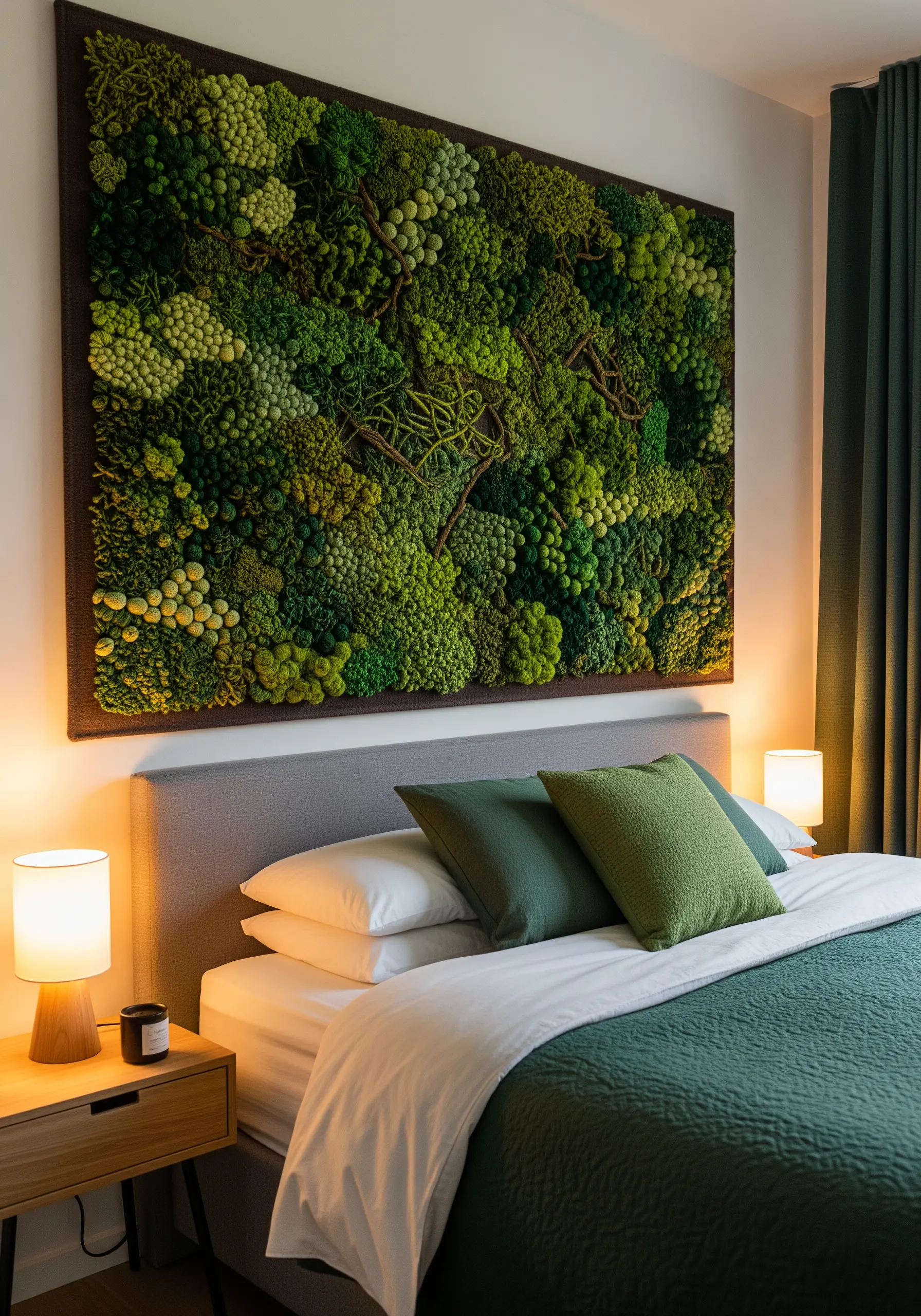
For a truly immersive textural experience, build up layers of high-pile stitches like turkey work and uncut bullion knots.
Work in dense, organic clusters, varying the height of your loops and the shades of green to create a realistic, mossy surface.
You can trim some loops of the turkey work and leave others intact to create different textures within the same piece.
This technique transforms embroidery from a surface embellishment into a sculptural art form, perfect for stitched details that make plain walls pop.
8. Explore a Micro-Landscape with a Stitch Sampler

Translate different natural textures into a quadrant of small studies, each focusing on a single stitch or technique.
Try a spiral of whipped backstitch for wood grain, a dense field of French knots for lichen, raised satin stitch for mushrooms, and couched threads for cracked earth.
Working on a small scale like this allows you to perfect each texture without the commitment of a large project. It’s an ideal way to build a personal library of textural effects for your future work.
Consider this your own personal nature-themed embroidery sampler.
9. Add Soft Dimension with Pussy Willow Pom-Poms

Combine traditional embroidery with simple fiber art techniques to create wonderfully tactile pussy willows.
Use a wrapped stem stitch or couching for the dark, woody branches.
For the fuzzy catkins, create tiny pom-poms from soft yarn or use a turkey work stitch, trimming the loops very short and fluffing them out to create a dense, velvety texture.
This mix of smooth, linear stitches and soft, dimensional forms makes the design incredibly engaging to both see and touch.
10. Create Hypnotic Patterns with Layered Stitches

Achieve a pinecone or dahlia-like effect by building concentric circles of layered stitches, such as fishbone or fly stitch.
Start from the center and work your way out, slightly overlapping each new row over the previous one. This creates a beautiful sense of depth and dimension.
Use an analogous color scheme, transitioning from light to dark, to enhance the gradient effect and give the design a hypnotic, rhythmic quality. This is one of the most satisfying floral mandala embroidery ideas for mindful stitching.
11. Mimic Wood Grain with Meandering Line Work

Capture the organic elegance of wood grain using nothing more than simple running stitches and backstitches.
Work with several neutral shades of thread simultaneously—like cream, beige, and grey—and let your lines wander and ripple across the fabric.
Avoid perfect, parallel lines. The beauty of this technique lies in the slight irregularities: stitches that vary in length, lines that converge and diverge, and the occasional stitched ‘knot’.
This approach is perfect for table runners, pillows, or any project where you want subtle, sophisticated texture.
12. Weave a Web with Beads and Metallic Thread

Elevate a simple line drawing by incorporating beads and choosing a thread with a subtle sheen.
For a spiderweb, use a fine metallic or silk thread to catch the light. First, create the radial spokes with straight stitches, ensuring they are taut.
Then, couch the spiraling thread over the spokes, adding tiny seed beads at the intersections to mimic dewdrops and add structural integrity.
This thoughtful combination of materials turns a common motif into a delicate, jewel-like artwork.
13. Recreate Agate Slices with Textural Contours

Emulate the layered beauty of a geode or agate slice by building up rings of varied, textural stitches.
Follow an irregular, organic outline and fill each concentric band with a different stitch: dense French knots, smooth satin stitch, bumpy bullion knots, or couched yarn.
A carefully chosen color palette that shifts from light to dark is essential to mimic the mineral deposits.
The negative space in the center is just as important as the stitches, giving the piece a focal point and a sense of authenticity. This technique is perfect for creating your own fiber art installations.
14. Design Serene Nursery Mobiles with Soft Appliqué

Create gentle, three-dimensional objects for a nursery mobile by combining soft appliqué with minimal embroidery.
Cut your nature-inspired shapes from felt or linen, lightly stuff them with batting, and stitch them closed.
Add delicate details with just a few simple stitches—a backstitched outline on a cloud, seed stitches on a raindrop, or straight stitches for a dandelion.
A cohesive, muted color palette ensures the final piece is soothing and sophisticated. These are perfect for embroidered nursery decor that feels calm and spacious.
15. Weave a Nest with Natural Fibers and Couching

Construct a bird’s nest that feels authentically wild by incorporating natural fibers directly into your work.
Use couching to stitch down strands of raffia, dried grasses, thin twigs, and chunky wool yarn onto your base fabric.
Build up the fibers in a circular, overlapping pattern, just as a bird would. This technique blurs the line between embroidery and sculpture, resulting in a piece with incredible depth and realism.
It’s a fantastic way to experiment with mixed fiber creations inspired by nature.
16. Embroider on Lampshades for a Backlit Effect
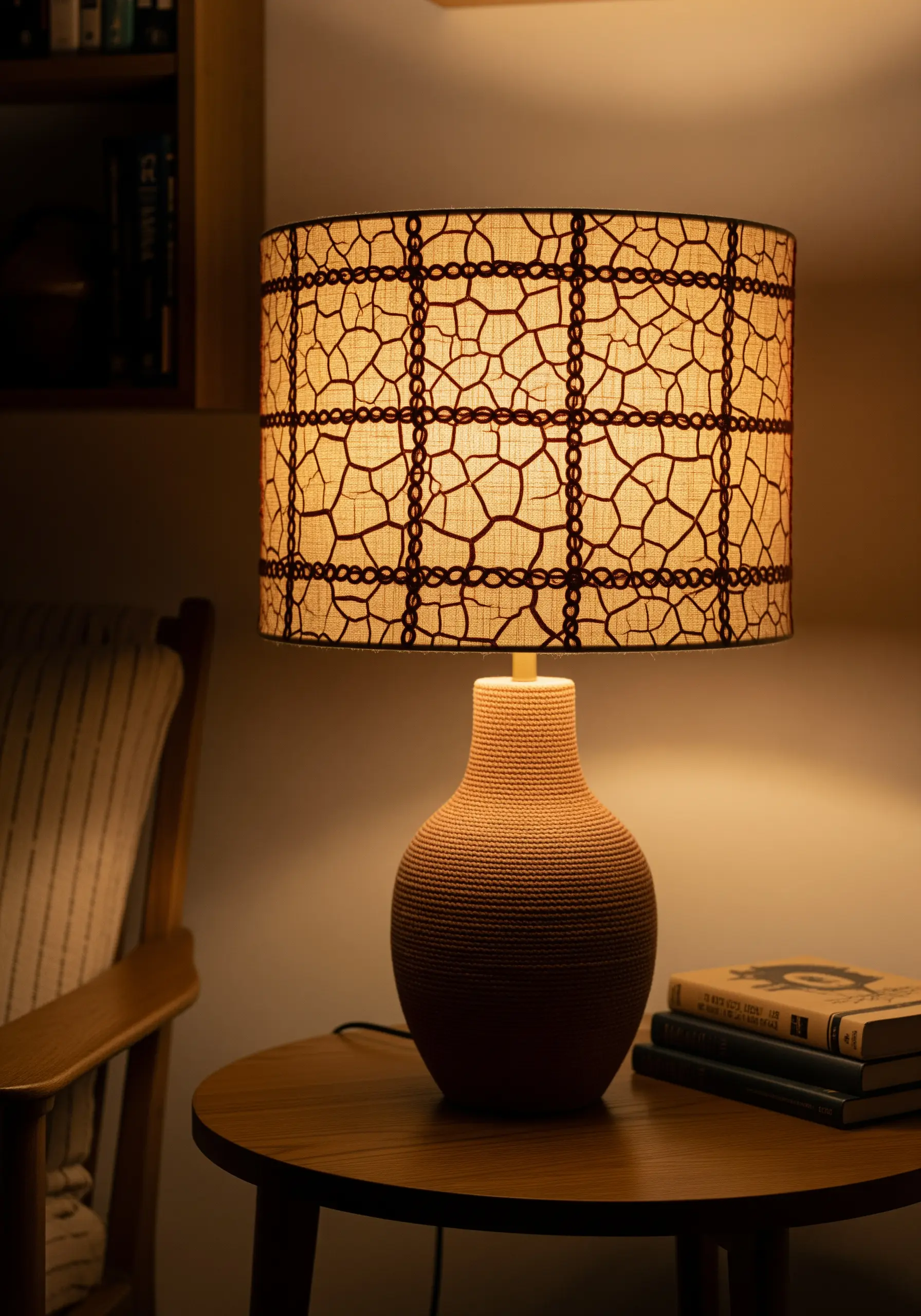
Transform a plain lampshade by using embroidery to create a design that interacts with light.
Choose a simple, open pattern like cracked earth or a chain-link motif, and stitch it onto a light-colored, open-weave fabric shade.
When the lamp is off, the texture is subtle and elegant. When it’s turned on, the embroidered lines become a dramatic silhouette, casting beautiful shadows and turning your stitching into a functional piece of art.
17. Paint with Abstract Textures on a Grand Scale

Move beyond the hoop and create large-scale wall art by treating thread like paint.
Use a punch needle or dense turkey work to fill large, abstract color blocks that evoke lichen or foliage.
Don’t focus on precise shapes; let the edges be soft and organic, bleeding into one another.
This approach is less about detailed stitching and more about using color and high texture to create an emotional, atmospheric impression on a much larger canvas.
18. Embellish Apparel with Topographical Patches

Add a personal, nature-inspired touch to a denim jacket or jeans with small, textural patches.
Create circular appliqués by crocheting or embroidering onto a scrap of felt. Use concentric circles of backstitch, chain stitch, or even satin stitch in earthy tones to mimic the rings of a tree or the layers of a smooth river stone.
Stitching these onto clothing is a modern, sophisticated way to practice visible mending or simply to turn your old clothes into art.
19. Achieve Photorealism with Directional Long-and-Short Stitch

To create the soft, delicate structure of a feather, rely entirely on the long-and-short stitch.
Use a single strand of floss and pay close attention to the direction of your stitches. They should angle outward and slightly downward from the central shaft, just as they do in a real feather.
Slightly vary the length and angle of each stitch, and leave tiny, deliberate gaps to create the illusion of individual barbs.
The precision of this technique is what creates its breathtaking realism, especially when using a high-contrast palette.
20. Interpret One Theme in Three Textural Ways
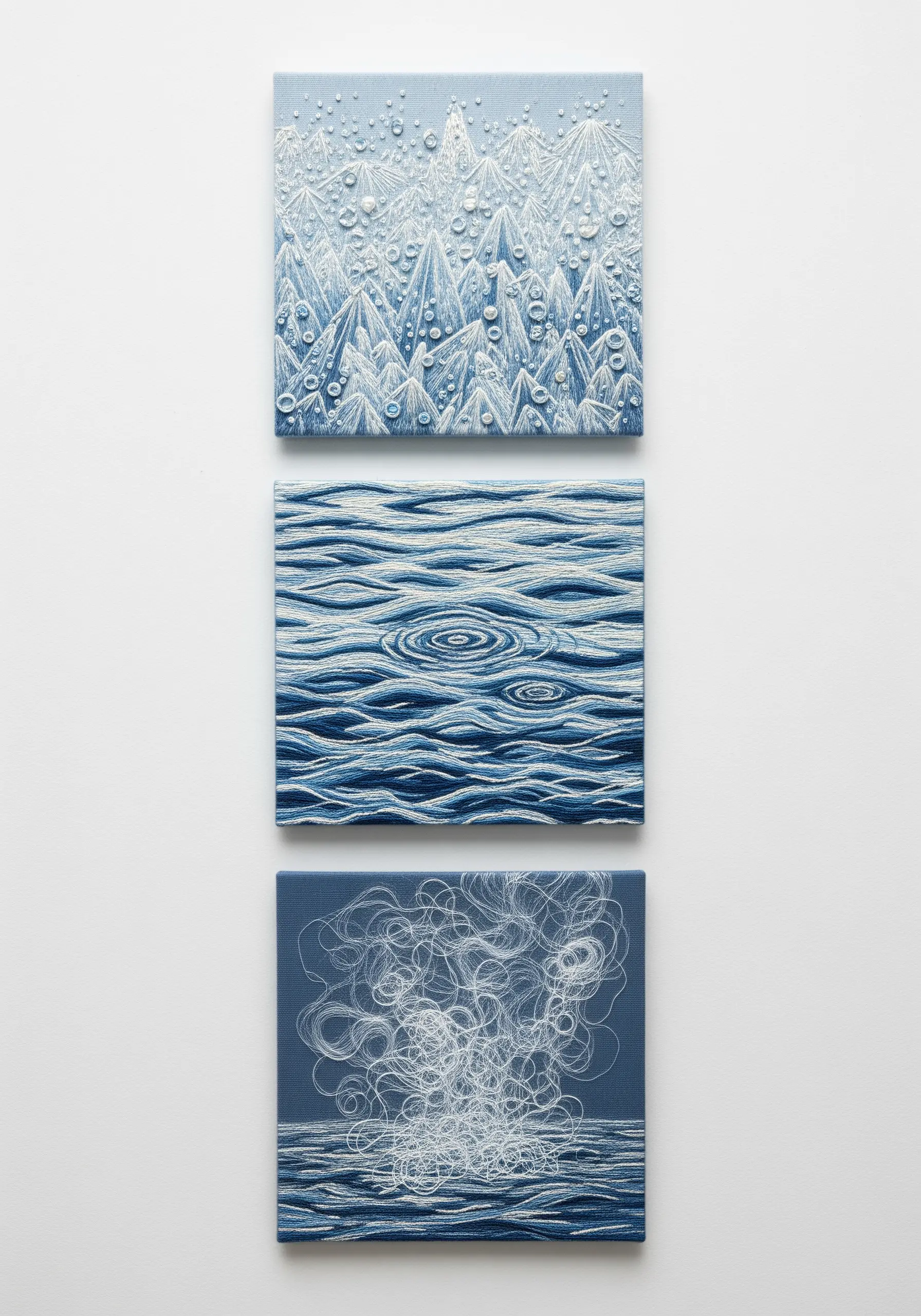
Challenge your creativity by depicting a single natural element—like water—across a series of small canvases, each with a different textural approach.
One panel could use French knots and seed stitches for foam and spray. A second could use flowing, concentric lines of backstitch for ripples.
A third could be pure chaos, using scribbled, free-motion stitching to represent turbulent energy. This exercise pushes you beyond literal interpretation and helps you develop a more expressive, personal stitch vocabulary, perfect for creating abstract mixed-media embroidery.


