Embroidery is more than a craft; it’s a way to add quiet, intentional art to the surfaces of your life. But it’s easy to feel stuck, wondering how to make your work feel less like a hobby and more like an expression of your personal style.
The secret isn’t in mastering hundreds of complex stitches. It’s in the thoughtful choices you make—the way you blend colors to create dimension, the texture you choose to tell a story, or the unexpected surface you decide to embellish.
Here, you’ll find ideas designed to elevate your technique and refine your creative voice. Move beyond just following a pattern and start making the small, deliberate decisions that will give your embroidery a polished, modern, and deeply personal finish.
1. Master the Art of Thread Painting for Lifelike Portraits
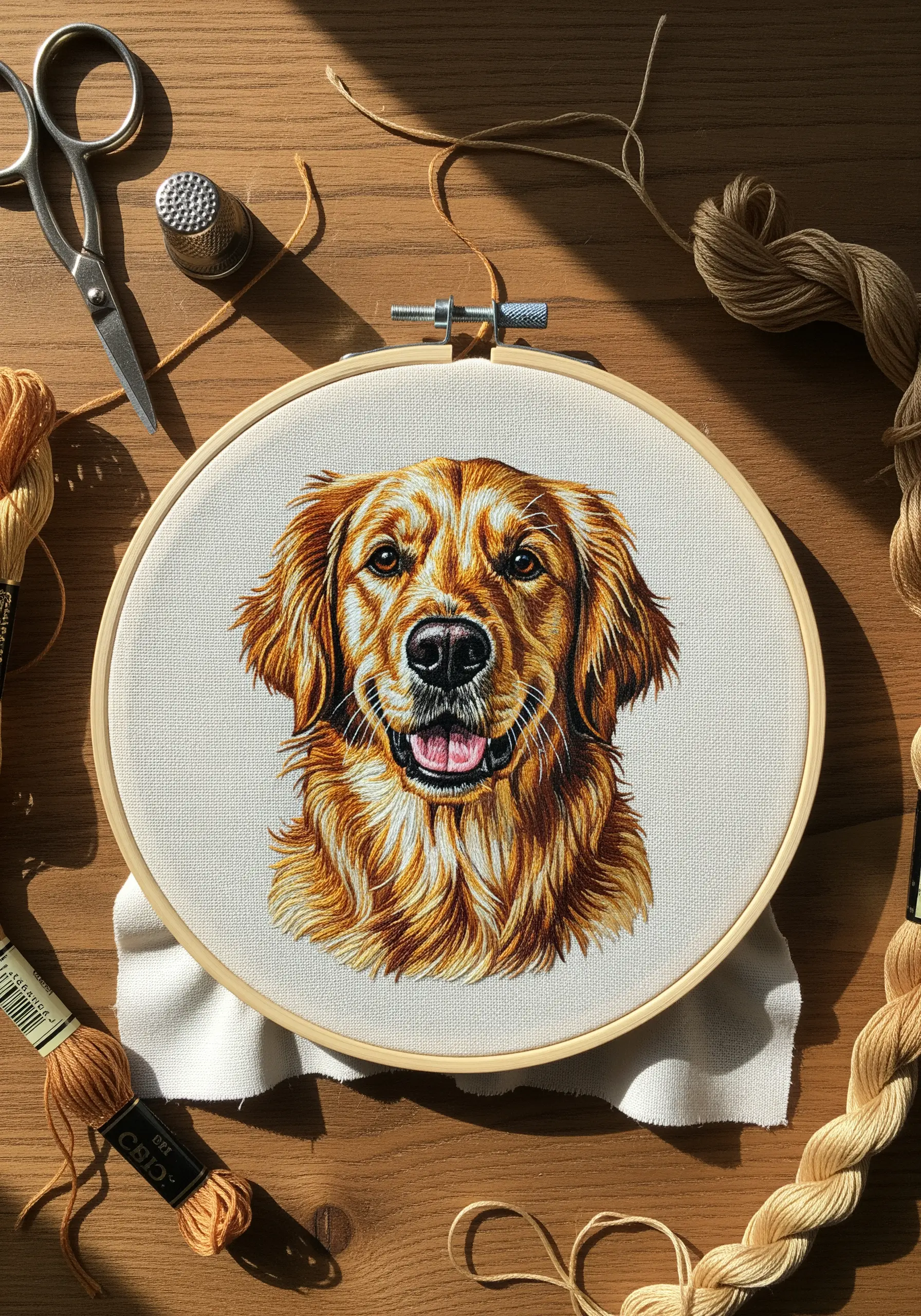
To capture the texture of fur, shift from satin stitch to the more nuanced long-and-short stitch.
Use a single strand of embroidery floss to achieve fine detail and smooth color transitions, mimicking the way light hits individual hairs.
Work in small sections, layering stitches in the direction of the fur’s growth.
This technique builds depth and realism, transforming a simple outline into one of the most modern thread portraits you can create.
Don’t be afraid to blend several shades of gold, brown, and cream within a small area to create highlights and shadows that give the portrait life.
2. Create Dimension with Padded Monograms
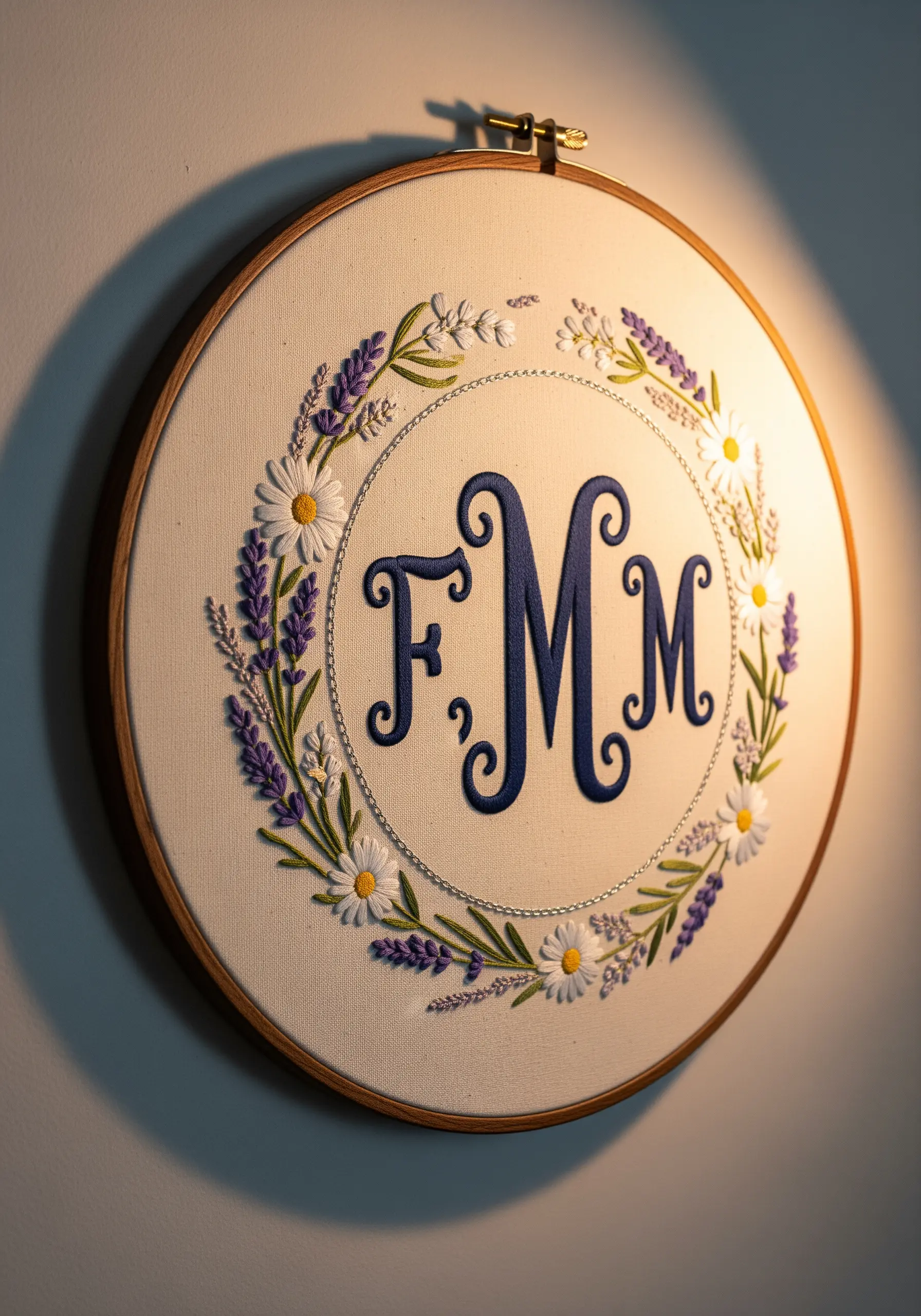
Elevate a simple monogram by giving it a three-dimensional, sculptural quality.
First, stitch a base layer of satin stitches or felt cutouts within your letter outlines—this is the padding.
Then, stitch your final, smooth satin stitch layer directly over the padding at a perpendicular angle.
This technique makes the monogram pop from the fabric, creating a professional, high-end finish for personalized name monogram wall embroidery gifts.
Contrast the bold lettering with delicate details like tiny French knots and fly-stitch leaves for a balanced composition.
3. Embellish Denim with Woven Wheel Roses
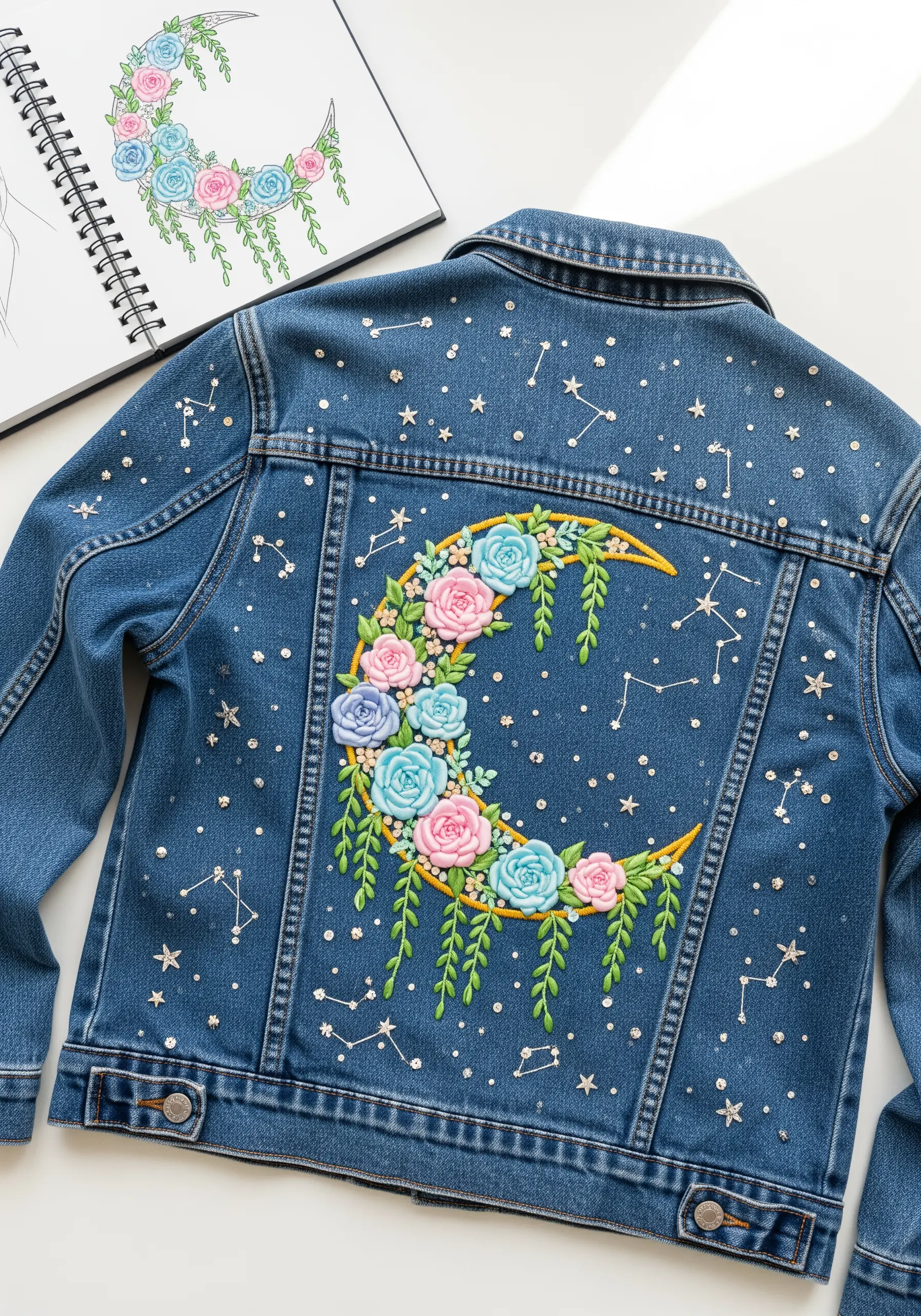
Transform a plain denim jacket with highly textured floral motifs that stand out.
Create a foundation with five or seven straight stitches radiating from a central point, like spokes on a wheel.
Then, using a tapestry needle and a thicker thread (like all six strands of floss), weave the thread over and under each spoke until the rose is full.
This method produces dense, dimensional roses that are far more durable on clothing than delicate stitches.
Scatter simple backstitch constellations around your floral moon to fill the space and add a touch of celestial magic to your design.
4. Master Two Styles of Personalized Cushions
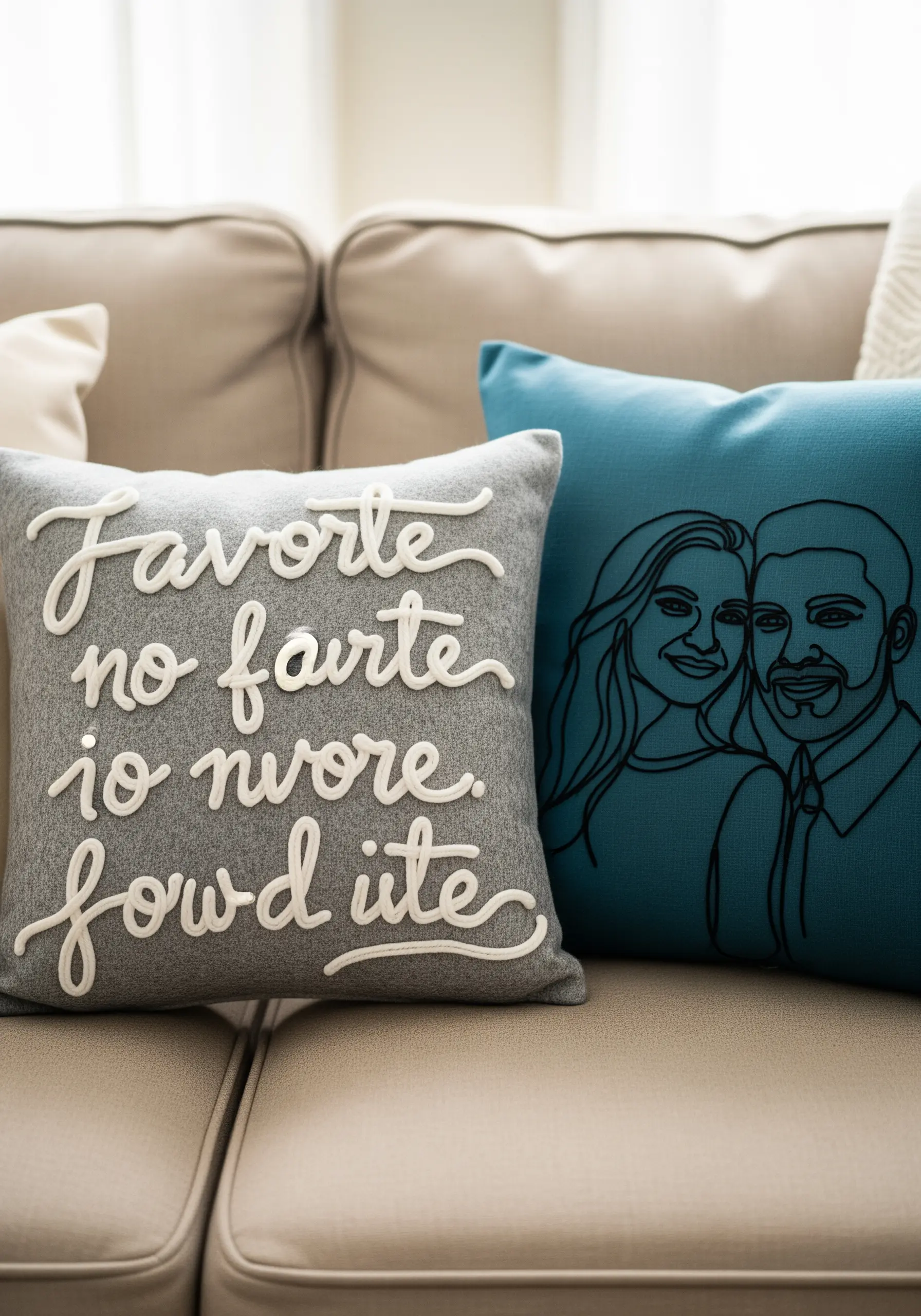
For clean, modern line-art portraits, use a simple backstitch with three strands of black floss.
This creates a bold, graphic look that is both quick to execute and visually striking on a solid color fabric.
For dimensional script, try couching: lay down a thick yarn or multiple strands of floss along your lettering path and tack it down with small, perpendicular stitches of a matching single thread.
This technique gives your text a raised, corded effect that adds sophisticated texture to handmade pillow cushion embroidery patterns.
5. Use Cross-Stitch for Charming Kitchen Linens
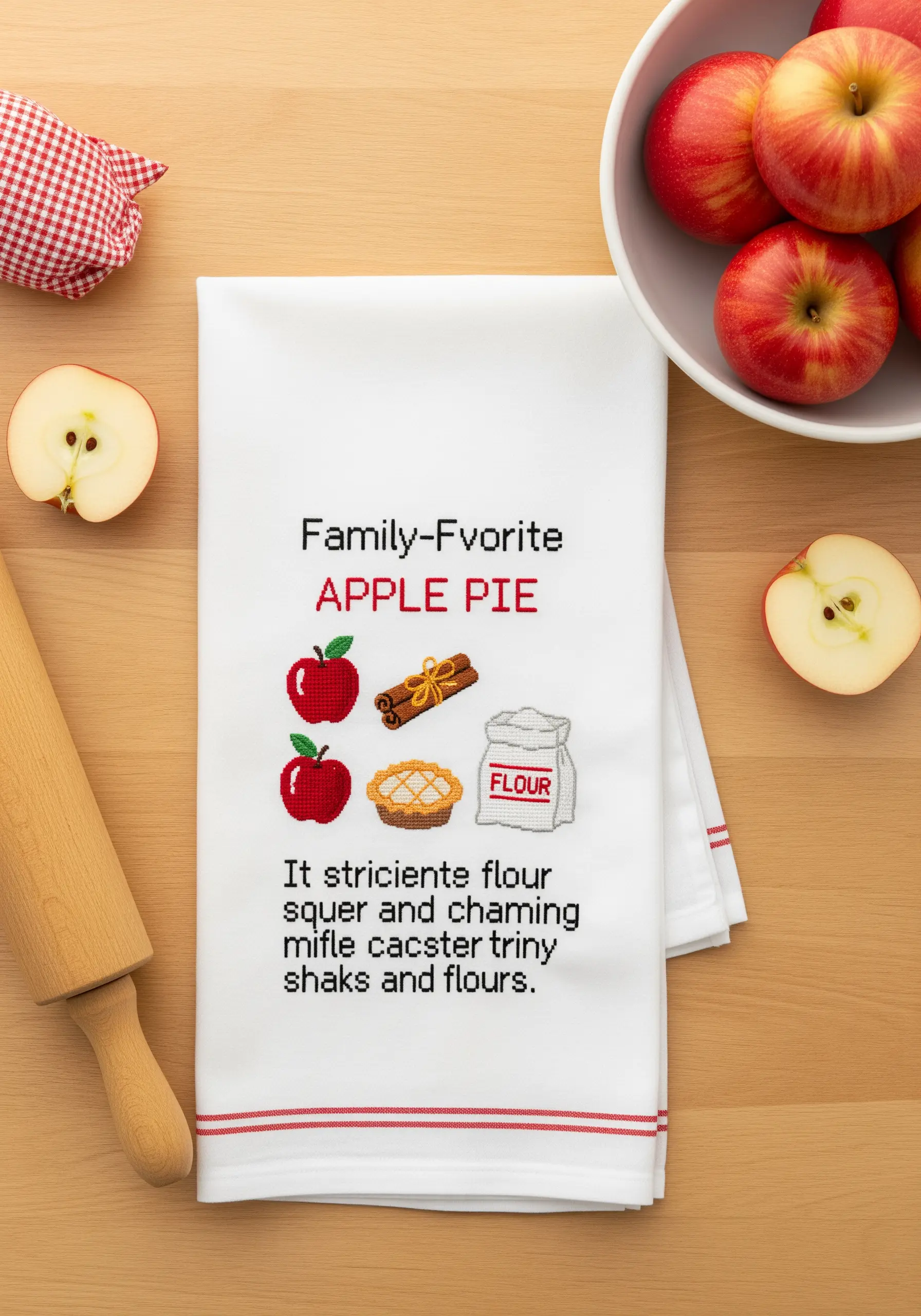
To embroider neat cross-stitch designs on non-Aida fabric like a tea towel, you need a grid guide.
Use a water-soluble waste canvas; simply baste it onto your towel, stitch your design following its grid, and then dissolve the canvas in water once you’re finished.
This ensures your stitches are perfectly uniform and square, giving your project a professional, polished look.
Combine small motifs with clean, modern typography to create charming and functional minimal fruit botanical embroidery patterns for kitchen wall decor or gifts.
6. Design a Cohesive Embroidery Gallery Wall
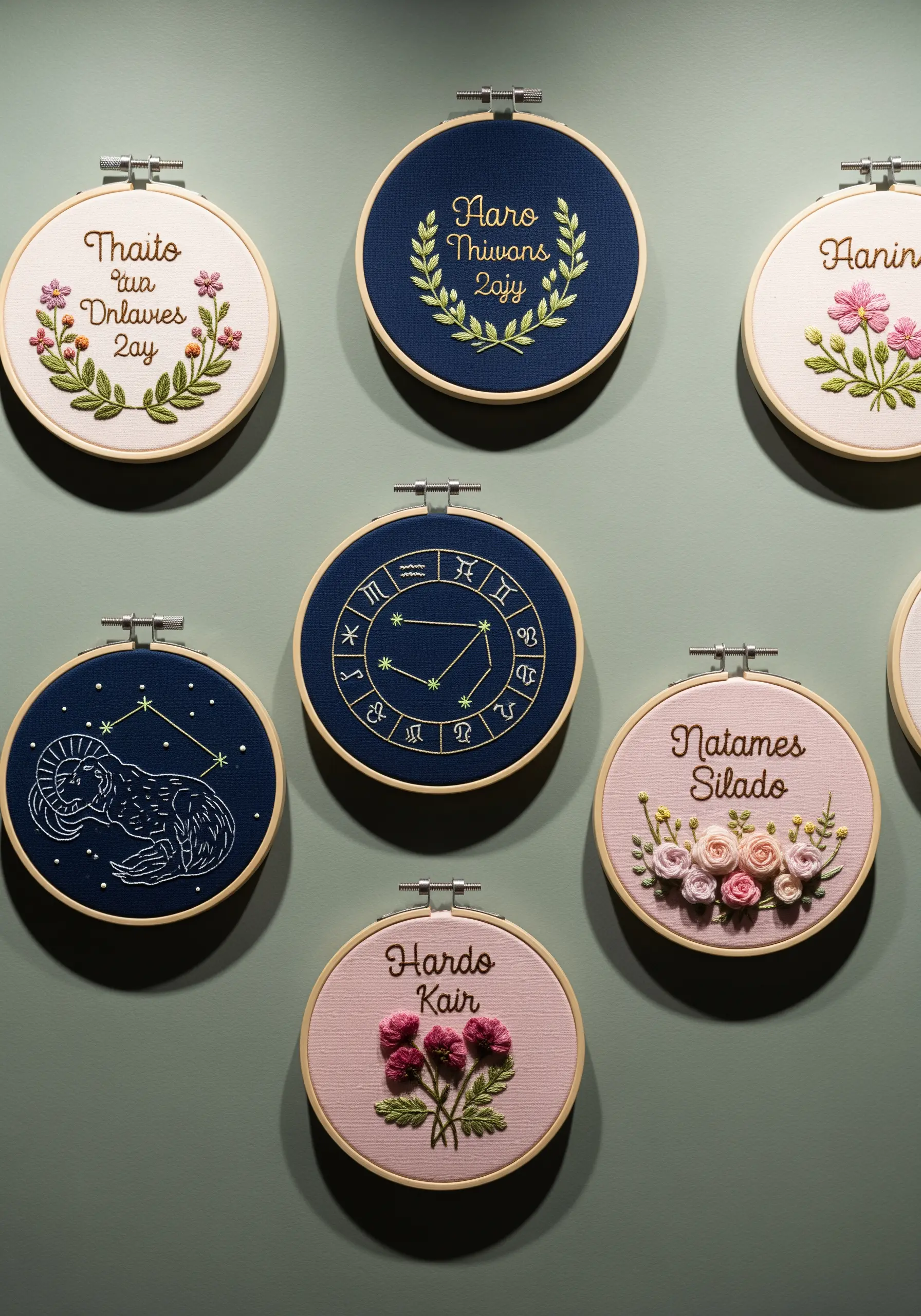
Create a stunning display by curating a collection of hoops with a unified theme or color palette.
Choose two or three background fabric colors, like navy, cream, and dusty pink, to create harmony.
Vary the motifs—florals, lettering, celestial designs—but keep the style consistent to ensure the collection feels intentional.
Using the same type of wooden hoop for each piece also acts as a unifying frame.
This approach allows you to create fun hoop art projects that tell a larger visual story when displayed together.
7. Stitch a Memory Map of a Favorite Journey
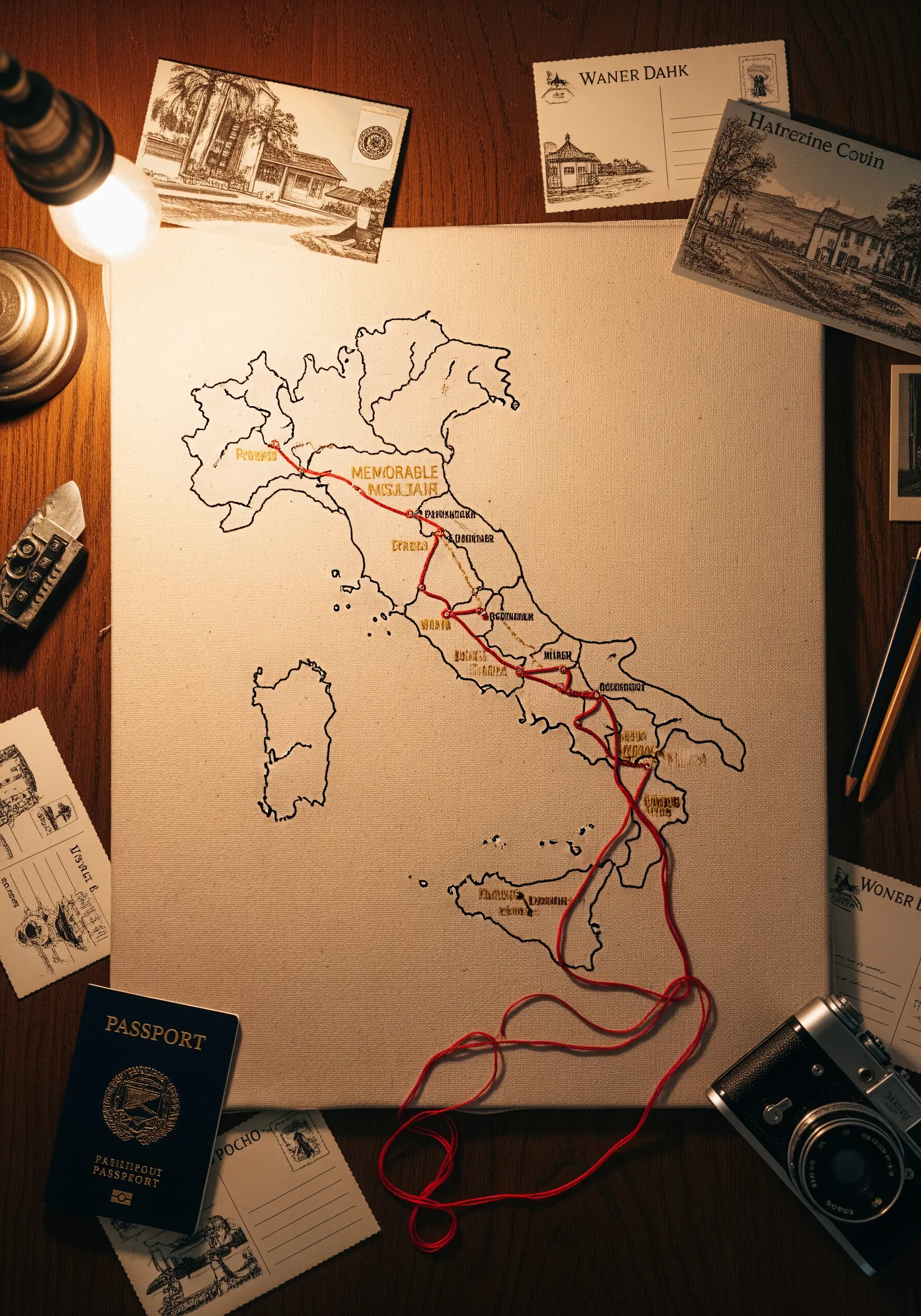
Transform a simple map into a deeply personal piece of art by tracing a journey with thread.
Transfer the outline of a country or region onto a stretched canvas using a light source or carbon paper.
Use a simple backstitch in black thread for the map’s outline to keep it clean and graphic.
Then, stitch the route of your trip in a contrasting color, like red, using a thicker thread or even a fine cord to make it stand out.
Add small text using a single-strand backstitch to label key locations, creating a beautiful visual travel diary.
8. Craft a No-Hoop Felt Name Banner
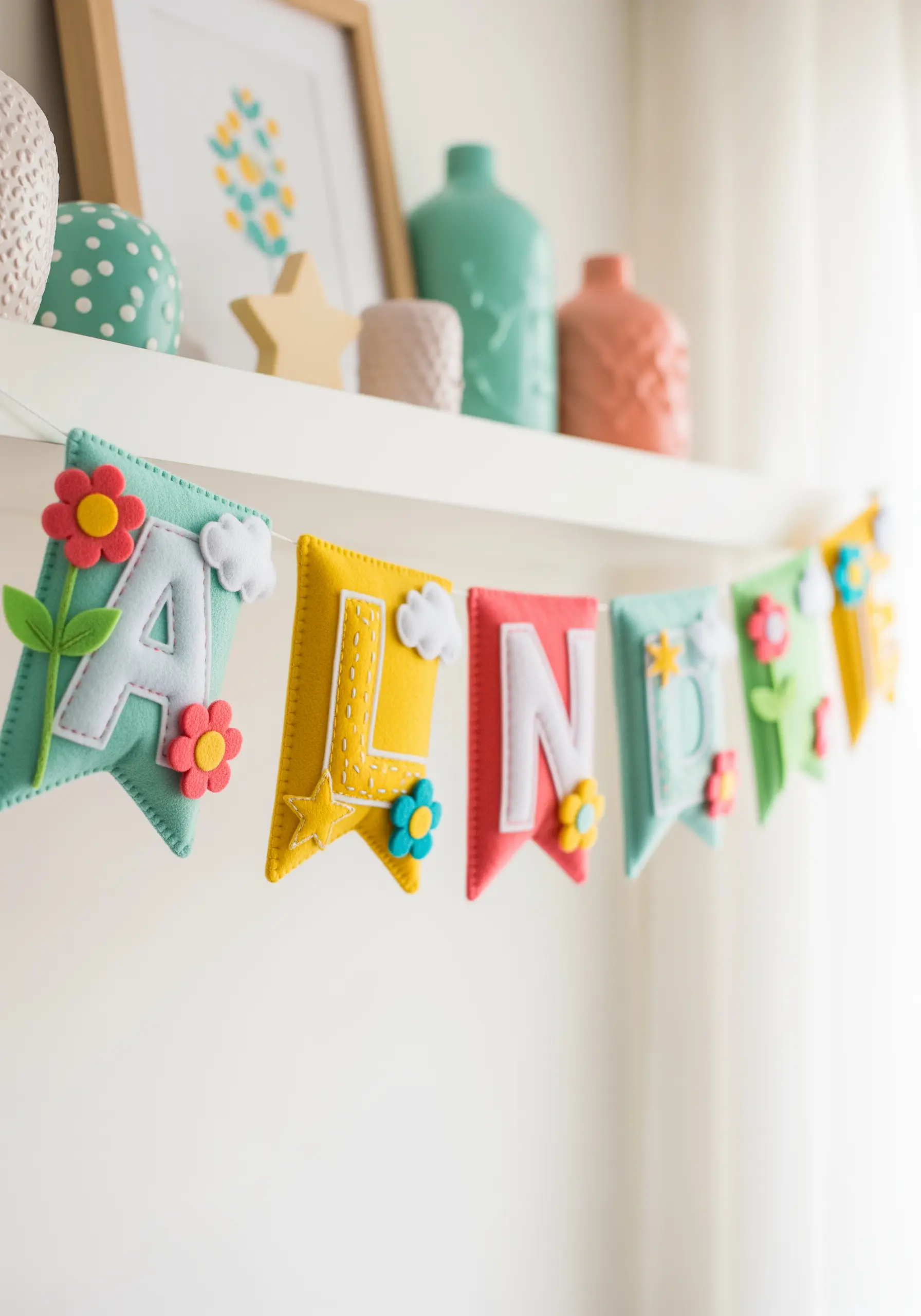
For a charming and soft decoration, create a personalized banner using layered felt pieces.
Cut out your pennant shapes and letters from different colored felt, then use fabric glue to hold them in place.
Secure the edges of each letter with a simple running stitch for a decorative touch.
Finish the outer edges of the pennants with a blanket stitch; this not only adds a beautiful handmade detail but also reinforces the felt.
This project is perfect for decorating nursery walls and requires no hoop, making it fast and accessible.
9. Explore Geometric Embroidery on Dark Fabric
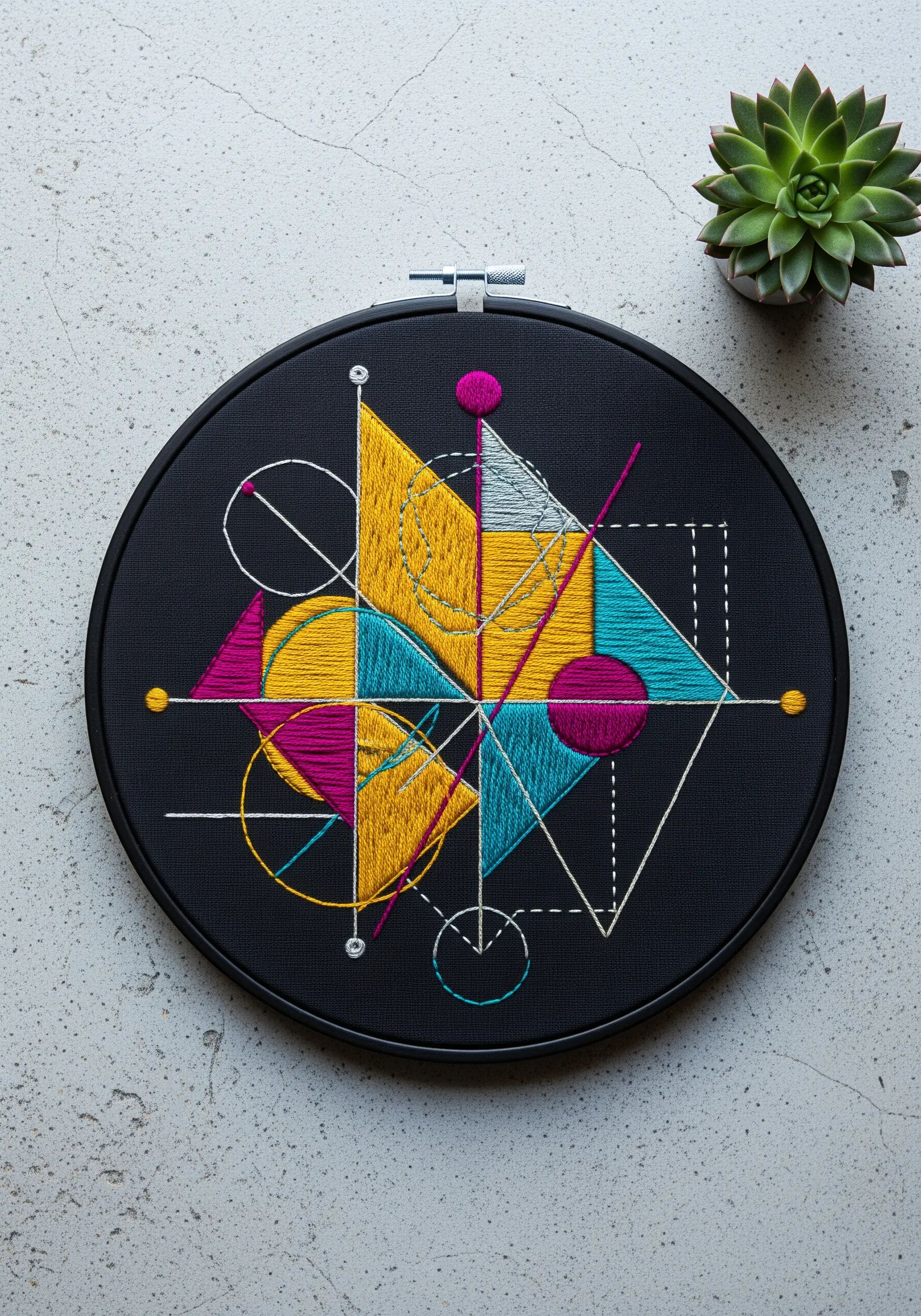
Make bold colors pop by stitching them on a black or dark navy cotton canvas.
Use a white water-soluble transfer pen to draw your geometric design with precision—a ruler is your best friend here.
Fill the shapes with satin stitch, but change the direction of your stitches for each adjacent shape.
This simple trick creates texture and causes the light to reflect differently off each block of color, adding dynamic energy to your geometric embroidered wall decor ideas.
Use a single white thread for outlines to define the shapes and add contrast.
10. Personalize Canvas Sneakers with Floral Stitches
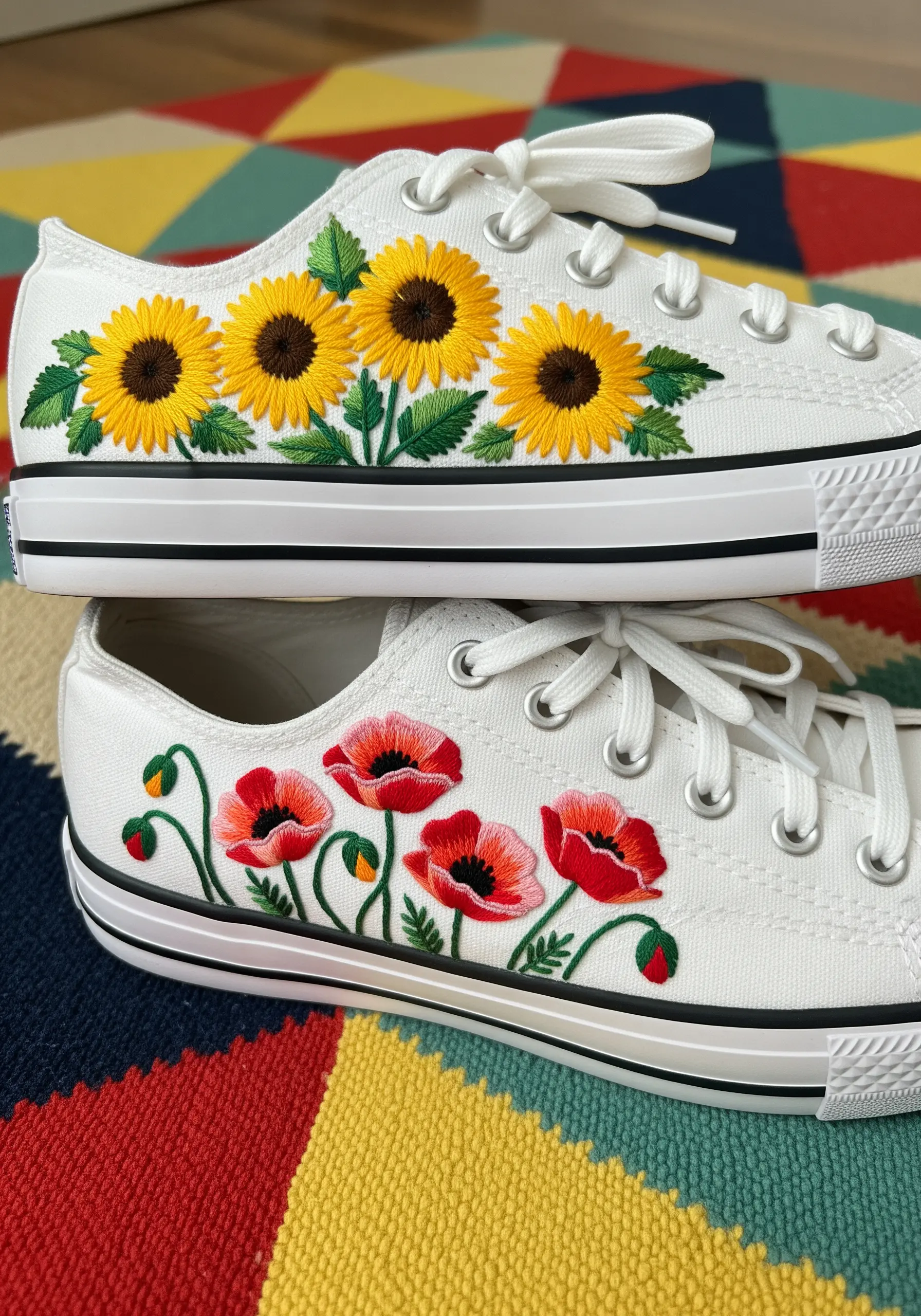
Embroidering on sturdy canvas shoes is easier than it looks, but requires the right tools.
Use a strong, sharp needle (like a chenille needle) and a thimble to help you push through the thick fabric.
Place a piece of iron-on stabilizer inside the shoe behind your design area to prevent the fabric from puckering as you stitch.
For the flowers, use long-and-short stitch to blend colors for the petals and French knots for the centers, creating vibrant, durable art for your feet.
11. Create an Architectural House Portrait
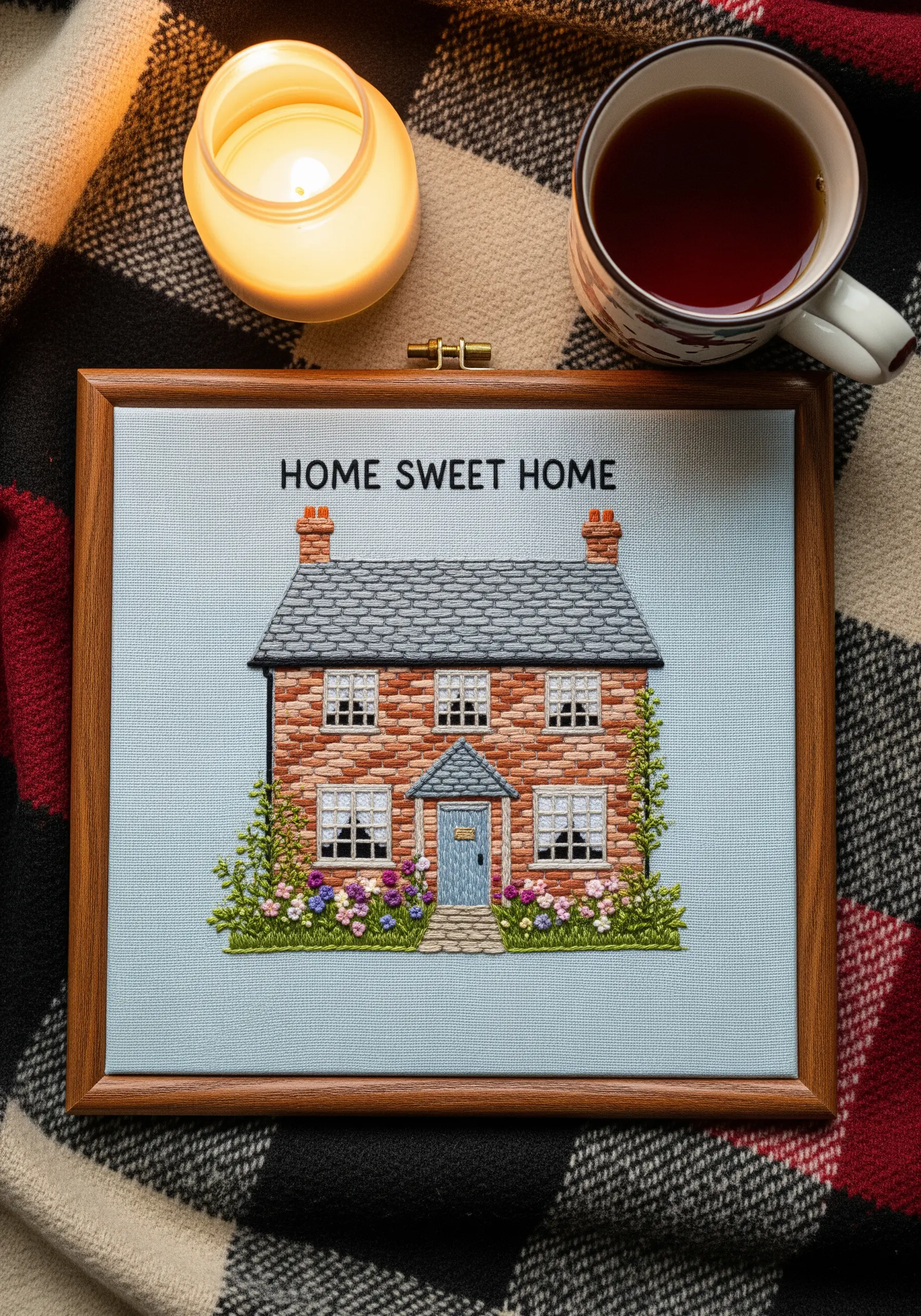
Capture the character of a home by translating its textures into different stitches.
Use a simple grid of single straight stitches for brickwork and windows, and a dense satin stitch or long-and-short stitch for roof tiles or wooden doors.
For foliage and flowers in the garden, a mix of French knots, lazy daisies, and fishbone stitches will add realistic texture and dimension.
Stretching your finished work over a square frame or canvas board creates a polished alternative to a traditional hoop, perfect for framed embroidery art pieces.
12. Stabilize Large Designs on Tote Bags
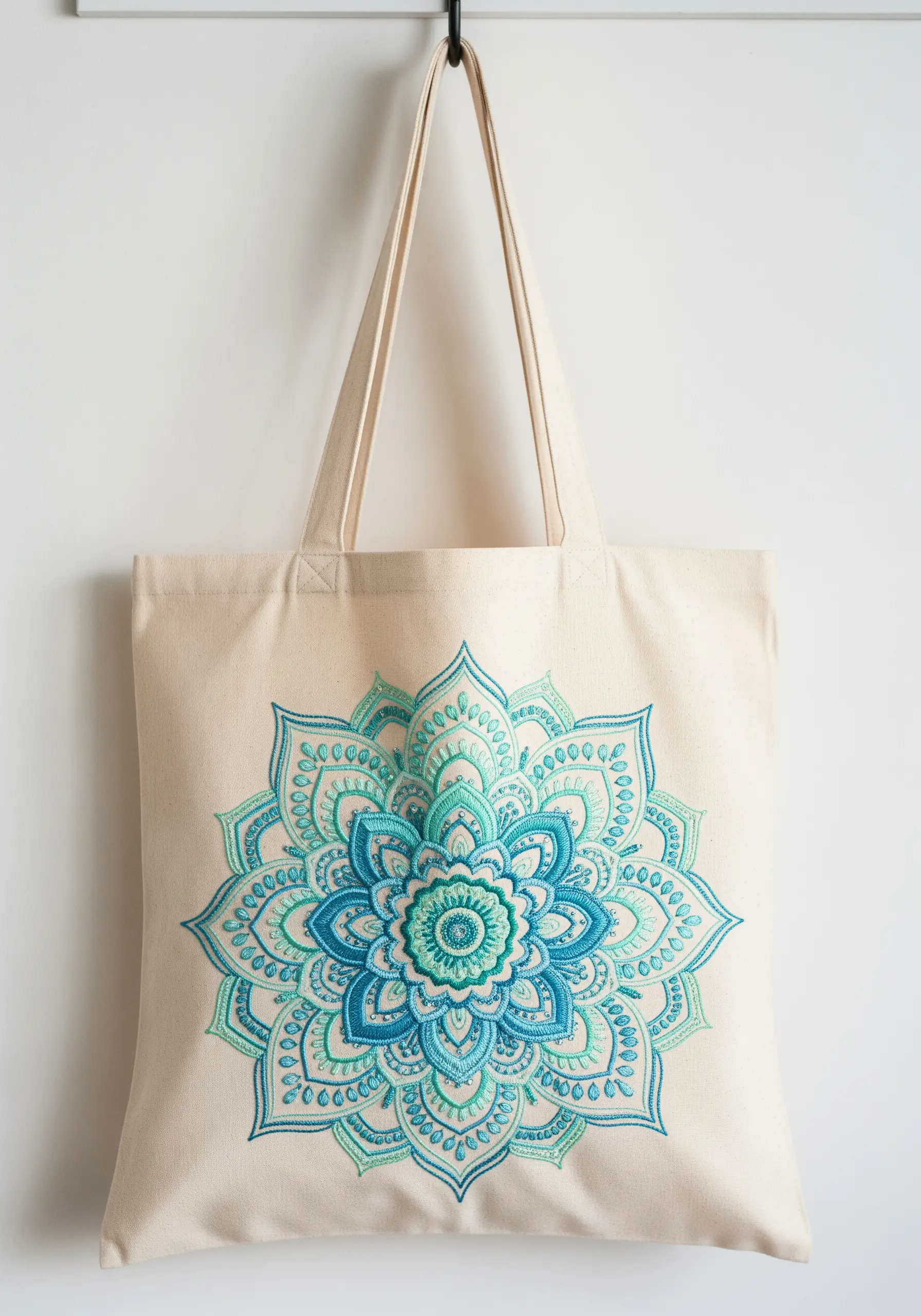
When stitching a large, dense design on a flexible item like a canvas tote, preventing distortion is key.
Before you begin, fuse a heavy-duty cut-away stabilizer to the inside of the bag where the embroidery will go.
This provides a stable foundation for your stitches, preventing the fabric from puckering or stretching under the thread’s tension.
The stabilizer remains permanently on the inside, ensuring your design looks smooth and professional even with regular use.
This is the secret to flawless personalized tote bag embroidery designs.
13. Stitch Elegant Bookmarks on Faux Leather
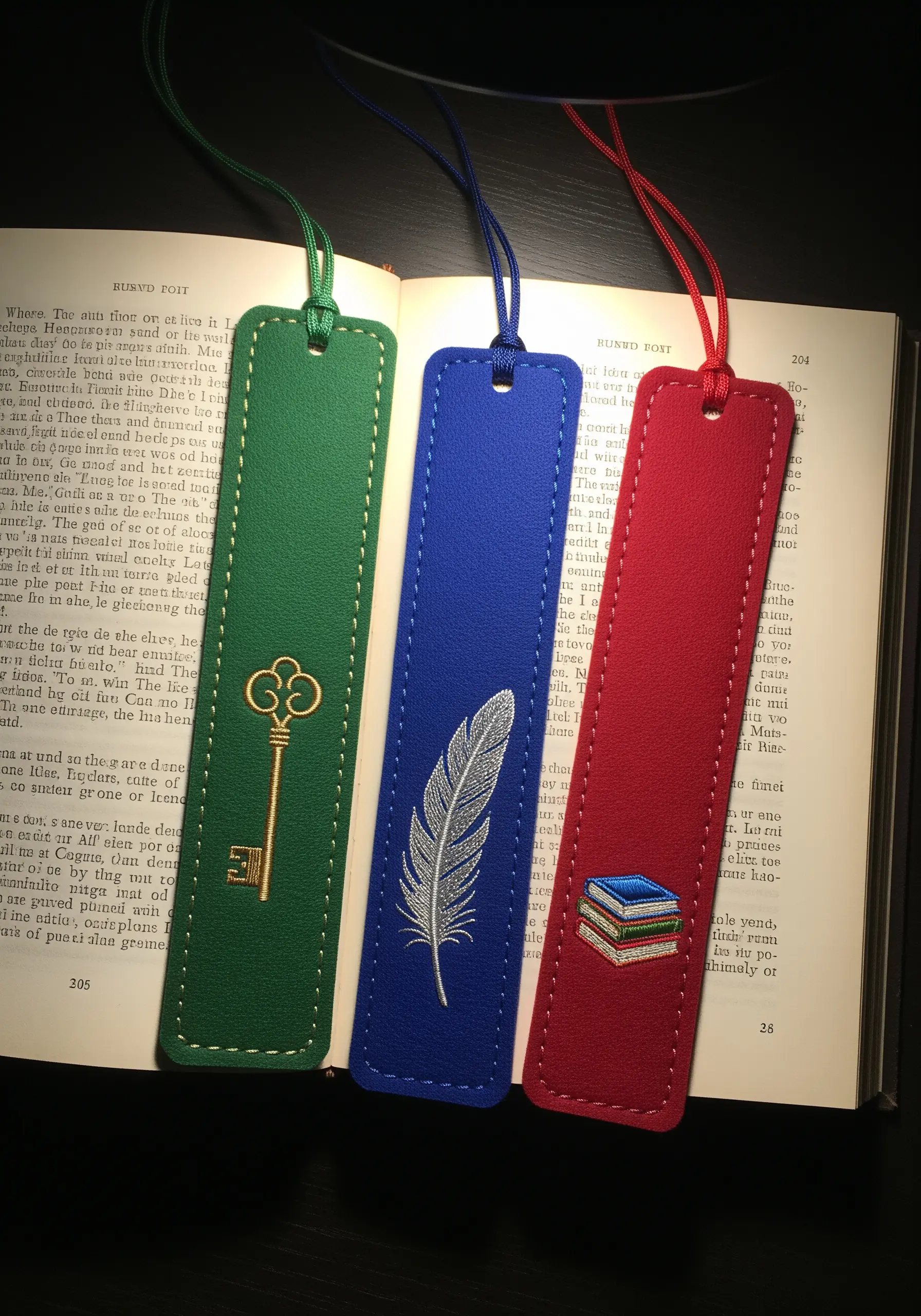
Create durable and sophisticated bookmarks by embroidering on non-fraying materials like faux leather or thick craft felt.
You won’t need a hoop; just a sharp needle to pierce the material cleanly.
Choose simple, iconic motifs—a key, a feather, a stack of books—and use a contrasting thread color to make the design pop.
A satin stitch works beautifully for filling small shapes, and adding a touch of metallic thread will give your DIY cozy embroidery bookmarks a luxurious finish.
14. Add a Delicate Touch to Clothing Collars
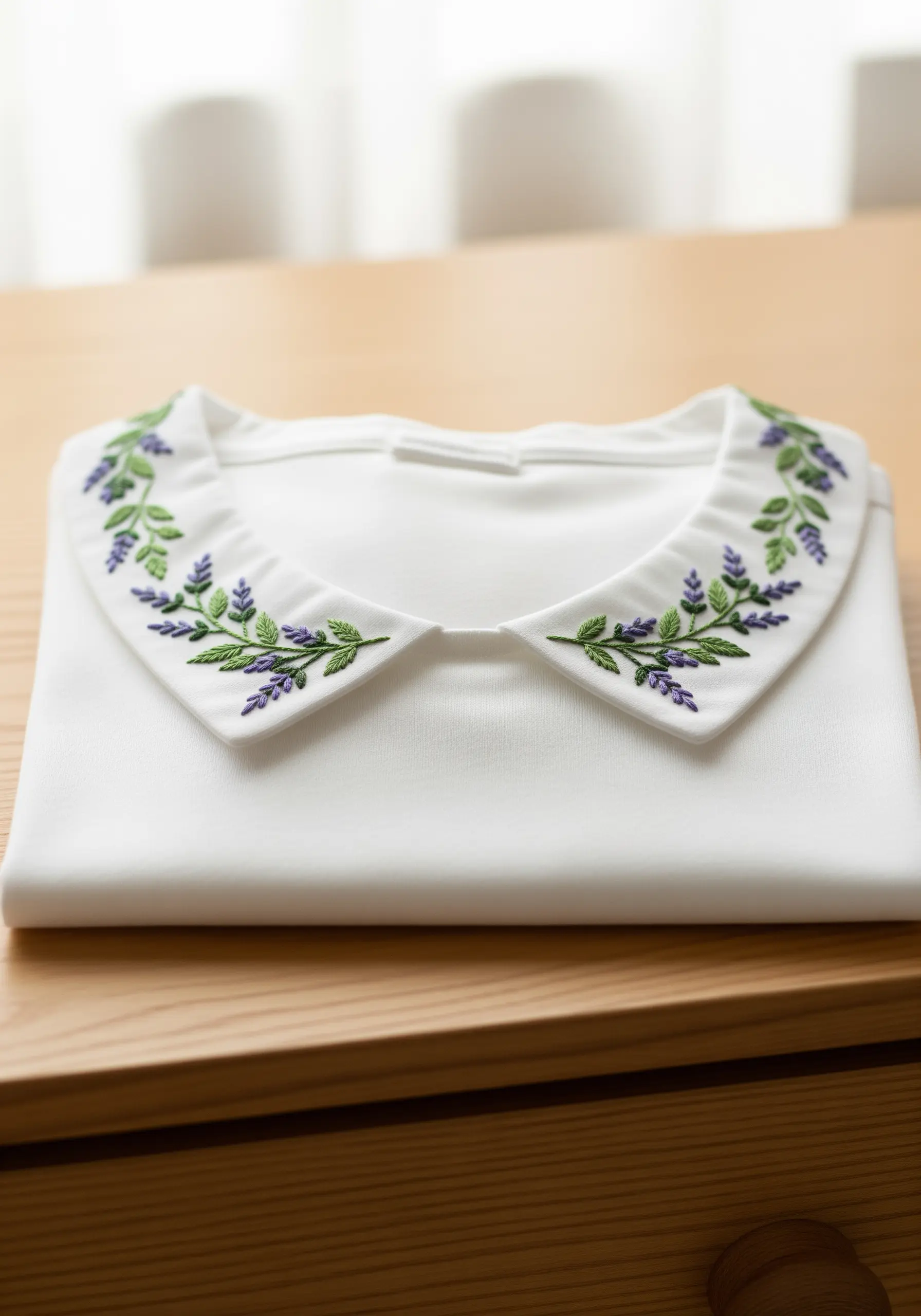
Transform a simple shirt by adding a touch of botanical embroidery to the collar.
To ensure your design is symmetrical, trace your pattern onto a wash-away stabilizer and stick it to each side of the collar.
Use a delicate fishbone stitch for the leaves to create a central vein and gentle shape.
For the lavender sprigs, use small, angled satin stitches or seed stitches.
Using just two or three colors creates an understated and elegant look, perfect for upgrading everyday apparel with delicate leaf embroidery stitches.
15. Achieve Realistic Shading on Succulents
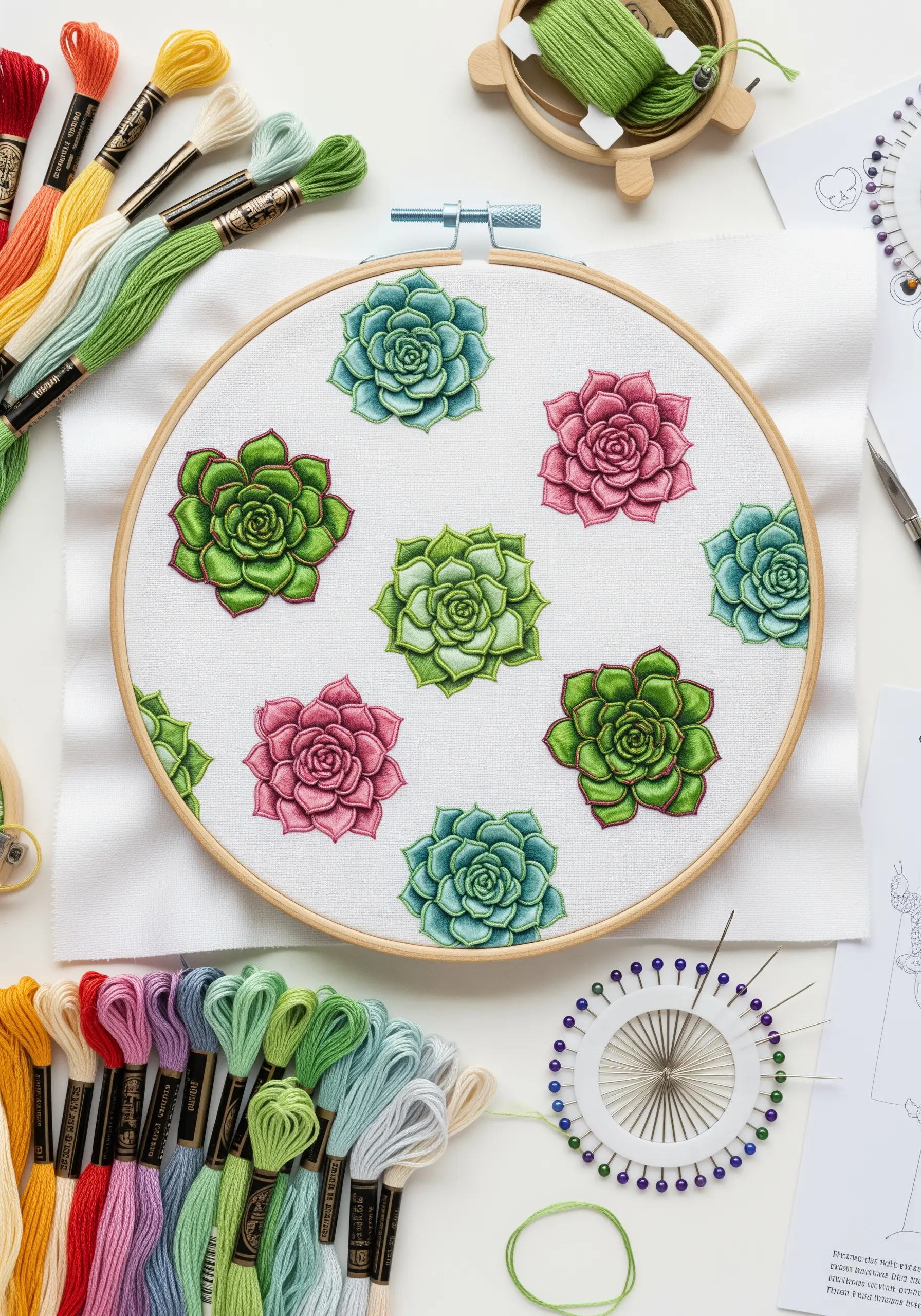
The key to stitching plump, realistic succulents is masterful color blending.
For each petal, use at least three shades of floss—a dark, a medium, and a light tone.
Start with the darkest color at the base of the petal and work your way to the lightest shade at the tip using long-and-short stitch.
This technique creates a smooth gradient that mimics the way succulents hold light and shadow, giving them a three-dimensional appearance.
It’s an essential skill for creating vibrant modern botanical stitches.
16. Weave a Landscape with Yarn Tapestry
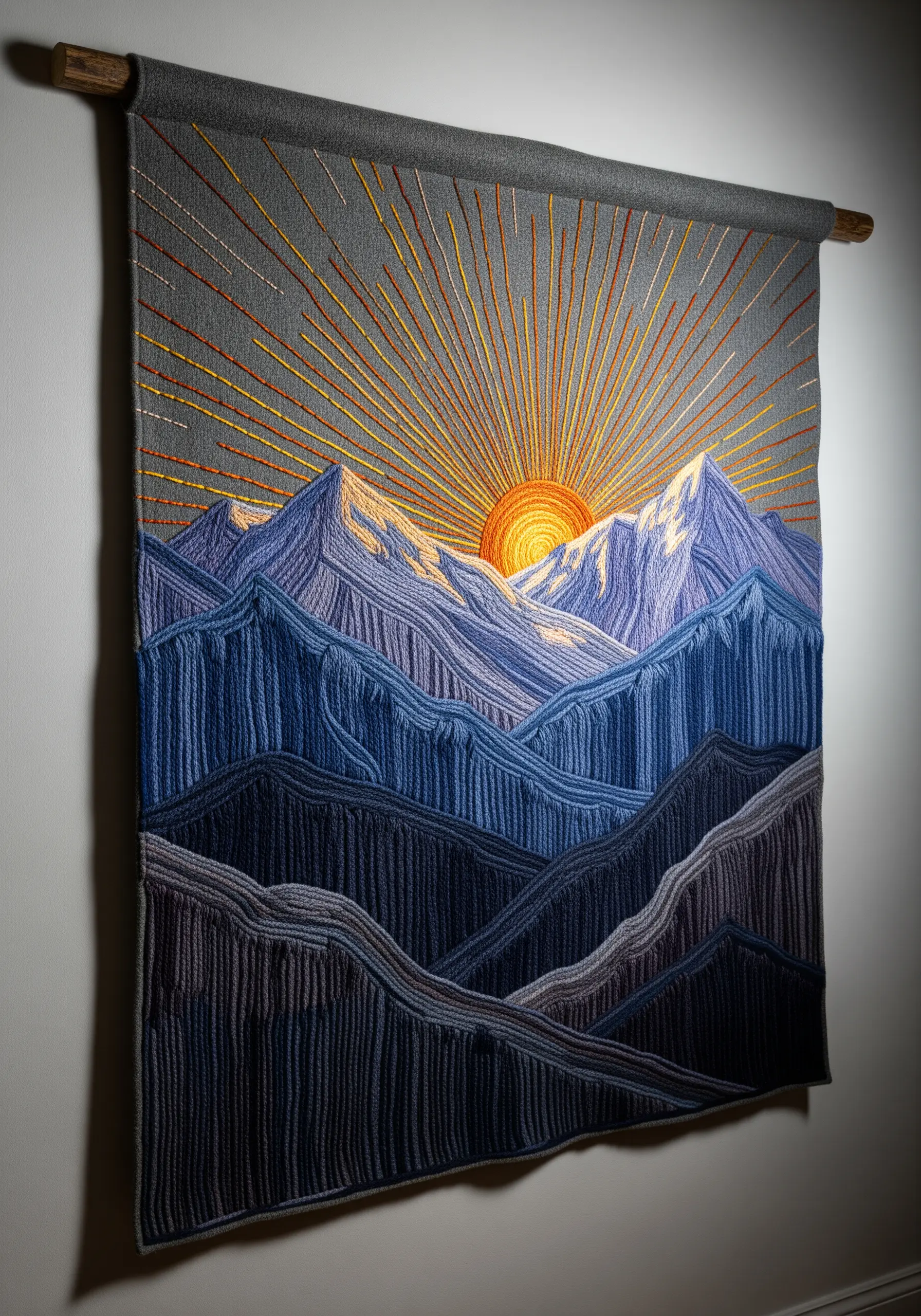
Create a large-scale, highly textured wall hanging by swapping floss for yarn.
Stretch a sturdy fabric like linen or burlap over a large frame and use a tapestry needle for stitching.
Fill in large areas, like the mountains and sky, with long, vertical satin stitches laid side-by-side.
The thickness of the yarn fills space quickly and creates a bold, graphic texture.
This method blends the principles of weaving and embroidery, allowing you to master dramatic yarn wall art techniques that make a statement.
17. Replicate Handwritten Text with Precision
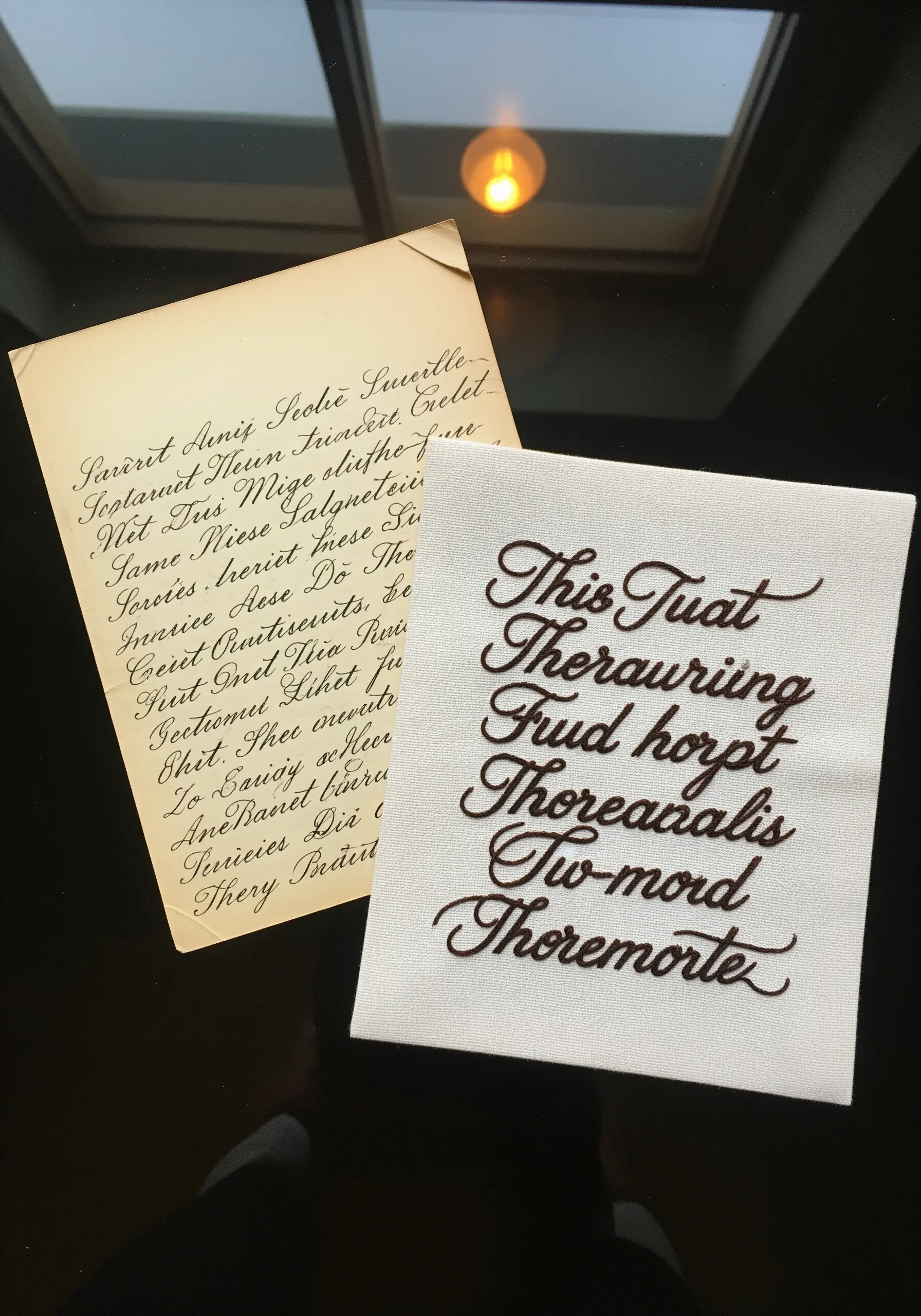
To transform a piece of handwriting into a stitched keepsake, focus on capturing the unique flow of the script.
Carefully trace the text onto your fabric using a fine-tipped, removable fabric marker.
Use a stem stitch or a split stitch with only two strands of floss; this allows you to navigate the tight curves and varying thickness of the letters smoothly.
Working slowly and keeping your stitch length consistent is crucial for achieving clean, readable minimal typography embroidery patterns.
18. Create 3D Effects on a Baseball Cap
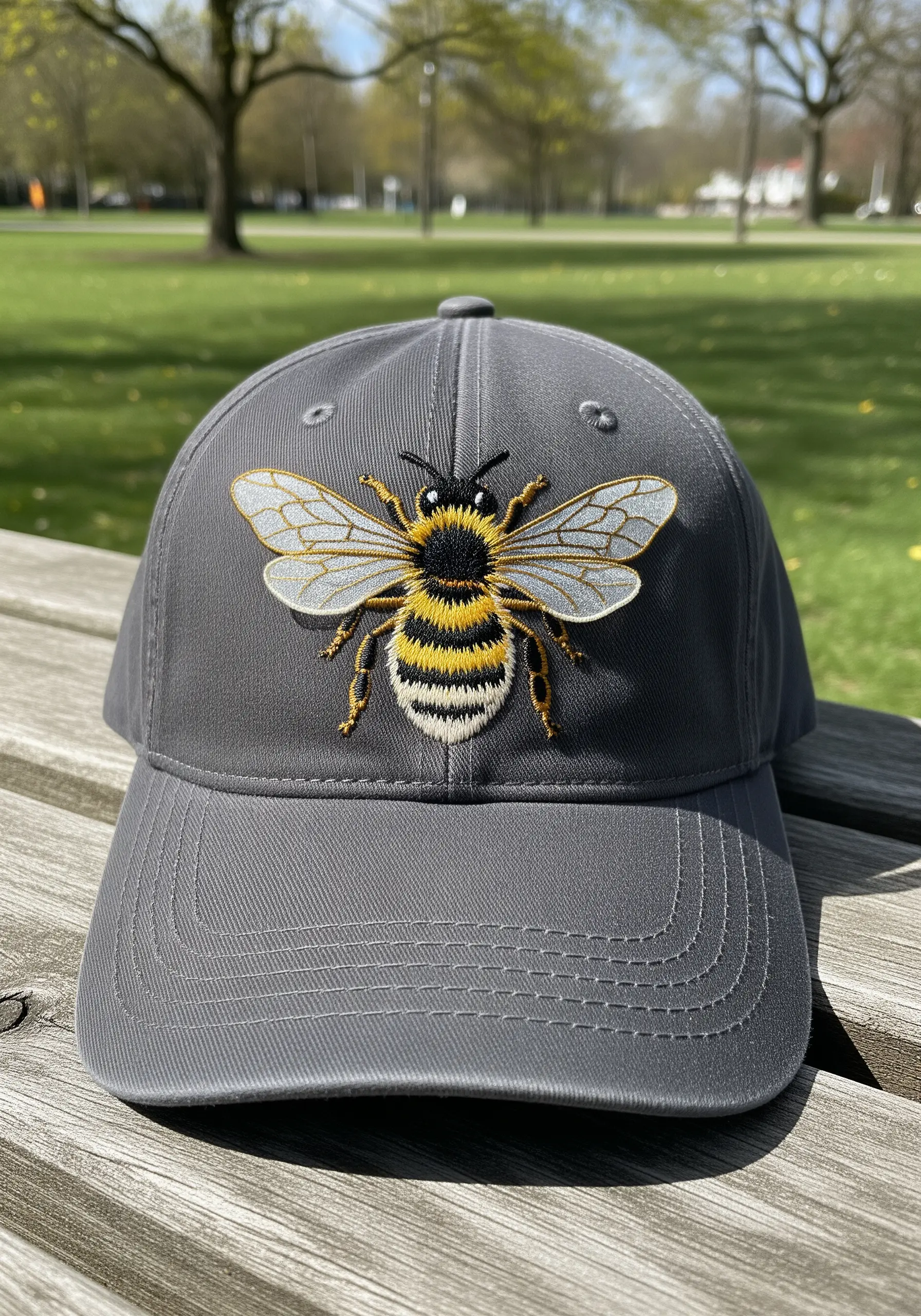
Embroidering on a curved, structured cap requires a small 4-inch hoop to isolate the stitching area.
To create the bee’s fuzzy texture, use the turkey stitch—create loops of thread and then snip them to form a plush, raised pile.
For the delicate, translucent wings, stitch the outlines on a separate piece of organza fabric, then carefully cut them out and appliqué them onto the cap.
This mixed-technique approach adds incredible realism and dimension to your wearable art.
19. Elevate Table Linens with Botanical Motifs
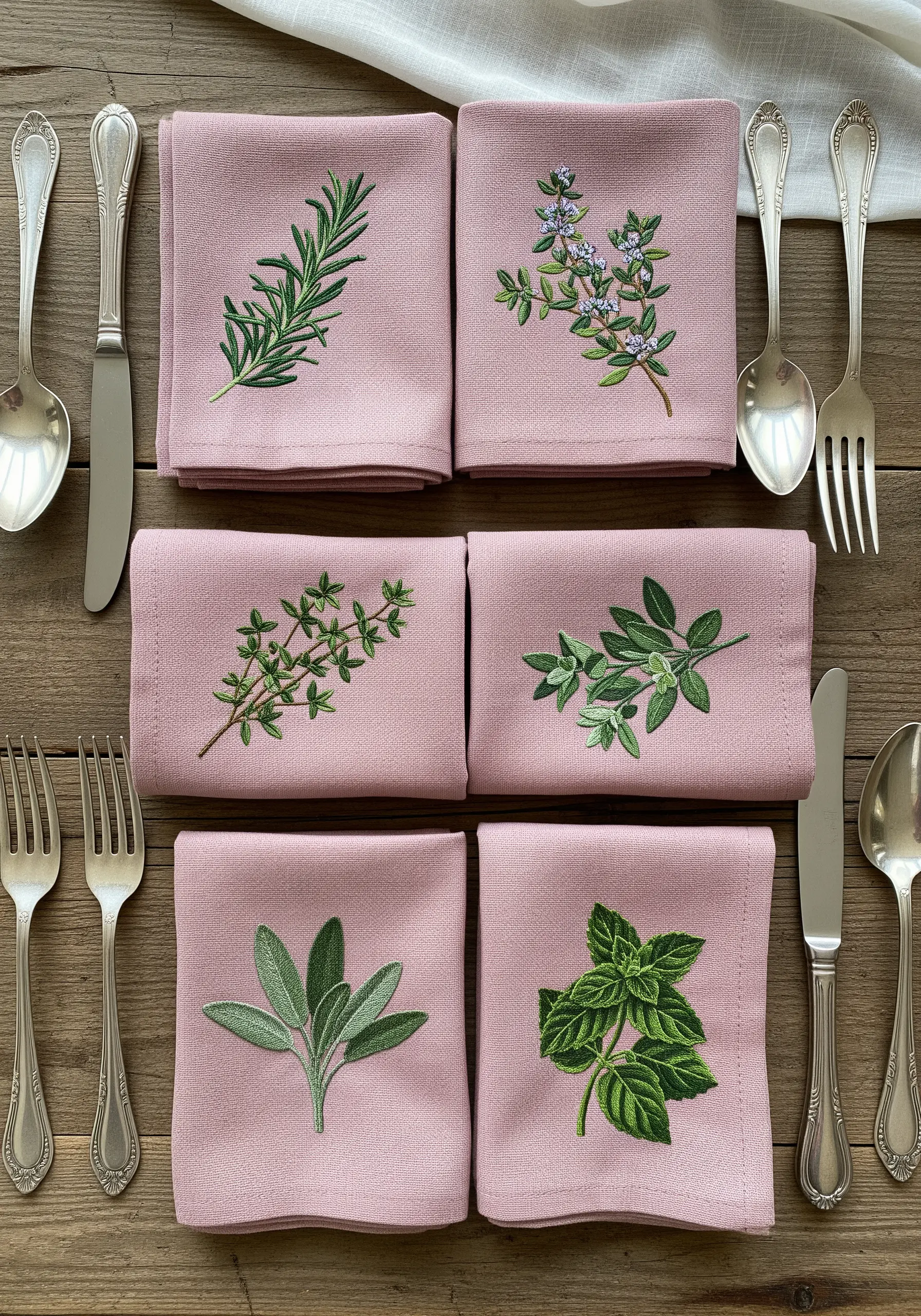
Create a cohesive and elegant set of dinner napkins by embroidering them with culinary herbs.
Choose a different herb for each napkin—rosemary, thyme, sage, mint—but stitch them all in a similar style and scale for a unified look.
Use a fishbone stitch for the leaves and a simple stem stitch for the branches to capture their organic forms.
This project turns everyday items into a sophisticated set, perfect for upgrading your table setting with minimalist line art embroidery patterns to elevate linen table napkins into luxury-style decor.
20. Explore Layered Line Art on Sheer Fabric
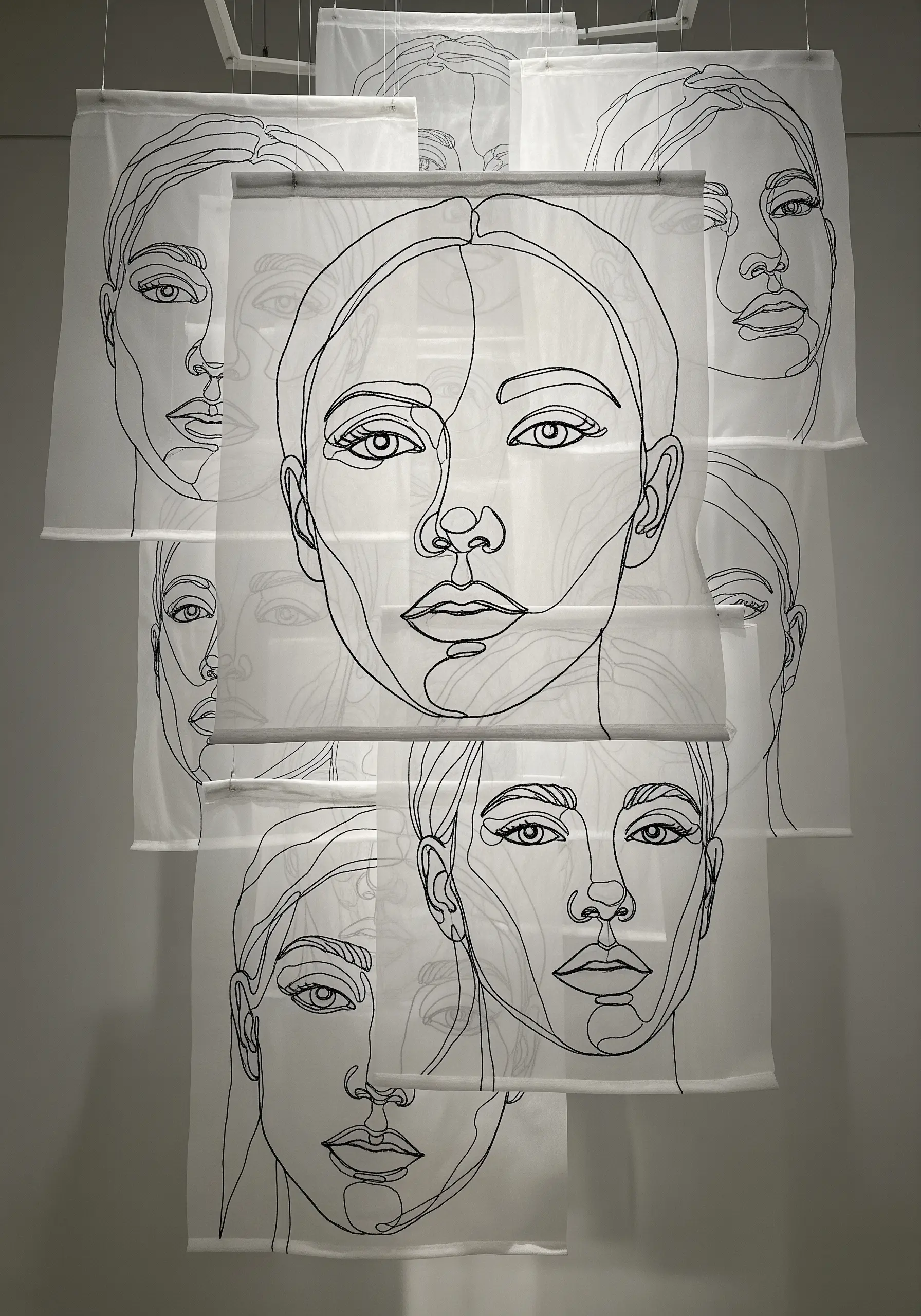
Create an ethereal, multi-dimensional art piece using layers of sheer fabric like organza or tulle.
Embroider a continuous line portrait with a simple backstitch on a single panel.
Then, stitch isolated elements of the same portrait—just the eyes, or the outline of the hair—on separate, smaller panels.
When you hang them layered with space in between, the fragmented images converge to create a captivating sense of depth and movement.
This technique transforms simple abstract line art silhouettes into a sculptural installation.
21. Stitch a Solar System with Varied Textures
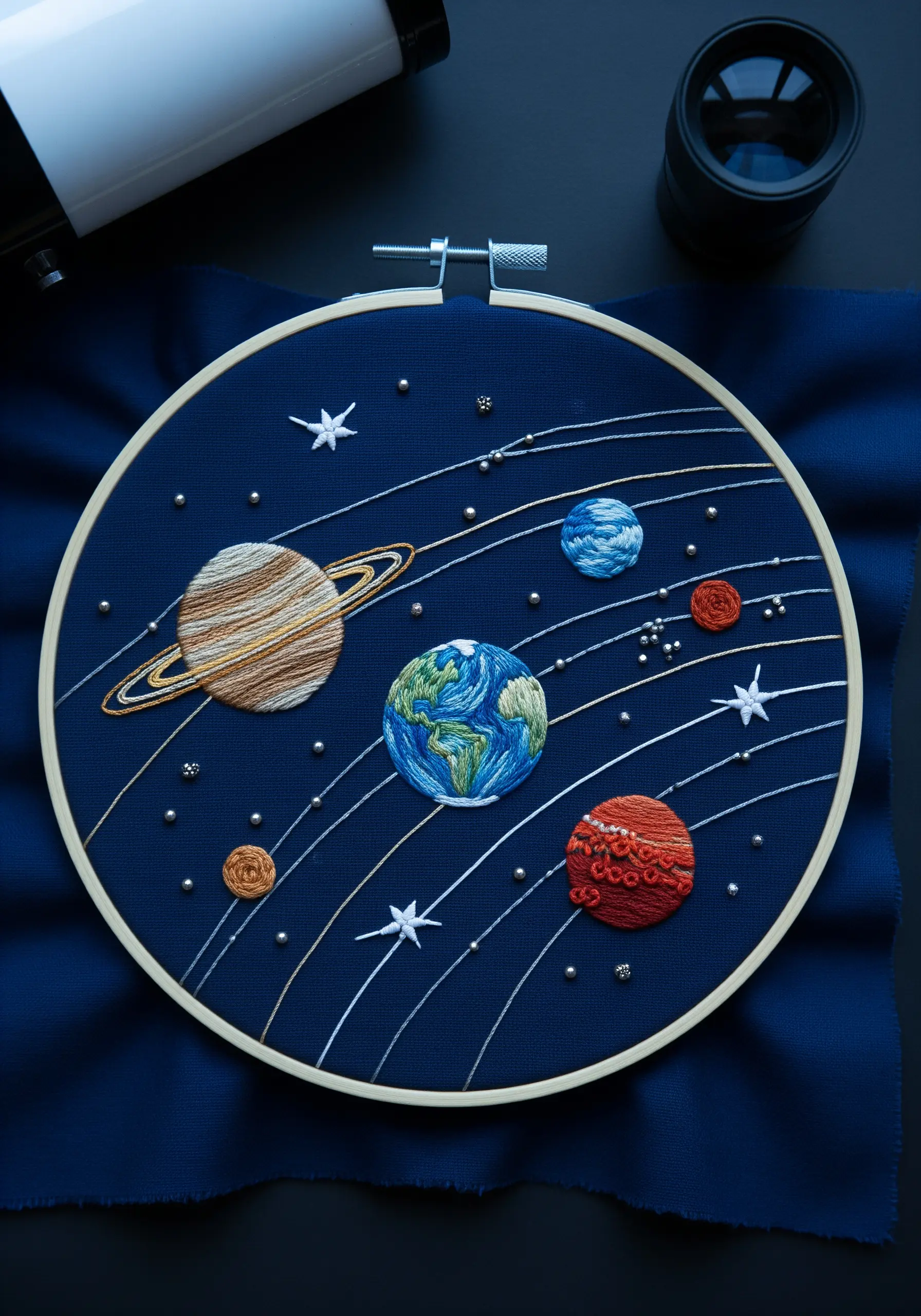
Capture the unique character of each planet by assigning it a specific stitch or texture.
Use concentric circles of split stitch for Jupiter’s bands and a dense field of French knots in reds and oranges for Mars’ rocky surface.
For Earth, blend blues, greens, and whites with a painterly long-and-short stitch.
Incorporate metallic threads for Saturn’s rings and use tiny silver beads as distant stars to add a touch of sparkle to your cosmic nature-themed wall hoop projects.
22. Incorporate Vintage Lace into a Wedding Keepsake
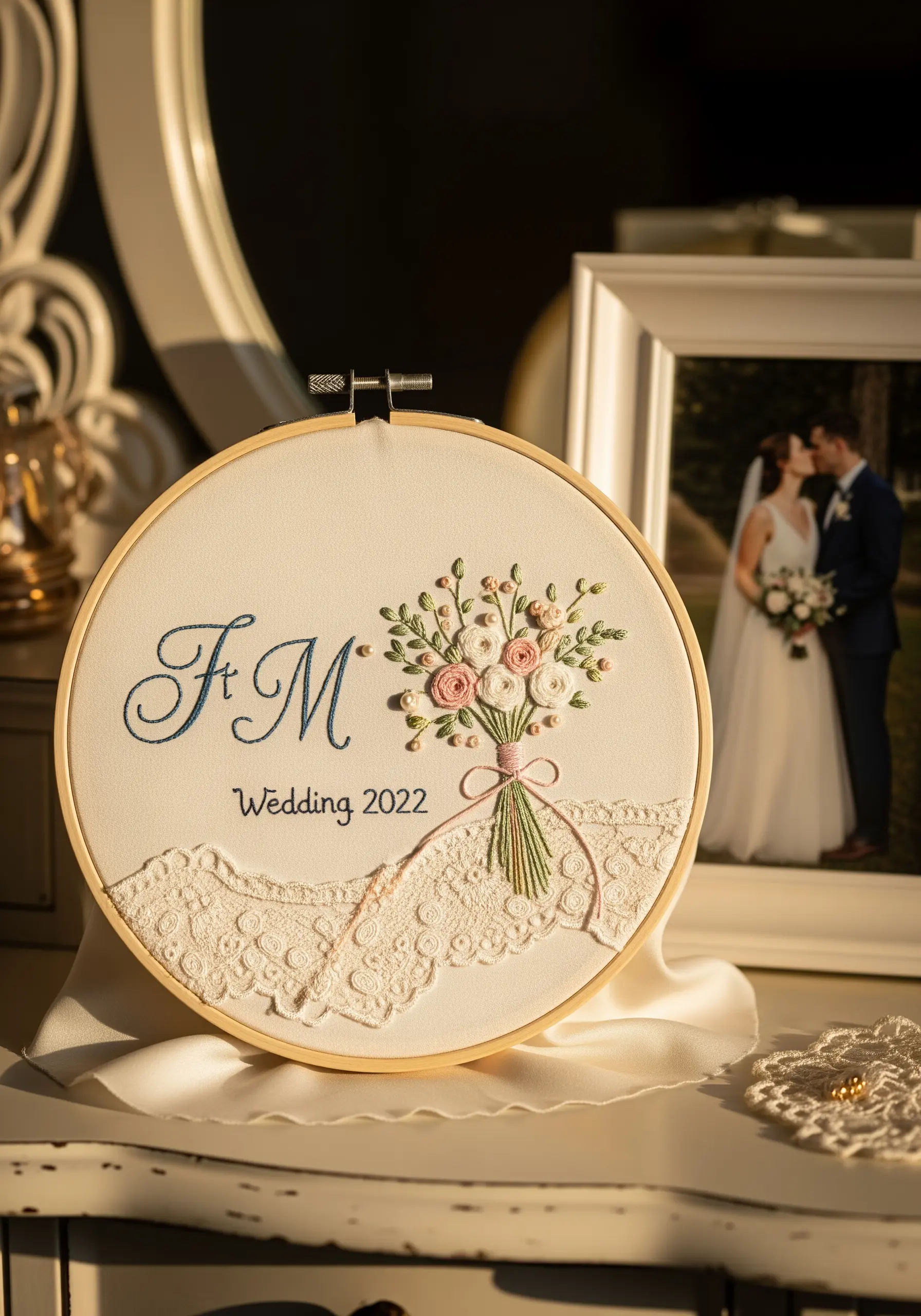
Add a layer of romance and personal history to a commemorative piece by incorporating fabric with sentimental value.
Before you begin stitching, carefully attach a piece of vintage lace—perhaps from a mother’s wedding dress or an heirloom handkerchief—to the lower portion of the fabric in the hoop.
Use tiny, hidden tacking stitches to secure it.
Then, embroider the monogram, date, and a delicate floral bouquet above it.
This combination of textures creates beautiful handmade embroidery ideas perfect for wedding anniversary gifts.
23. Use Appliqué for Bold, Graphic Apparel
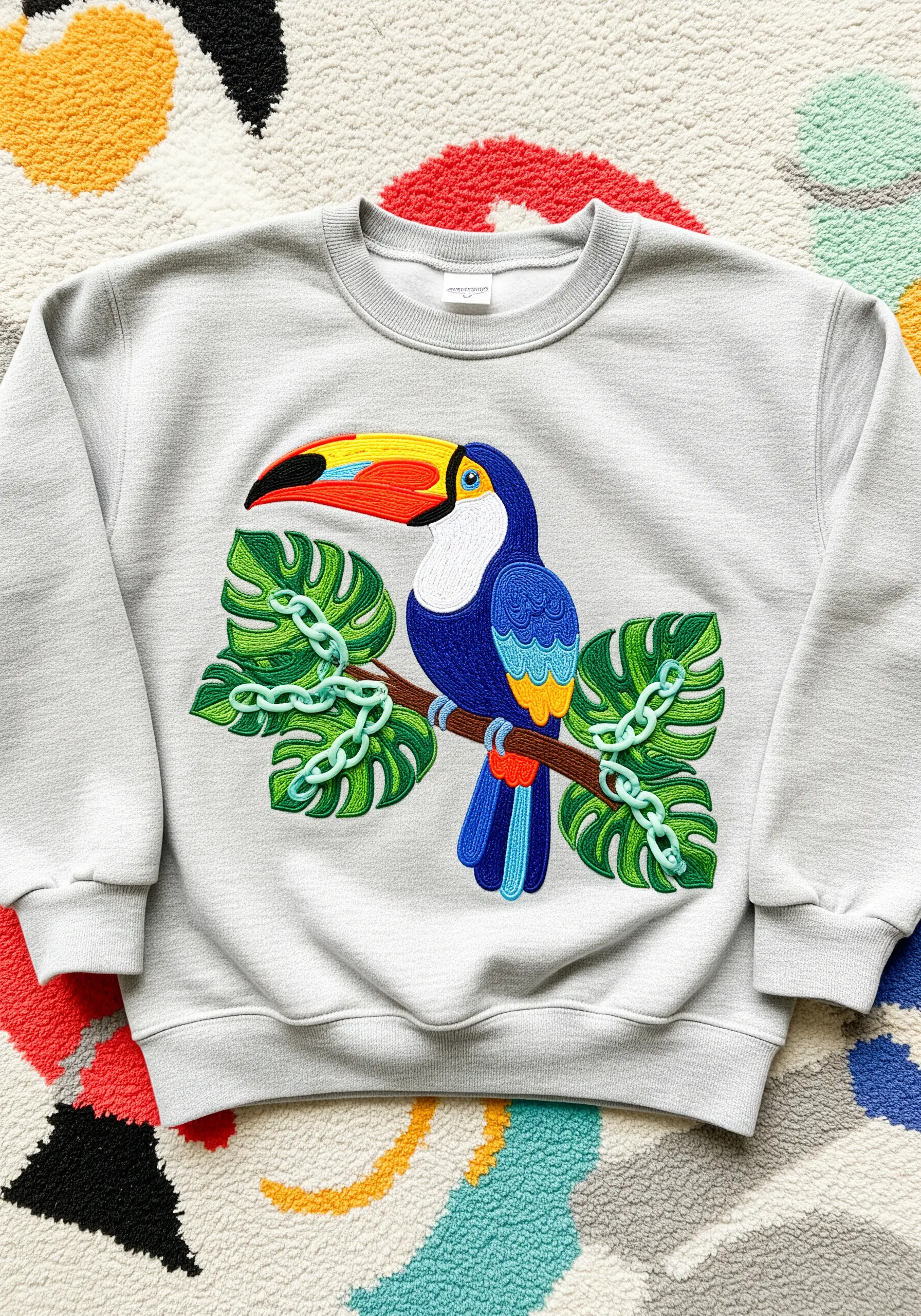
For large, color-blocked designs on clothing, combine appliqué with embroidery for a clean and impactful result.
Cut the main color shapes of your motif (like the toucan’s beak and body) from felt or cotton fabric.
Iron them onto the sweatshirt using a fusible web adhesive, then secure the edges with a tight, neat satin stitch border.
This technique, often used for collegiate lettering, provides crisp edges and solid color coverage that would be time-consuming to fill with thread alone.
Add smaller embroidered details on top to complete your color-blocking embroidery patterns.
24. Embroider on a Lampshade for Ambient Art
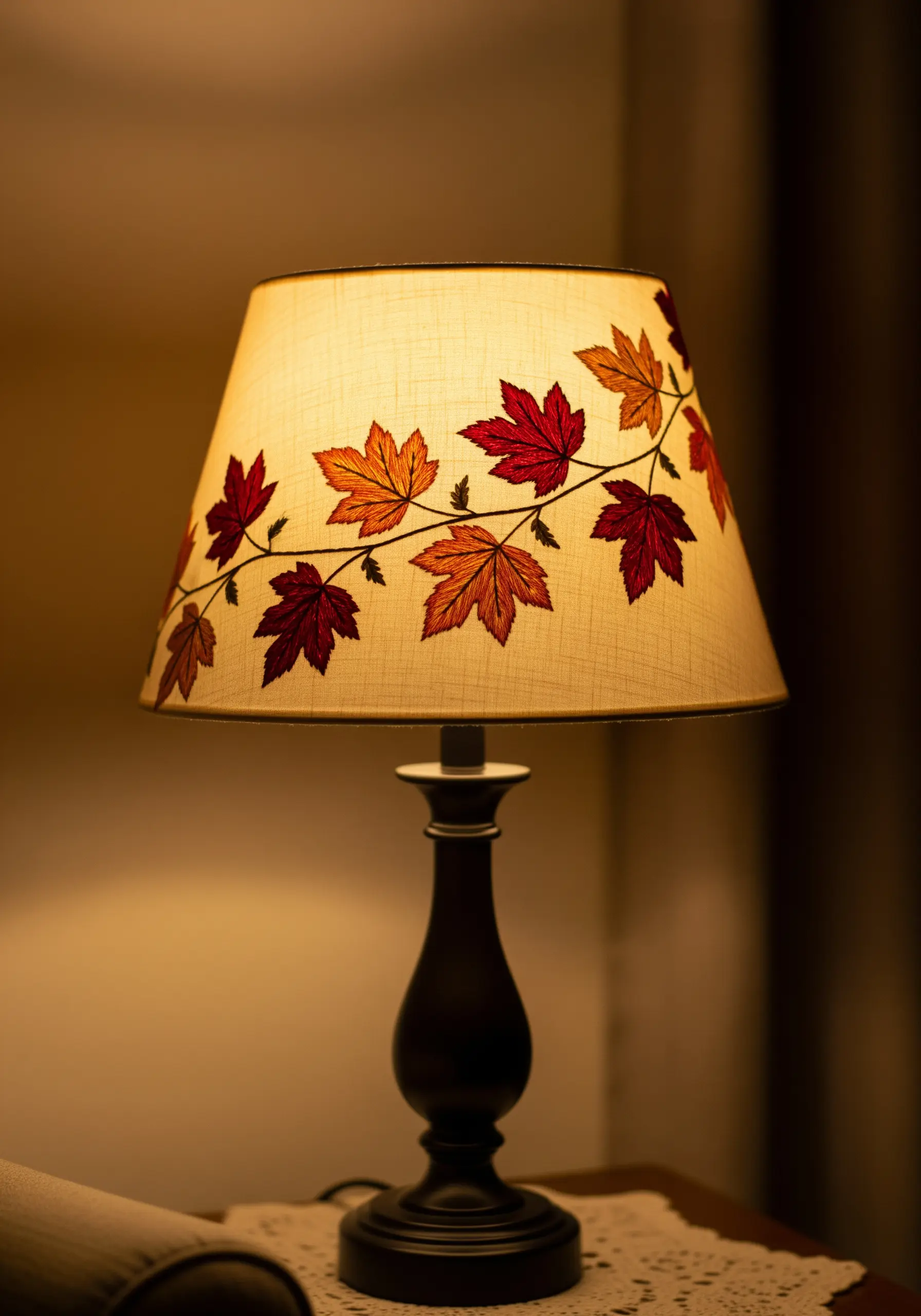
Add a subtle, custom touch to your home by embroidering directly onto a fabric lampshade.
For the best results, choose a simple design with clean lines, like this vine of autumn leaves.
Use a basic backstitch or stem stitch, which requires minimal pulling and won’t distort the lampshade’s structure.
A curved upholstery needle can be helpful for stitching without having to deconstruct the lamp.
When the light is on, your stitching will be beautifully illuminated, turning a functional object into one of your most elegant embroidery accents that instantly upgrade your home decor.
25. Design and Create Your Own Iron-On Patches
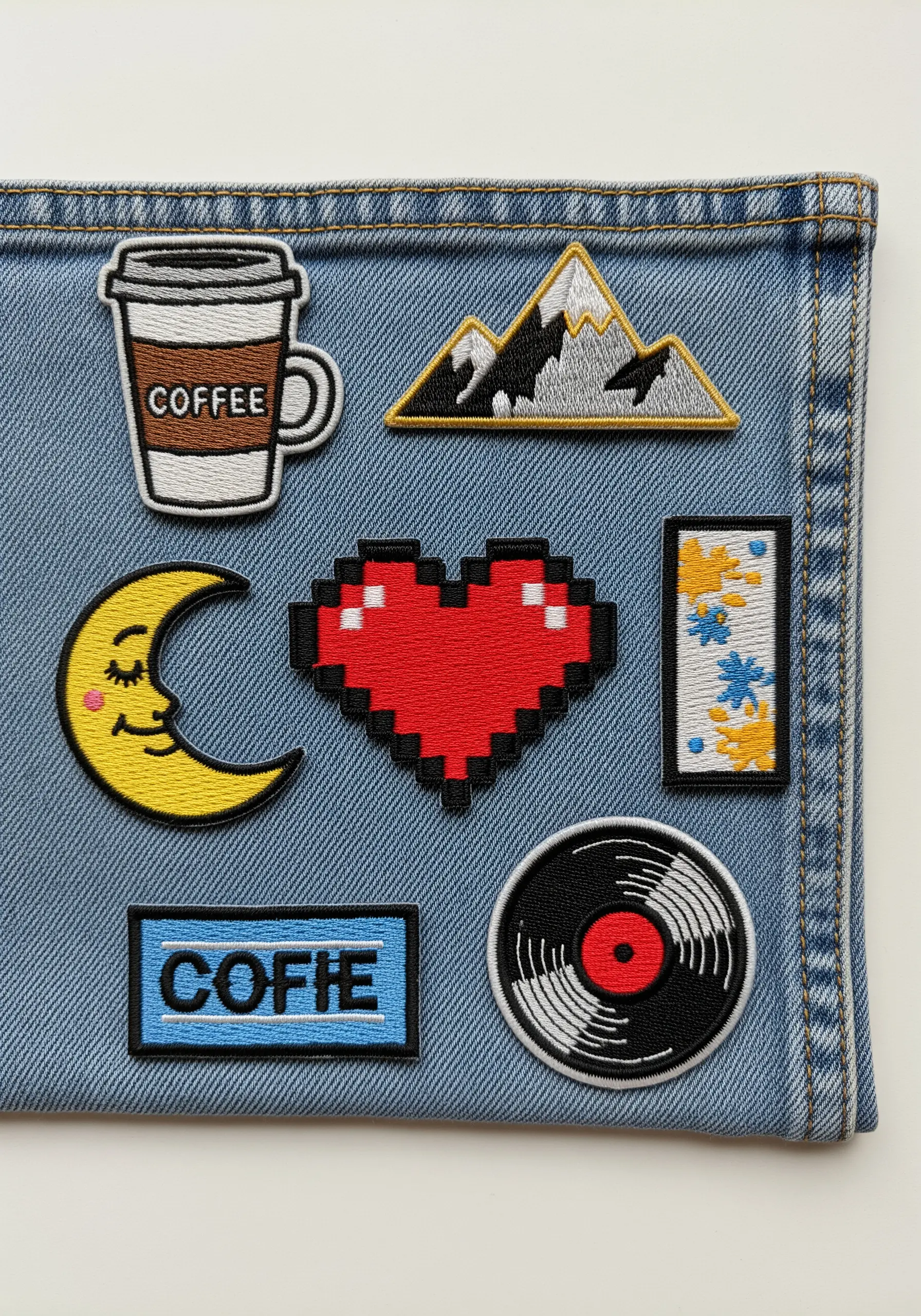
Turn any small embroidery design into a professional-looking patch you can apply to jackets, bags, or jeans.
Stitch your motif onto a piece of sturdy, non-stretch fabric like felt or denim.
Once finished, trim the fabric around the design, leaving a small 1/8-inch border.
Finish the raw edge with a tight, dense satin stitch border.
Finally, apply a sheet of iron-on adhesive to the back, and your custom patch is ready to go.
26. Stitch a Soundwave for Abstract Personal Art
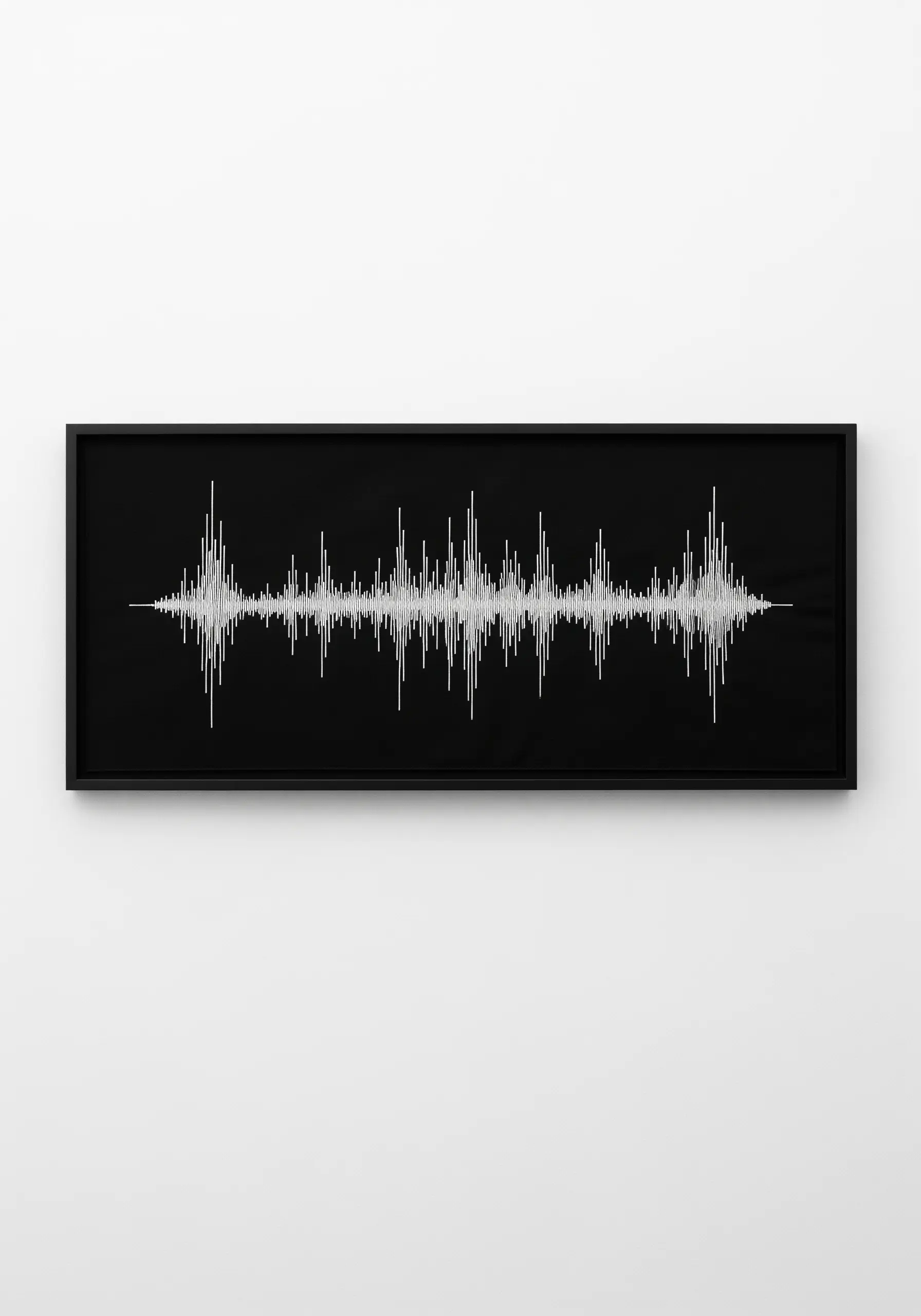
Capture a voice, a favorite song, or a meaningful sound as a piece of minimalist art.
Use a free online tool to generate a visual soundwave from an audio clip, then print and transfer the pattern to your fabric.
Stitch the entire design using a simple backstitch or stem stitch in a high-contrast thread color, like white on black.
The result is one of the most unique abstract thread embroidery ideas that turn simple lines into mesmerizing wall art—deeply personal yet elegantly abstract.
27. Document a Year in Stitches with a Data Tracker
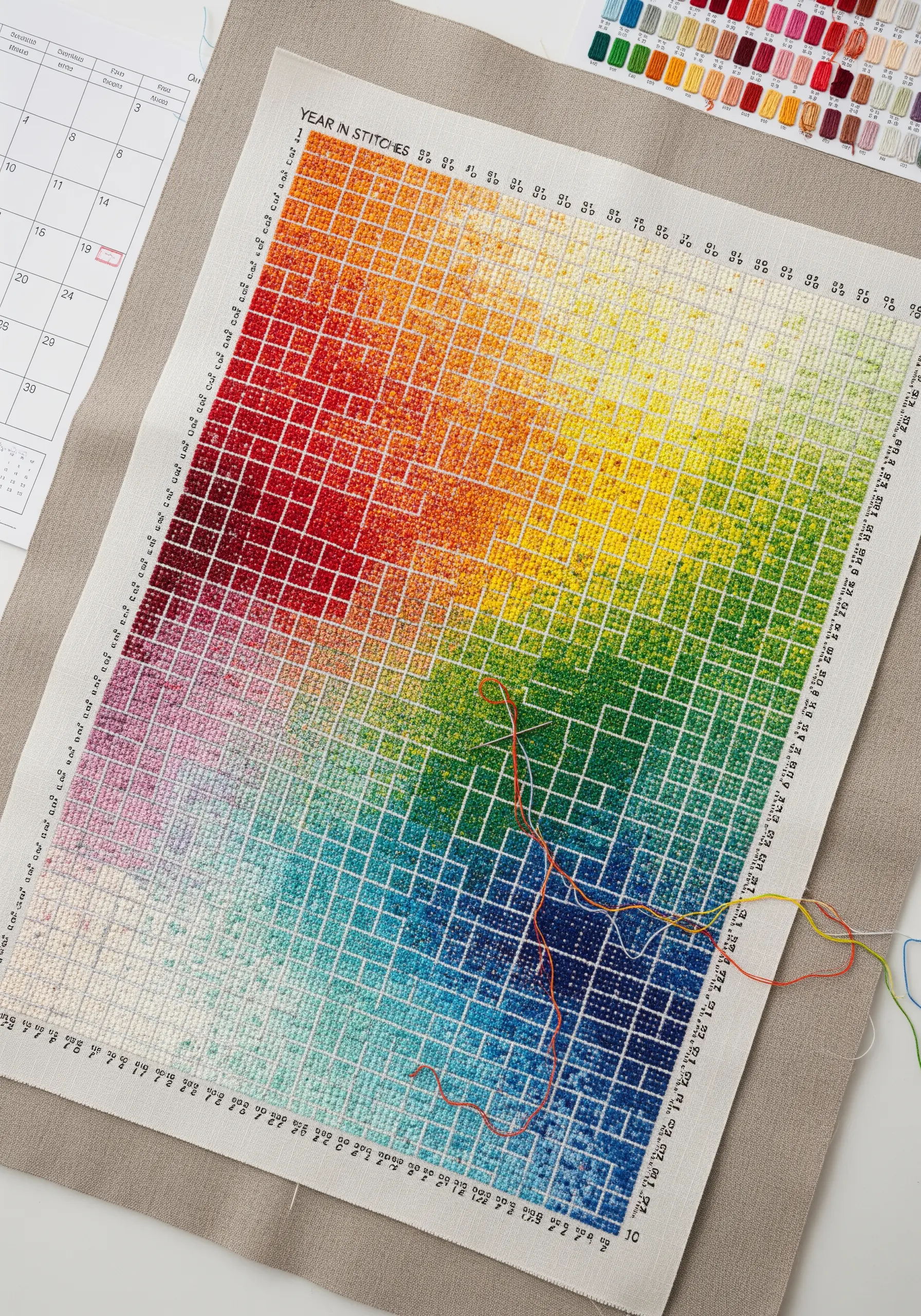
Create a living piece of art by tracking data—like daily temperatures or moods—with colored thread.
Draw a grid on your fabric, with each square representing one day of the year.
Assign a different color of floss to each data point (e.g., blue for cold days, red for hot days).
Fill in one square each day with a simple cross-stitch or satin stitch.
Over the year, you will create a stunning, pixelated gradient that tells the story of your days, turning data into one of your most meaningful seasonal wall art projects.