

Have you ever felt the quiet desire to create something with thread that feels entirely your own, free from the constraints of a pattern? You can move beyond tracing lines and filling shapes to a place where your needle truly follows your intuition.
This is where the magic of abstract embroidery lies. It’s not about making a mess; it’s about making your mark. By layering threads, playing with tension, and allowing colors to collide, you can create a kind of beautiful, controlled chaos. This is your permission to experiment, to let go of perfection, and to discover a style that is uniquely yours.
Think of your fabric as a canvas and your thread as paint. Each stitch is a brushstroke, and every overlapping line adds depth, emotion, and story. These ideas are more than just techniques—they are starting points for you to build confidence and transform the way you see your own creativity.
1. Build Density with Woven Chaos
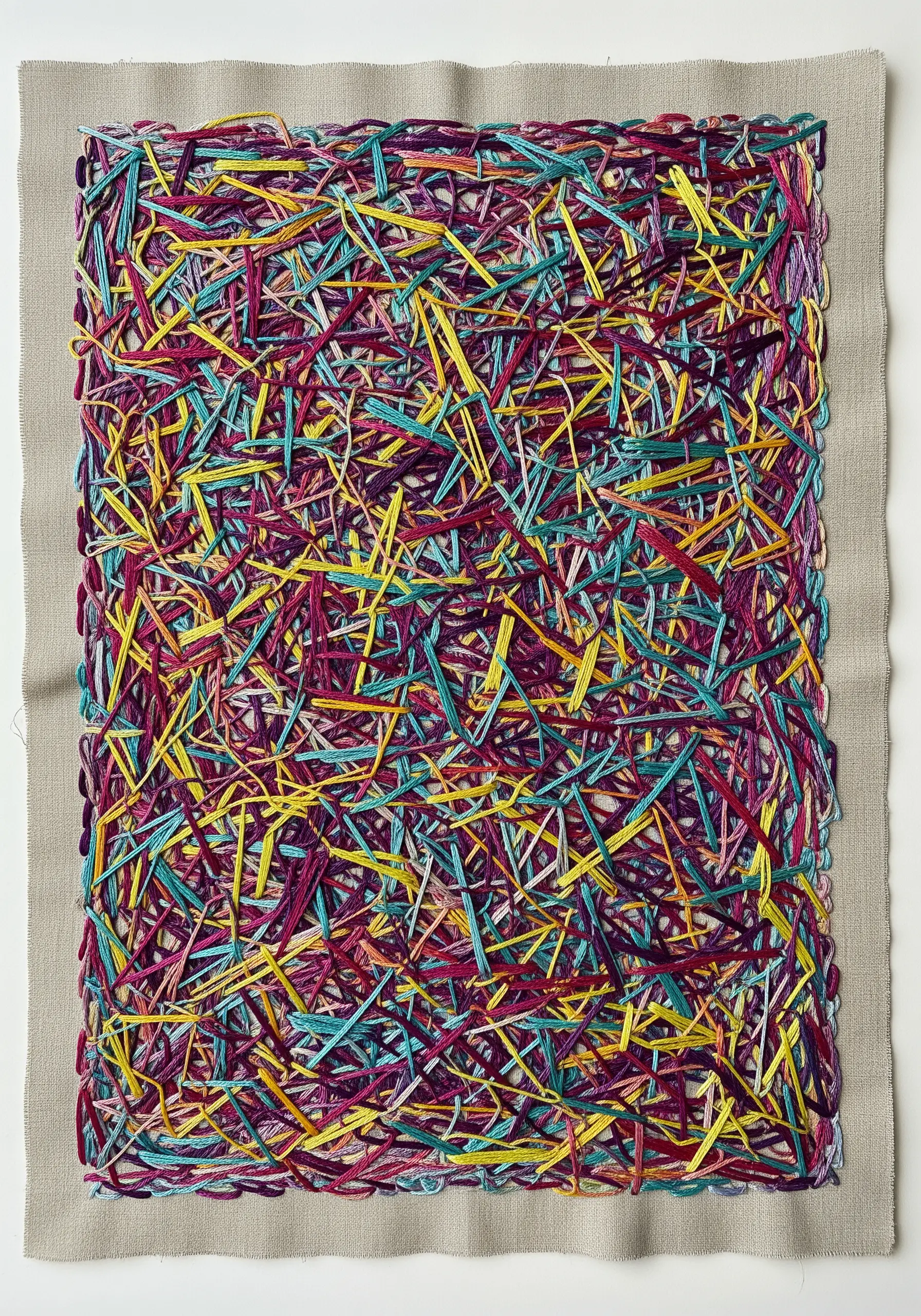
Create a densely textured surface by layering random straight stitches in a tight, overlapping pattern.
Work in sections, changing your thread color frequently to build a rich, interwoven effect that mimics woven fabric.
To prevent your fabric from puckering under the tension, use a high-quality, non-stretch linen and a sturdy frame or hoop.
This technique is not about precision but about building layers, so allow the threads to pull and intersect to create organic texture.
2. Spiral Couching with Thick Yarn
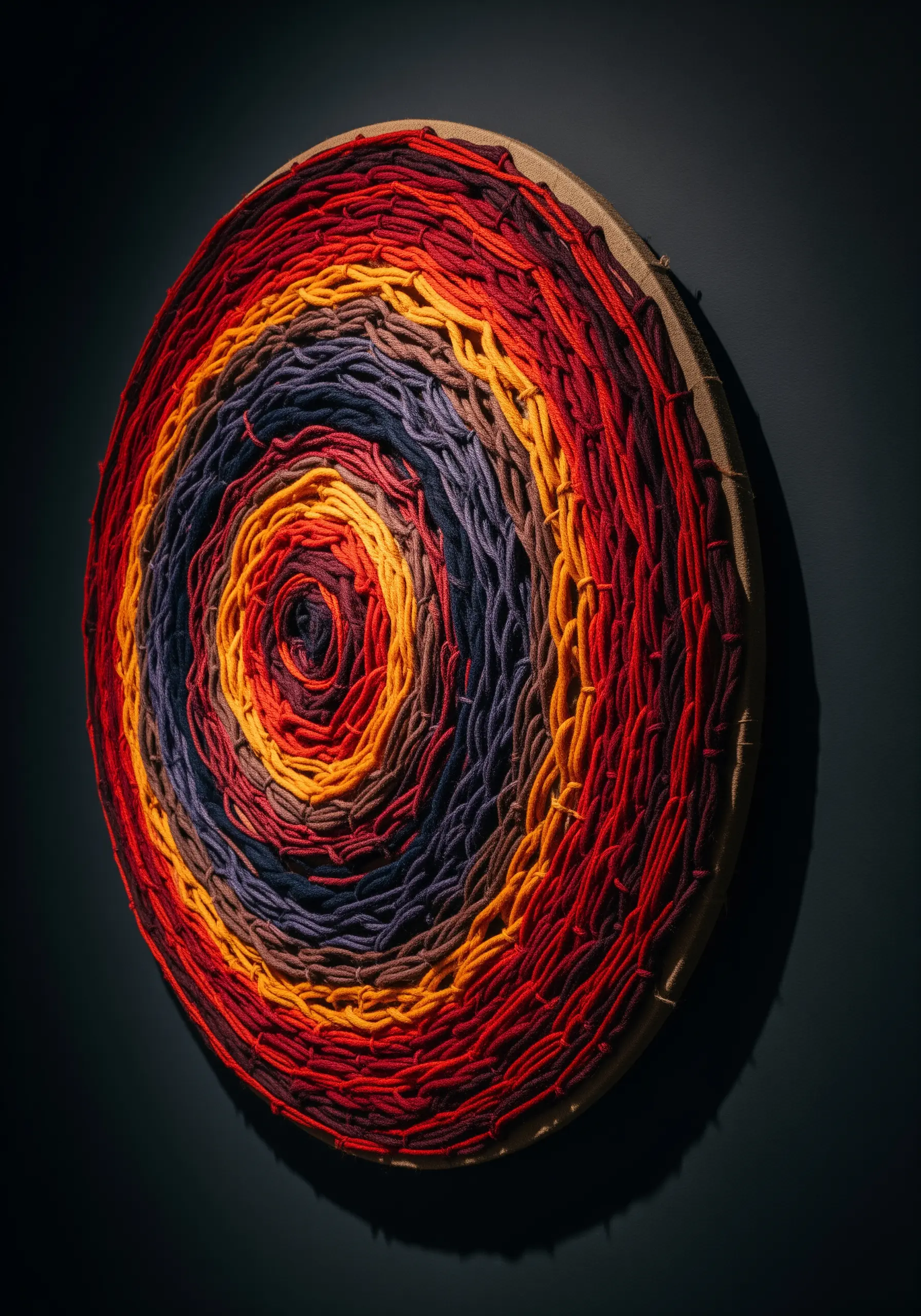
Achieve this bold, sculptural effect by couching thick yarn or fabric strips onto a circular canvas.
Lay your thick fiber in a spiral and use a standard six-strand floss in a contrasting or matching color to tack it down with small, evenly spaced stitches.
The magic is in the tension; keep the securing stitches tight enough to hold the yarn, but loose enough to let the yarn’s volume create dramatic shadows.
This approach transforms simple thread into a powerful piece of abstract thread sculpting.
3. Create Tension with High-Contrast Lines
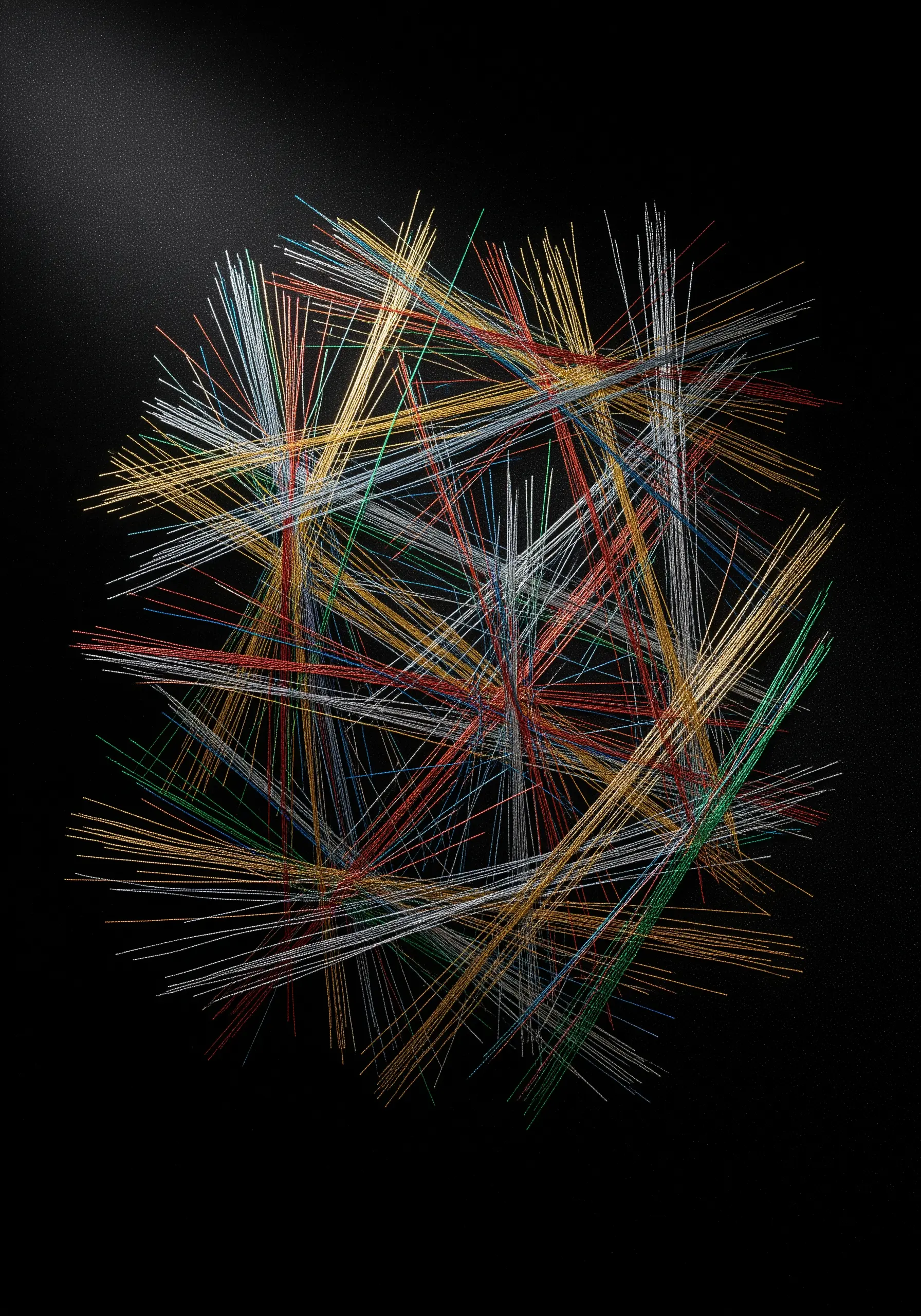
Stitch on a dark, solid background to make fine threads appear electric.
Use a single strand of embroidery floss or even metallic sewing thread for crisp, sharp lines.
Instead of a planned pattern, let your stitches cross over each other at random angles, creating a web of energy.
The key to this look is impeccable tension—each straight stitch should be taut, like a laser beam crossing the fabric.
4. Abstract with Interlocking Chain Stitches
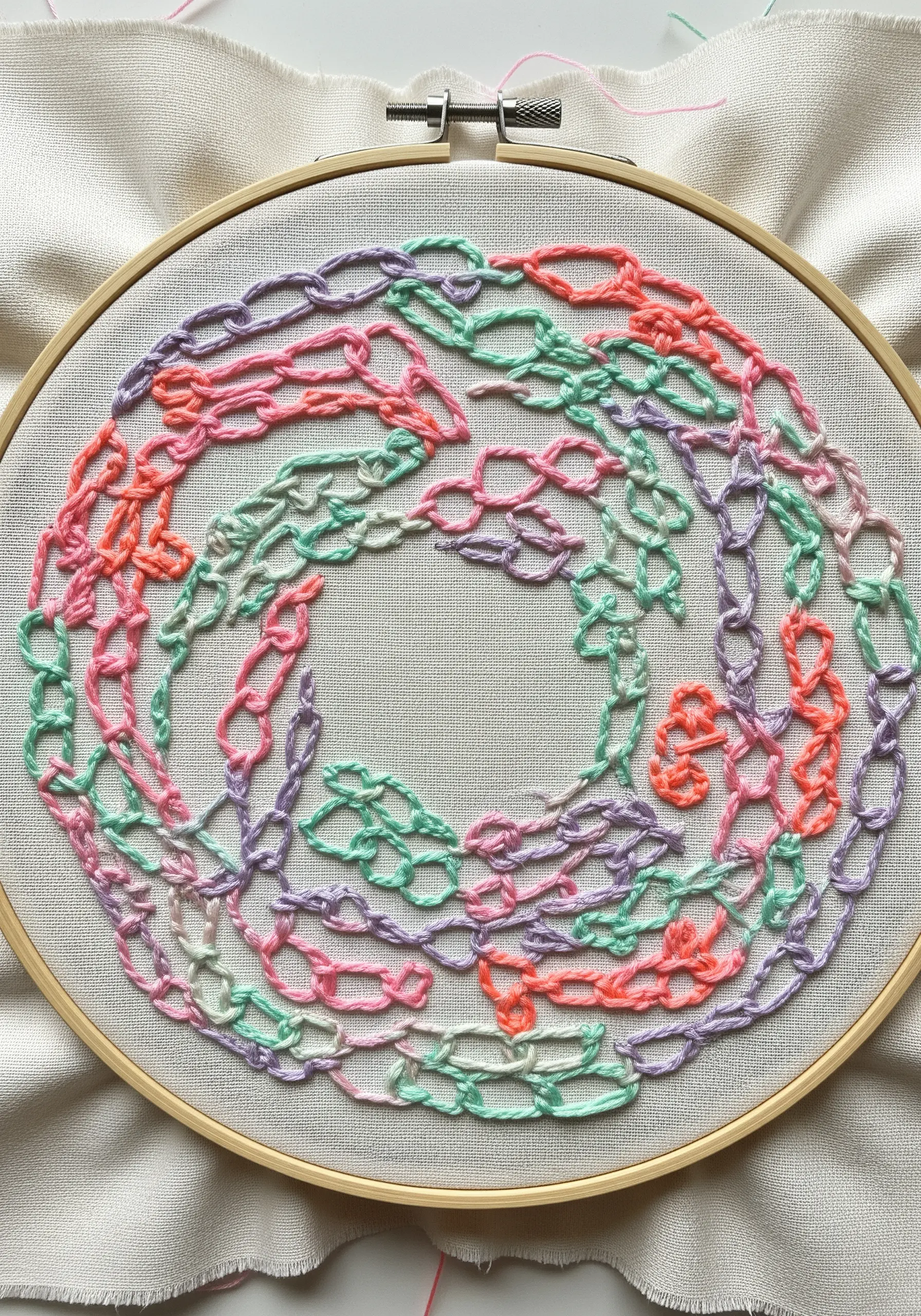
Use the classic chain stitch to create a pattern that feels both structured and spontaneous.
Work with a pastel palette to keep the overlapping forms from becoming visually heavy, allowing the design to feel airy and light.
Vary the length and tension of your chain links; tighter stitches create solid lines, while looser ones add soft, dimensional loops.
This is a perfect exercise in letting a single stitch guide your composition, creating movement through repetition and variation.
5. Combine Bulky Yarn with Rustic Fabric
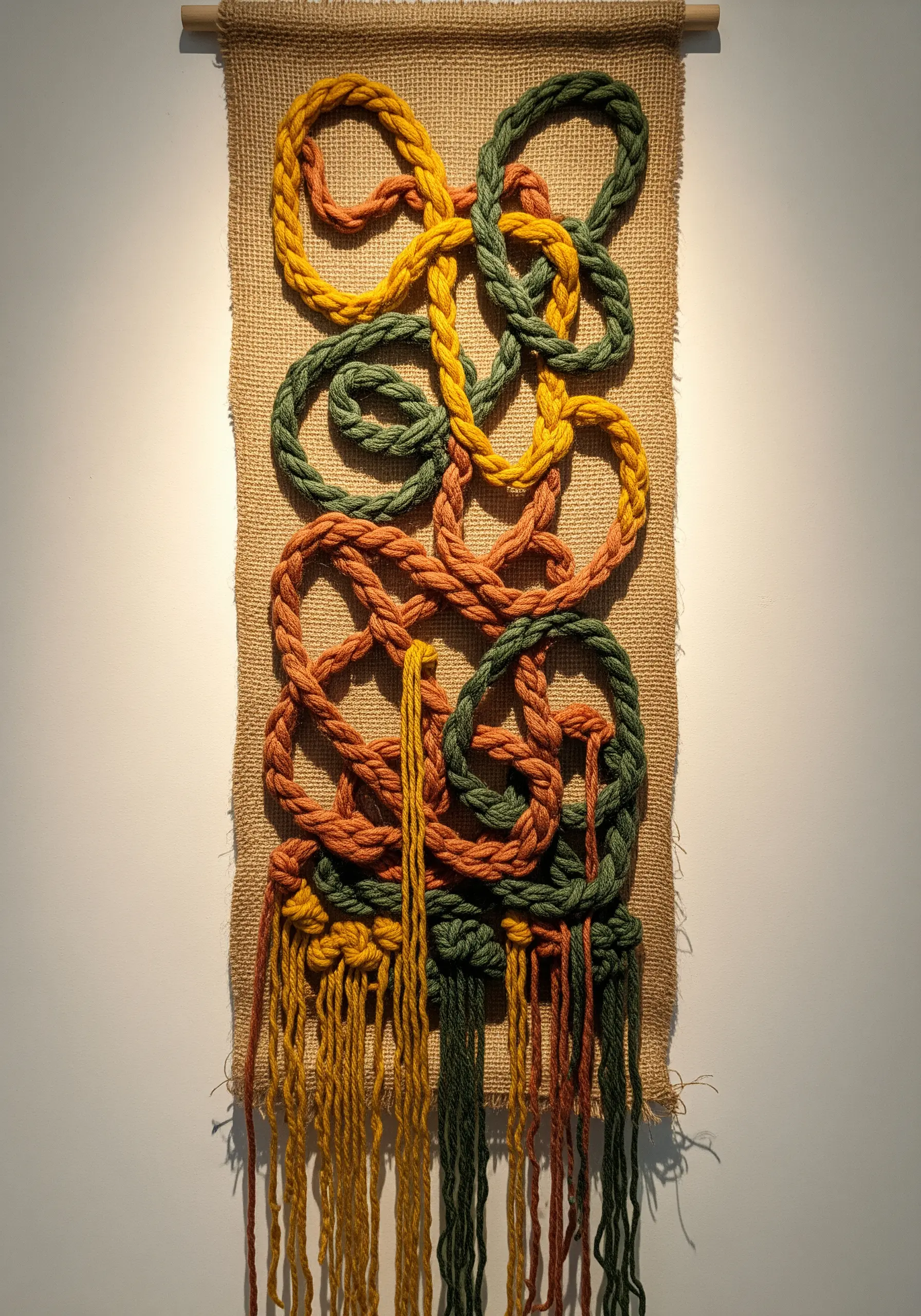
Create a powerful textural statement by couching thick, soft yarn onto a coarse fabric like burlap or jute.
The contrast between the plush, rounded yarn and the flat, rustic weave of the base is what gives this style its aesthetic power.
Don’t hide your couching stitches; use a visible, contrasting thread to add another layer of detail to the design.
Allow the yarn ends to hang loose for a fringed, deconstructed finish that enhances the organic feel.
6. Frame Your Chaos with Geometric Precision
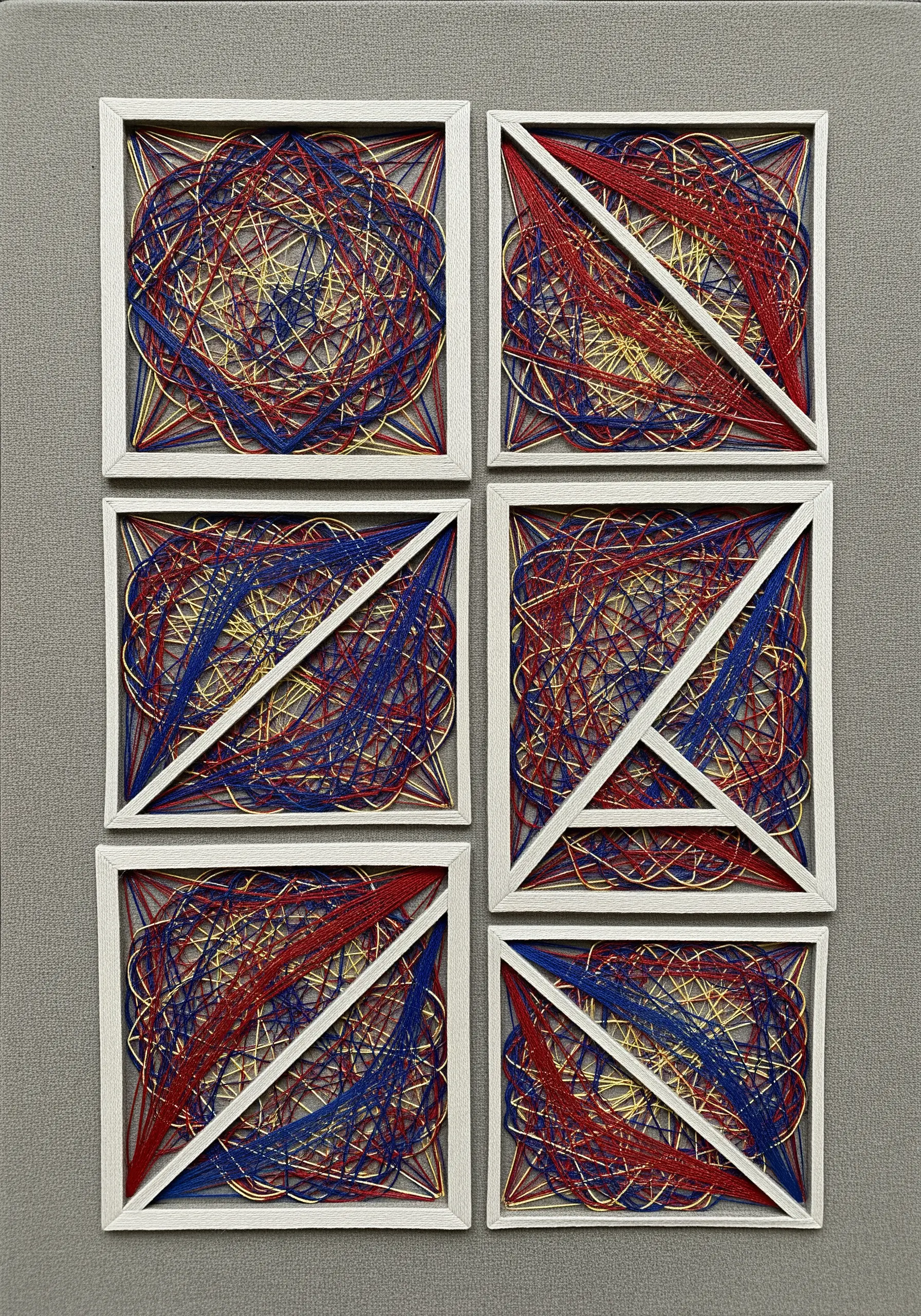
Create controlled energy by containing overlapping threads within sharp, geometric frames.
This is a string art technique adapted for display; you can achieve a similar effect by creating a grid of anchor stitches on fabric and weaving thread between them.
Use primary colors like red, blue, and yellow to create a bold, graphic statement that feels both chaotic and perfectly balanced.
Grouping several small pieces together amplifies the impact, turning simple thread work into a compelling minimalist hoop art pattern.
7. Sketch with Loose, Floating Loops
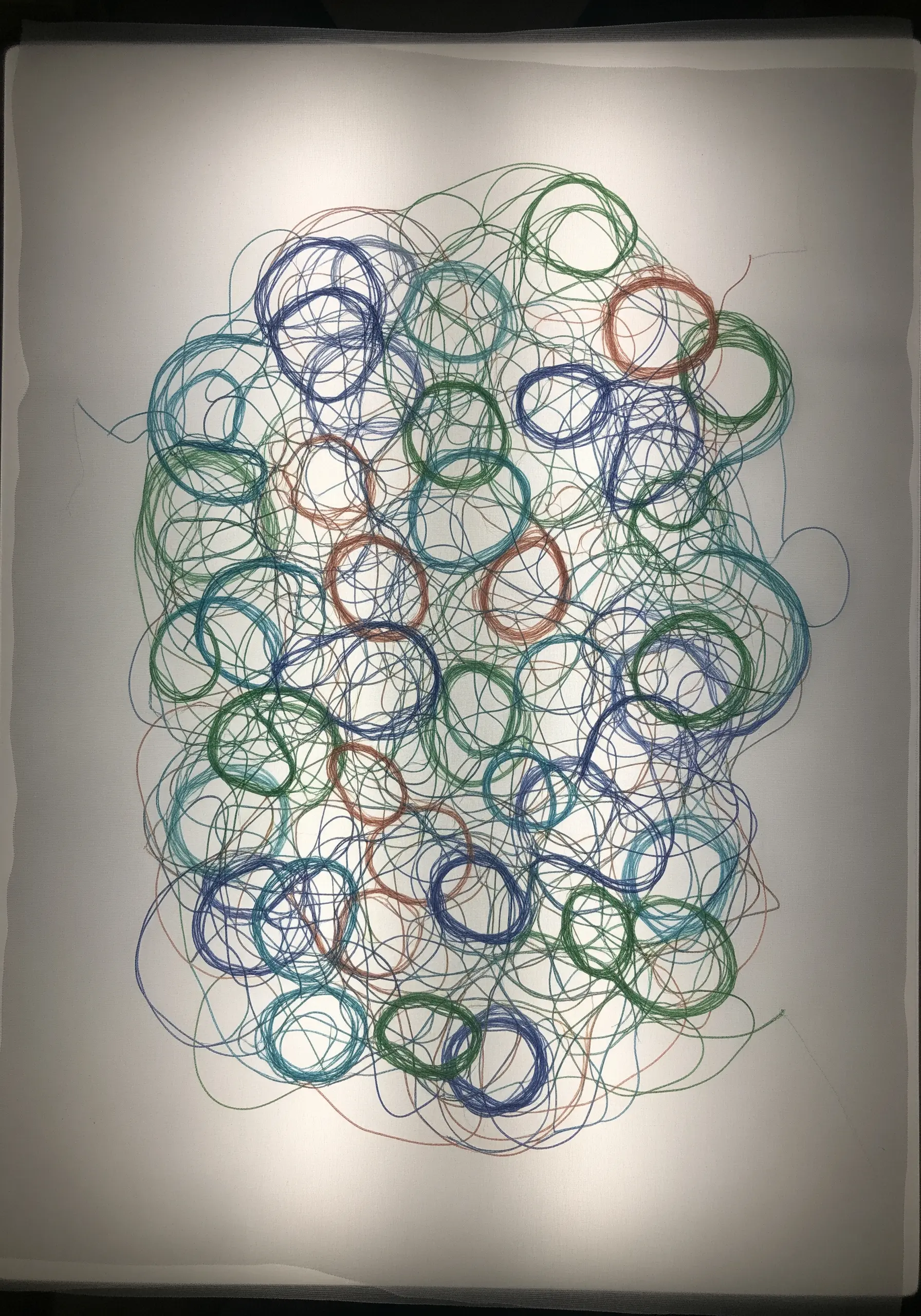
Create an ethereal, drawing-like effect by leaving your threads intentionally loose.
Use a single strand of floss and form soft, circular loops, tacking them down with tiny, almost invisible stitches at only a few anchor points.
This technique relies on negative space; the unstitched areas of the fabric are just as important as the threads themselves.
Backlighting the finished piece on a lightbox or in a window reveals the delicate, layered nature of the lines.
8. Build Optical Depth with Color Gradients
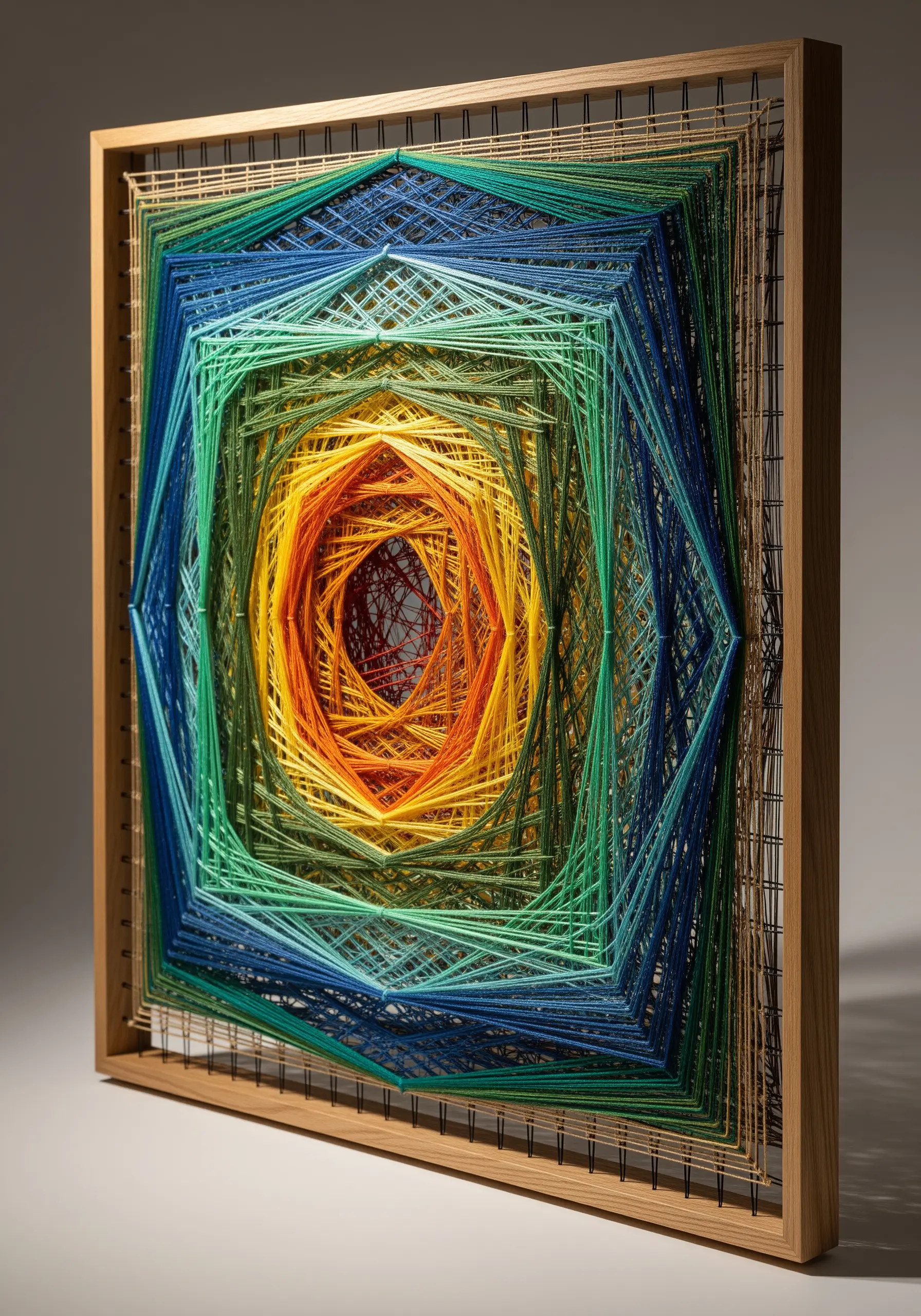
Mimic three-dimensional depth on a two-dimensional surface by layering threads in a precise color gradient.
This string-art style can be translated to fabric by stitching long, straight stitches from an outer frame to an inner one.
Start with dark colors on the outer layers and gradually move to lighter, warmer tones toward the center to create the illusion of a glowing tunnel.
This is a masterful study in how color placement, not just stitch type, can build powerful modern thread illusion techniques.
9. Stitch an Energetic Burst of Color
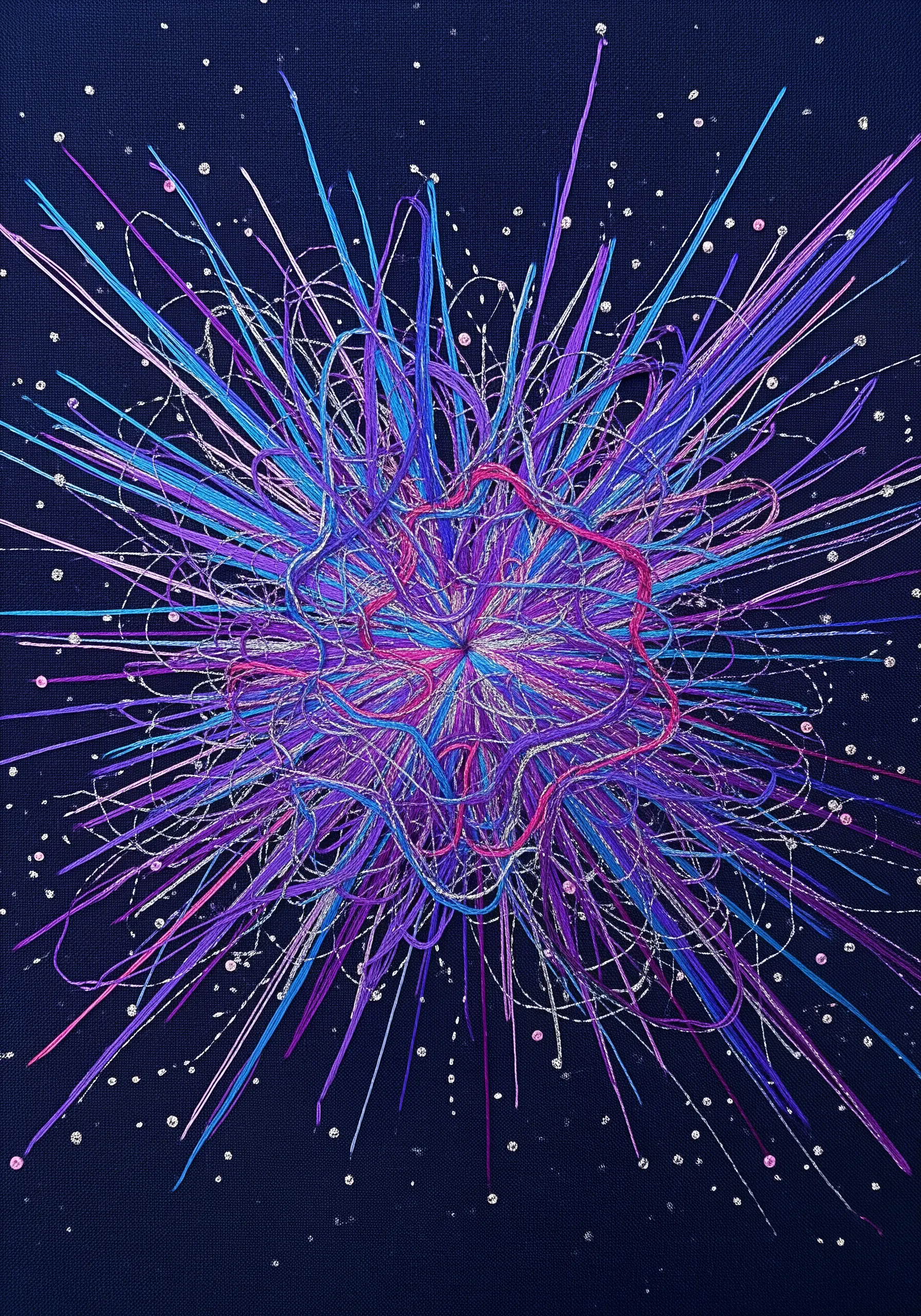
Capture a sense of explosive energy by combining straight stitches with couched, looping threads.
Radiate straight stitches of varying lengths from a central point, like a starburst.
Then, layer on top with wild, looping threads in contrasting colors, couching them down to secure the chaotic energy.
Incorporate a fine metallic thread and a scattering of French knots to represent sparks and add a final layer of shimmering detail.
10. Layer Stitches Over a Painted Canvas
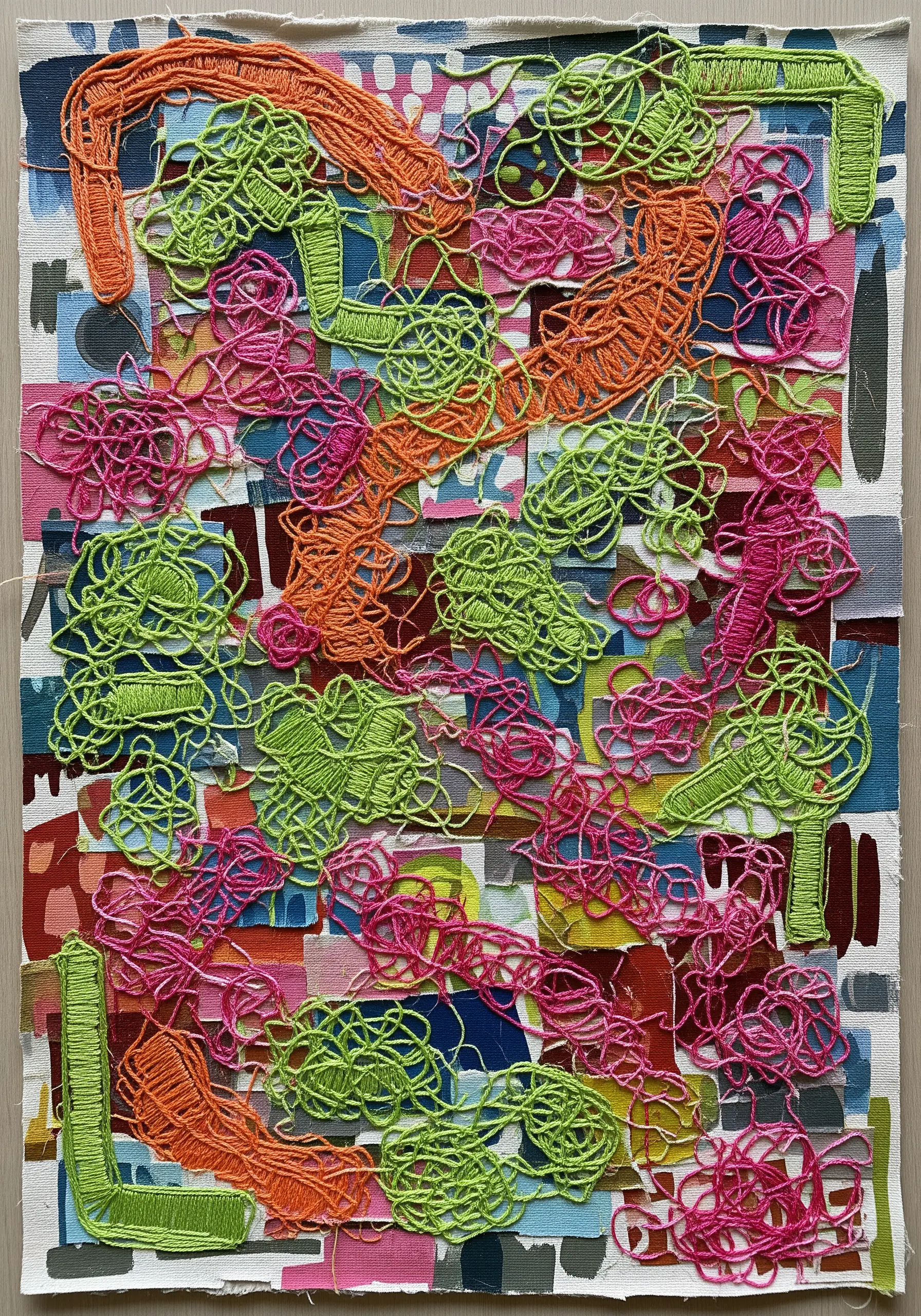
Add a new dimension to your work by embroidering over a pre-painted abstract background.
Use acrylic or fabric paint to create blocks of color on your canvas, then let it dry completely before stretching it in a hoop.
Use thick, chunky stitches like satin stitch or chain stitch in vibrant colors to interact with the painted shapes below.
This mixed-media approach allows your thread to add texture and definition, creating a dialogue between the two art forms.
11. Weave a Sunset with Short Stitches
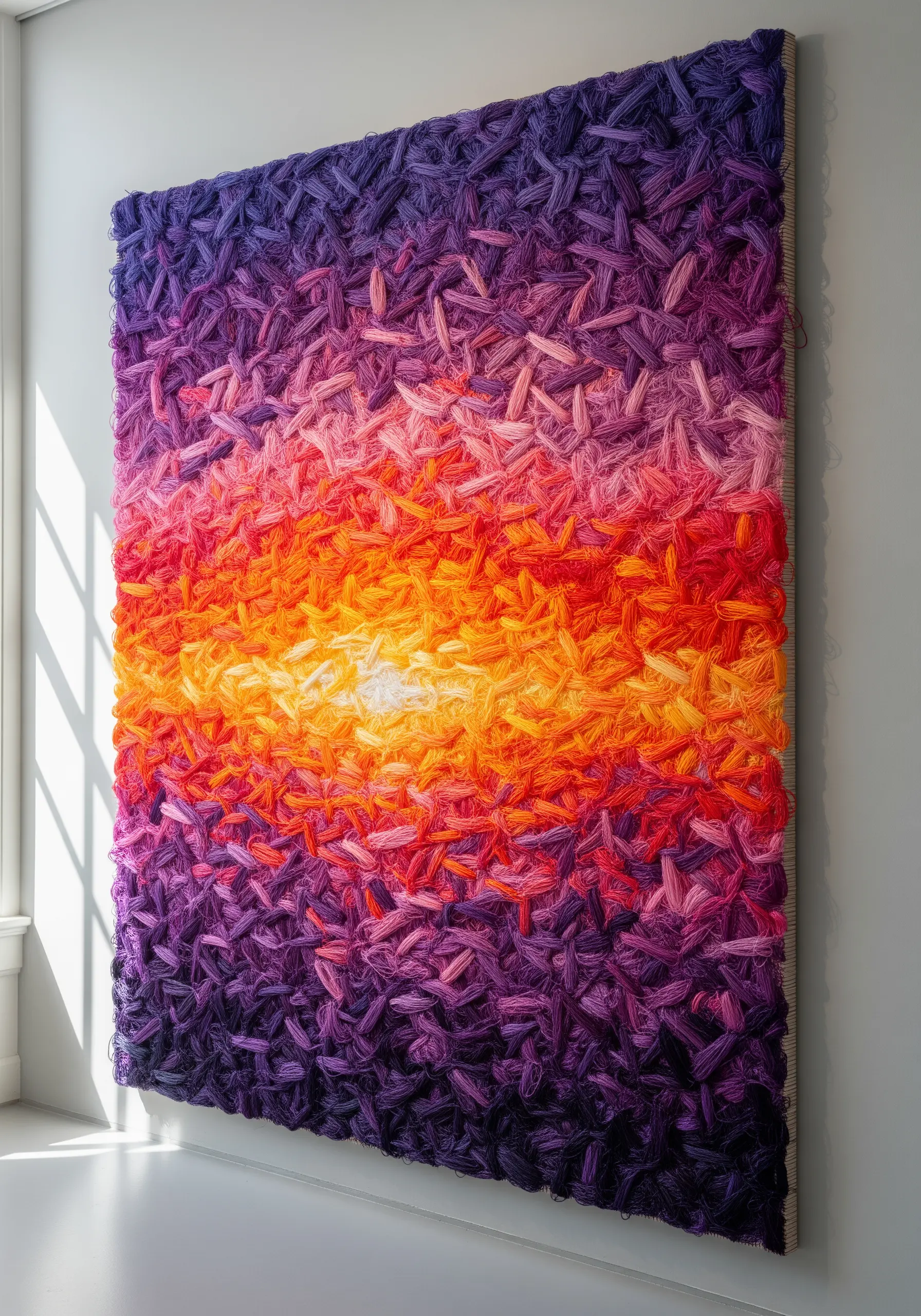
Create a breathtaking gradient effect reminiscent of a sunset by using thousands of short, dense stitches.
Instead of traditional satin stitch, lay down small seed stitches or short straight stitches at varying angles to build up blocks of color.
Blend your colors carefully, allowing the edges of each color band to intermingle for a soft, painterly transition.
This technique transforms a simple canvas into a rich tapestry, proving that texture can be just as impactful as intricate patterns.
12. Radiate Calm with a Monochromatic Wheel
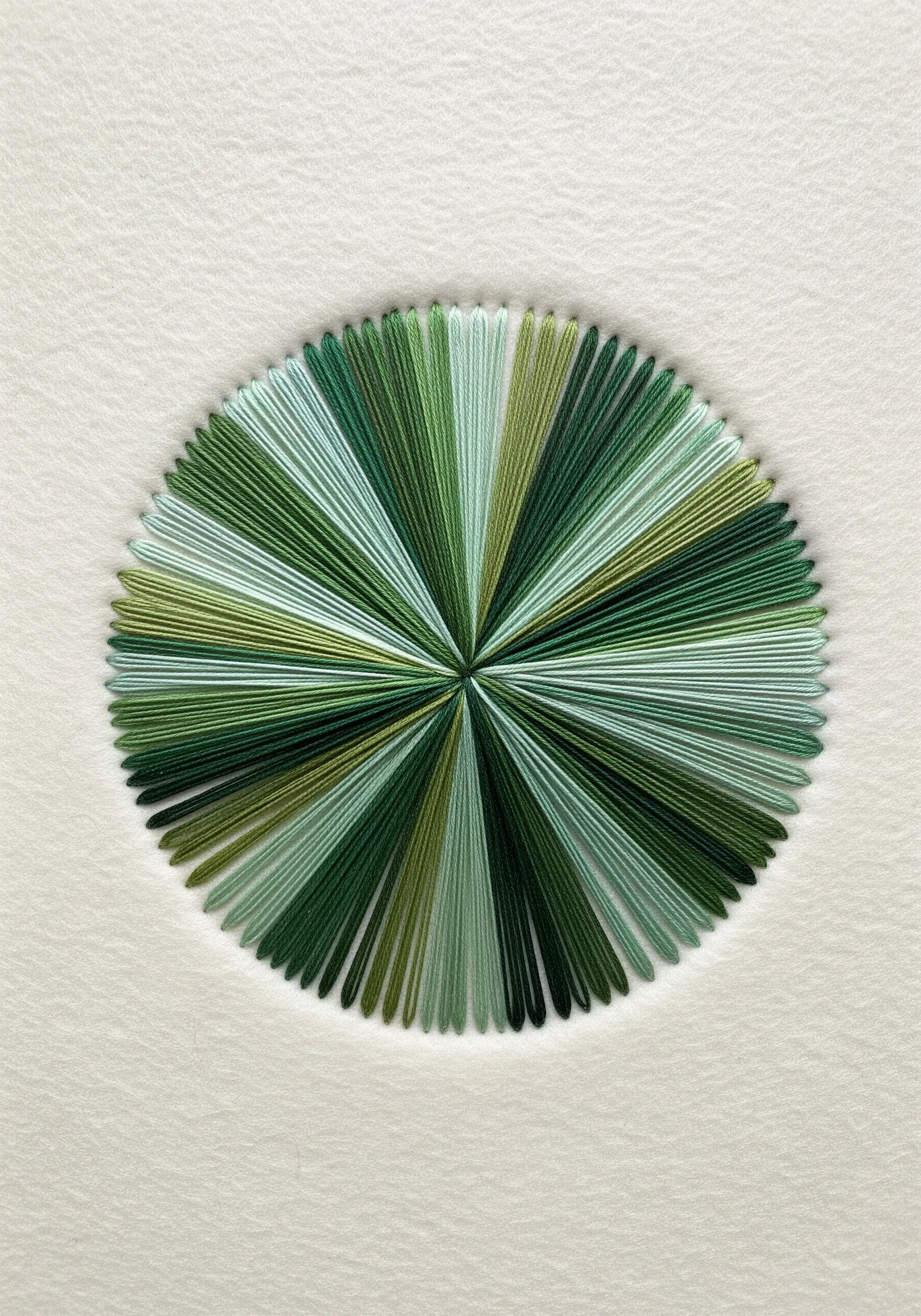
Explore the subtle power of a monochromatic color palette by arranging straight stitches in a perfect circle.
Divide your circle into equal segments and fill each one with a single shade, working from a central point outwards.
By arranging shades of the same color—from pale mint to deep forest green—you create a design that is both dynamic and incredibly serene.
This is a perfect exercise for mastering stitch tension and creating modern mandala stitch patterns with a minimalist aesthetic.
13. Create Jeweled Textures with Knots
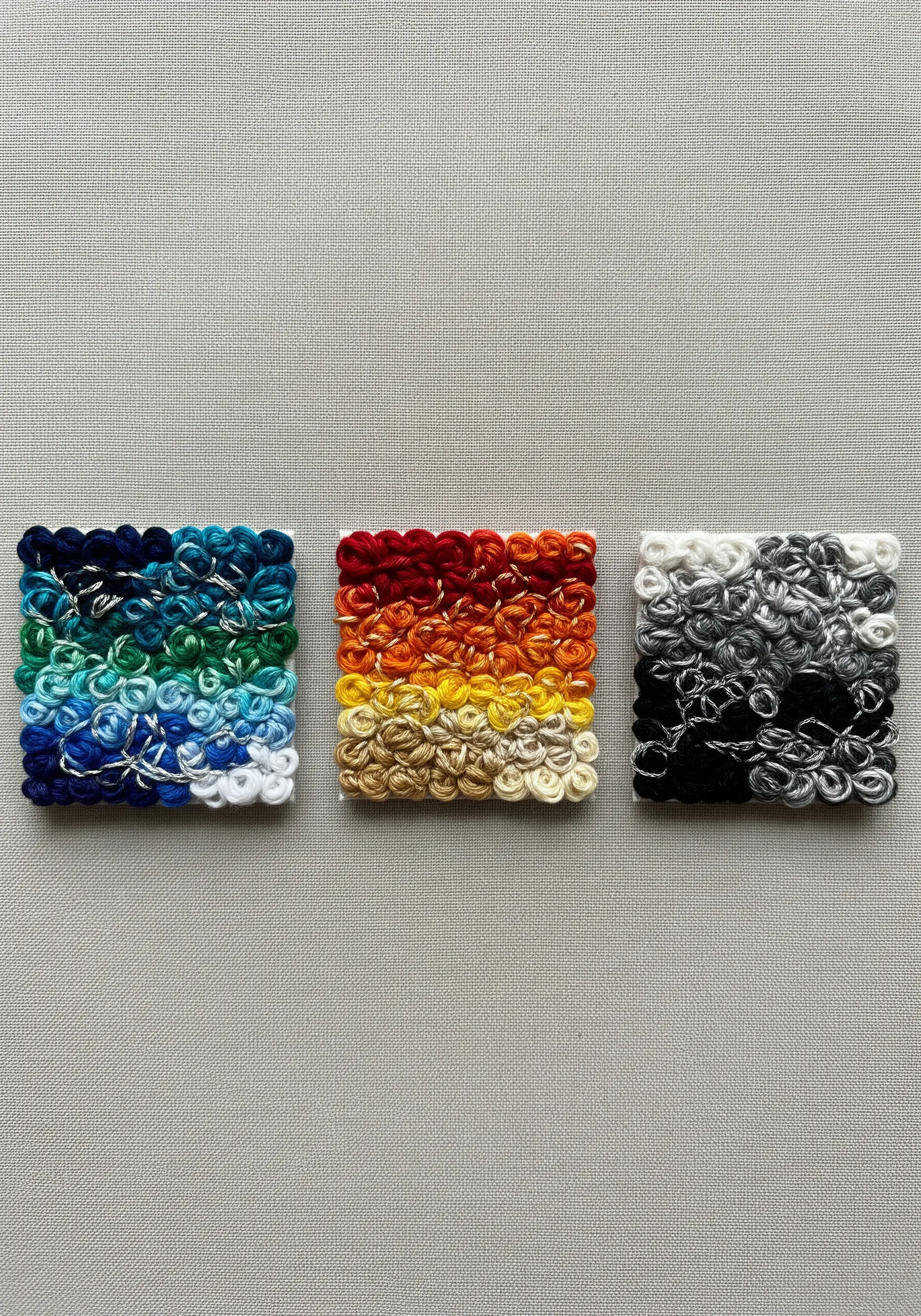
Build small, concentrated blocks of texture using tightly packed French knots or bullion knots.
Work in small squares or color fields, creating gradients that mimic tiny, pixelated sunsets or seascapes.
Weave a single strand of metallic thread through your knots to add a subtle glint of light, making each section feel like a tiny, embroidered jewel.
This technique is perfect for creating tiny embroidery projects that have immense textural depth.
14. Embellish Apparel with Deconstructed Thread
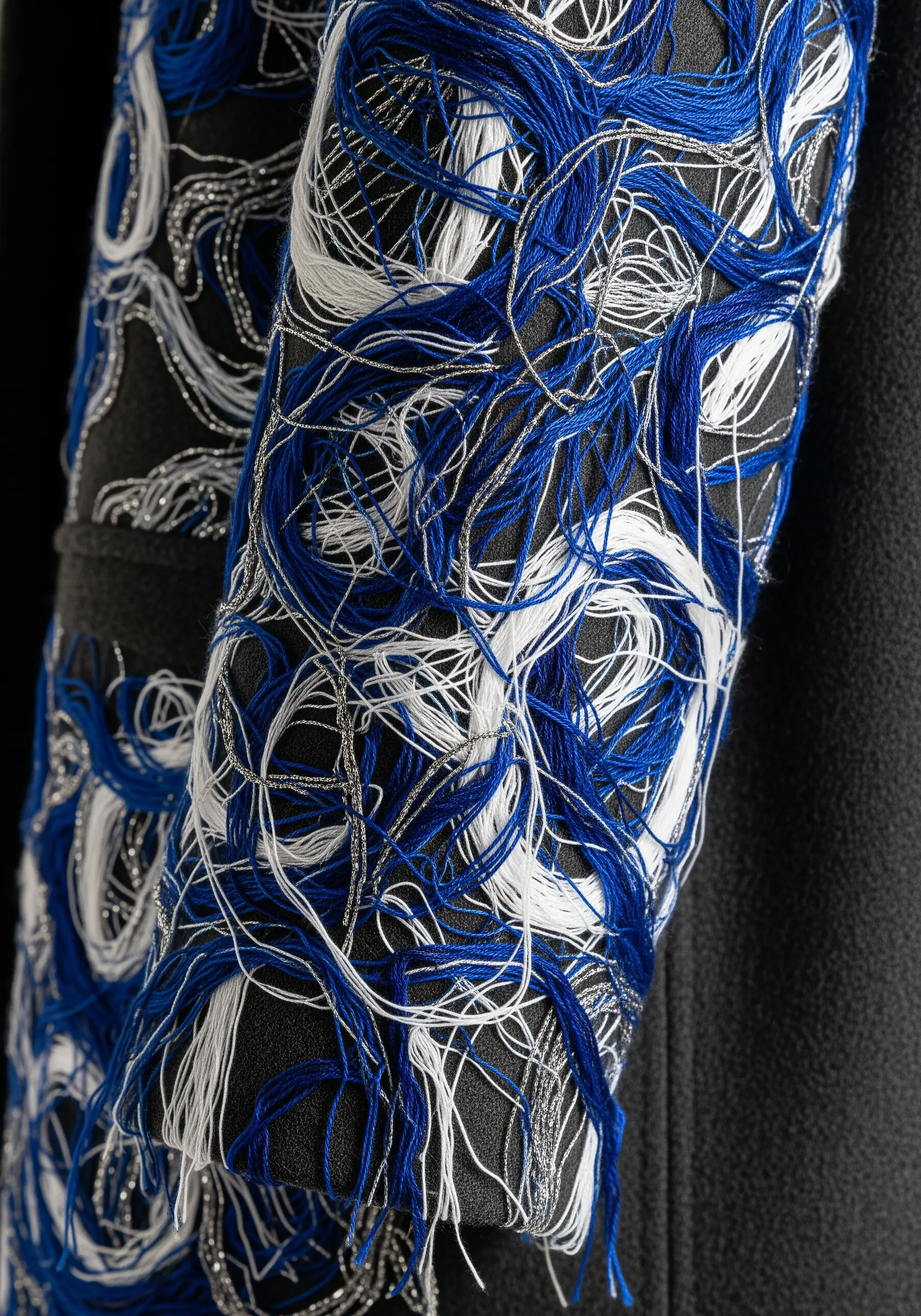
Add a bold, high-fashion touch to clothing by applying loose, frayed threads to a sleeve or collar.
Lay down bundles of untrimmed embroidery floss and secure them with a wide, machine-stitched zigzag or a simple, hand-stitched couching line.
The key is to embrace the frayed ends; this deconstructed approach adds movement and an edgy, modern texture.
Combine a matte cotton floss with a high-shine rayon or metallic thread for a sophisticated contrast that catches the light.
15. Cultivate a Garden of Abstract Knots
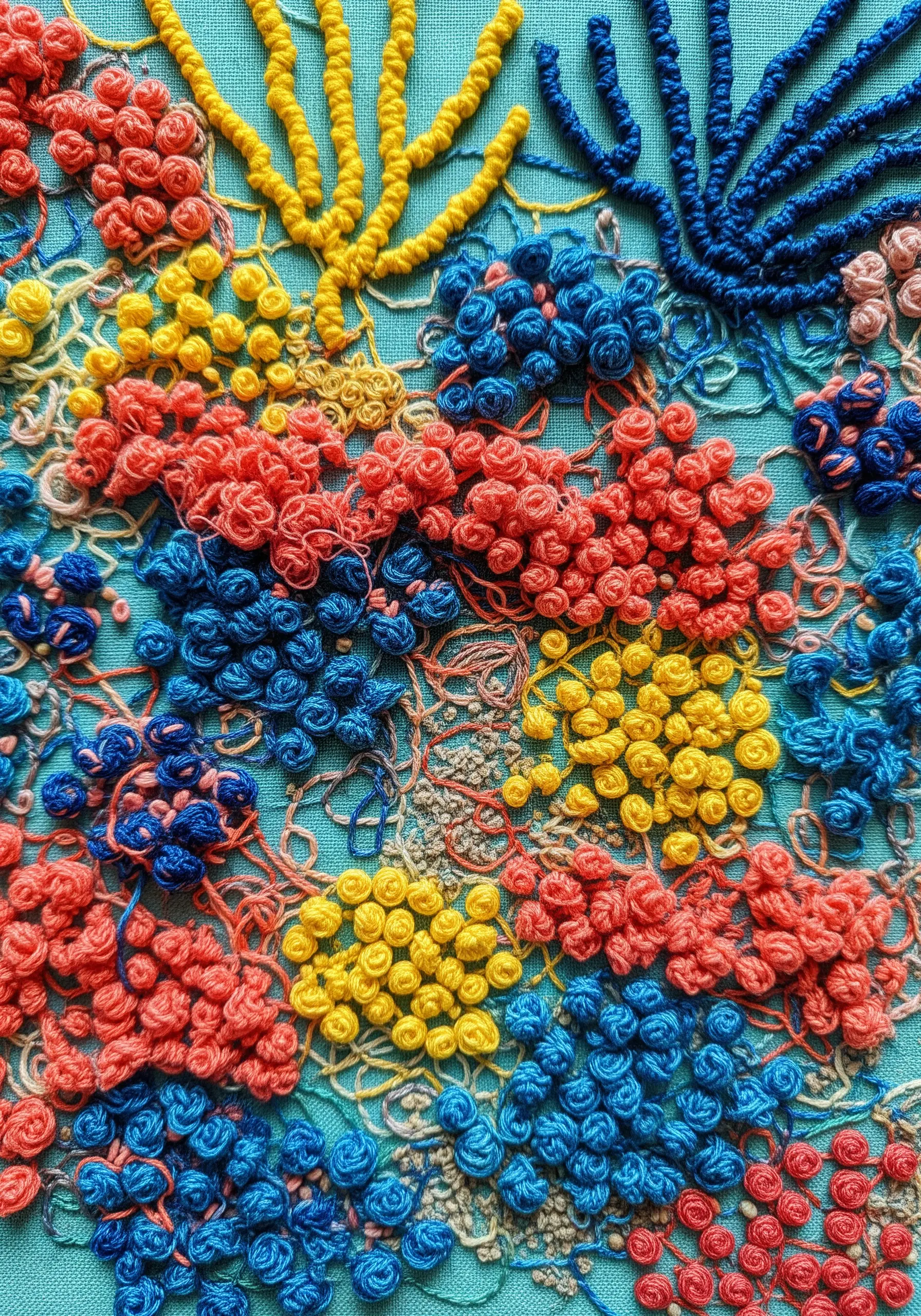
Create a texture that resembles a vibrant coral reef or a field of flowers by clustering different types of knots.
Combine French knots for tight buds, bullion knots for worm-like shapes, and detached chain stitches (lazy daisies) for open petals.
Work in dense, overlapping clusters of color, allowing very little of the background fabric to show through.
This technique is a masterclass in building a three-dimensional surface with thread alone, creating a rich, tactile experience.
16. Compose with Organic, Earth-Toned Loops
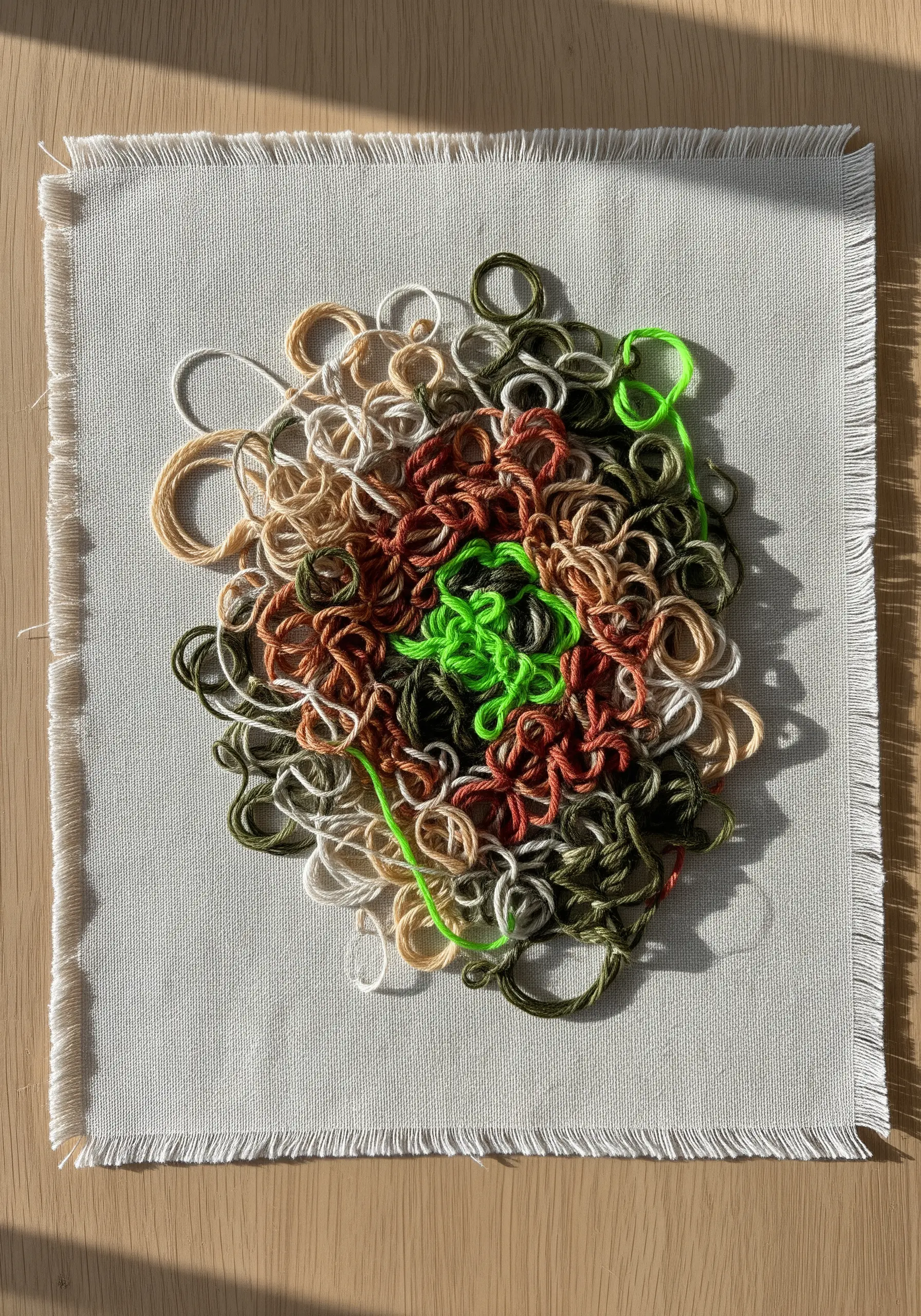
Capture the feeling of a forest floor or a bird’s nest by working with loose, couched loops in an earthy palette.
Use shades of brown, green, cream, and rust to create a harmonious and organic composition.
Instead of a planned design, allow the loops to fall naturally, overlapping and twisting to create an unstructured, found-object feel.
Introduce a single, unexpected pop of bright color, like lime green, to act as a focal point and draw the eye inward.
17. Design a Waterfall of Rainbow Yarn
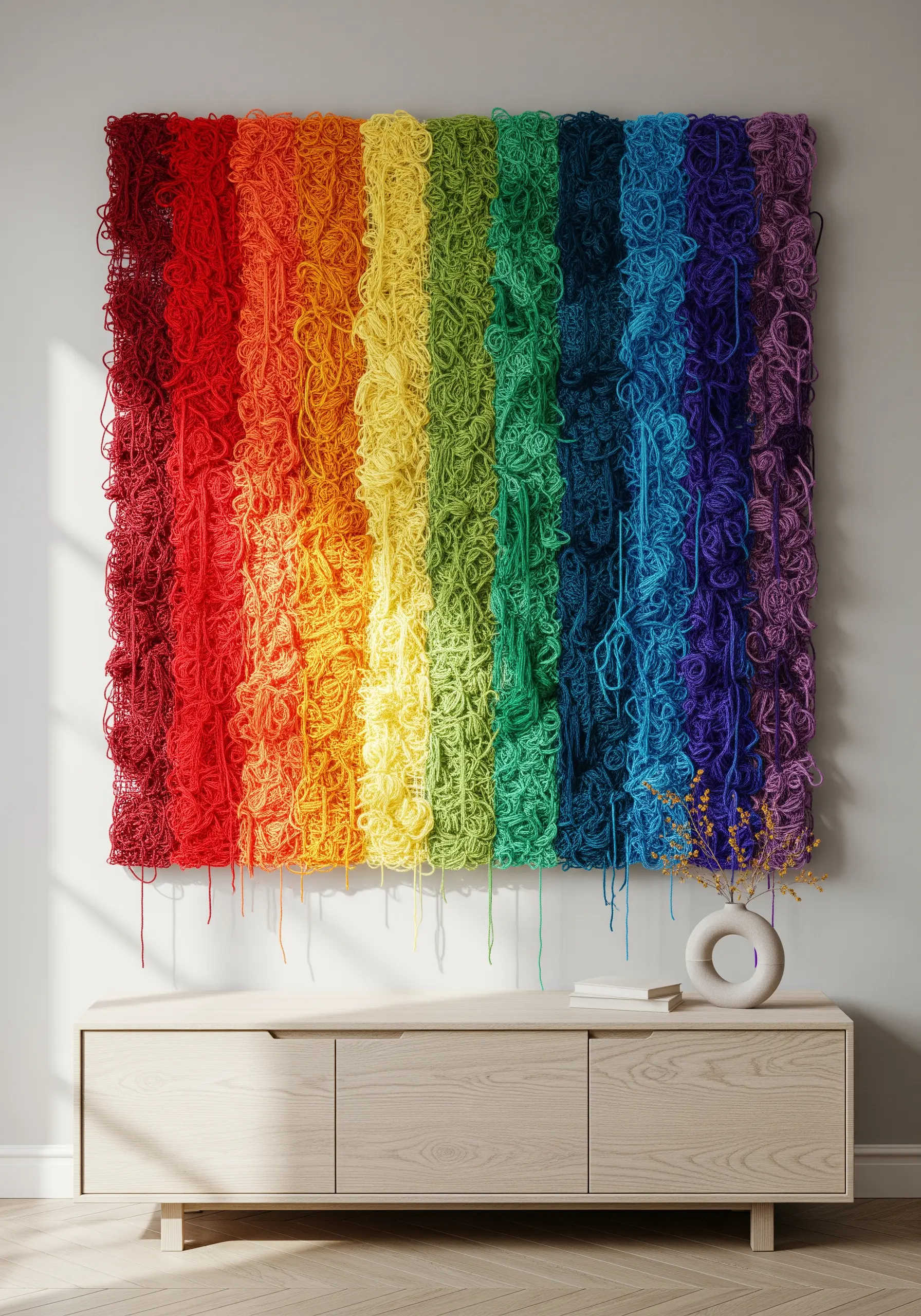
Make a large-scale statement piece by creating a waterfall of color and texture.
Secure long strands of yarn or thick floss along the top edge of a large canvas, then let them hang freely.
Arrange the colors in a perfect rainbow gradient for maximum visual impact.
Introduce texture by knotting, looping, or braiding some of the strands, creating a colorful fiber art installation that is dynamic and ever-changing.
18. Layer Delicate Threads on Paper
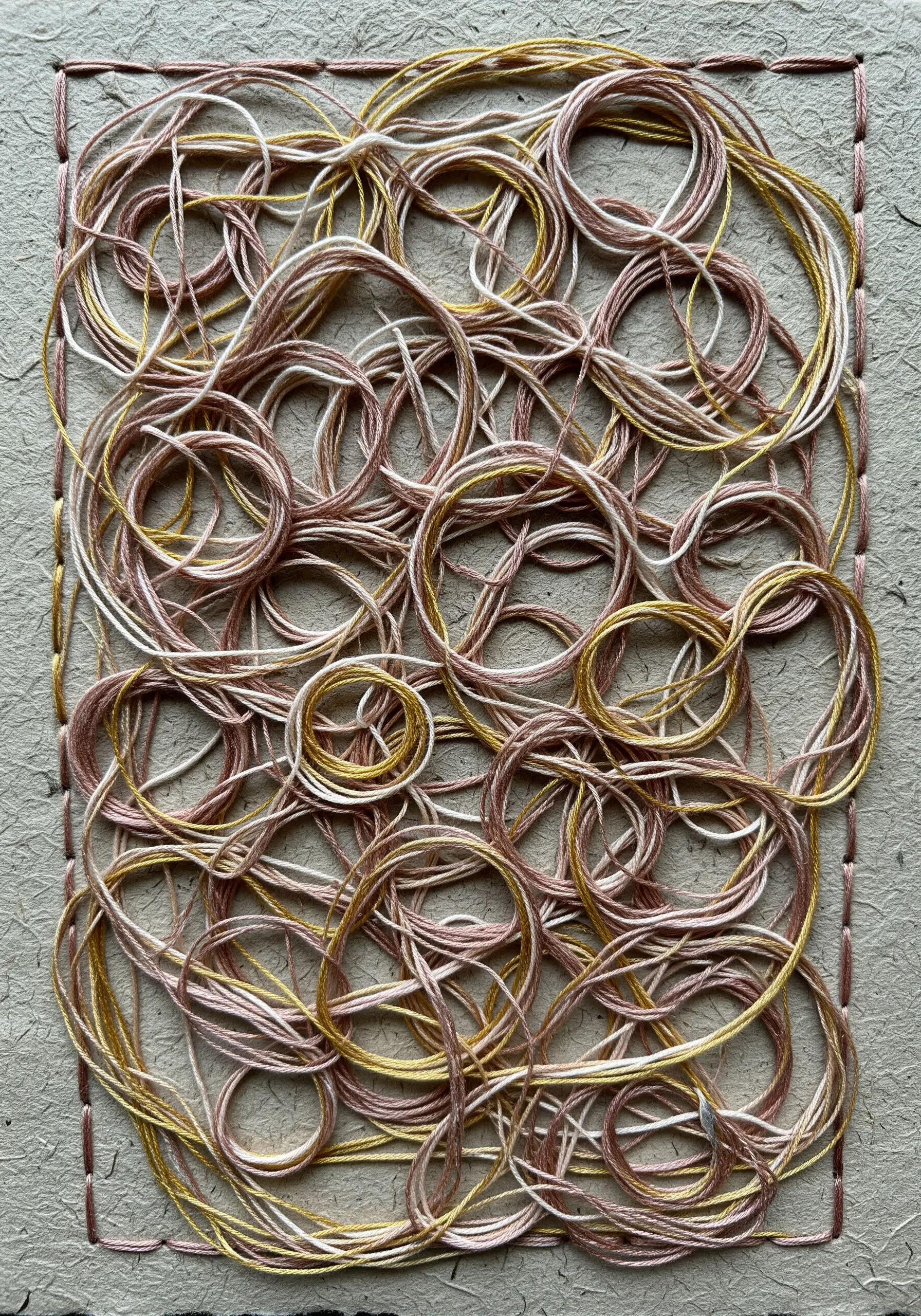
Explore the unique combination of soft thread and crisp paper for a delicate, modern aesthetic.
Gently pre-pierce your holes with a pin before stitching to prevent tearing the paper, and use a needle with a duller tip.
Create soft, overlapping circles with fine thread, using metallic floss to add a touch of warmth and elegance.
This technique turns simple stitching into beautiful embroidery paper art ideas that highlight the beauty of line and form.
19. Contrast Order and Chaos
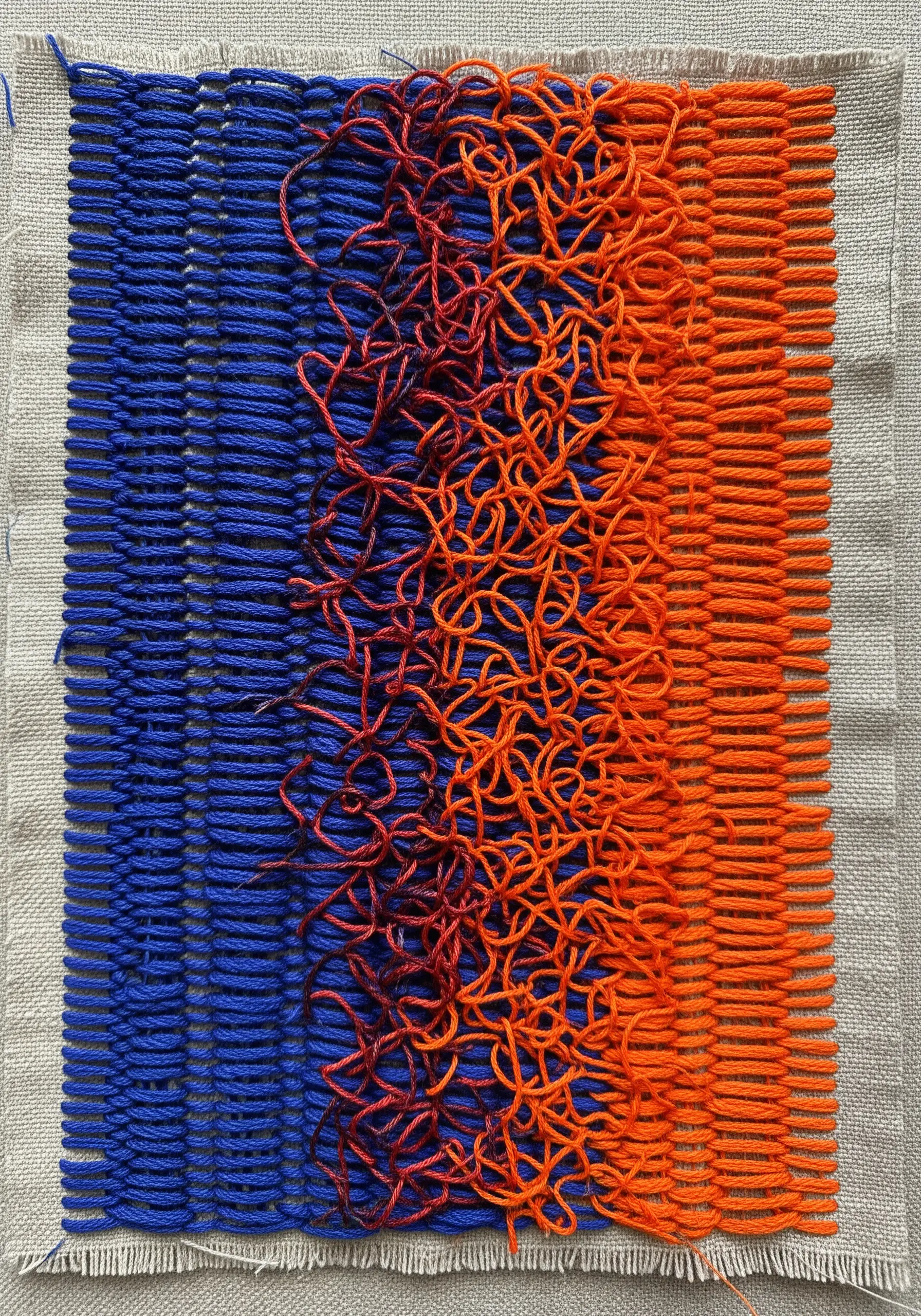
Create a visually compelling design by juxtaposing a highly structured stitch pattern with a section of pure chaos.
Fill portions of your canvas with neat, uniform stitches like vertical satin stitch or wrapped bars.
Then, allow a burst of tangled, looped, and knotted threads to erupt from the orderly section, creating a powerful visual narrative.
Use a dramatic color shift—like from cool blue to fiery orange—to heighten the contrast between the two zones.
20. Guide the Eye with a Single Accent Color
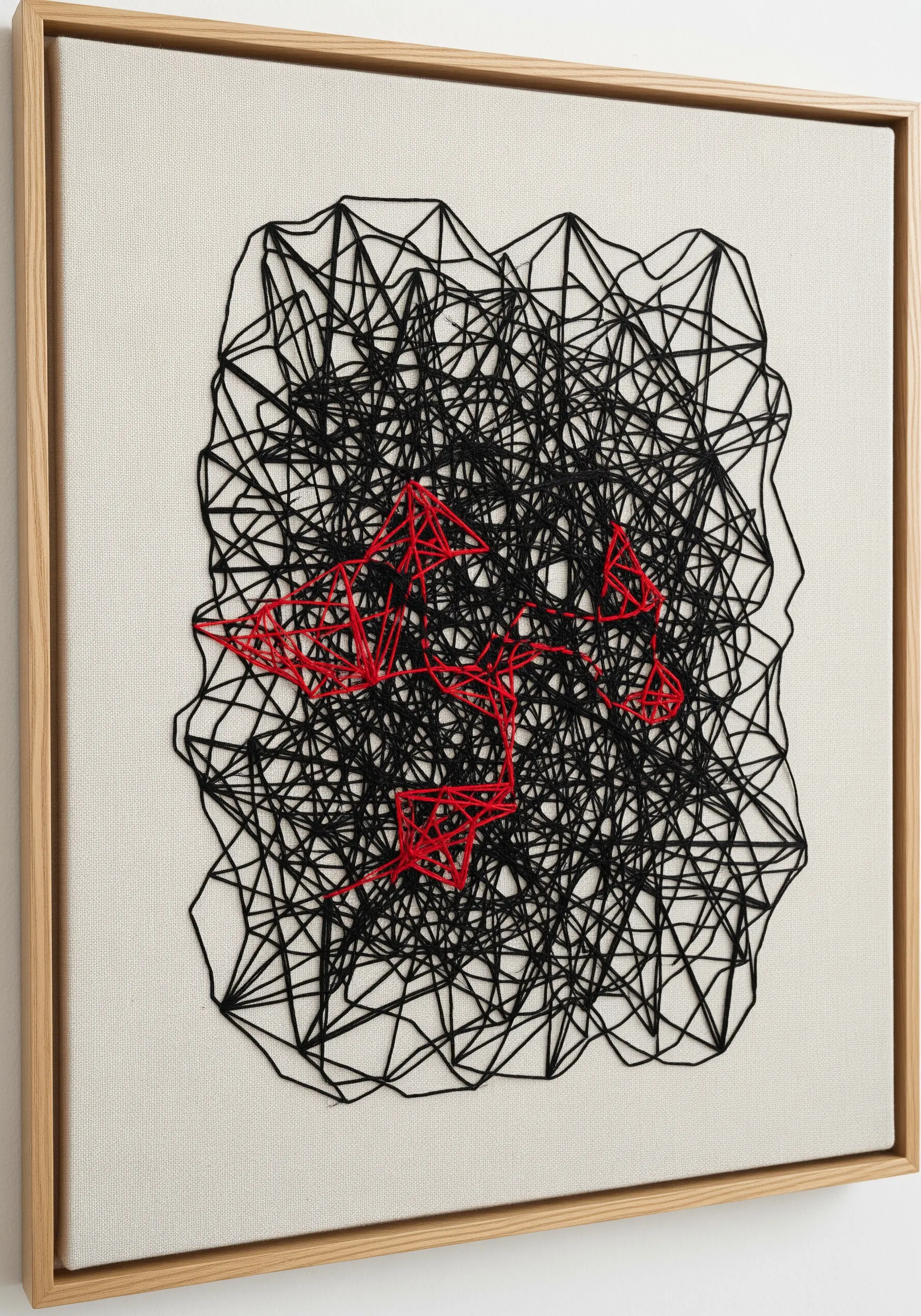
Build a complex, abstract web using a single dominant color, such as black, to create a sense of depth and shadow.
Use only straight stitches, layering them at random angles until you have a dense, mesh-like structure.
Then, introduce a single, high-contrast thread—like a vibrant red—and weave it through your existing network.
This accent color acts as a pathway, guiding the viewer’s eye through the beautiful complexity you’ve created.
21. Mix in Beads for Glimmers of Light
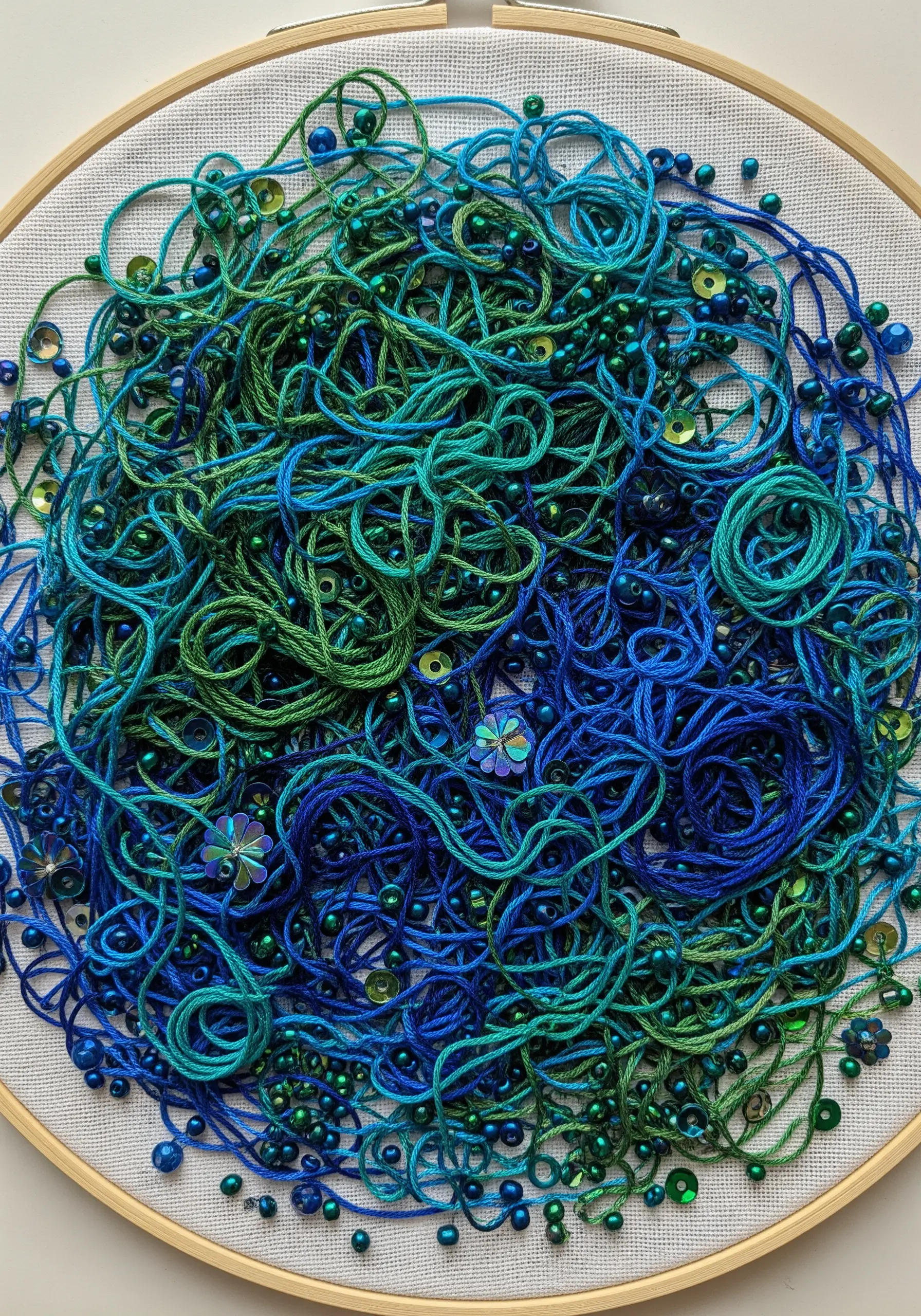
Elevate your abstract thread work by incorporating beads and sequins for texture and light.
As you create your tangled nest of threads, pause to string a few seed beads onto your floss before taking the next stitch.
Scatter sequins throughout the composition, securing them with a single bead in the center to make them pop.
This mixed-media approach adds points of reflected light that contrast beautifully with the matte finish of the cotton thread.
22. Radiate Energy with Unfinished Ends
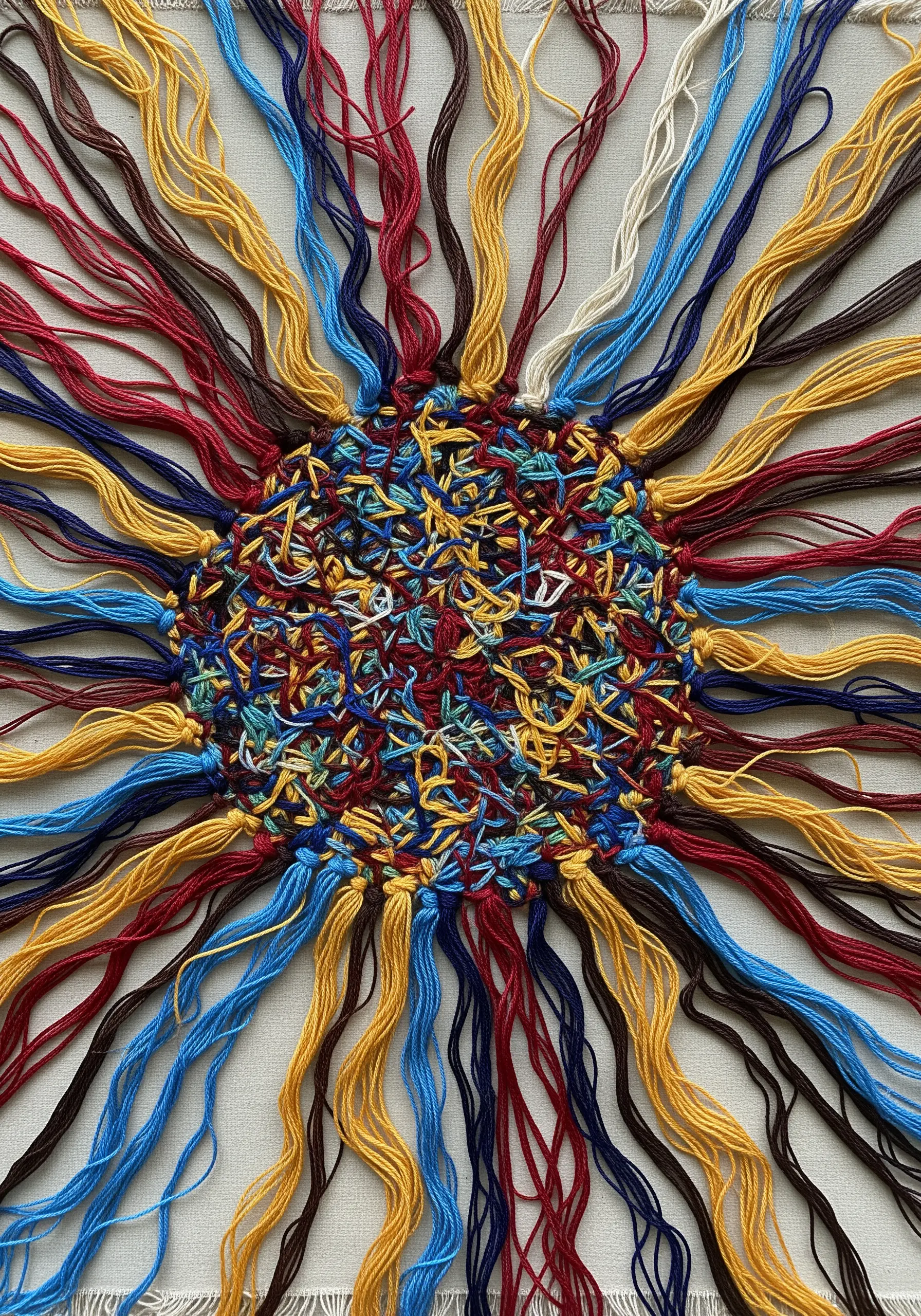
Create a design that feels like it’s bursting with energy by combining a tightly stitched center with long, loose rays.
Fill a central circle with a dense, woven mat of short stitches in a multitude of colors.
From the edge of this circle, stitch long, straight lines radiating outwards, but don’t secure the ends—let them hang freely off the edge of your fabric.
This technique creates a dynamic sunburst effect, full of movement and untamed energy.
23. Float Abstract Lines on Sheer Fabric
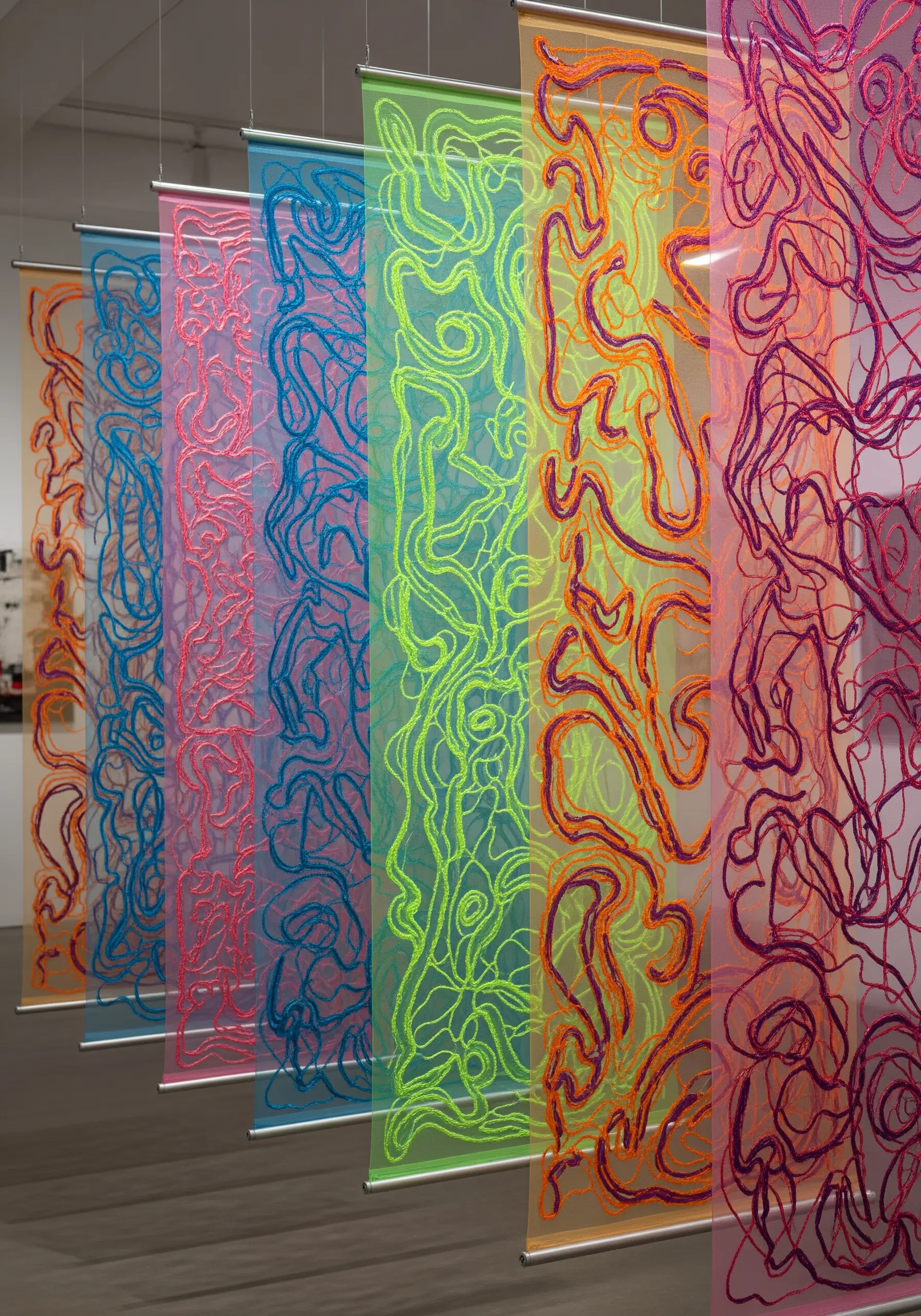
Create an ethereal, floating effect by stitching your design onto a sheer fabric like organza or tulle.
To stabilize the fabric while you work, hoop it with a layer of water-soluble stabilizer.
Stitch your free-form, abstract lines directly through both layers. Once you’re finished, simply wash the stabilizer away.
The result is a design that seems suspended in mid-air, perfect for creating layered, sculptural fiber art installations.
24. Use Metallics to Catch the Light
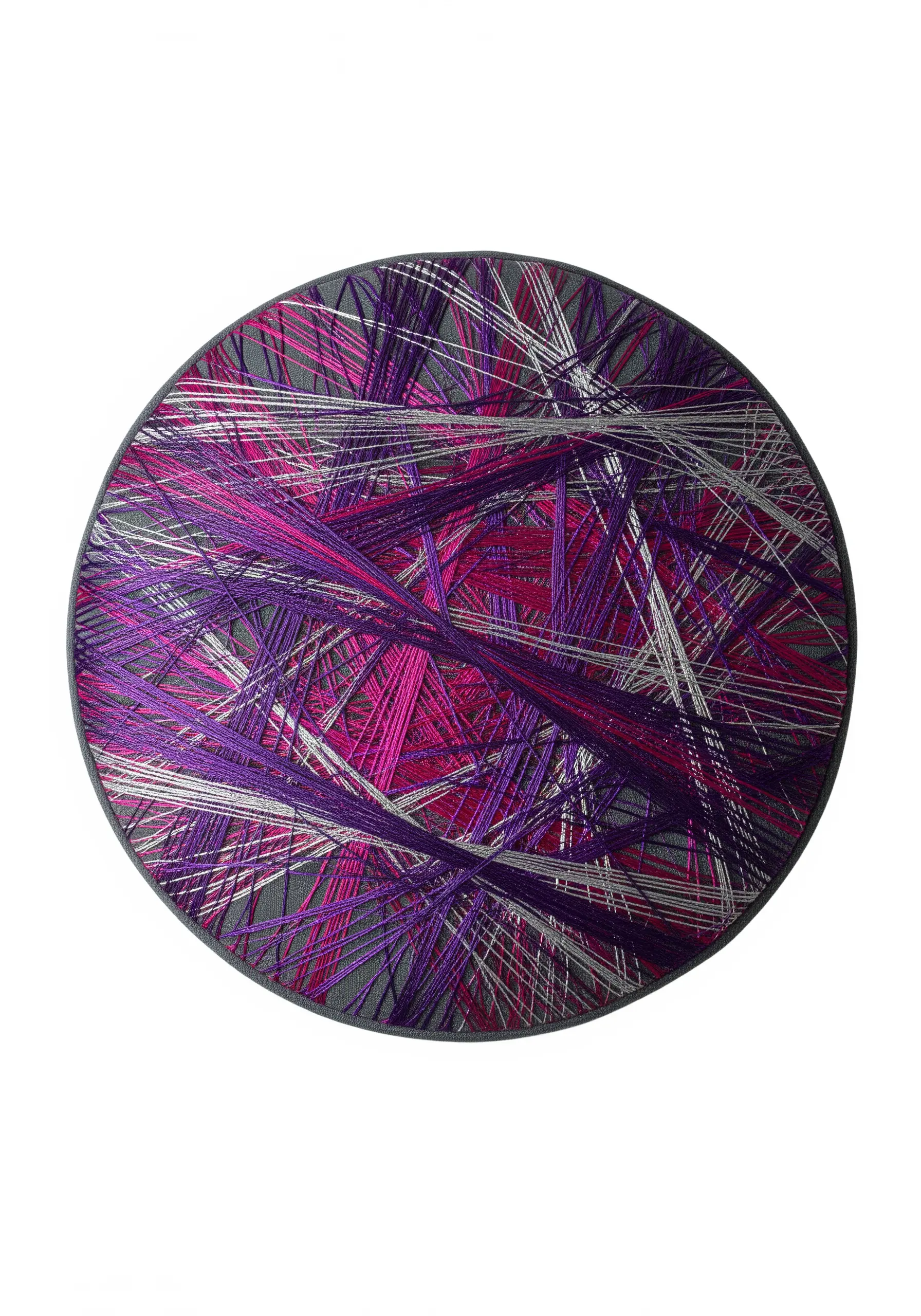
Add a touch of quiet luxury to your abstract work by incorporating metallic and high-sheen threads.
Combine a standard matte cotton floss with a fine metallic or a silky rayon thread in a similar color palette.
As you layer your random straight stitches, the mix of finishes will create a subtle, shimmering effect.
The way the light interacts differently with each thread type adds depth and sophistication without needing a complex pattern.
25. Make Your Mark with Thread Graffiti
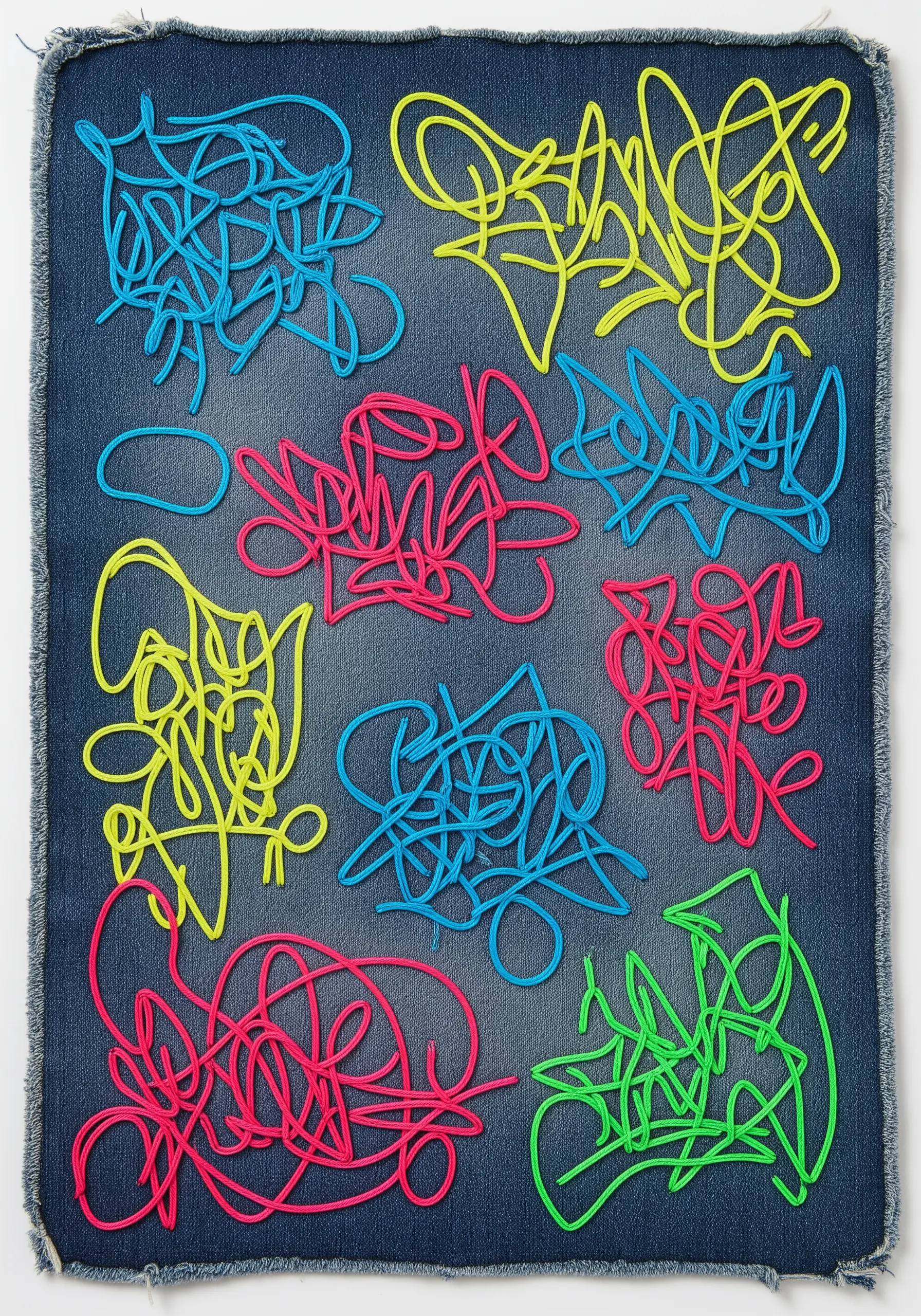
Use thick, bold thread to create graffiti-inspired scribbles on an unexpected fabric like denim.
Choose neon or primary colors that will pop against the dark background. Perle cotton No. 5 is perfect for this, as it has a great sheen and thickness.
Lay your thread down in a free-form, calligraphic line and secure it using a matching, finer thread with a couching stitch.
This technique is a fun, expressive way to turn a simple piece of fabric into a vibrant work of urban-inspired art.


