Sometimes, a pattern doesn’t feel quite right. You want to stitch something more personal, something that captures a fleeting feeling, a distant memory, or the quiet hum of a mood. But where do you begin when the subject is invisible?
Think of abstract embroidery not as a complex art form, but as a language. It’s a way to translate your inner world into a tangible object through color, texture, and line, free from the constraints of realism. A tangled knot can represent complexity; a smooth, straight stitch can mean clarity. A vibrant color can shout with joy, while a muted tone can whisper a quiet thought.
These ideas are not patterns to be followed precisely, but rather starting points for your own exploration. Let them give you permission to play, to trust your intuition, and to see your needle and thread as tools for telling the stories that have no words.
1. Stitch the Rhythm of a Memory

Capture the feeling of a flowing memory, like ocean waves or a gentle breeze, by laying long, parallel strands of thread across your fabric.
Instead of individual stitches, couch these strands down with a single, fine thread in a matching or contrasting color.
This technique, known as couching, preserves the smooth, unbroken sheen of the floss, creating a liquid-like surface that satin stitch cannot replicate.
Vary the thickness of your laid threads (from three to six strands) and their tension to create subtle shifts in depth and movement, transforming your hoop into a tactile representation of flow.
Explore abstract thread waves swirls to capture motion and flow in your embroidery and discover how a simple line can convey powerful emotion.
2. Illustrate the Fading Edges of a Thought
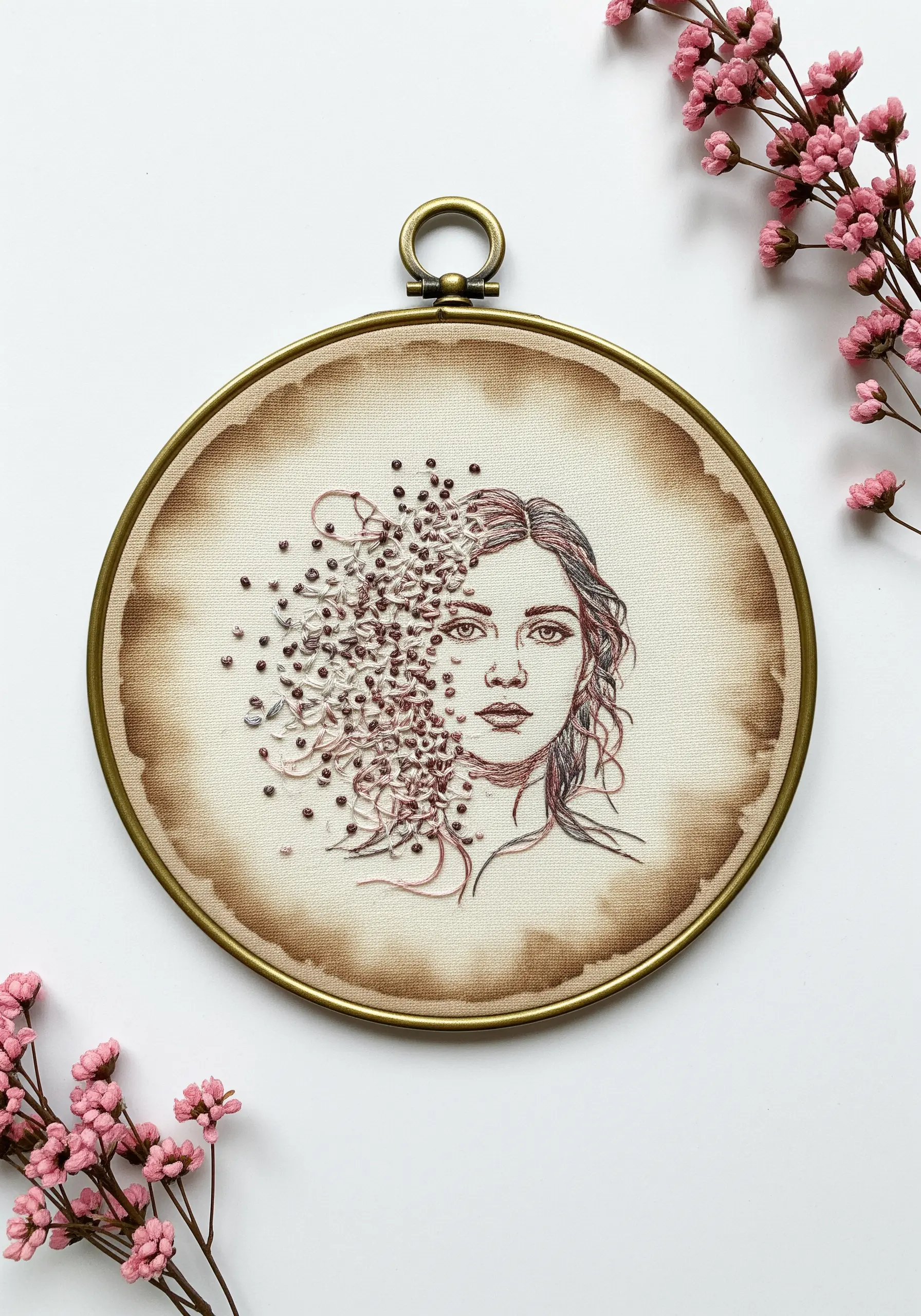
Combine crisp, delicate line art with a cloud of textural stitches to represent a memory that is both sharp and dissolving.
Use a single strand of dark floss for the portrait, focusing on the clarity of a split stitch or backstitch for defined features.
For the dissipating areas, switch to a mix of French knots, seed stitches, and tiny straight stitches in various shades, clustering them densely at first and then scattering them outwards.
This contrast between defined lines and abstract texture creates a powerful visual narrative about how we hold onto and let go of our recollections.
Staining the fabric with tea or coffee beforehand adds a layer of warmth and nostalgia to the piece.
3. Channel Raw Energy with Thread and Wire
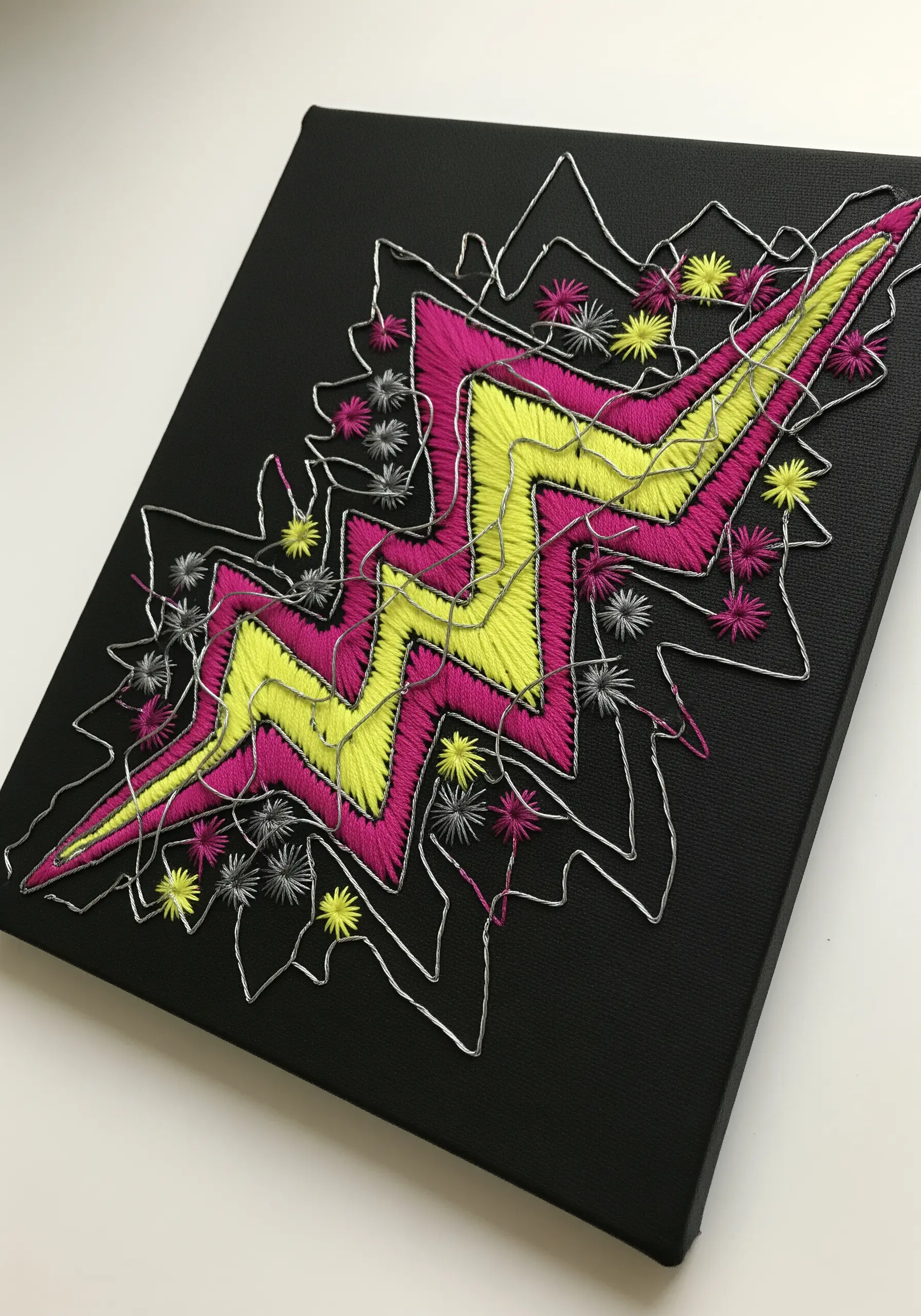
Embroider on a painted canvas to give your stitches a bold, graphic backdrop that fabric alone cannot achieve.
First, pierce your design’s outline through the canvas with a sharp awl or a thick needle to make stitching easier on the rigid surface.
Fill the main shapes with vibrant satin stitch, letting the thread’s sheen contrast with the matte canvas.
To add a layer of chaotic energy, couch down malleable artistic wire around your stitched shapes, bending it into sharp, irregular angles that break free from the clean lines of your embroidery.
This mixed-media approach turns a feeling of intense energy into a physical, dimensional object.
4. Map a Constellation of Ideas

Represent the interconnectedness of thoughts by creating a conceptual map in your hoop.
Use padded satin stitch for the main ‘nodes’ by building up a foundation of small straight stitches before covering them, giving your shapes a raised, 3D effect.
Connect these nodes with taut, straight stitches to form a clean, architectural network, a technique borrowed from string art.
Introduce softer textures, like fluffy clouds made from Turkey work or tufted wool, to symbolize dreams or less-defined ideas, creating a dynamic interplay between structure and abstraction.
This is one of many modern grid-dot stitch concepts perfect for tech-inspired textile art that transforms abstract feelings into a visual system.
5. Embody a Burst of Joy

Translate a sudden, radiant feeling into a dynamic sunburst using only the chain stitch.
Work with a thick, plush thread, like pearl cotton or all six strands of floss, to give each stitch a bold, rope-like texture.
Instead of aiming for perfect uniformity, vary the length of each ray, allowing some to be short and punchy while others stretch to the edge of your composition.
This variation in length and a vibrant, warm color palette create a powerful sense of outward energy and uninhibited happiness, perfect for embellishing a plain jacket or tote bag.
6. Find the Focal Point in a Monochrome Landscape

Create a moody, atmospheric landscape using fabric paint or dye as your base layer, letting it bleed and settle organically.
Once dry, add textural depth with dense fields of seed stitch in black and grey threads, varying the direction and density of your stitches to suggest hills and clouds.
Introduce a single, powerful focal point with a starkly contrasting color, like a vertical line of red satin stitch.
This minimalist accent draws the eye and imbues the entire piece with a sense of narrative and purpose, symbolizing a single clear thought or memory within a complex emotional landscape.
7. Capture the Gravity of a Melancholy Mood
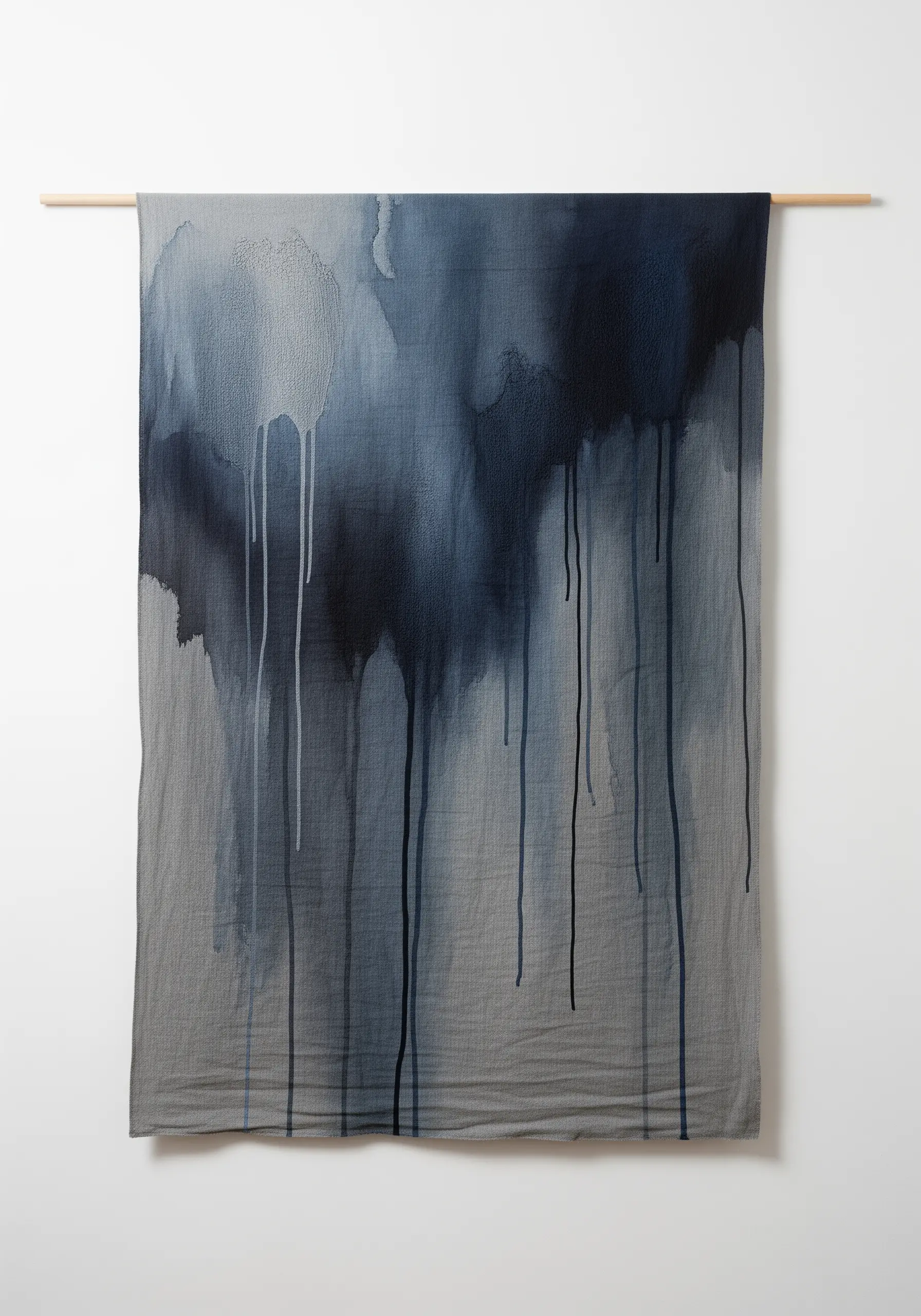
Use a dye-painting technique on a large piece of semi-sheer fabric to evoke a feeling of heavy stillness or a descending mood.
Water down fabric paint and apply it to the top of the hanging fabric, allowing it to drip and run naturally to create organic, cascading lines.
Once the paint is dry, enhance the drips with subtle, vertical running stitches using a thread that is just a shade lighter or darker than the paint.
This discreet stitching adds a layer of texture that catches the light, giving the piece a quiet depth without overpowering the delicate, watercolor-like effect, making it ideal for rent-friendly embroidery wall tapestry ideas that don’t damage apartment walls.
8. Arrange a Sampler of Sensations

Translate different emotional textures into a physical grid, creating a tactile diary of feelings.
Divide your hoop into sections and assign a different stitch to each one: dense French knots for complexity, smooth satin stitch for calm, a woven basket stitch for stability, and methodical straight stitches for focus.
Working within a cohesive color palette allows the textures, rather than the colors, to tell the story.
This exercise moves beyond decorative stitching, turning your hoop into a modern sampler of your inner state—a practice in mindfulness and material expression.
9. Weave a Vortex of Passion

Convey an intense, swirling emotion by combining various red and metallic fibers on a stark black background.
Use satin ribbon for the thickest, shiniest parts of the spiral, couching it down with a matching thread to control its curves.
Incorporate thinner elements like braided floss, metallic cord, and pearl cotton, weaving and layering them to create a sense of chaotic, dynamic movement.
Let the ends of some threads remain loose and wild, suggesting an energy that cannot be fully contained within the composition.
This textural buildup creates a powerful, sculptural piece that feels both luxurious and untamed.
10. Stitch the Radiance of a Breakthrough

Capture the feeling of a sunrise or a moment of clarity using directional straight stitches that radiate from a central point.
Vary the length and density of your stitches—short and tightly packed at the core to create a bright, solid center, and longer and more spaced out as they extend outwards.
This technique creates a visual gradient of light and energy that feels more organic and painterly than a solid satin stitch.
Use a palette of analogous colors to blend the landscape and sky seamlessly, allowing the texture of the stitches to define the forms.
11. Cultivate a Tangle of Wild Growth

Express a feeling of complexity or untamed nature by filling your hoop with a chaotic mass of textural stitches and loose threads.
Combine chunky yarn, standard six-strand floss, and fine pearl cotton to create a variety of textures.
Use woven wheel stitches, French knots, and couched loops, packing them tightly together without a clear pattern.
Let some threads hang loose over the edge of the hoop to break the perfect circular frame, suggesting that the feeling or memory is too big to be contained.
This approach makes for fantastic cozy mixed-fiber projects perfect for winter decorating, full of warmth and dimension.
12. Sculpt a Storm with Soft Fibers

Go beyond the hoop and create a textural wall hanging that embodies the drama of a storm.
Use thick, unspun wool roving for the clouds, shaping it into swirling rosettes and securing it to a felt background with a few hidden tacking stitches.
For the lightning, use a high-contrast thread like white or silver and create sharp, jagged lines with a split stitch, or even couch down a piece of painted fabric cut into a lightning shape.
Represent rain with simple, knotted pieces of cord or yarn, allowing them to dangle freely and add movement to the piece.
This tactile approach turns weather into a soft-sculpture narrative.
13. Depict an Overwhelming Feeling

Use a single, repetitive stitch to represent a pervasive thought or a building emotion, like a rising tide of memories.
The woven wheel stitch is perfect for this, as you can vary its size and density to create an undulating surface.
Start with small, tight stitches at the bottom and gradually increase their size and looseness as you move up the design.
Working in a monochromatic color scheme forces the viewer to focus entirely on the texture and form, making the piece a powerful meditation on a single, overwhelming sensation.
A single contrasting motif, like the yellow chain stitch arc, offers a glimmer of hope or a different perspective.
14. Visualize a Meditative State

Create a visual representation of focus or calm with a series of clean, concentric circles.
Use a simple backstitch or stem stitch with three strands of floss to achieve crisp, defined lines.
The true artistry here lies in your color selection. Plan a smooth, satisfying color gradient that flows from a dark, intense center to a light, airy outer ring.
This gradual shift in color creates a hypnotic, tunnel-like effect that draws the eye inward, making the piece a perfect object for quiet contemplation.
Mark your circles precisely with a water-soluble pen before you begin to ensure perfect spacing.
15. Construct a Mandala of Inner Balance

Translate the feeling of harmony and centeredness into a geometric mandala.
Instead of focusing on curves, build your design from repeating symmetrical lines and angles using backstitch and satin stitch.
Work with a limited, calming color palette, like soft neutrals and a touch of metallic gold, to maintain a sense of peace and order.
The repetition of the stitches and the process of creating perfect symmetry is a meditative act in itself.
Once complete, frame it simply to elevate the work and integrate it into your home as a reminder of inner balance.
16. Map the Warmth of a Sunny Memory

Use abstract color blocking to capture the essence of a feeling rather than a specific image.
First, paint your fabric with blocks of color using fabric paint, creating a smooth, non-representational base that suggests a mood—like the warm glow of a summer afternoon.
Then, fill sections of your painted design with directional satin stitches. You don’t need to fill everything; instead, use the thread to add texture and emphasis.
Changing the angle of your stitches within a single block of color creates a subtle play of light and shadow, adding depth and sophistication to your abstract work and allowing you to explore abstract color psychology stitch ideas to express mood calm or drama.
17. Create Texture from a Single, Persistent Thought
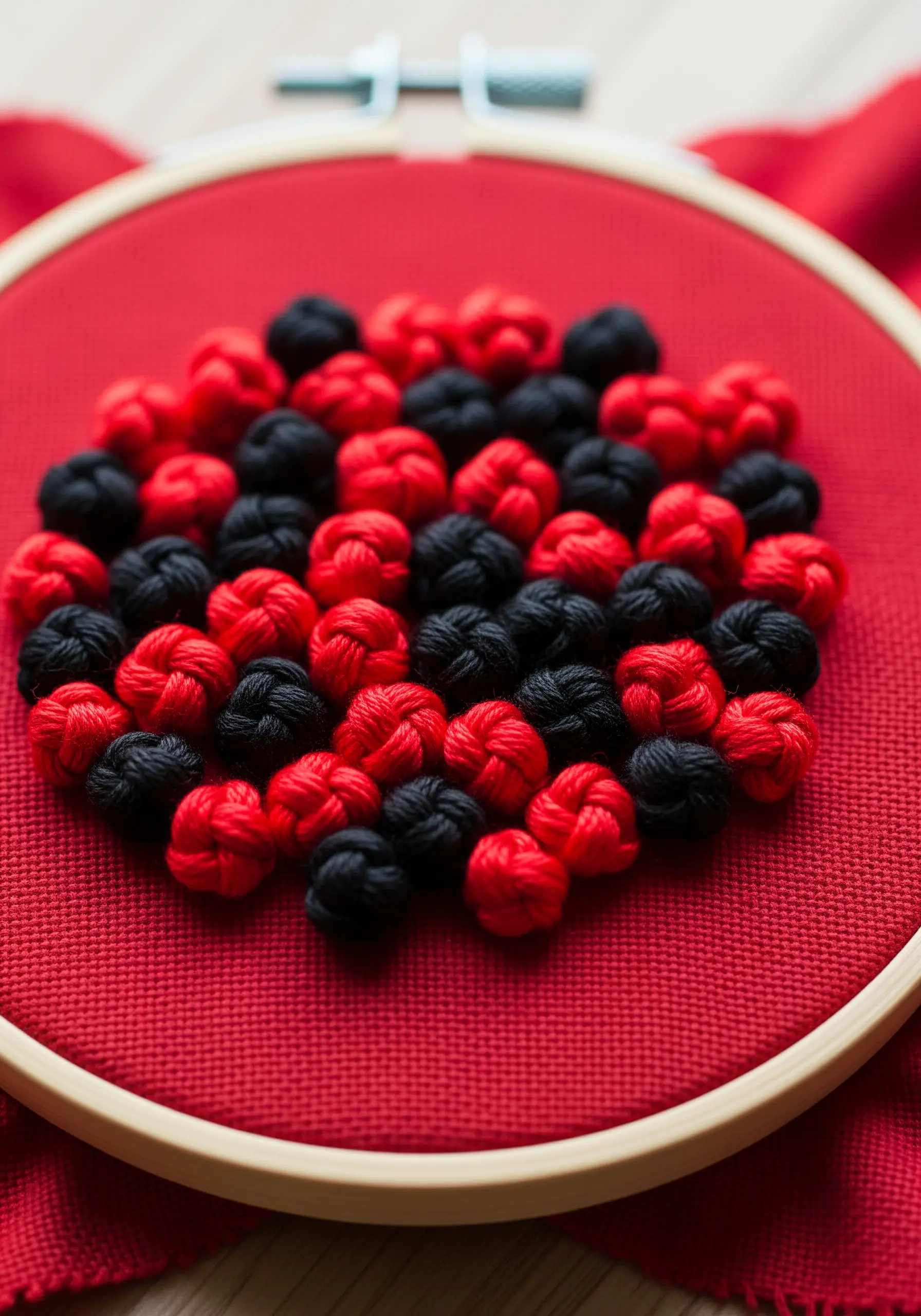
Represent a recurring thought or an intense, focused emotion with a dense cluster of a single type of stitch.
The colonial knot, a cousin to the French knot, is ideal as it creates a tight, nubby texture that stands up well when packed together.
Use a thick thread, like pearl cotton, and vary the tightness of your knots slightly to create subtle variations in the surface.
The visual power comes from the sheer density and repetition, transforming the fabric into a highly tactile, sculptural field that communicates intensity through its singular focus.
18. Articulate the Void with a Point of Light

Convey a complex, perhaps overwhelming, emotion by creating a dense, chaotic texture on black fabric.
Fill a defined area with a freeform mix of stitches—seed stitches, single straight stitches at random angles, and French knots, all in black or charcoal grey thread.
This monochrome texture absorbs light, creating a feeling of depth and mystery.
Then, introduce a single, tiny, brightly colored bead. This lone point of color acts as a focal point, representing hope, a single clear memory, or a moment of clarity within the chaos.
The contrast between the vast, dark texture and the small, bright element is what gives the piece its profound emotional weight.
19. Chart a Journey of Small Moments

Illustrate a timeline or a personal journey using a single, meandering line of thread.
A whipped backstitch creates a smooth, raised line that has more presence than a simple backstitch. Use a variegated thread to symbolize the changing moods and phases of the journey.
Mark significant moments or memories along the path with small embellishments. You can incorporate buttons, sequins, and small charms that have personal meaning.
The piece becomes a minimalist map of your experience, where each added element tells a part of the story.
Finish the line with a contrasting texture, like a small pom-pom, to signify an endpoint or a new beginning.
20. Stitch a Cascade of Effervescent Joy

Capture a feeling of bubbly, unrestrained happiness with a cascade of brightly colored, textured circles.
Create each circle by coiling thread on the fabric’s surface and securing it with tiny, radiating tacking stitches from the center outwards.
Use threads with different sheens—like matte cotton, silky rayon, and shiny metallic—to create variation and light-play, mimicking the look of bubbles or confetti.
Arrange the circles in a seemingly random, floating composition against a dark, contrasting background to make the colors pop with maximum vibrancy and energy.
21. Cultivate a Story of Personal Growth

Create a large-scale, sculptural piece that tells a story of growth from root to bloom.
Work on a long, narrow piece of fabric, like a wall hanging, to emphasize the vertical journey.
At the bottom, use simple, earthy stitches like running stitches and seed stitches in brown and ochre tones to represent roots and soil.
As you move upwards, introduce more complex and dimensional stitches. Use bullion knots, cast-on stitches, and woven picots with chunky green yarns to create lush, sculptural leaves and stems.
Crown the piece with the most vibrant, complex, and colorful stitches at the very top, symbolizing a full bloom or moment of achievement.