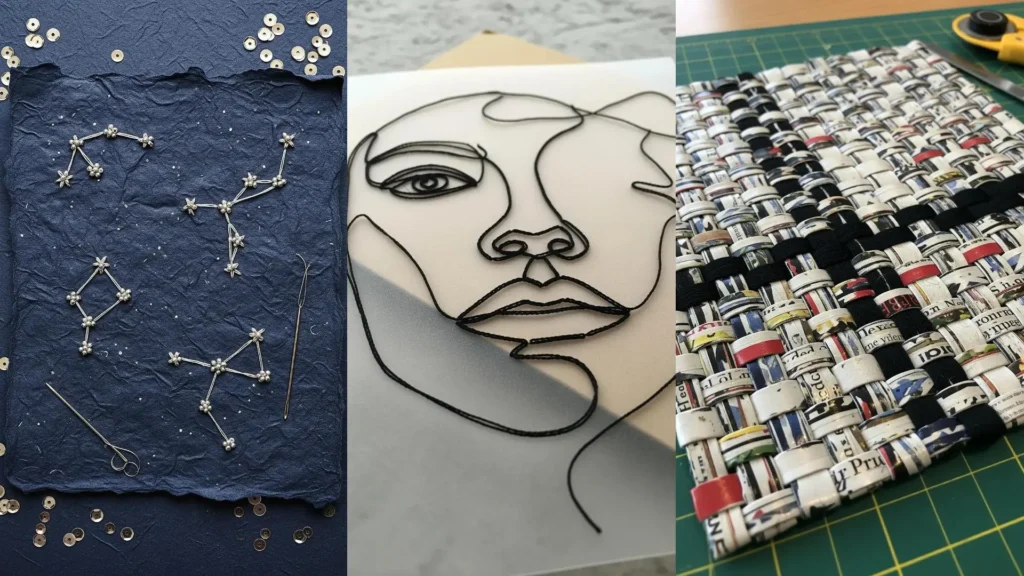
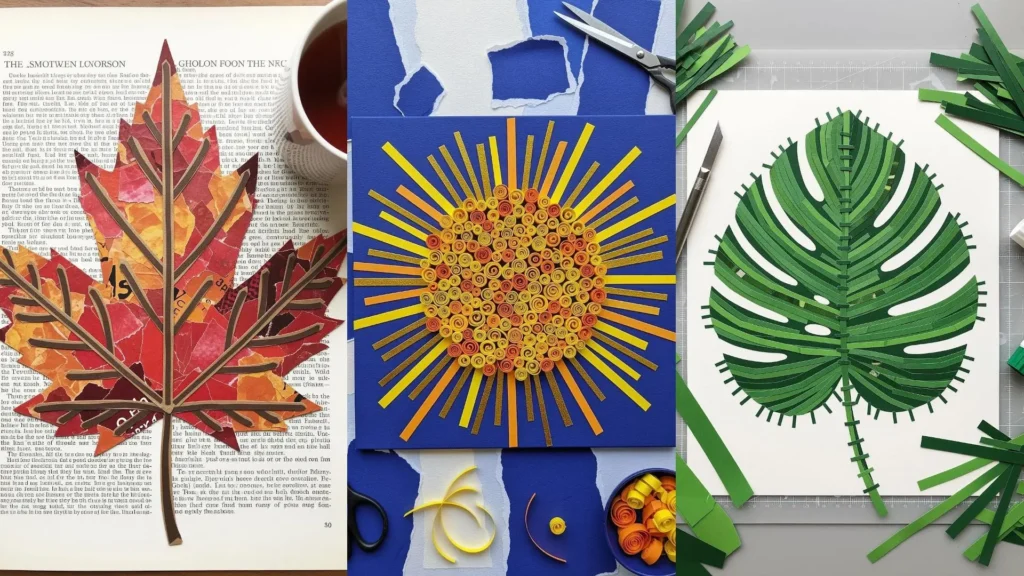
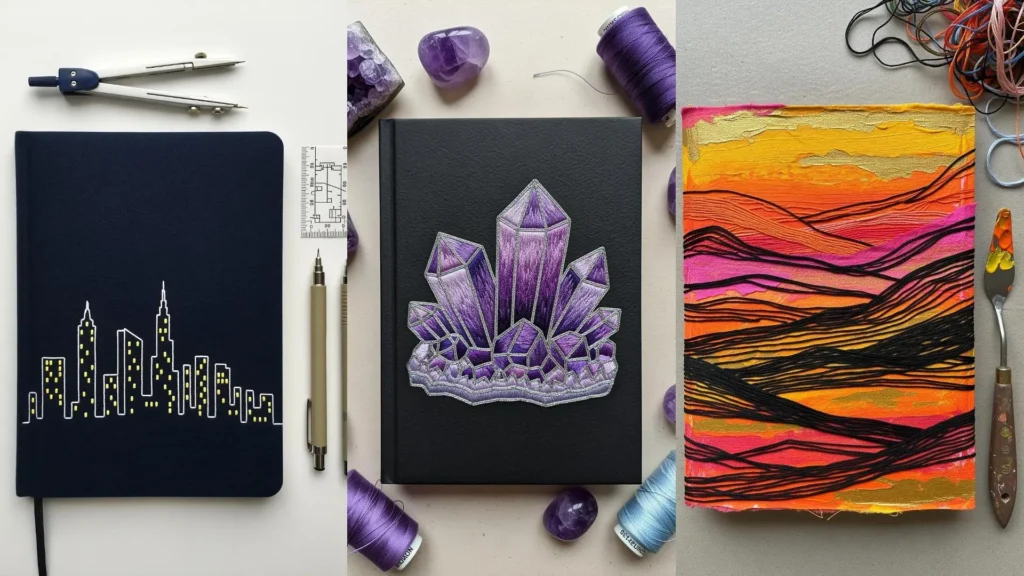
Have you ever held a needle and felt the familiar comfort of thread and fabric, but wondered what else was possible? I want you to consider a new partner for your stitching, one that offers crispness, structure, and a completely different voice: paper.
Working with paper isn’t about replacing fabric; it’s about expanding your artistic vocabulary. Its firm surface allows for sharp, graphic lines, sculptural forms, and layered compositions that are difficult to achieve with cloth alone. It encourages you to think like an illustrator, a cartographer, or a sculptor, all while holding your beloved needle and thread.
These ideas aren’t about learning complex new skills. They are about seeing a familiar material in a new light. Start simply with a piece of heavy cardstock, a treasured photograph, or a sheet of textured watercolor paper. Let your needle find its new rhythm, and discover the elegant conversation that happens when thread meets paper.
1. Stitching on Watercolor: Creating Botanical Depth
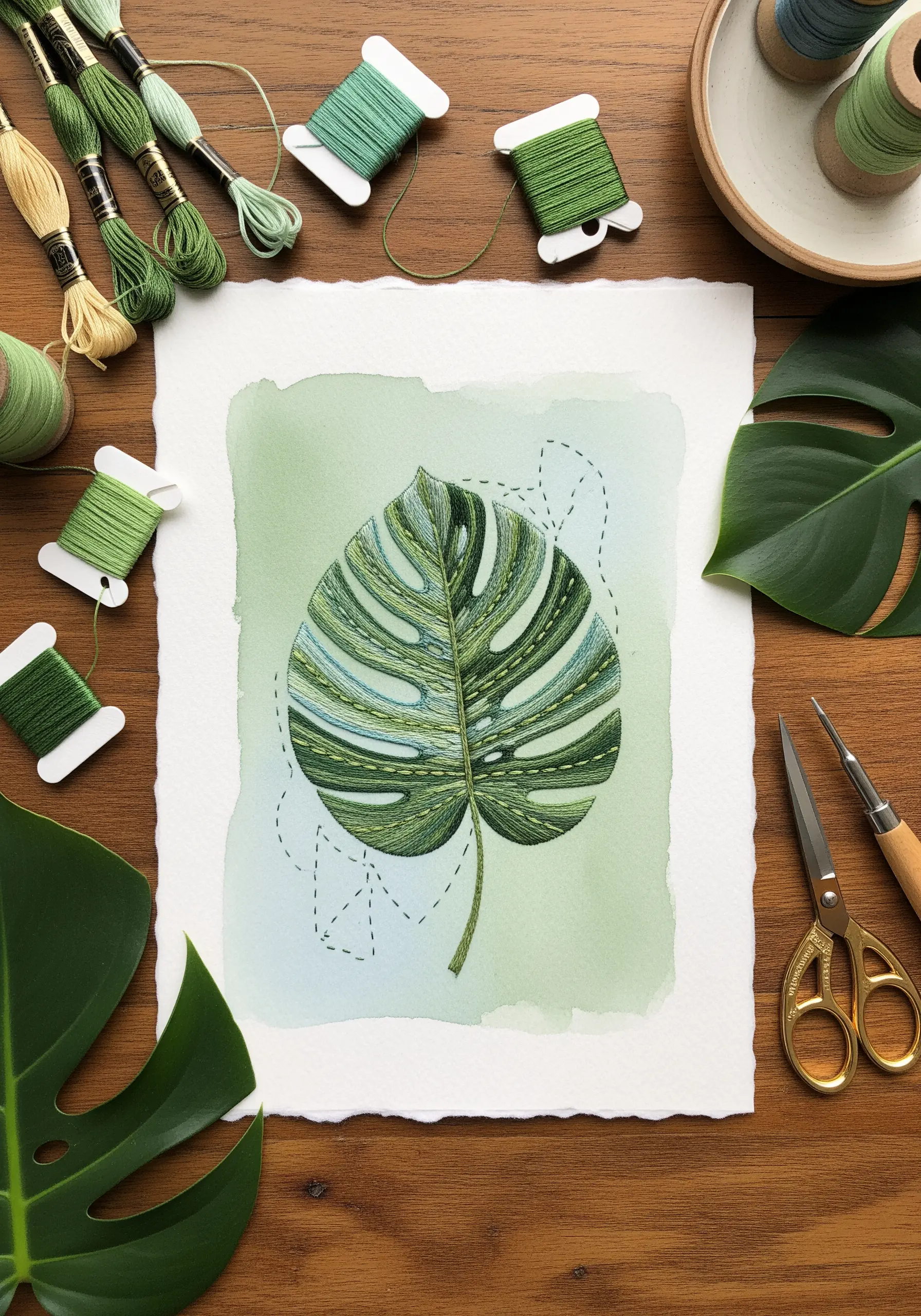
Begin by applying a soft watercolor wash to a sheet of cold-press watercolor paper, which has a wonderful texture for holding both paint and thread.
Once the paint is completely dry, use a sharp, fine needle to gently pre-pierce holes along your main stitch lines to prevent any tearing.
Use a long-and-short stitch with variegated green threads to mimic the natural color shifts in the leaf, allowing the painted background to show through subtly.
The watercolor provides a soft base of color, letting your stitches add sharp, focused texture in a beautiful embroidery paper art piece.
2. Celestial Artistry: Stitching on Painted Fabric
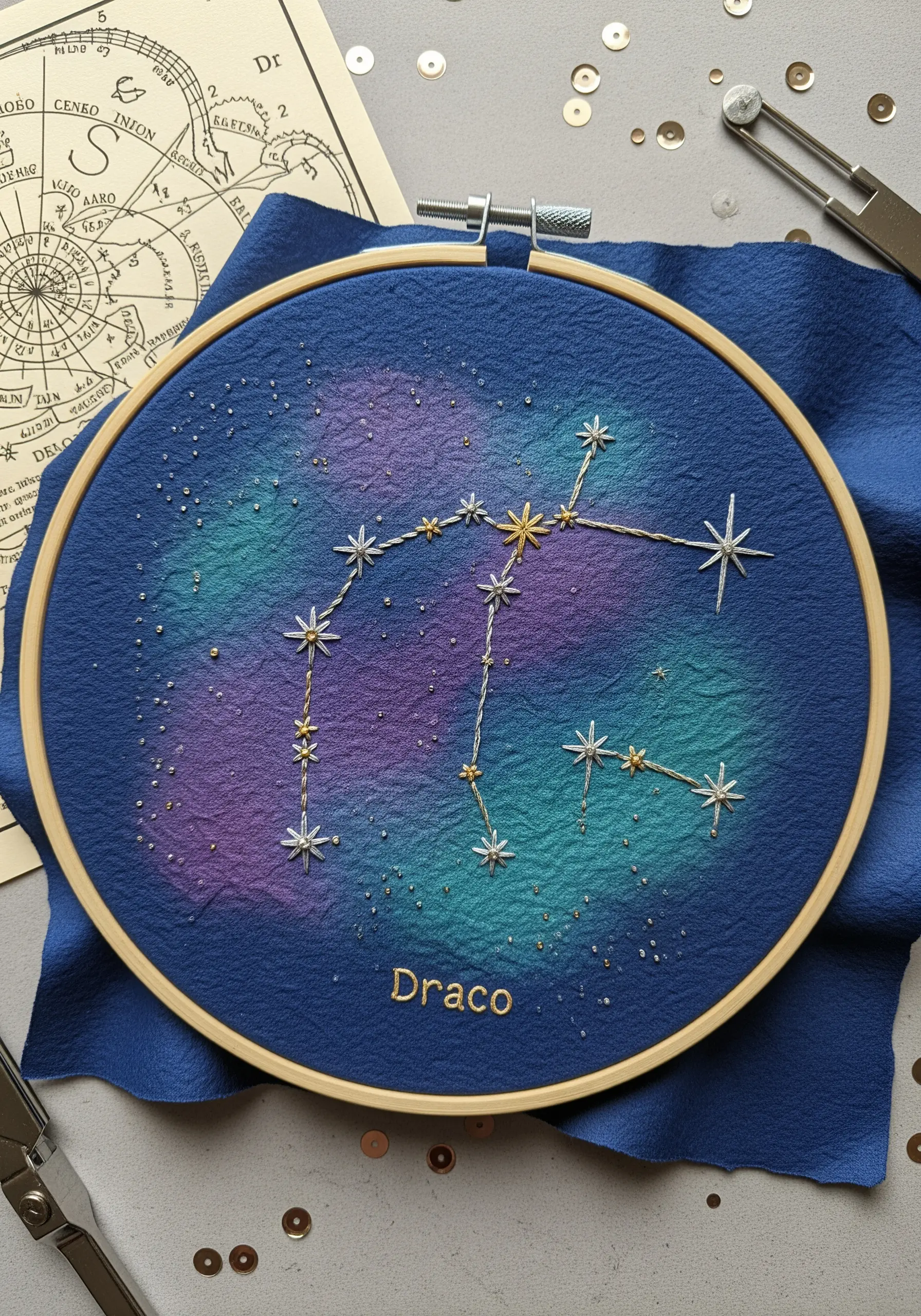
Create an atmospheric galaxy background by dabbing fabric paints or diluted acrylics onto dark blue or black cotton with a sponge.
Splatter white paint with a stiff brush to create a field of distant stars, then let the fabric dry completely before hooping it.
Stitch your chosen constellation using a bright metallic thread to catch the light, varying your stitch sizes for visual interest—use star stitches for prominent stars and tiny French knots for smaller ones.
The painted background provides an ethereal depth that elevates your work into a personal piece of cosmic embroidery art.
3. Tactile Landscapes: Layering Torn Paper and Fiber
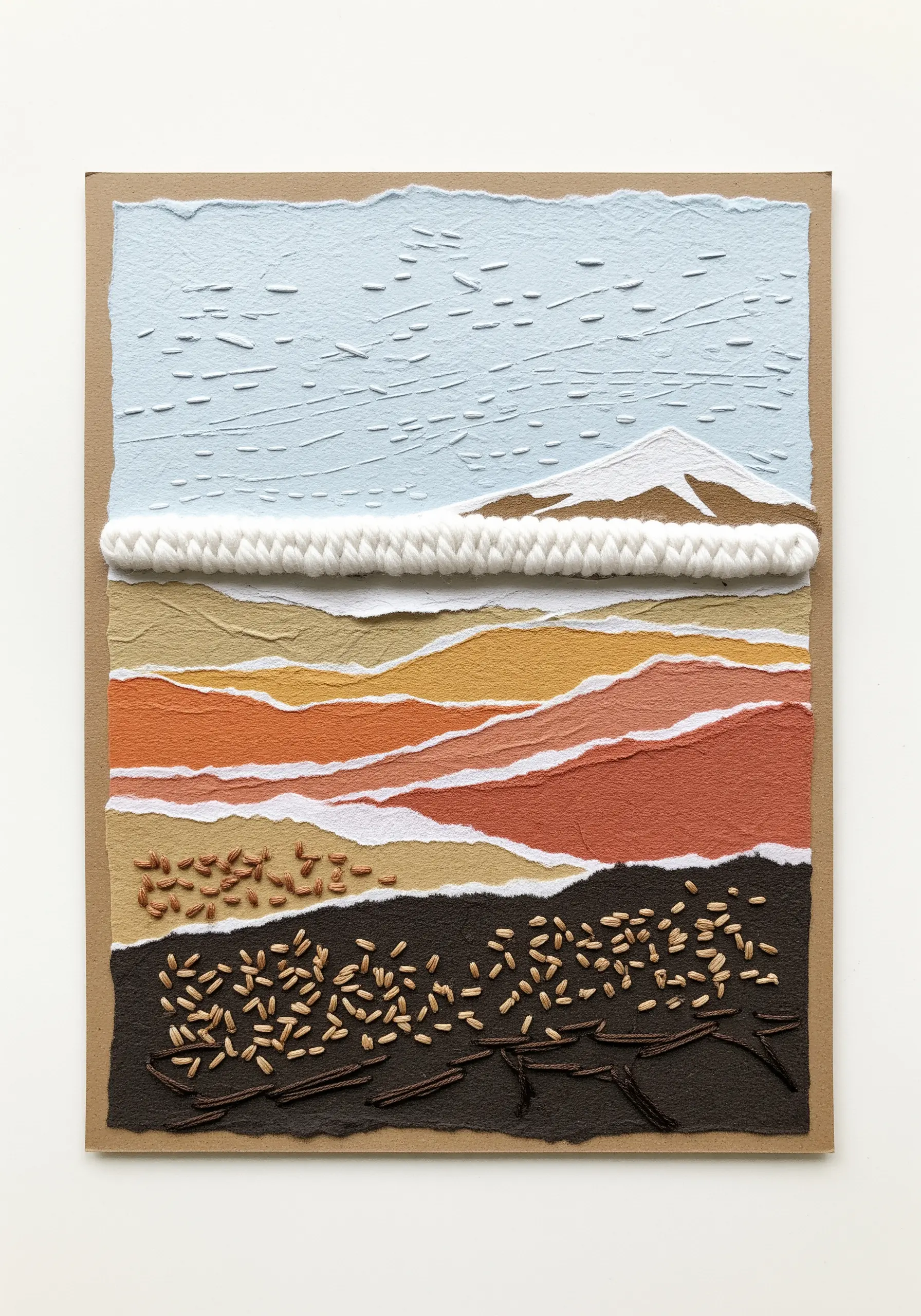
Build a textural landscape by layering torn pieces of colored cardstock, allowing the rough edges to create an organic, stratified effect.
For a bold focal point, like a cloud bank or horizon line, couch a thick braided cord or yarn onto the paper surface instead of using standard thread.
Add delicate details with embroidery floss, using scattered seed stitches or tiny French knots to represent grains or distant flora.
This technique is all about celebrating materials and creating organic texture embroidery through the contrast of chunky paper, soft cord, and fine thread.
4. Journaling with Thread: Integrating Stitches into Collage
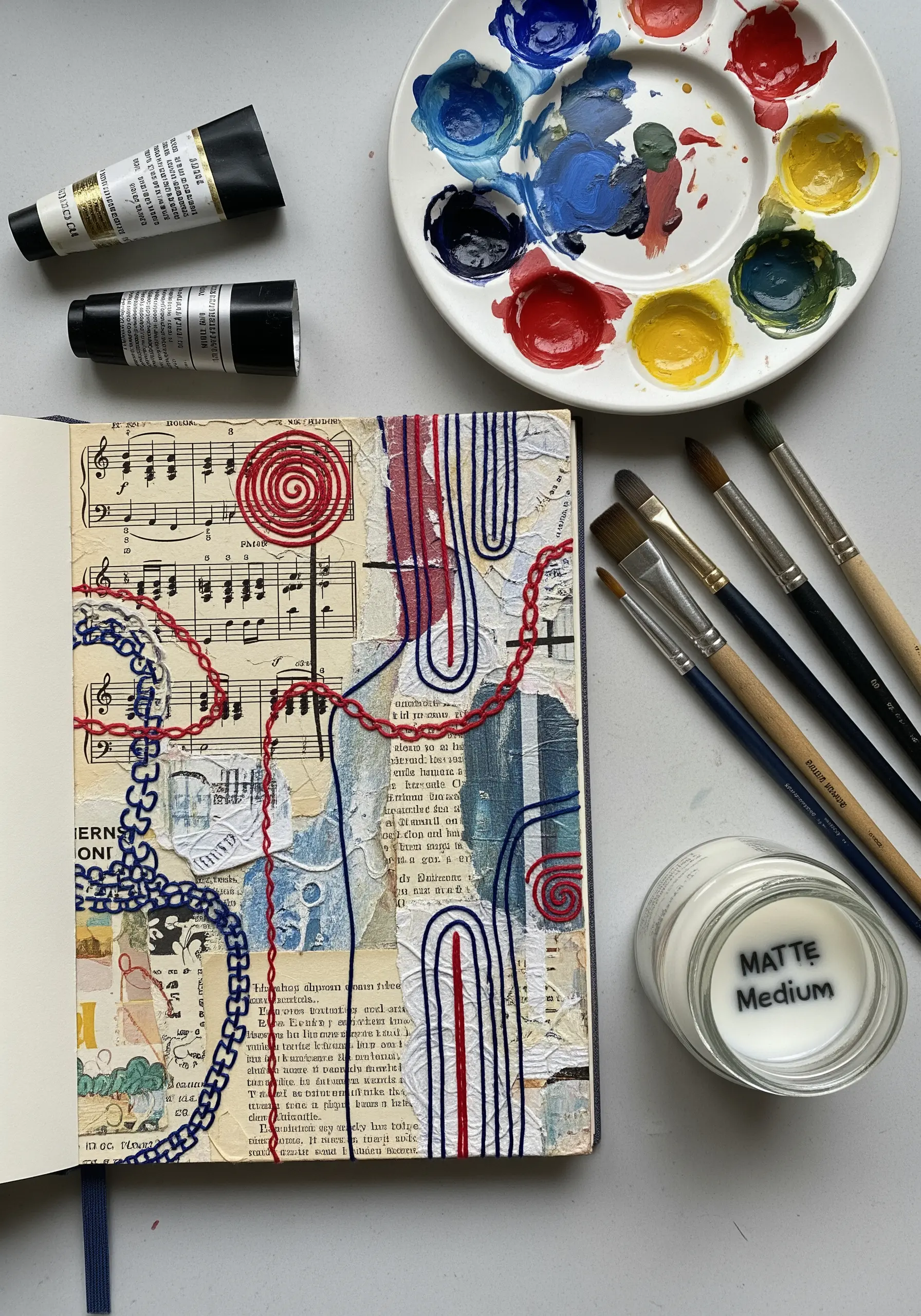
Elevate your art journal pages by stitching directly onto a finished collage.
First, build your background with torn papers, sheet music, gesso, and ink washes, ensuring the page is completely dry before you begin stitching.
Use a simple but effective stitch, like a chain stitch, to draw unifying lines that flow across the different collage elements, guiding the eye and tying the composition together.
This allows you to integrate tiny stitches for depth, adding a final tactile layer that paint alone cannot achieve.
5. Geometric Paper Stitching: Modern Gift Embellishments
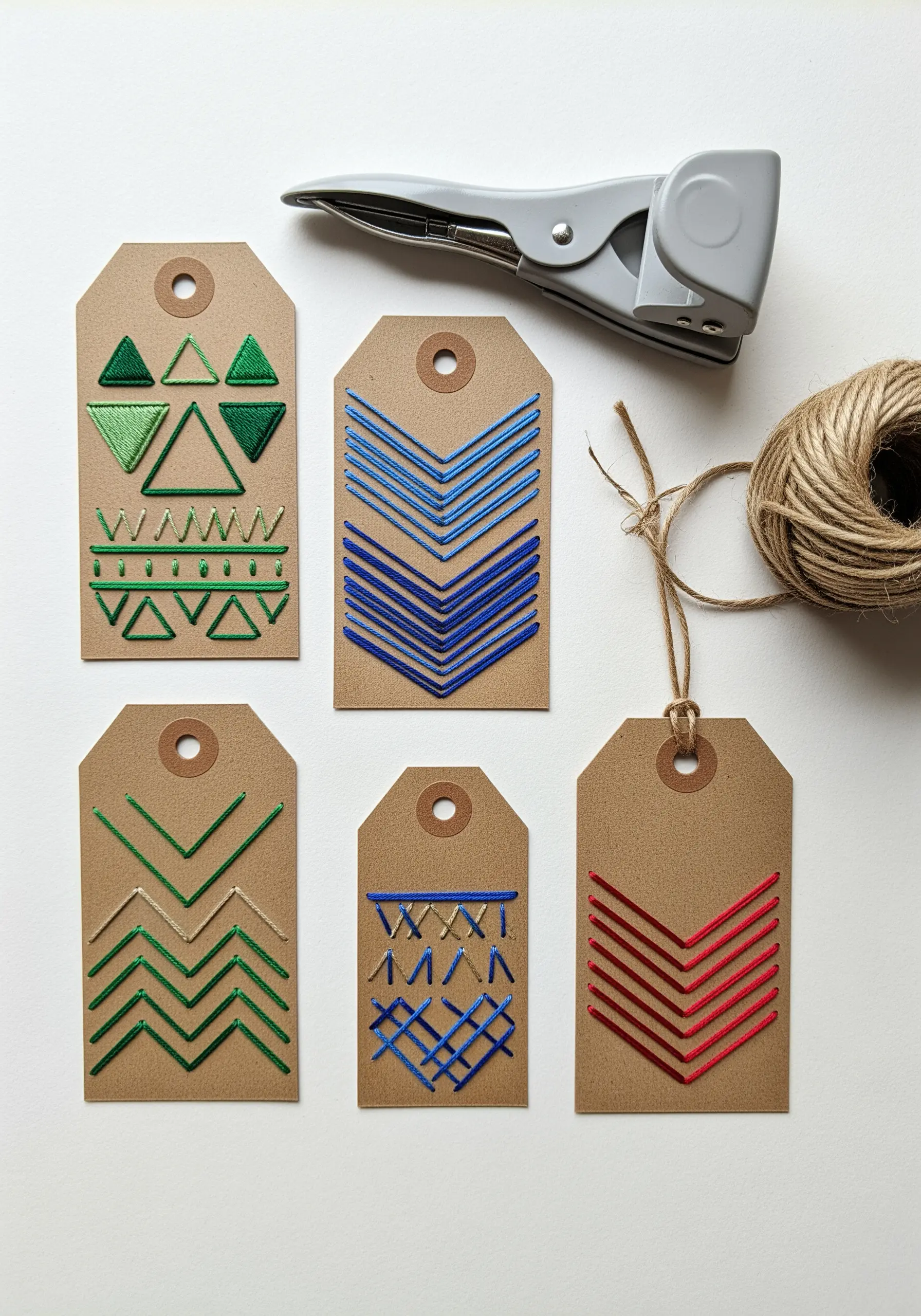
Turn simple cardstock tags into bespoke works of art by adding clean, geometric embroidery.
The key to crisp stitches on paper is to pre-punch your holes along a grid using an awl or a thick needle; this prevents tearing and ensures perfect stitch placement.
Use satin stitch to fill triangles and chevrons with solid color, and use backstitch for sharp, graphic outlines.
This is a perfect way to create quick and personalized embroidered gifts using leftover threads from larger projects.
6. Illustrative Stitching: Enhancing Ink with Metallic Thread
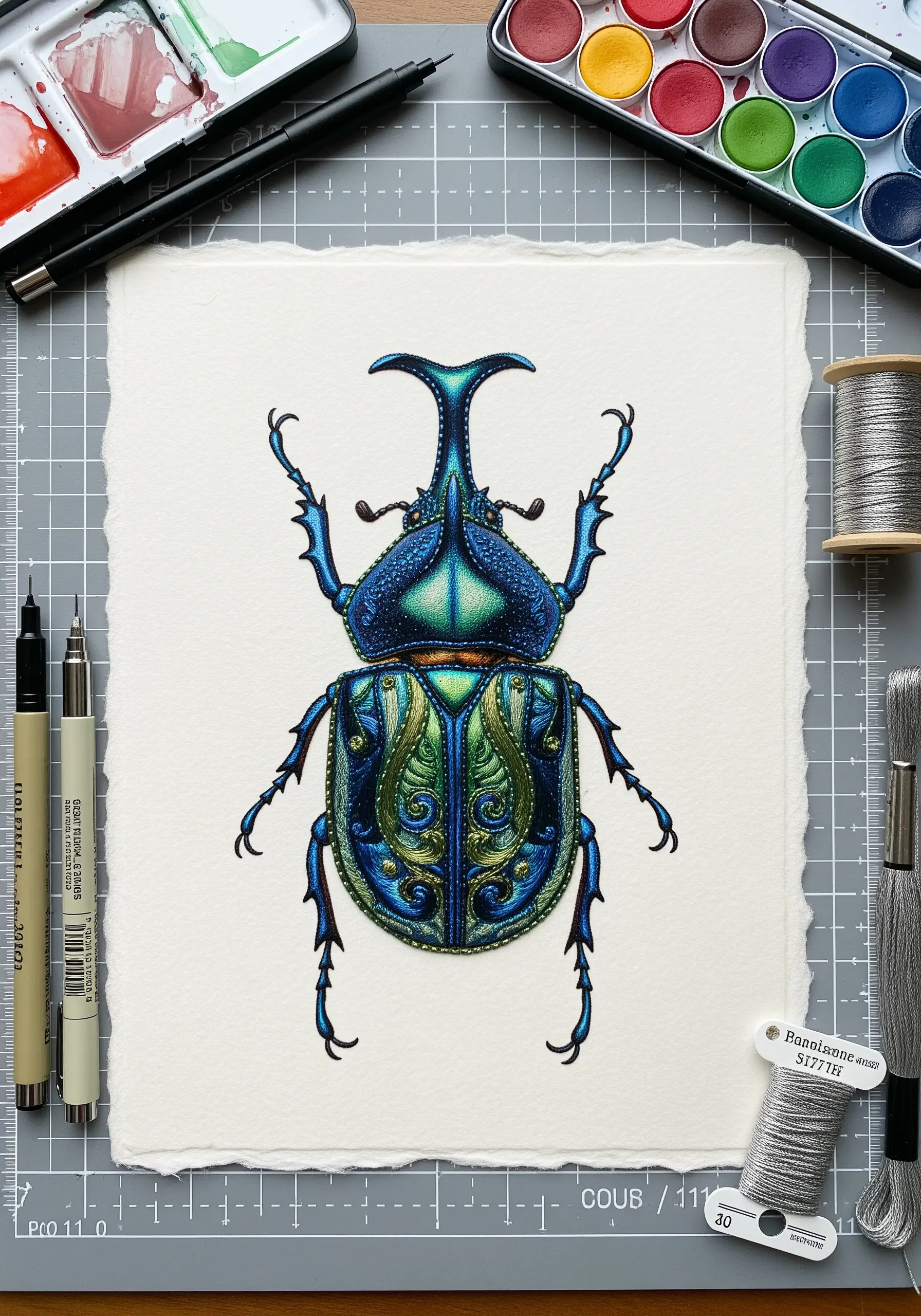
Start with a detailed ink illustration on heavy, cold-press watercolor paper.
Instead of filling large areas, use thread to add strategic accents. Identify where light would naturally hit and add highlights with a single strand of metallic or silk floss.
Employ sparse, deliberate stitches—like single straight stitches or tiny seed stitches—to mimic the iridescence of a beetle’s carapace or the shimmer on a wing.
This technique preserves the delicacy of the illustration, a perfect example of how paper can make simple stitches look magical.
7. Architectural String Art: Creating Urban Light and Shadow
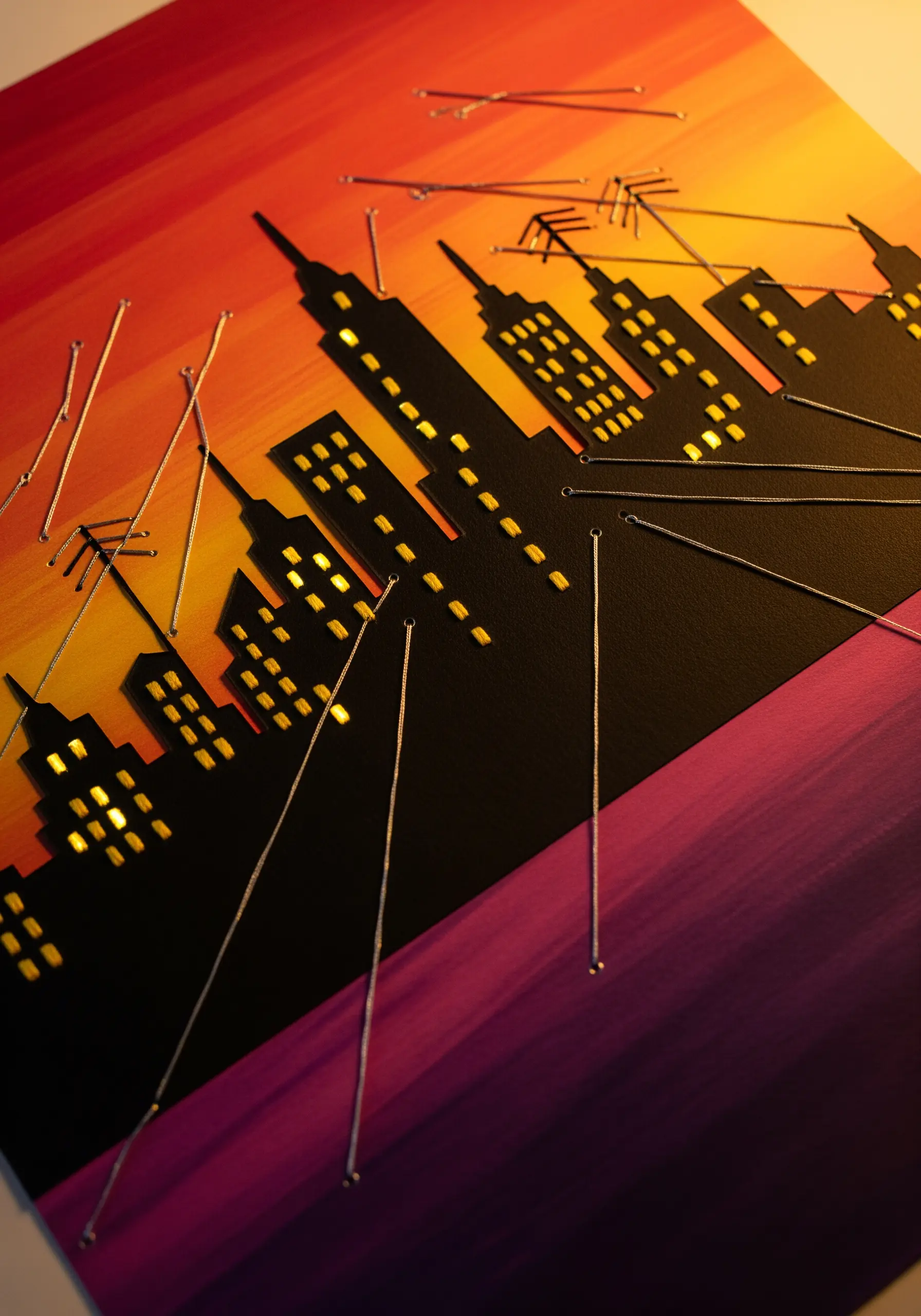
Combine paper cutting with string art techniques for a dramatic, modern cityscape.
Cut building silhouettes from black cardstock and mount them on a background with a painted sunset gradient.
Then, pre-punch holes around the scene and stretch metallic thread between them to create dynamic lines representing light rays or abstract energy.
This is one of the most effective modern thread landscape projects for capturing urban energy and movement.
8. Paper as Fabric: A Floral Wreath on Handmade Paper
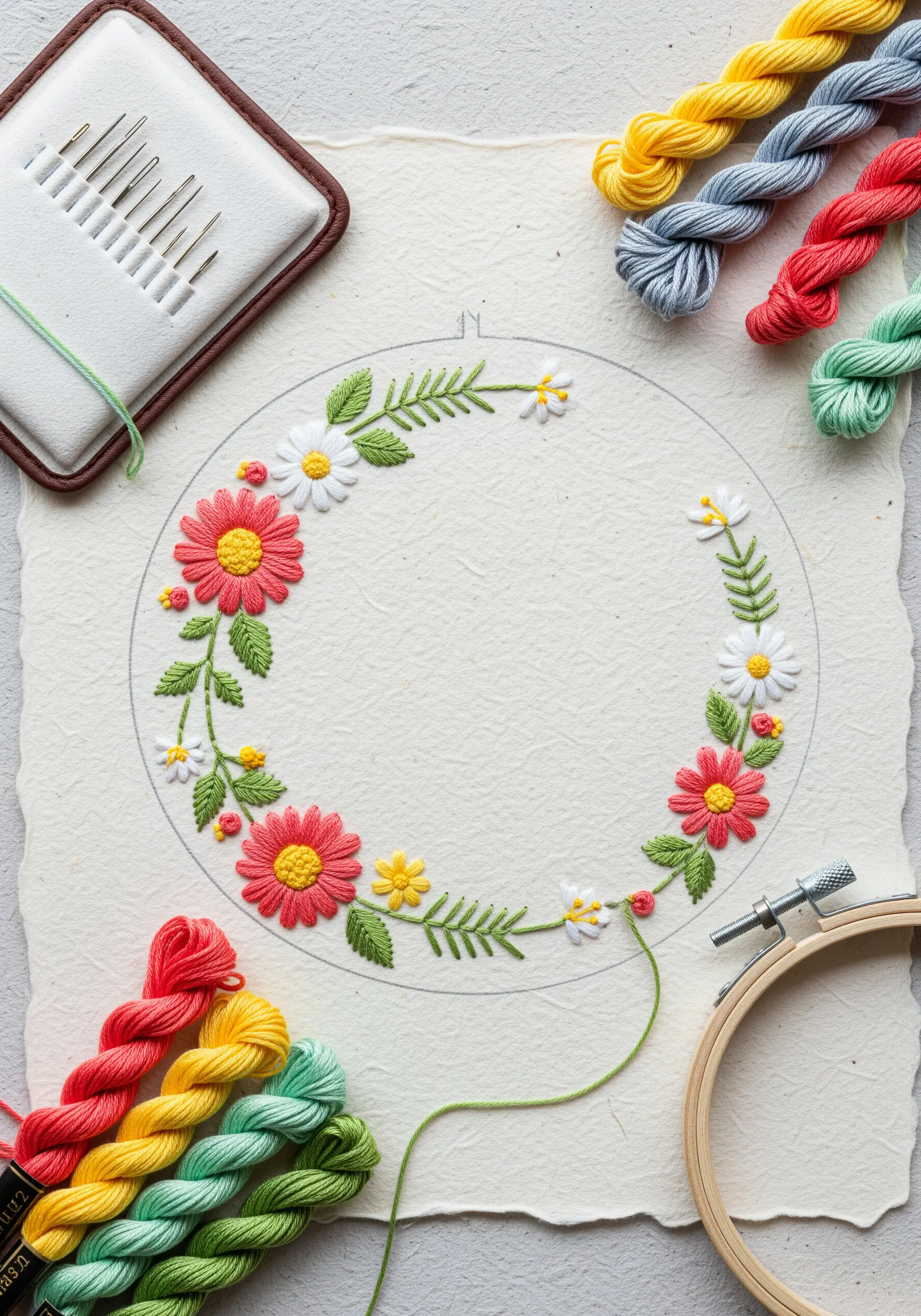
Use high-quality, fibrous handmade paper as your stitching ground to add instant organic texture to your work.
To avoid tearing this delicate surface, choose a fine needle and limit your floss to two or three strands.
Select stitches that create minimal stress on the paper, such as lazy daisies for petals, small French knots for flower centers, and simple fishbone stitches for leaves.
This method is perfect for creating delicate wildflower hoop art projects on an unconventional surface.
9. Stitched Cartography: Building 3D Topographical Maps
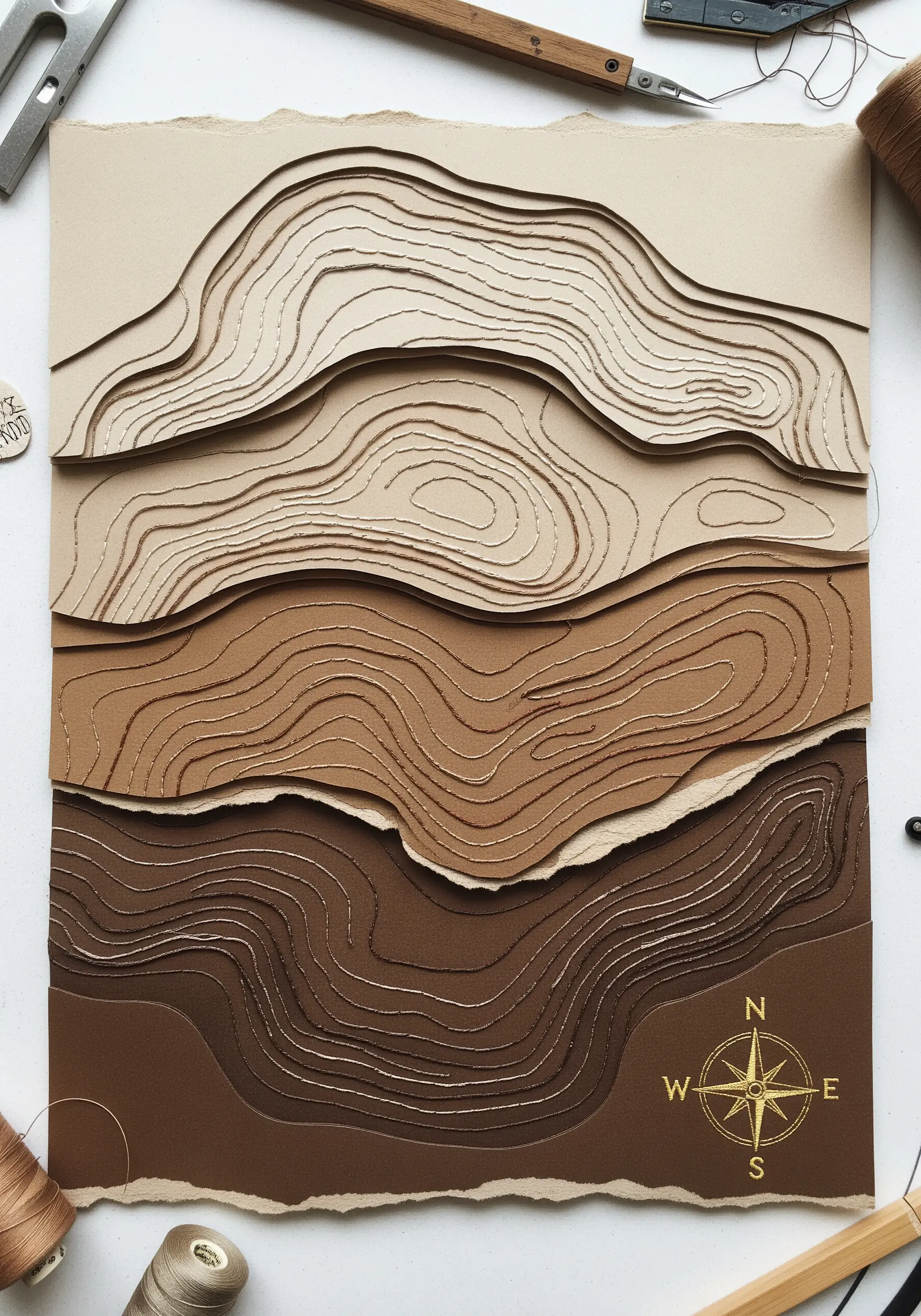
Create a stunning sense of depth and elevation by layering cutouts of cardstock in a monochromatic gradient.
Each torn-edge layer represents a different altitude, forming a tangible, 3D landscape.
Instead of drawing the fine contour lines, stitch them using a simple backstitch with a single strand of thread that contrasts slightly with the paper.
The thread physically traces the land’s form, using one of the most effective abstract stitching techniques to convey geography.
10. Photo Embroidery: Adding Color to Monochrome Prints
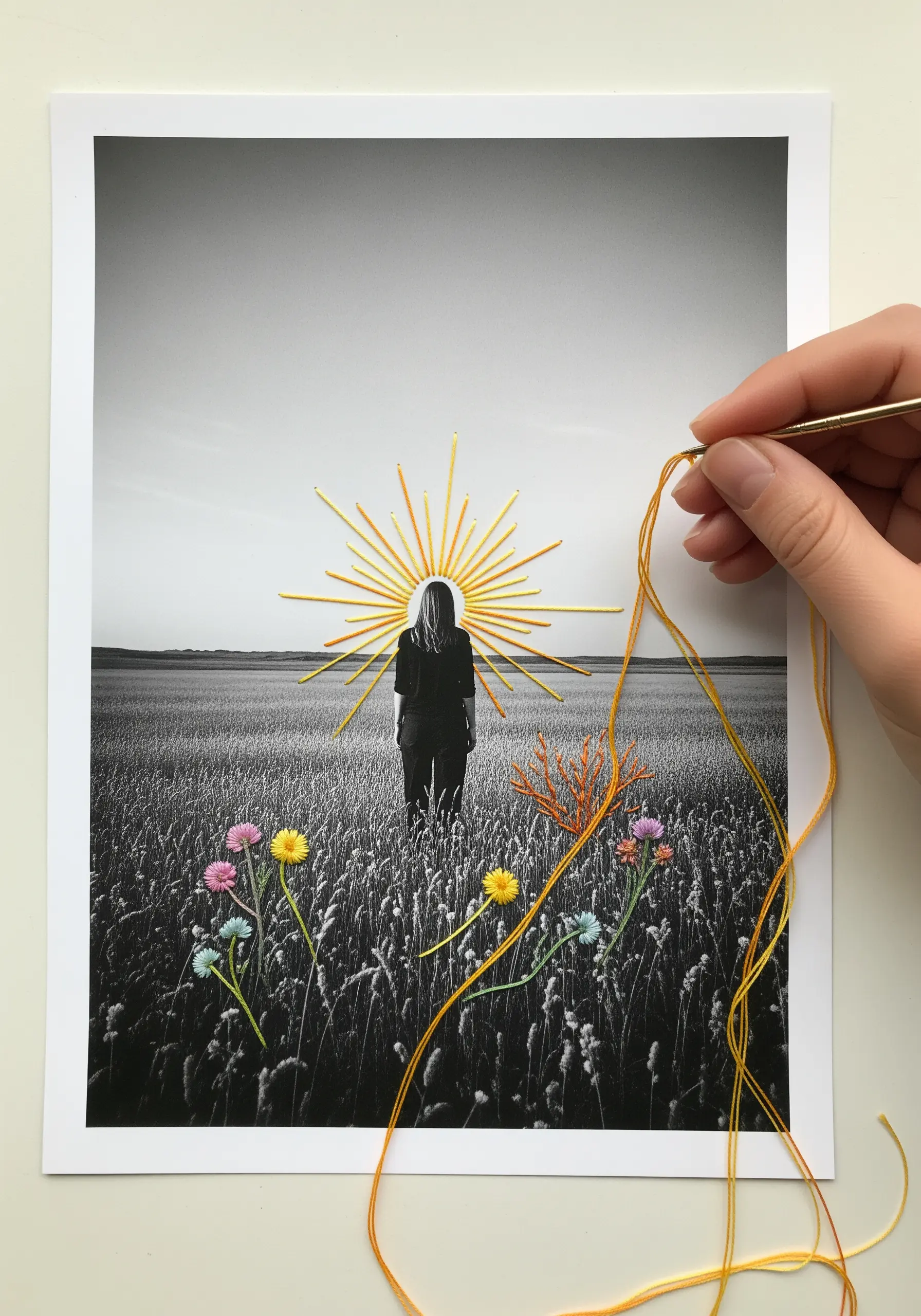
Transform a black-and-white photograph by selectively adding stitched color, creating a powerful emotional focal point.
Print your image on matte photo paper, which provides a receptive, non-glossy surface for your thread.
Use brightly colored floss to add imaginative or symbolic elements, like a radiant sunburst behind a figure or vibrant flowers blooming from the ground.
This is one of those mixed media embroidery ideas that can give old memories a new, powerful voice.
11. Paper Quilting: Unifying Patterns with Simple Stitches
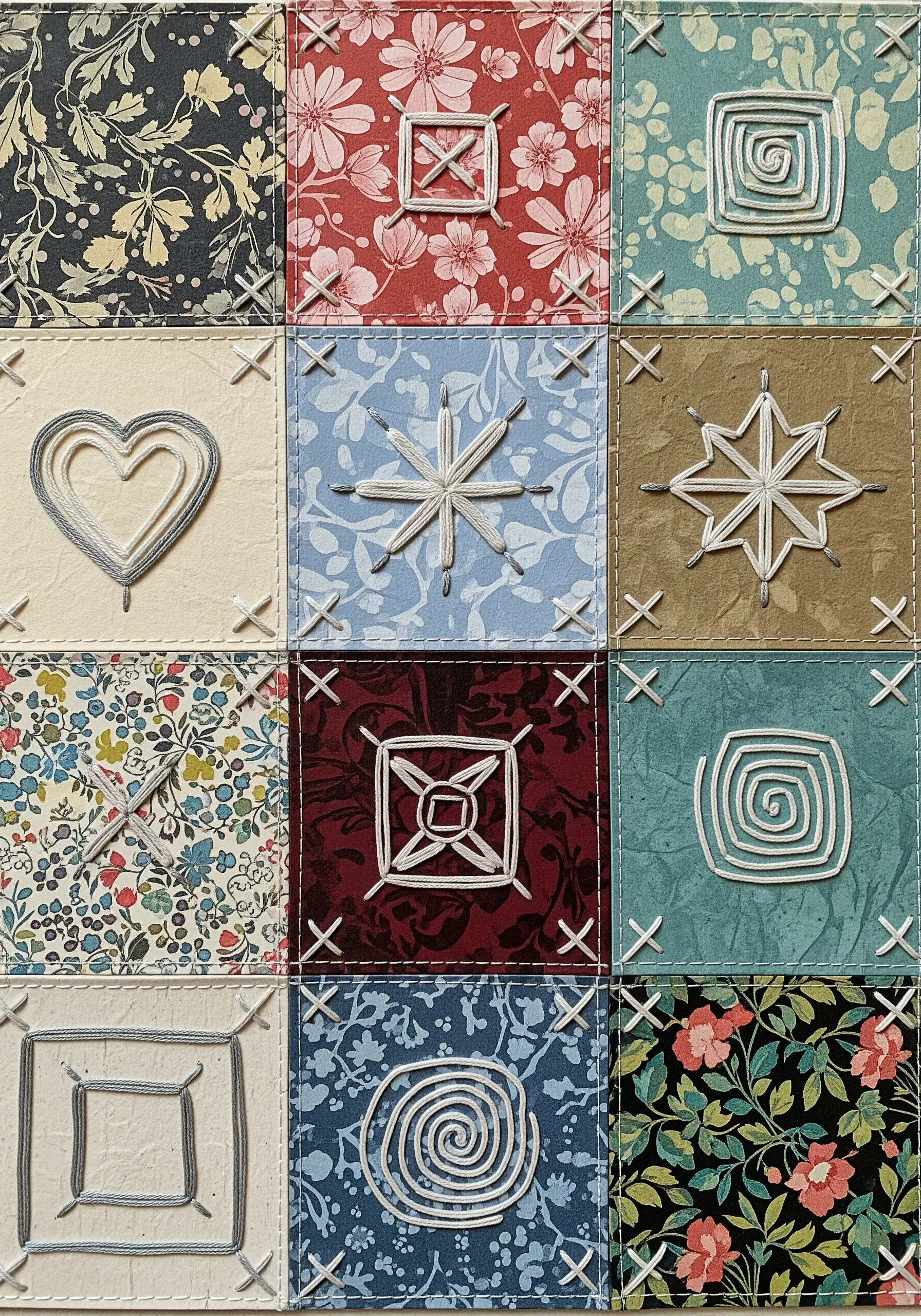
Create the look of a traditional quilt by arranging squares of decorative or handmade paper on a cardstock base.
Use a contrasting thread, like a bright white, to add simple cross stitches at the corners where the “blocks” meet, giving the illusion of hand-sewn seams.
This overarching stitch element provides visual unity, tying all the disparate patterns together into a cohesive and charming piece.
In the center of each square, add one of your favorite minimalist stitched ideas.
12. Celestial Outlines: Defining Painted Forms with Thread
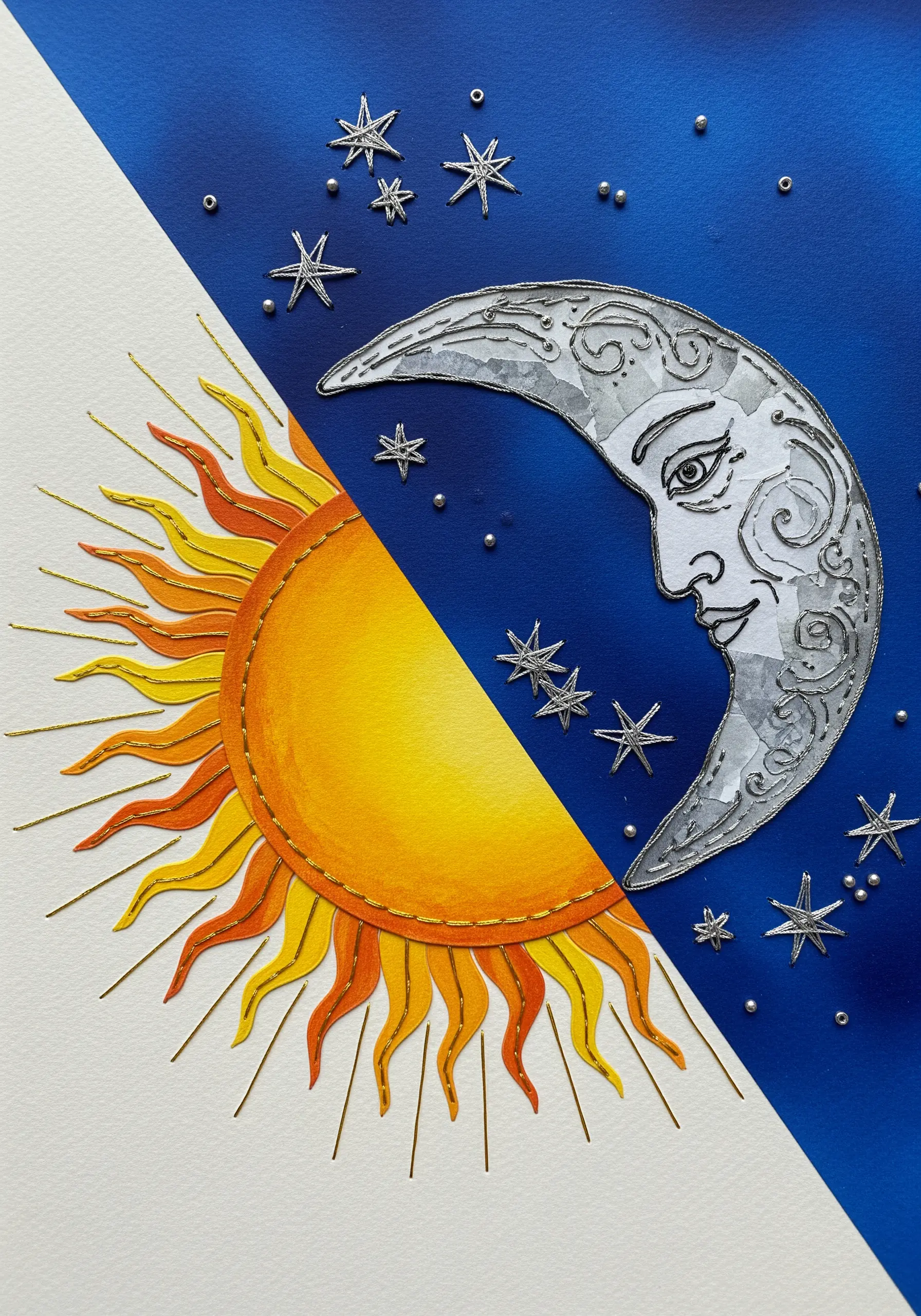
Combine the softness of paint with the crispness of thread to create beautifully defined illustrations.
Use watercolor or gouache to paint a celestial body, blending the colors to create a soft, luminous gradient.
Once the paint is dry, use a metallic thread to outline the primary shapes with a backstitch or stem stitch. This adds a sharp, graphic edge that makes the soft, painted areas pop.
This technique is perfect for creating luminous celestial embroidery wall designs.
13. Stitched Translucence: Layering Vellum and Botanicals
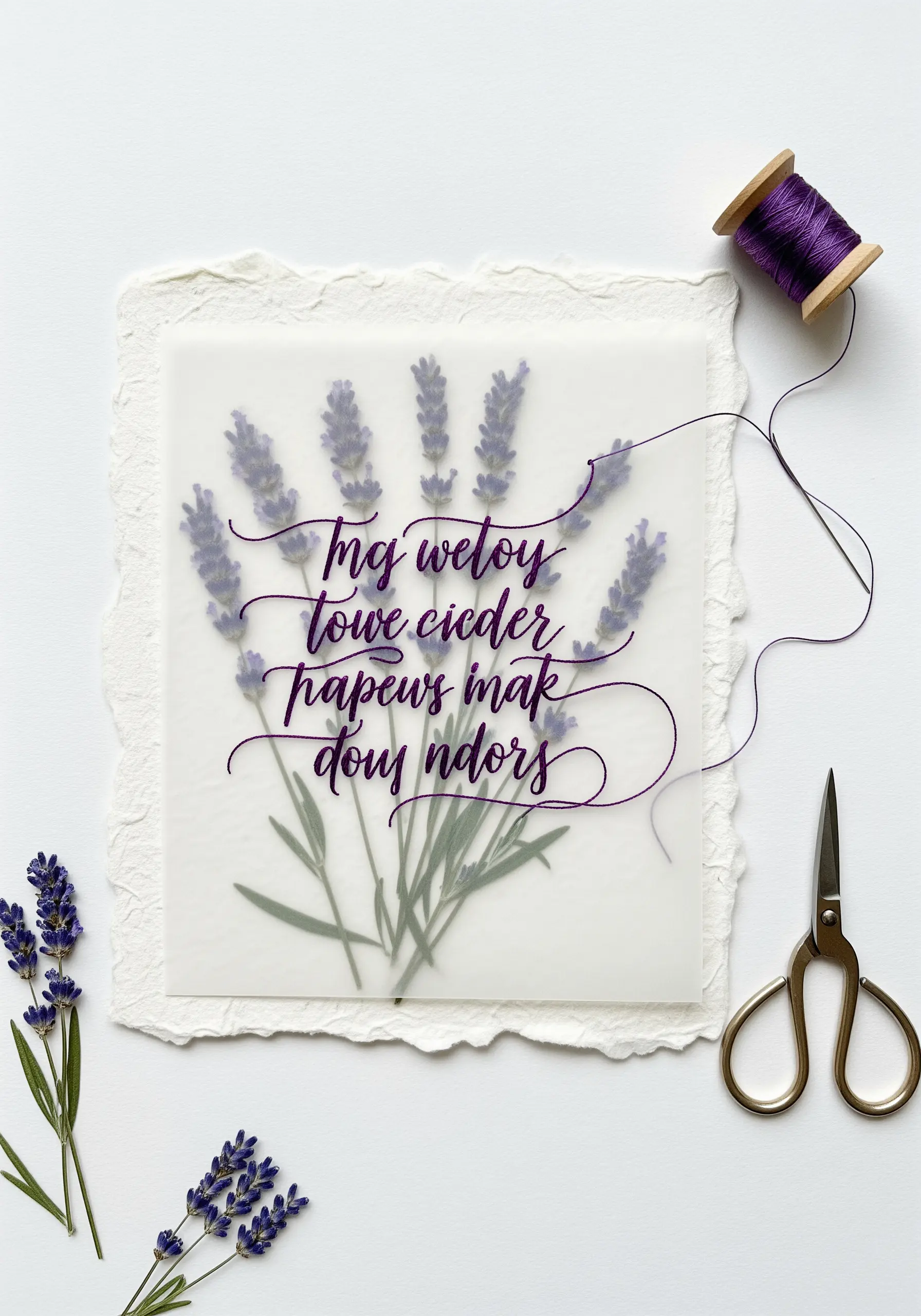
Create a delicate, ethereal effect by stitching a quote or design onto a sheet of vellum.
Place pressed flowers or leaves behind the vellum and mount the entire piece onto textured paper; this creates a soft, diffused silhouette of the botanicals.
Carefully pre-pierce your stitch holes, as vellum is fragile. The paper’s translucency creates a beautiful interplay of shadow and light.
This is one of the most ethereal botanical embroidery ideas you can try.
14. Watercolor Mandalas: Blending Geometry and Fluid Color
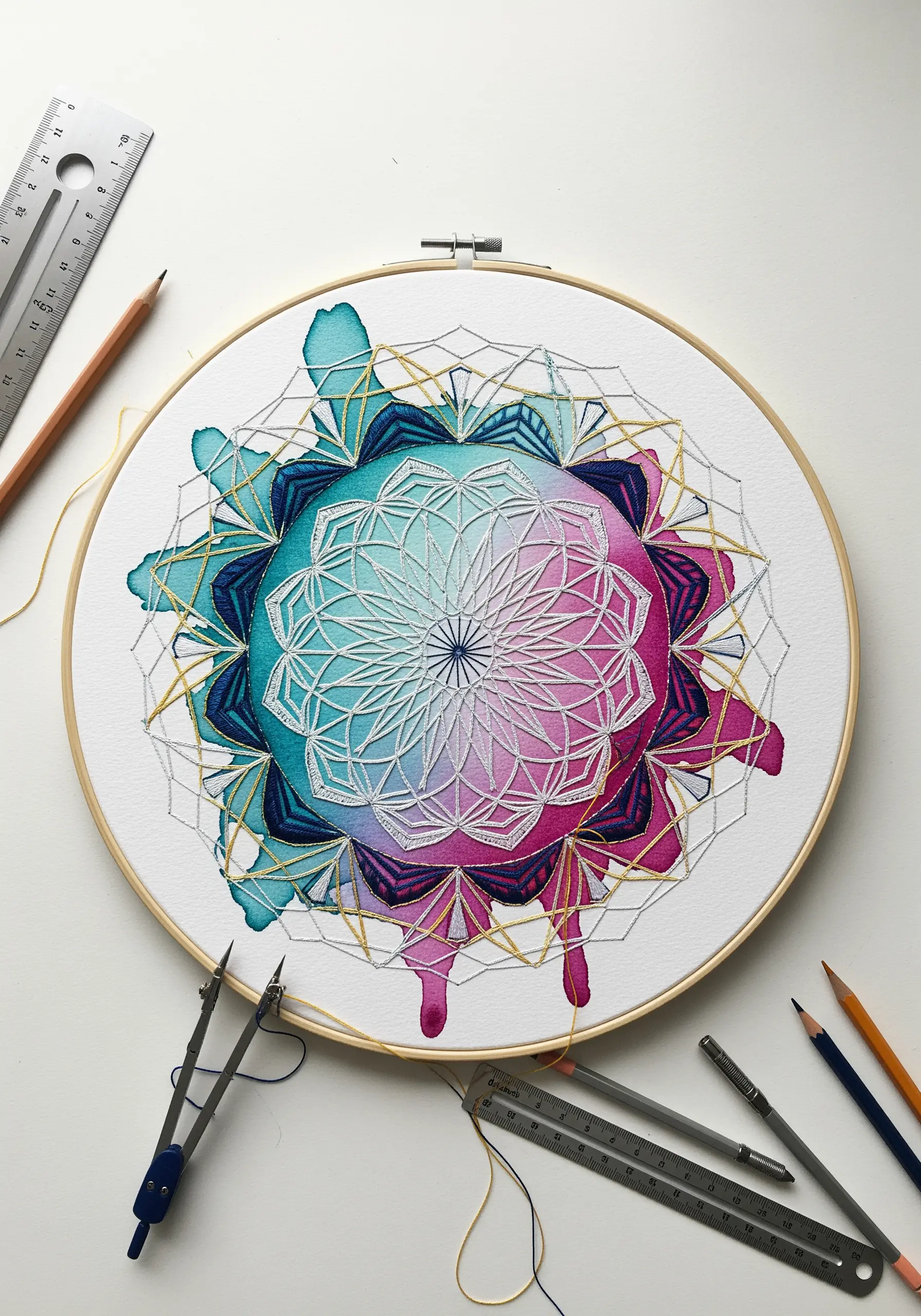
Add an organic, free-flowing element to the precise geometry of a mandala by incorporating watercolor.
After stitching your primary lines on fabric—using a crisp white or metallic thread for contrast—use a fine brush to apply watercolor directly inside the stitched sections.
Encourage the color to bleed and pool against the thread lines, which act as a resist.
This transforms traditional modern mandala stitch patterns into fluid, organic art, creating a beautiful tension between control and freedom.
15. The Embroidered Recipe: Illustrating Cards with Stitches
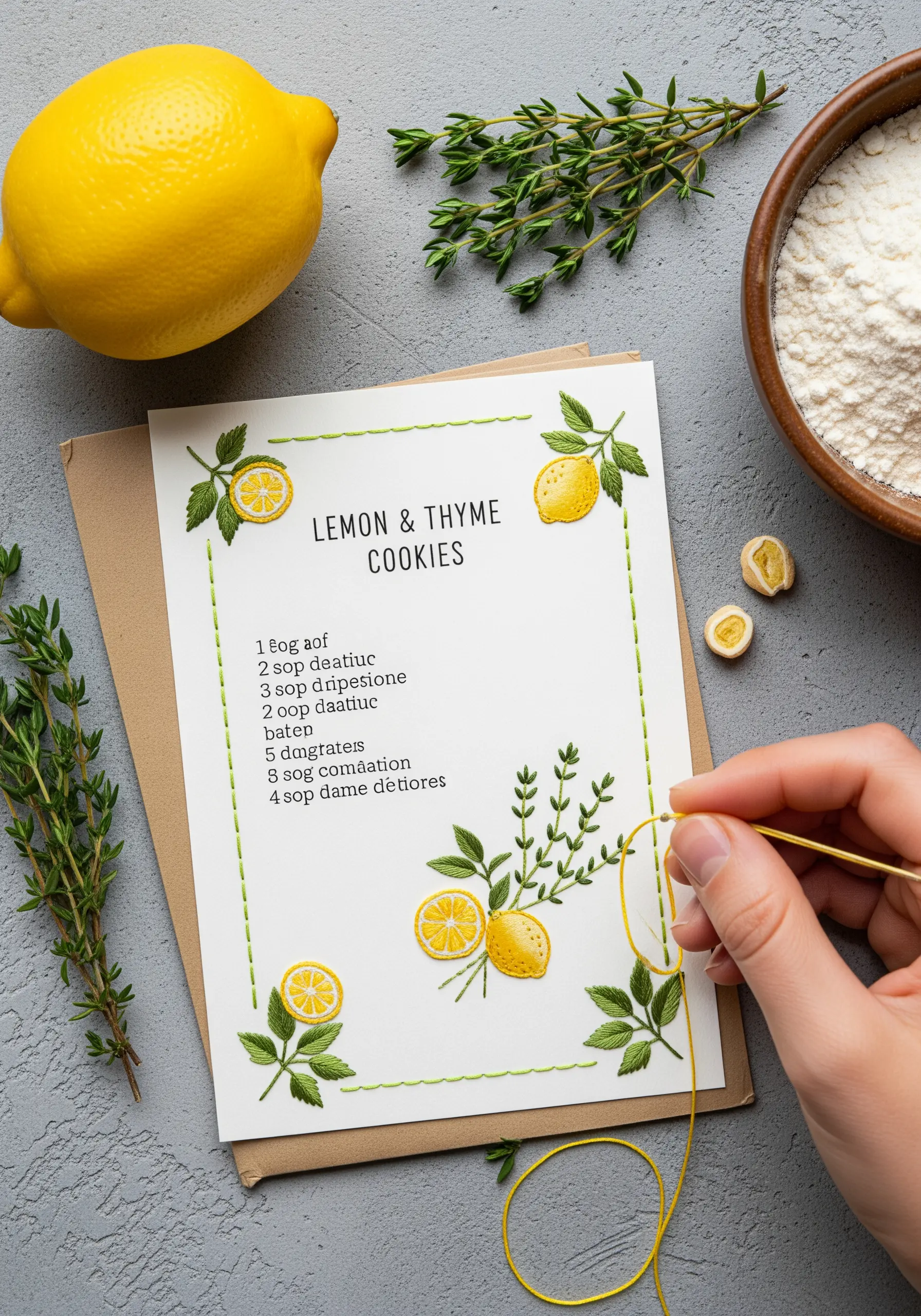
Elevate a favorite recipe from a simple card into a treasured kitchen heirloom by adding hand-stitched illustrations.
Print the text on a heavy, high-quality cardstock, leaving ample white space for your botanical motifs.
Use simple, effective stitches—like satin stitch for lemon slices and fishbone stitch for leaves—to add a touch of handmade charm.
This is one of the most charming embroidered gift ideas, turning a simple recipe into a work of art.
16. Illuminated Stitches: Crafting a Backlit Paper Lantern
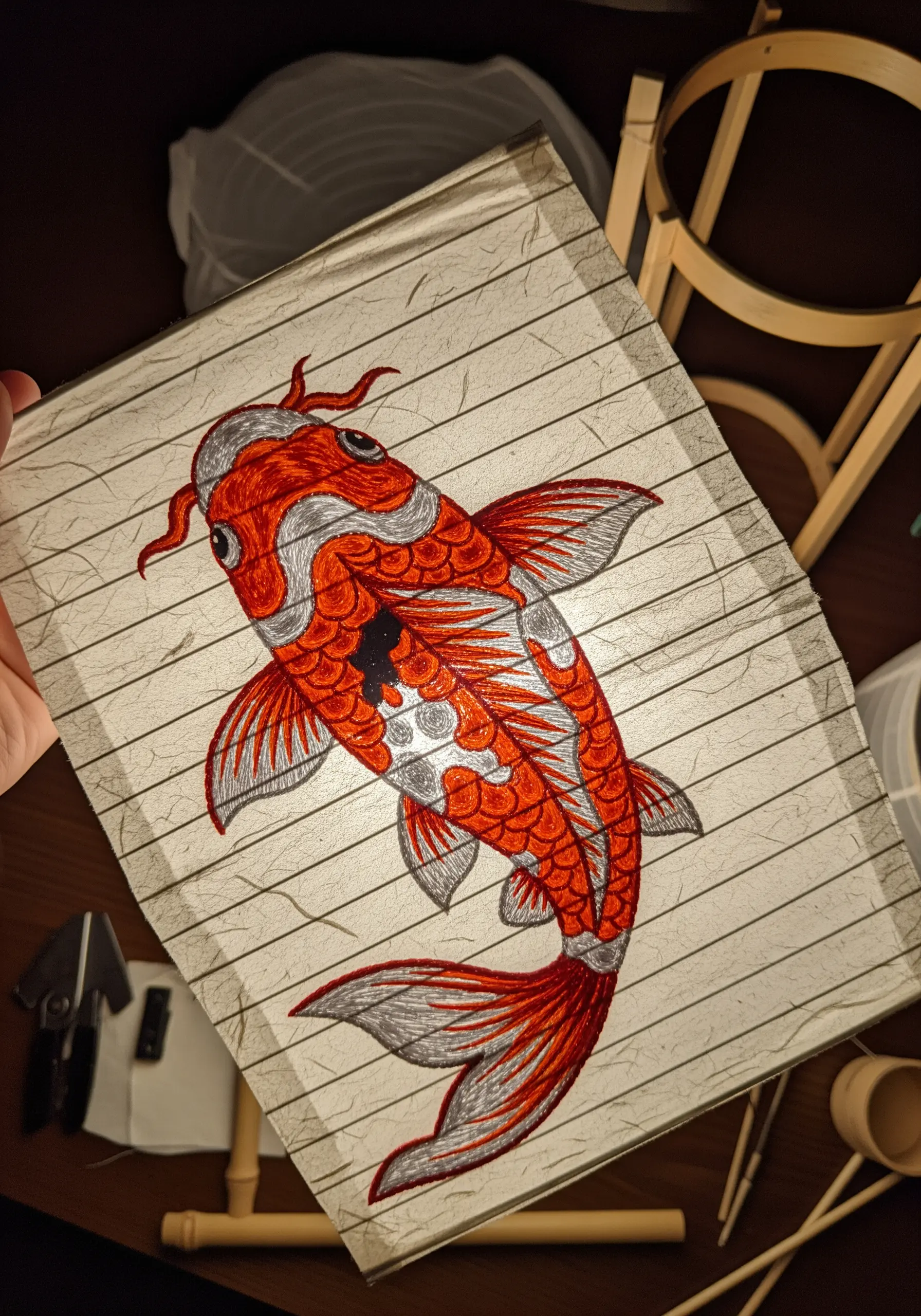
Stitch your design onto a semi-translucent paper, such as rice paper or vellum, to create a stunning panel for a lantern.
When backlit, the light will shine through the paper and illuminate the threads, making your colors appear exceptionally vibrant.
Use dense satin stitches to ensure the thread provides solid, brilliant color against the light source.
You can create stunning DIY art objects by merging the craft of embroidery with the functional beauty of light.
17. Stitch-Sculpted Feathers: Crafting 3D Embellishments
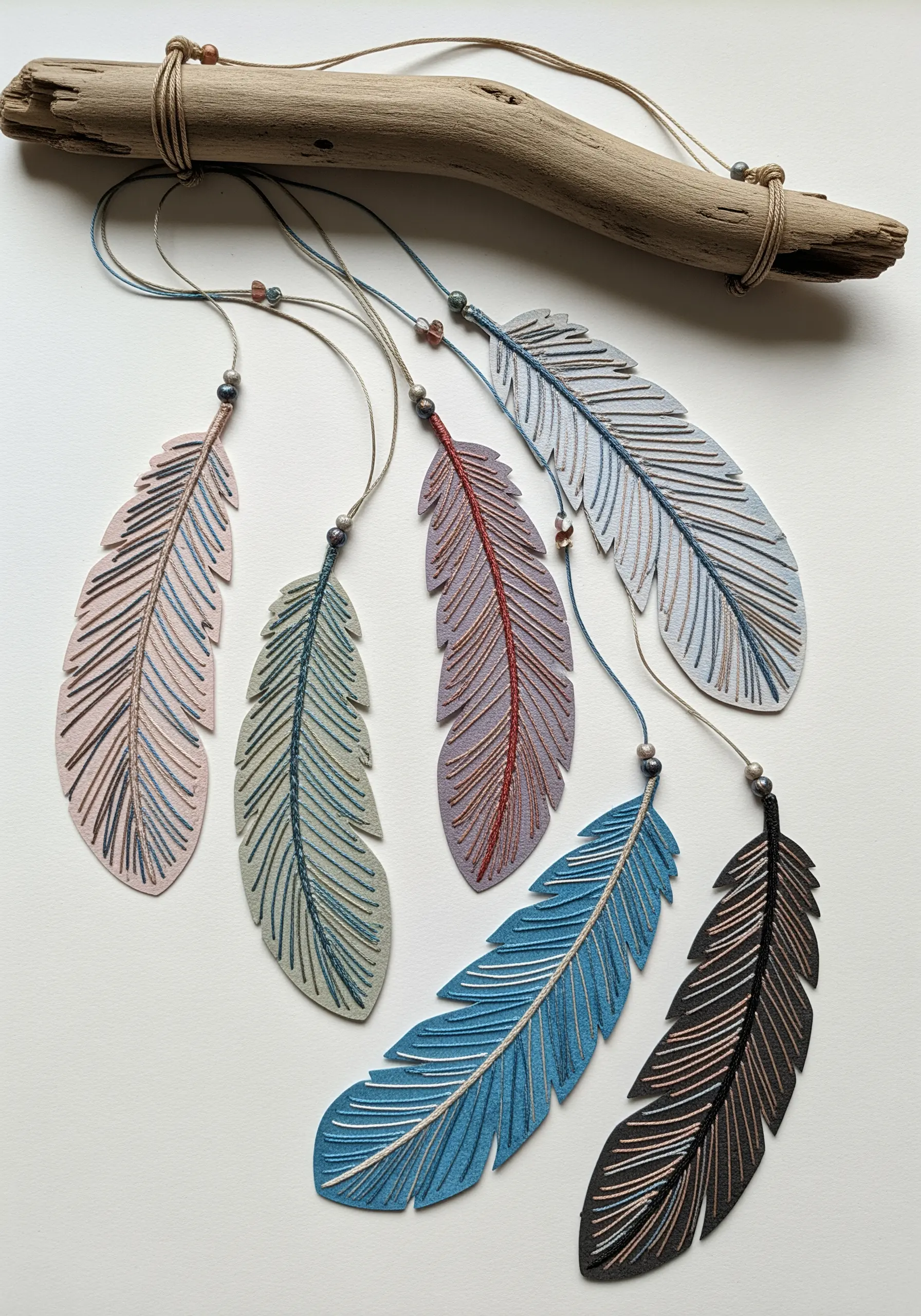
Create tactile, dimensional objects by stitching directly onto stiffened paper or felt before cutting them out.
For feathers, use long, dense straight stitches for the barbs and a contrasting backstitch for the central spine.
The density of the thread gives the paper a robust, fabric-like quality and a beautiful texture.
Once stitched, carefully cut out the shapes. The result is a collection of stunning handmade sculptures with a natural, bohemian feel.
18. A Coral Reef Canvas: Building Texture with Mixed Media
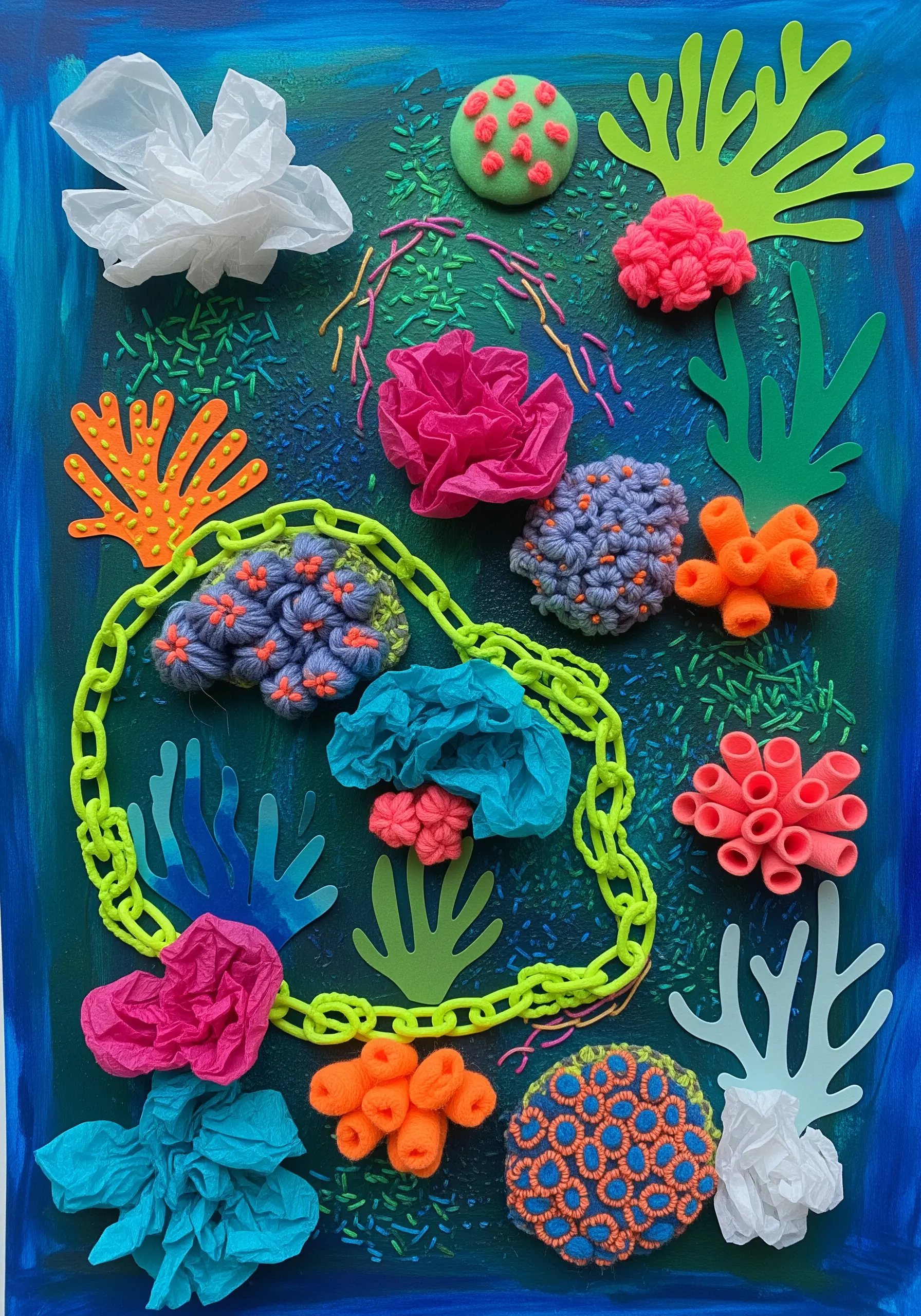
Construct a vibrant, tactile underwater scene by combining various materials on a painted canvas.
Use highly textural stitches like French knots and bullion knots to create coral formations that rise from the surface.
Integrate other elements like scrunched tissue paper, small pom-poms, paper cutouts, and even plastic chains, anchoring them with your needle and thread.
This maximalist approach is at the heart of creative mixed media embroidery crafts, encouraging you to think beyond just thread.
19. Refined Reading: An Elegant Embroidered Bookmark
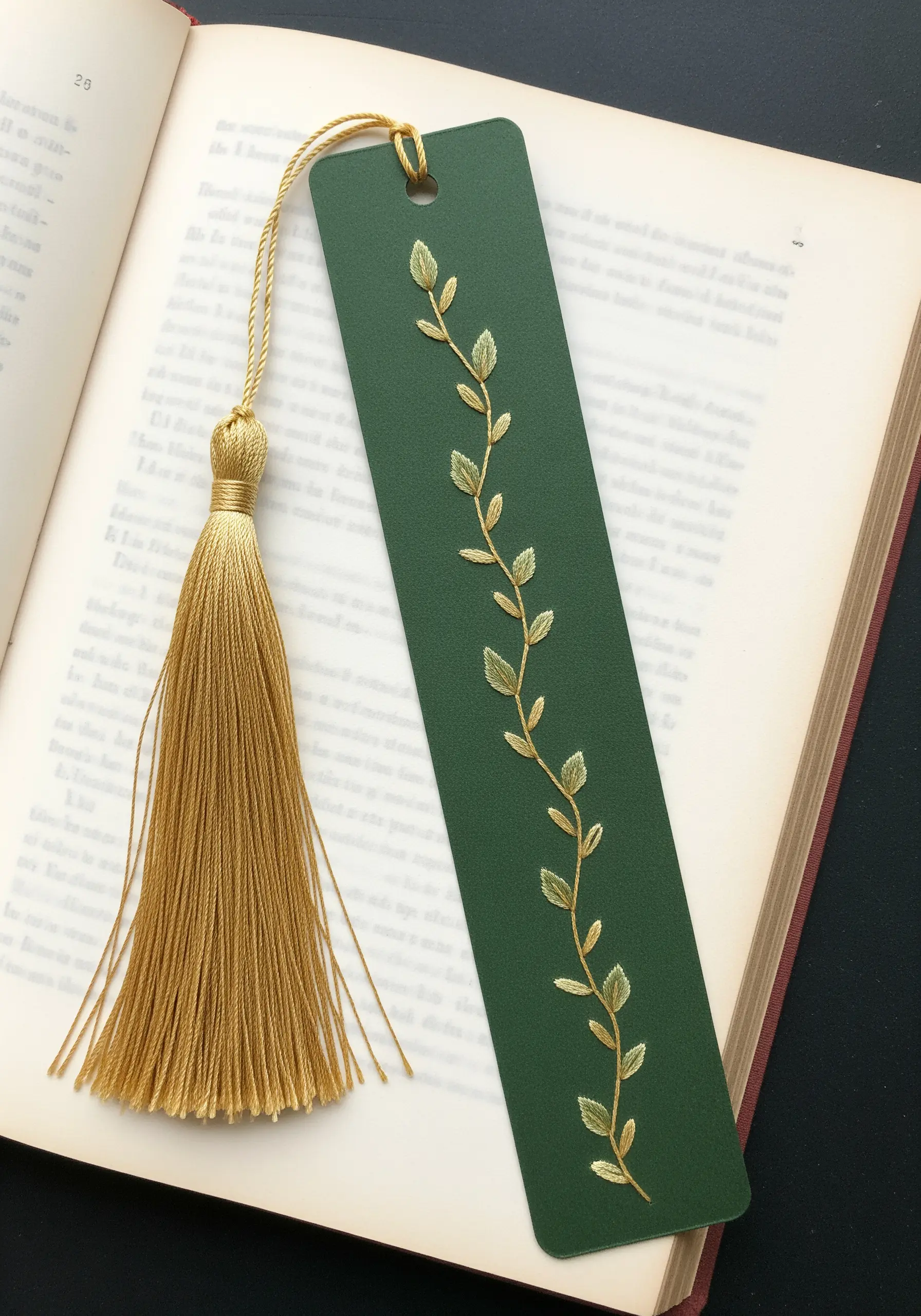
Transform a simple piece of cardstock into a sophisticated bookmark with a single, elegant embroidered motif.
A classic choice is a delicate vine, for which you can use a stem stitch to create a smooth, curving line.
Add leaves using a fishbone stitch or a single detached chain stitch (lazy daisy). Using a silk or metallic gold thread against a dark, rich paper color adds a touch of understated luxury.
This is one of the most elegant and easy DIY embroidered mixed-media bookmarks you can create.
20. Architectural Accents: Isolating Color with Stitching
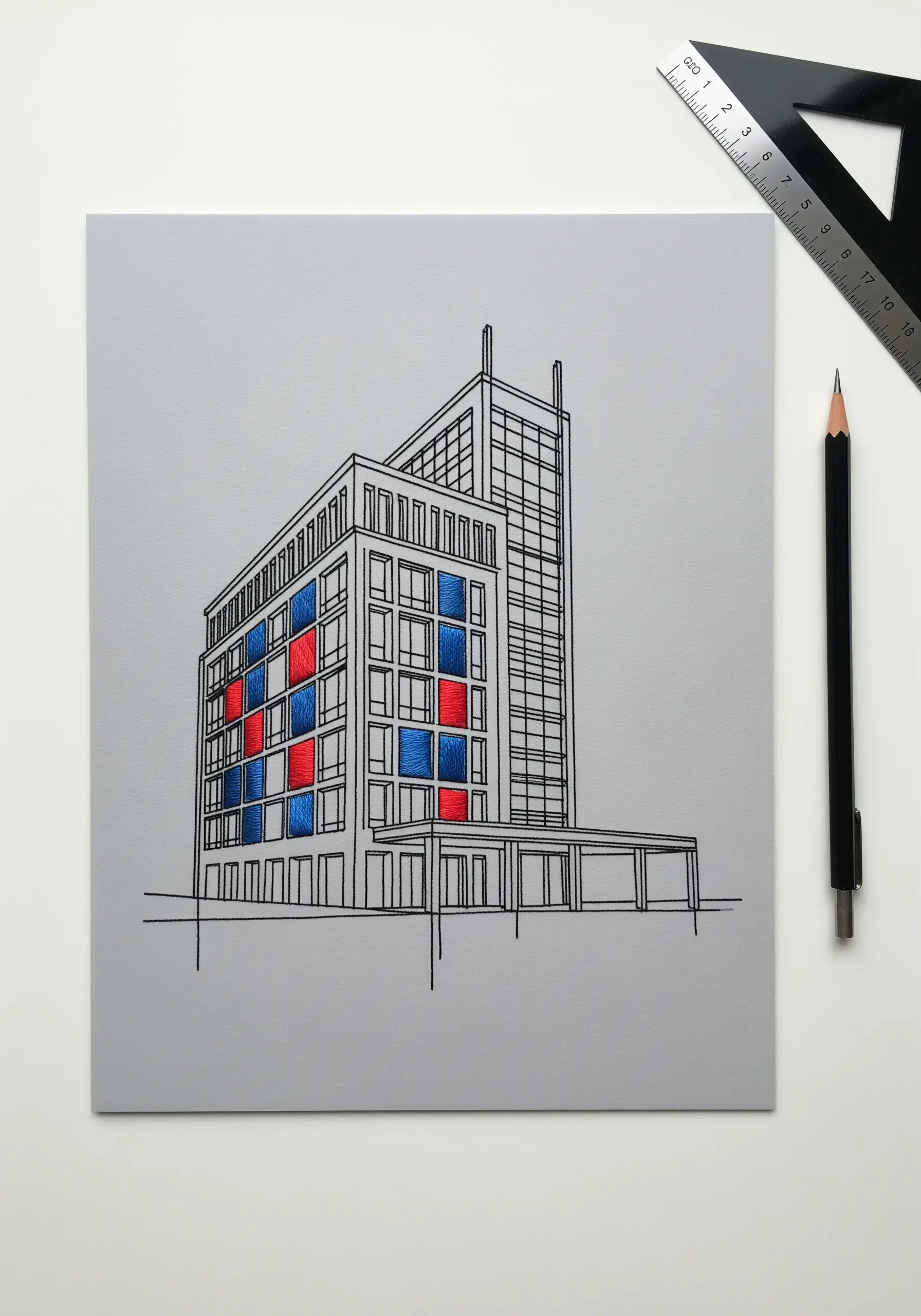
Use thread to add a powerful, selective pop of color to a monochrome architectural line drawing.
Print or draw your building on high-quality art paper. Then, instead of outlining the entire structure, choose just a few windows to fill with dense, vibrant satin stitch.
This technique of color isolation immediately draws the eye, turning the thread into a confident focal point.
The contrast creates modern, graphic minimal embroidery designs with architectural flair.