

Your denim jacket is more than just an item of clothing; it’s a canvas waiting for your story. But perhaps you feel your stitches haven’t quite captured the bold vision in your mind. You’re ready to move beyond simple patterns and create something that feels intentional, polished, and unmistakably yours.
This is where technique meets artistry. Elevating your embroidery isn’t about mastering hundreds of complex stitches. It’s about understanding how to use a few simple ones with purpose—how to control your stitch direction to create movement, how to blend colors to add depth, and how to combine textures for a truly dynamic finish.
Here, you’ll find ideas that transform your jacket from a craft project into a piece of wearable art. We’ll explore how to think like a designer, using composition, color theory, and texture to make every motif feel both personal and professional. It’s time to stitch with confidence and wear your creativity boldly.
1. Master the Directional Fill Stitch
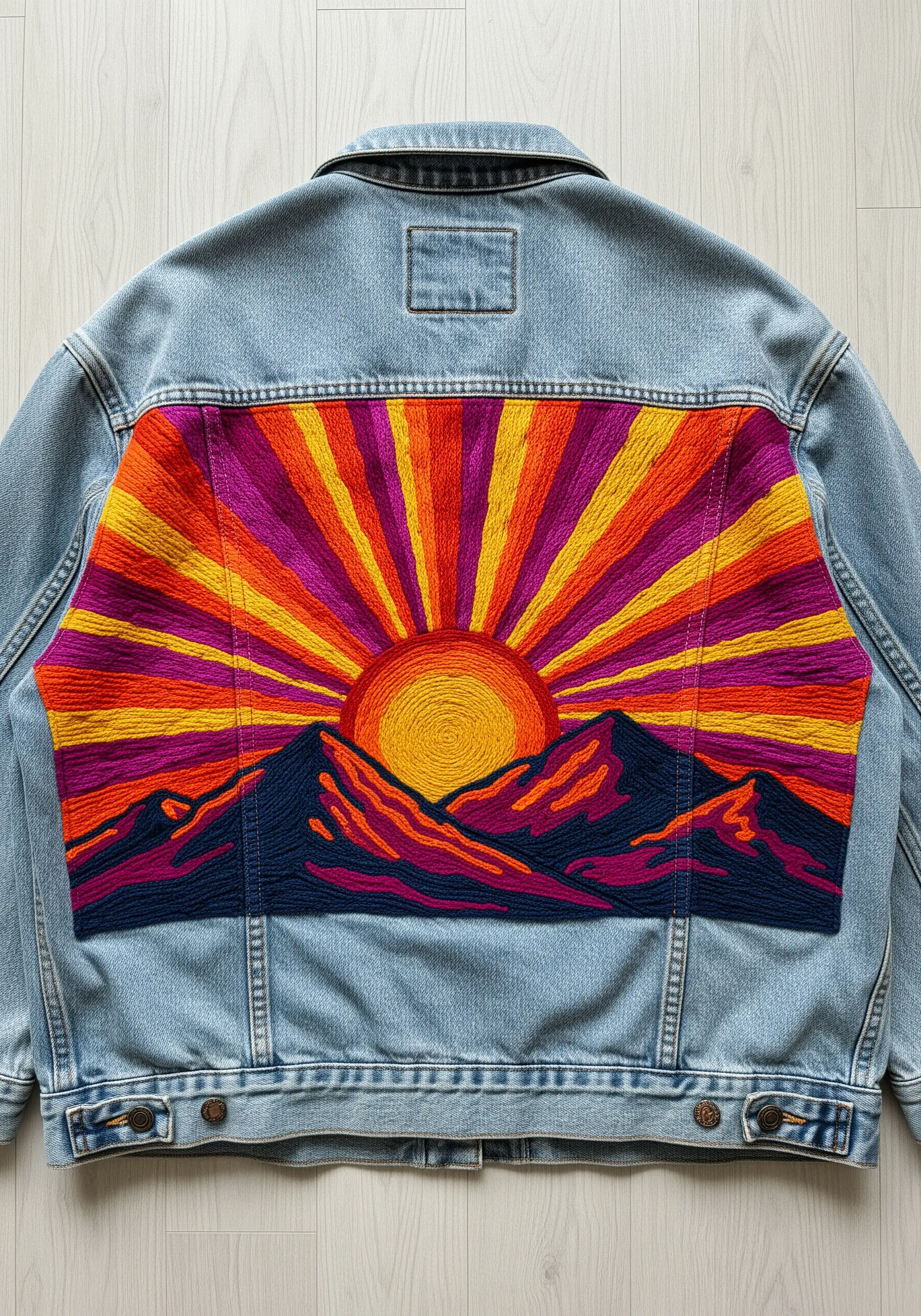
Create a dynamic sunset by using a long satin stitch that radiates from a central point, mimicking the movement of light.
For the sun itself, use a spiral of stem stitch or split stitch, starting from the center and working your way out for a dense, textured finish that contrasts with the smooth rays.
Vary the length of your stitches slightly where colors meet to create a softer, more blended transition instead of a hard line.
This technique turns a simple landscape into a statement piece by emphasizing energy and direction, drawing the eye across the entire back panel of the jacket.
2. Combine Outlines with Delicate Fills
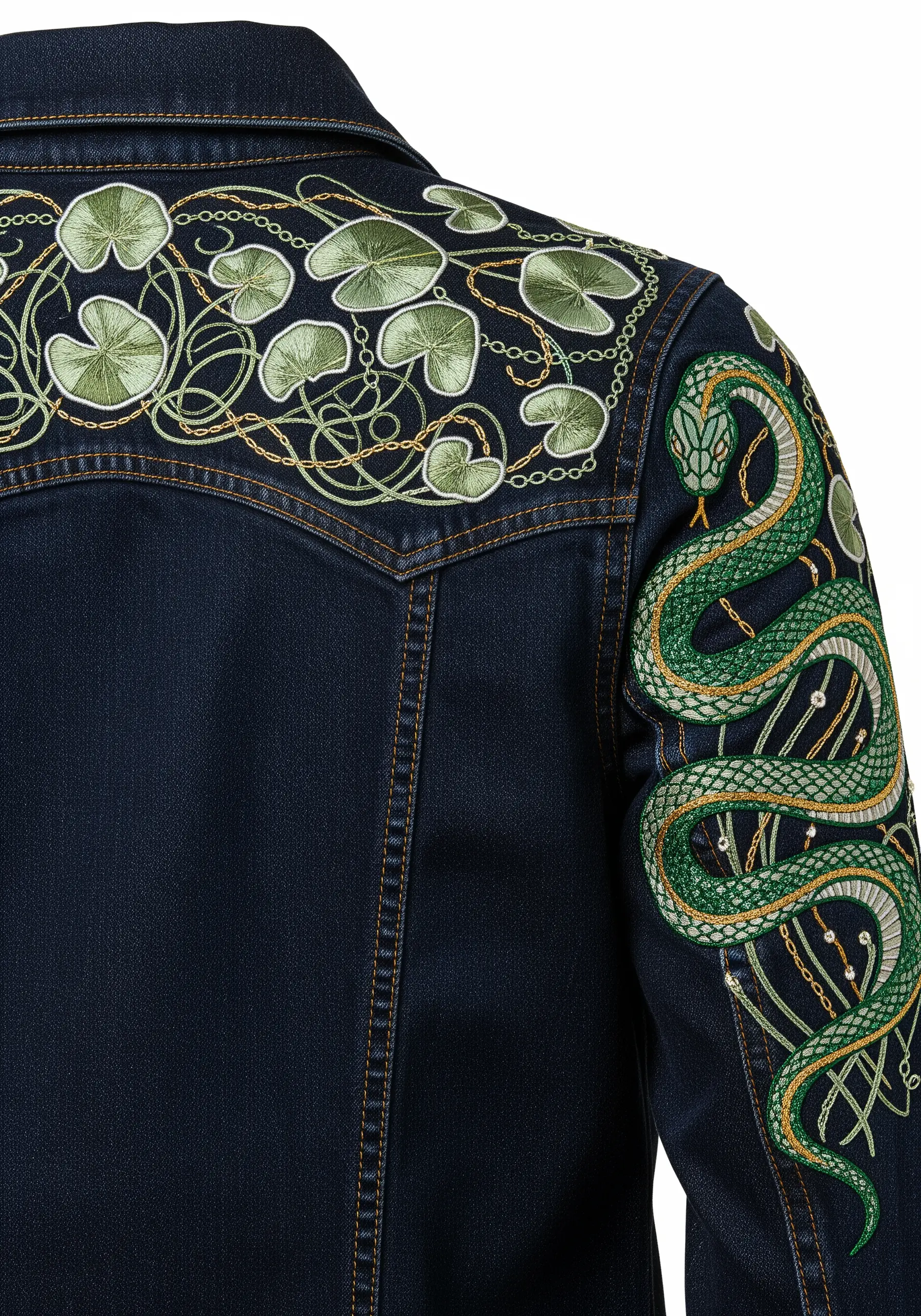
For an elegant Art Nouveau effect, pair a fine, decorative outline—like the golden chain stitch here—with a softly filled motif.
Use a single strand of thread for the leaves’ veins and a split stitch fill for the petals, which gives you more control over shading than a standard satin stitch.
The contrast between the metallic chain stitch and the matte green thread adds a layer of sophistication, making the design feel intentional and refined.
Placing this design asymmetrically over the shoulder and onto the sleeve creates a beautiful, organic flow that moves with you.
3. Blend Appliqué with Stitched Details
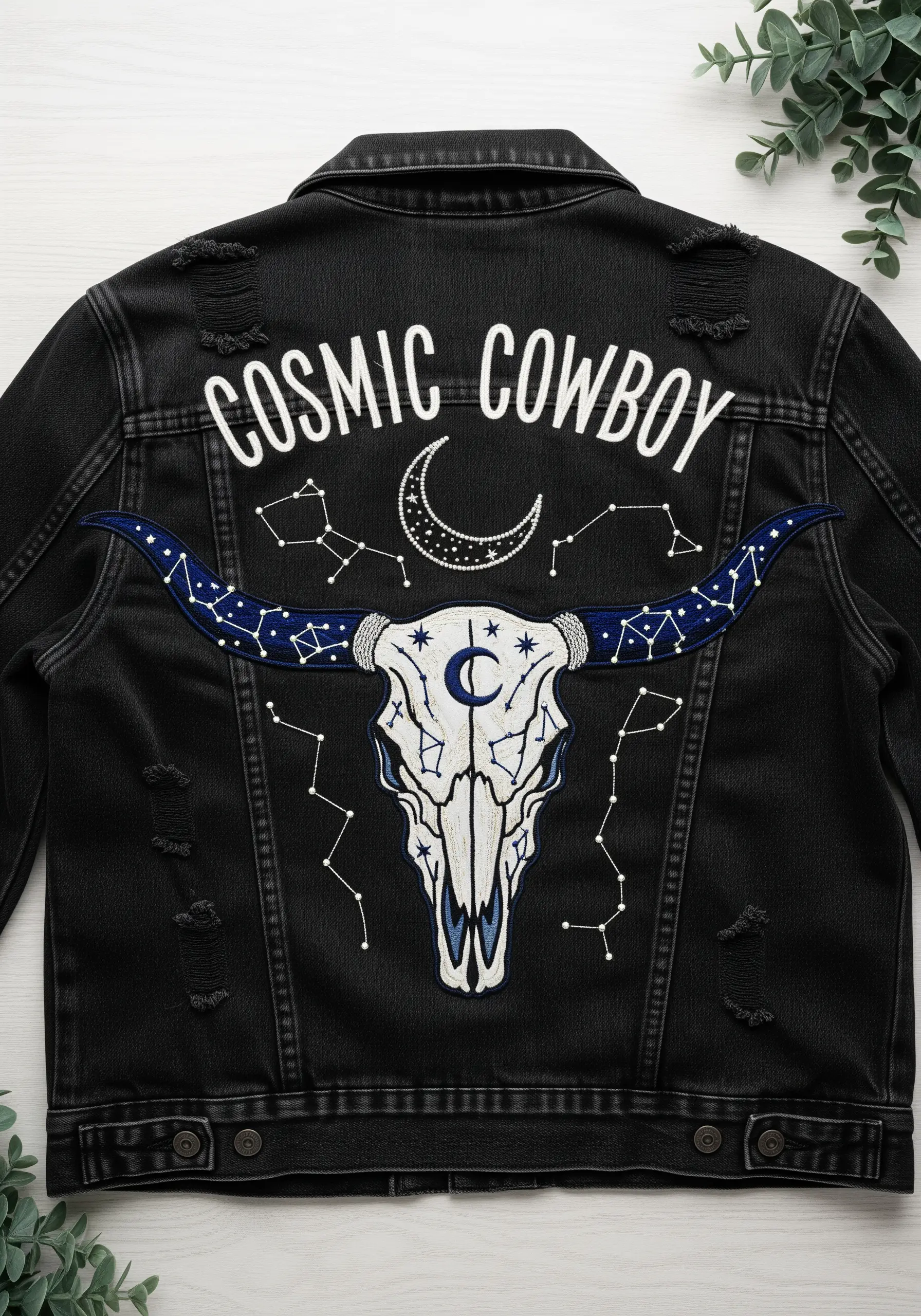
Achieve a bold, graphic look by first applying a fabric patch for the main shape, such as the skull, and then stitching details directly onto it.
This method saves time on large fill areas and ensures your colors—like the deep blue horns—are perfectly saturated and flat.
Use a simple backstitch in a contrasting color, like white, to add delicate constellations and lettering, which pop against the dark denim.
A few strategically placed beads or rhinestones can mimic stars, adding a subtle sparkle that catches the light without overwhelming the design.
4. Frame Your Jacket with Folk Art Florals
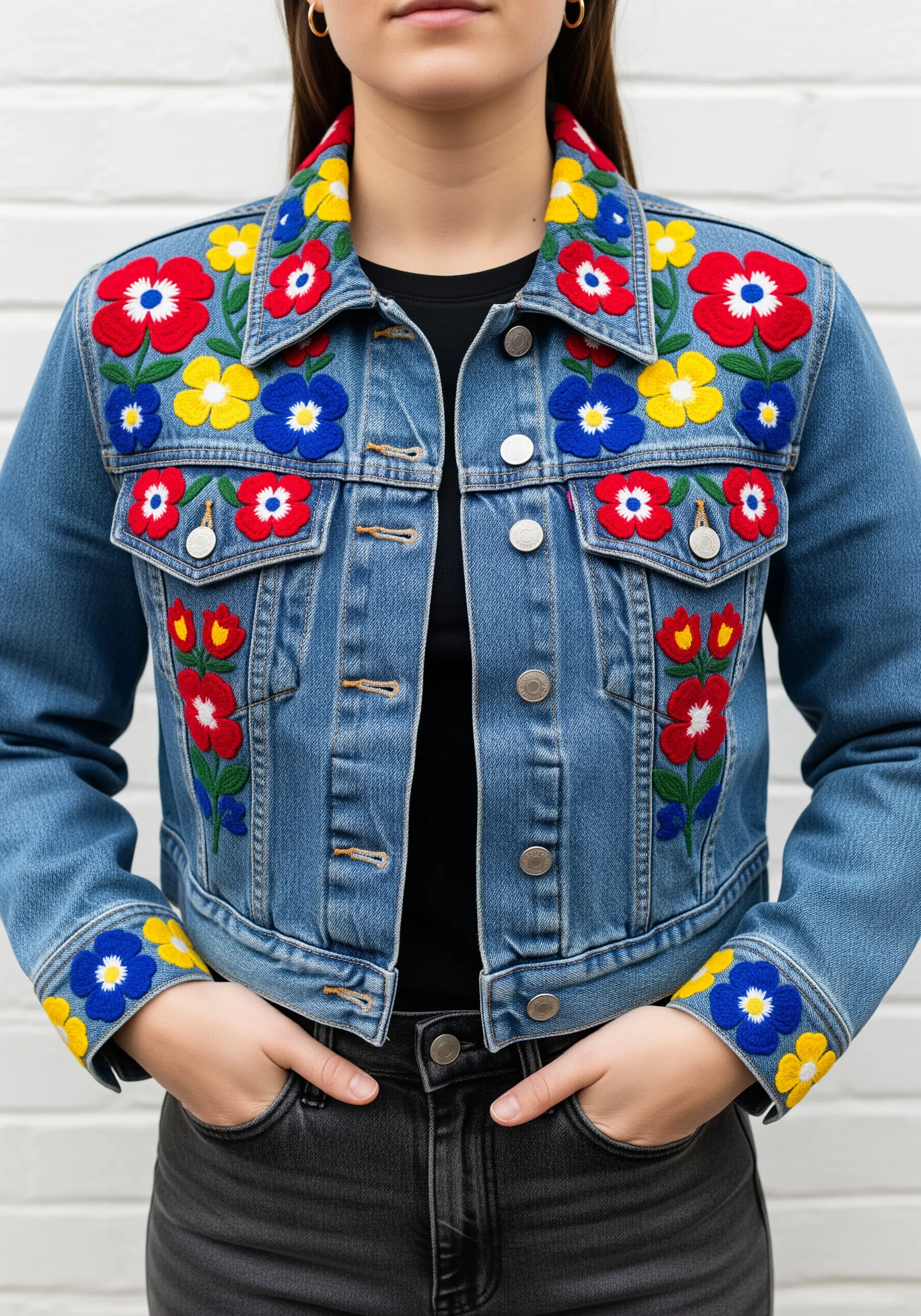
Use primary colors and dense satin stitches to create a bold, folk-art-inspired look that feels both vintage and modern.
Arrange the flowers symmetrically along the collar, front panels, and cuffs to create a built-in frame for your jacket.
To make the motifs feel like patches, outline each flower and leaf with a thick, contrasting border using a stem stitch with all six strands of floss.
This high-contrast, graphic approach transforms the entire garment, not just a single section, into a cohesive piece of wearable art.
5. Channel Art Deco with Metallics
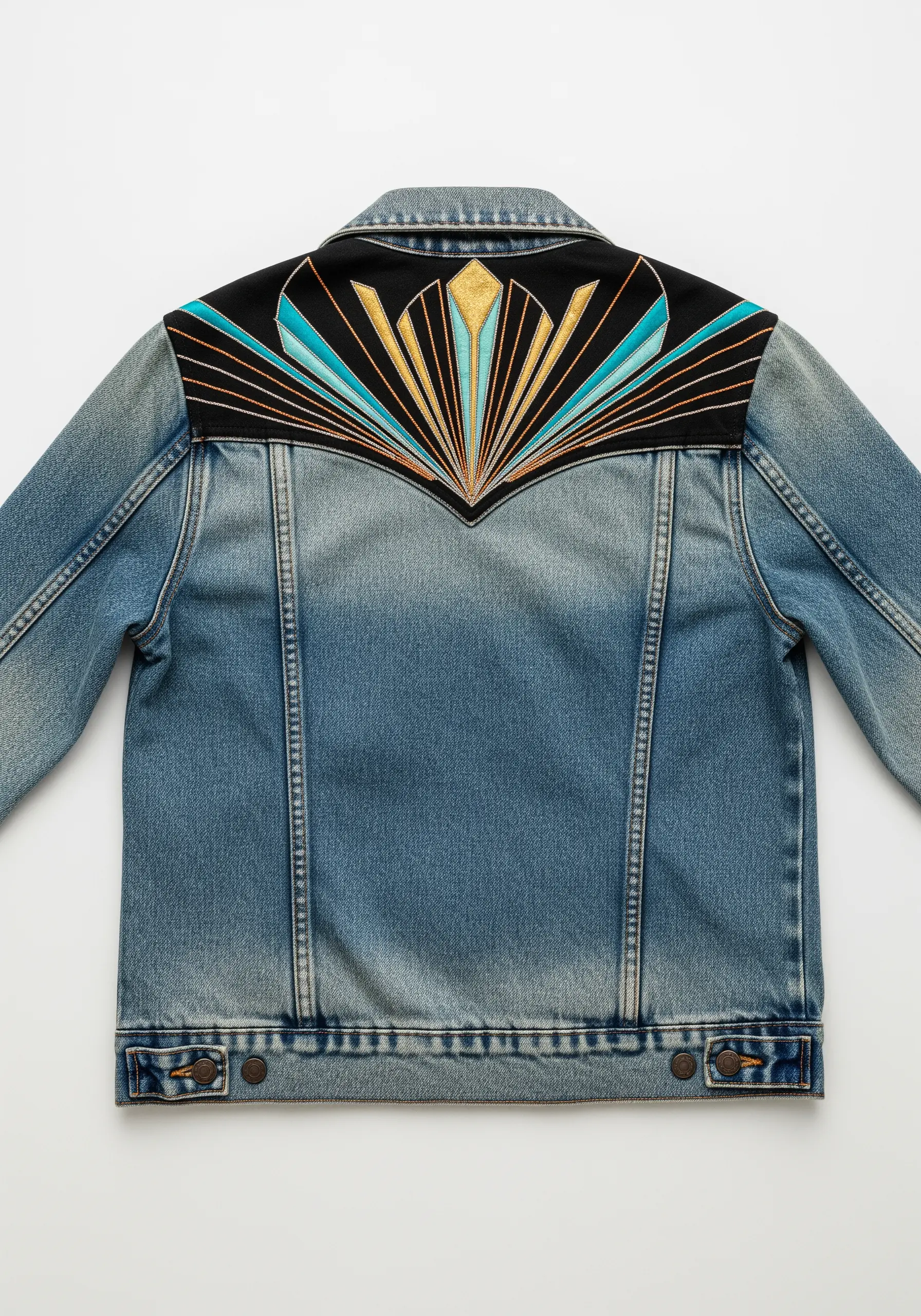
Capture the glamour of Art Deco by combining metallic threads with a strong, geometric design on a separate, contrasting fabric panel.
Use a satin stitch for the gold and turquoise fills, ensuring every stitch lies perfectly parallel for a sleek, reflective finish. A stabilizer is non-negotiable for this level of precision.
The black outline, stitched with a fine backstitch, is essential for defining the shapes and making the metallic colors pop.
Attaching this embroidered panel to the jacket yoke adds architectural interest and a polished, professional quality to your work.
6. Achieve Realism with Thread Painting
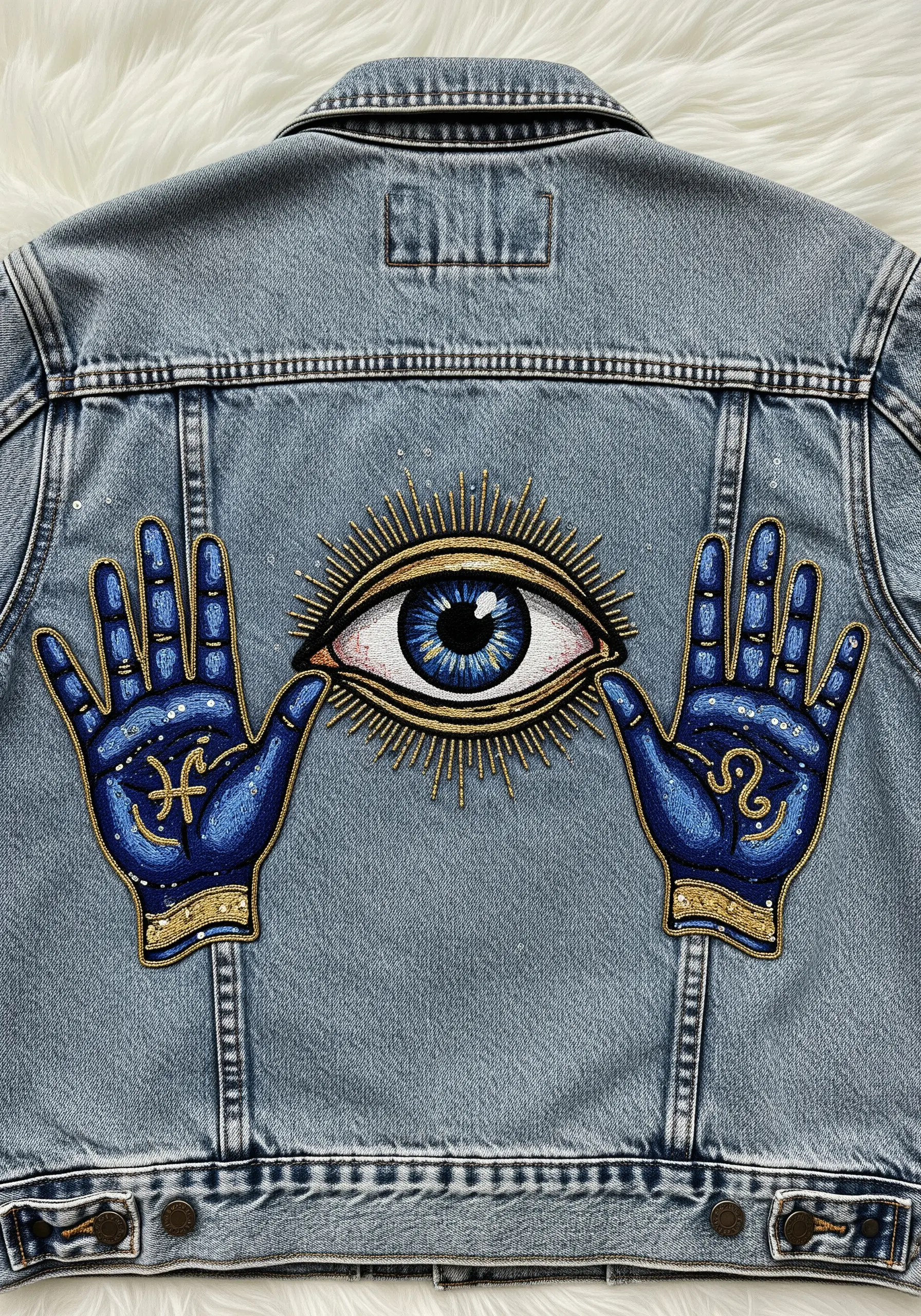
For a realistic eye, use the long-and-short stitch technique to blend multiple shades of blue and white, creating depth and a glossy highlight.
Define the hands and eye with a sharp, clean outline using a two-strand backstitch before filling in the shapes—this creates a crisp edge.
Incorporate small seed beads and metallic thread for the radiating light and wrist cuffs to add texture and a subtle, mystical shimmer.
This approach elevates a symbolic design from a flat graphic to a piece of art with dimension and lifelike detail.
7. Create Contrast with Bold Outlines
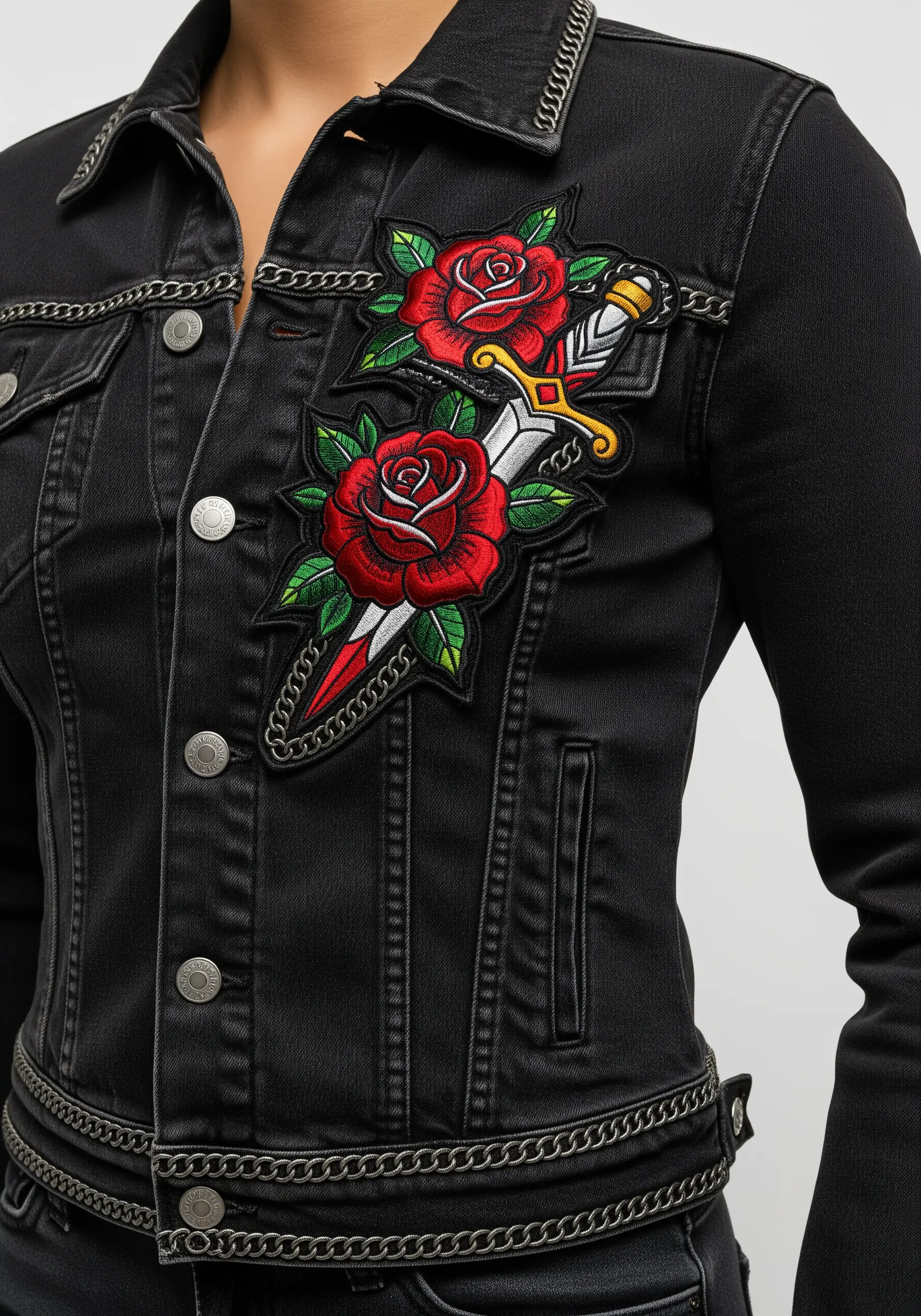
Emulate a classic tattoo style by using a heavy, black outline for your motifs. A three-strand stem stitch or split stitch will give you the necessary weight and definition.
Fill the rose petals with a simple satin stitch, using two or three shades of red to create a subtle gradient that suggests dimension.
Positioning the patch over a seam or pocket adds an element of surprise and integrates the design more thoughtfully into the jacket’s construction.
This technique works because the strong outline contains the colors, making even simple fills look sharp and intentional.
8. Use Stitch Direction to Build Patterns
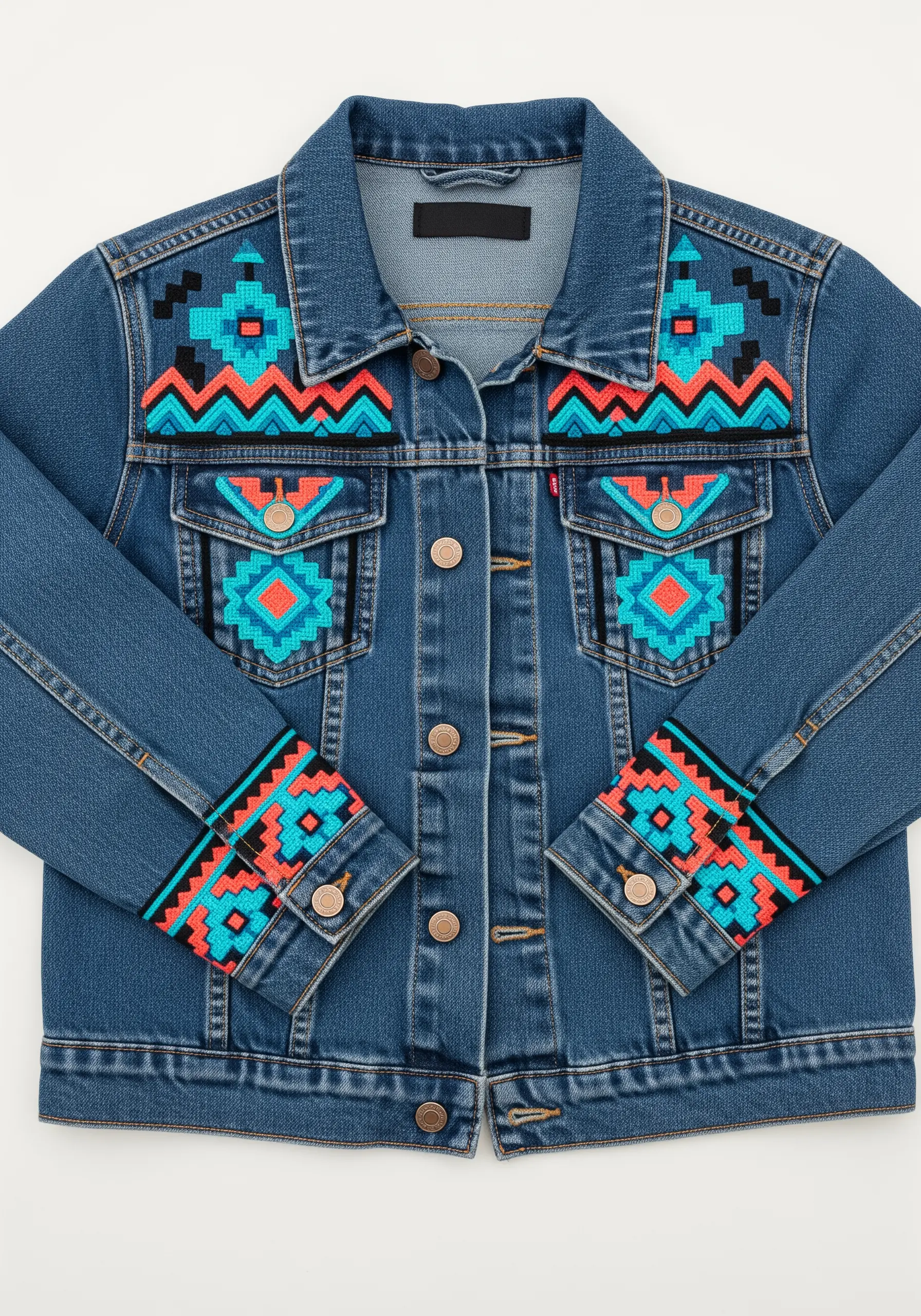
For geometric designs, the direction of your fill stitch is as important as the color. Alternate between vertical and horizontal satin stitches to define each shape within the pattern.
The clean lines are achieved by first creating a split-stitch outline around each block of color, which provides a stable edge to tuck your satin stitches into.
This method prevents colors from bleeding into one another and gives the entire piece a crisp, almost woven appearance.
Using a limited palette of high-contrast colors—like turquoise, coral, and black—enhances the graphic quality of the design.
9. Embrace Psychedelic Color with Variegated Thread
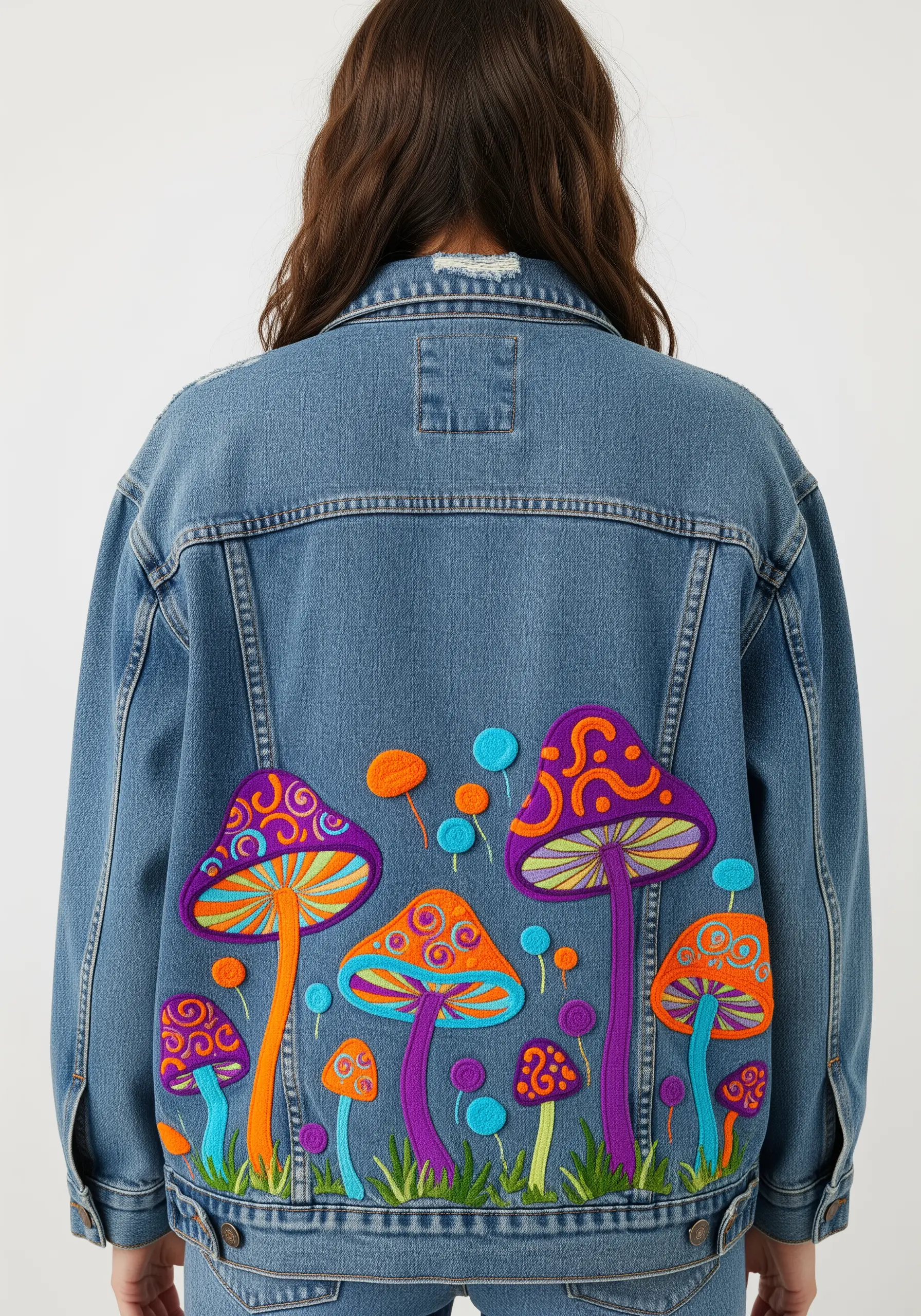
To create the swirling patterns inside these mushrooms, use a variegated floss. Its natural color changes will do the blending work for you, creating effortless psychedelic gradients.
Use a dense satin stitch for the fills, but allow the stitches to curve slightly to follow the organic shapes of the caps and stems.
For the smaller dots and details, a single French knot or a small circle of satin stitch provides a pop of texture.
This approach is perfect for capturing a playful, ’70s-inspired vibe that feels imaginative and free-spirited, turning your jacket into a piece of wearable art.
10. Add Dimension to a Printed Fabric Panel
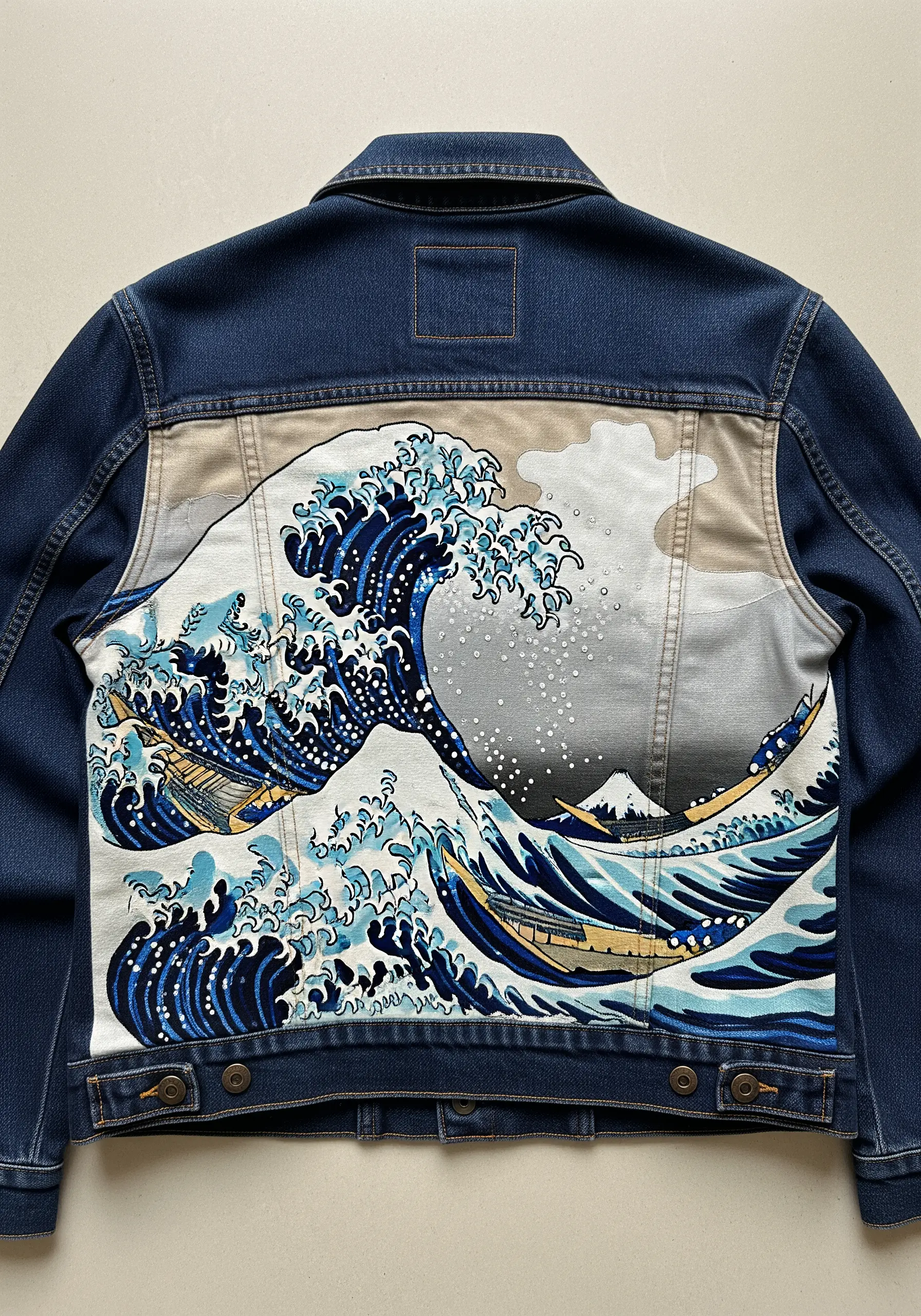
Recreate an iconic artwork by starting with a printed fabric panel of the design. This provides a perfect guide for your stitches.
Focus your embroidery on key areas to add texture and depth. Use white French knots for the sea spray and a dark blue backstitch to outline the crests of the waves.
This mixed-media technique allows you to tackle a complex image without having to stitch every detail from scratch.
The result is a piece that has the precision of a print but the tactile, handcrafted quality of embroidery.
11. Enhance Printed Motifs with Stitched Highlights
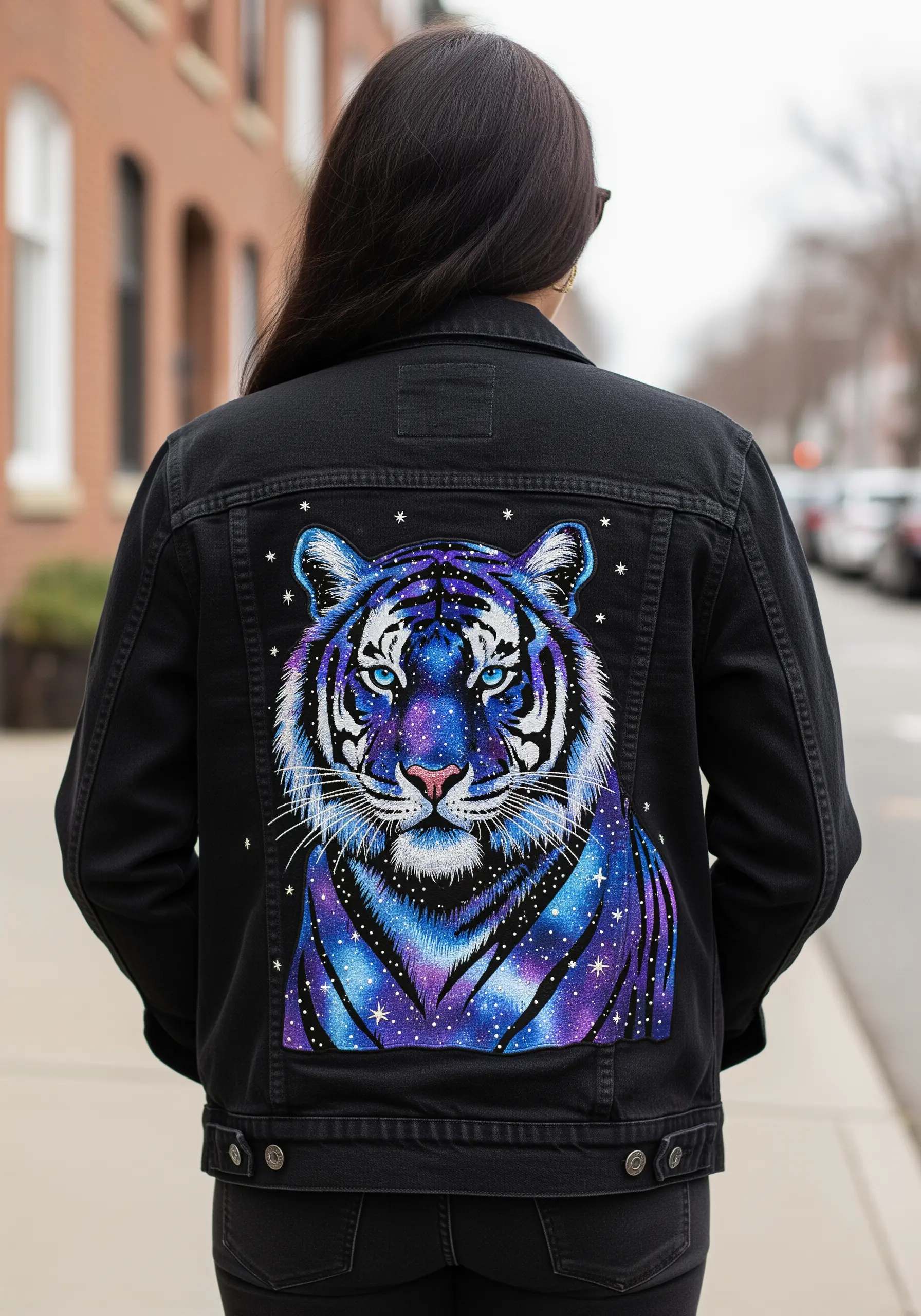
Similar to the wave design, you can use a pre-printed cosmic tiger patch as your base for a stunning, detailed piece.
Elevate the print by adding your own stitched details. Use a silvery metallic thread to trace the tiger’s stripes and add tiny French knots or seed beads for the stars in the galaxy.
Focusing your stitches on highlights and shadows enhances the printed image, making it appear more dimensional and integrated with the jacket.
This is a brilliant way to achieve a highly realistic and complex design while still adding your personal, handmade touch.
12. Mimic Chenille Texture with French Knots
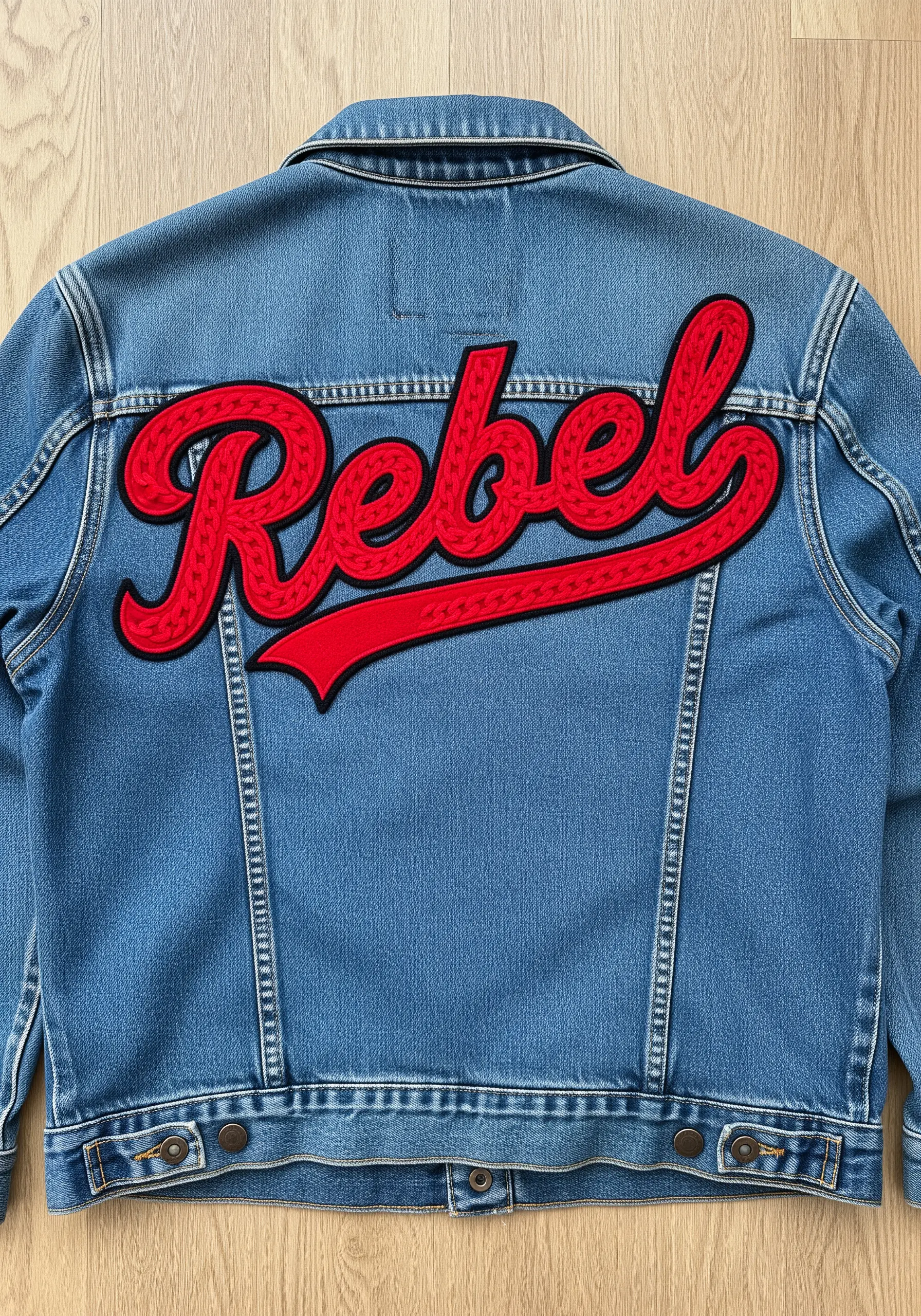
To get that classic, fuzzy varsity letter effect without a machine, fill your lettering with tightly packed French knots or the turkey work stitch.
First, create a bold outline for your word using a thick satin stitch. This raised border will contain your textured fill stitches and give the design a clean edge.
Use a thick thread, like pearl cotton or all six strands of embroidery floss, to make your knots fuller and reduce the time it takes to fill the space.
This technique gives your lettering a tactile, three-dimensional quality that stands out dramatically against the flat denim.
13. Create a Delicate Wildflower Meadow
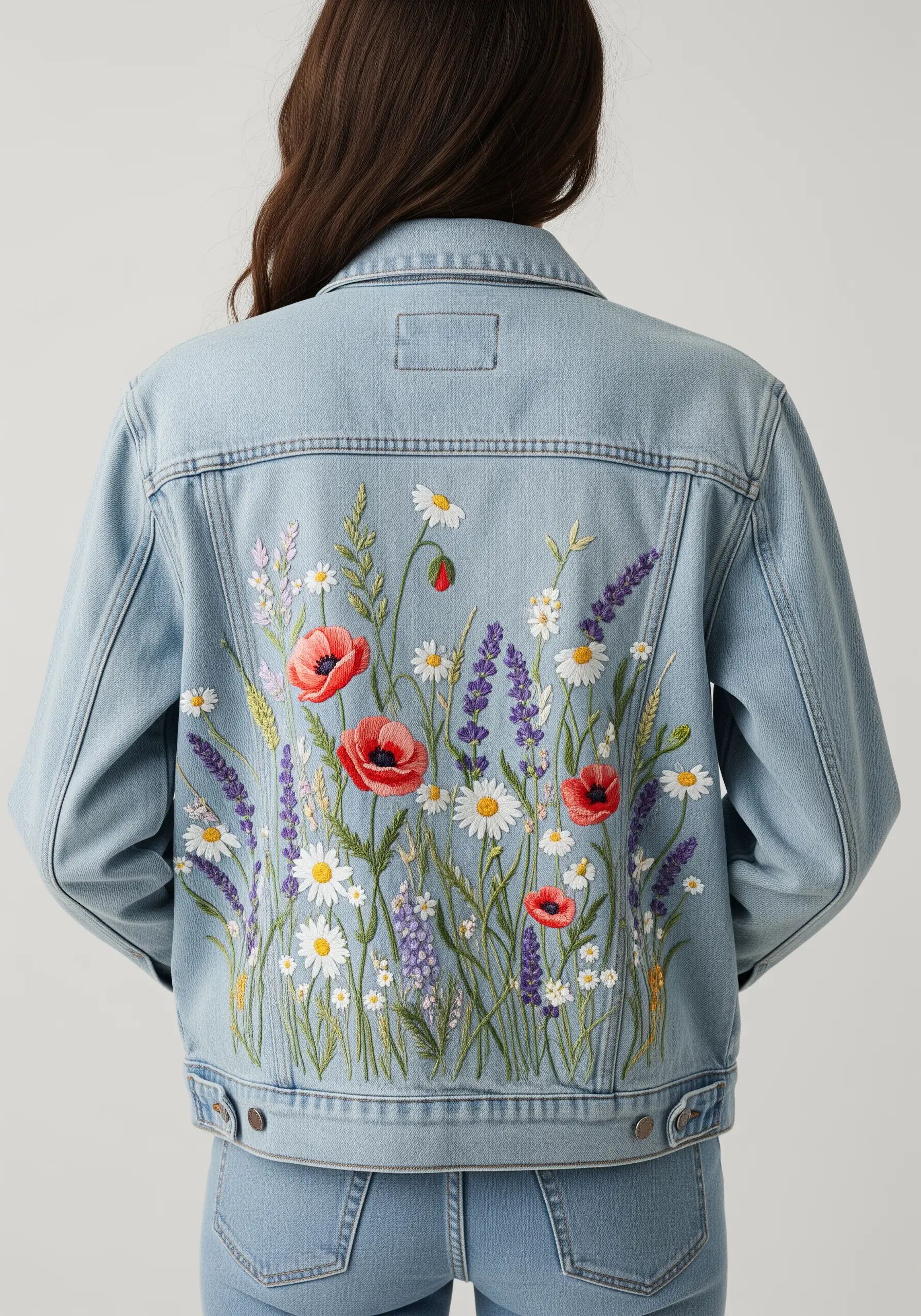
For a natural, organic feel, arrange your flowers in a scattered, asymmetrical composition that grows up from the bottom hem of the jacket.
Use a variety of simple stitches to give each plant a unique texture: lazy daisy for petals, French knots for flower centers, and stem stitch for the stalks.
Work with fewer strands of floss—one or two for fine details like lavender and poppy stamens—to achieve a delicate, almost painterly look.
This delicate botanical style avoids a rigid, pattern-like appearance and instead feels like a real garden scene captured on fabric.
14. Make a Statement with Line Art Patches
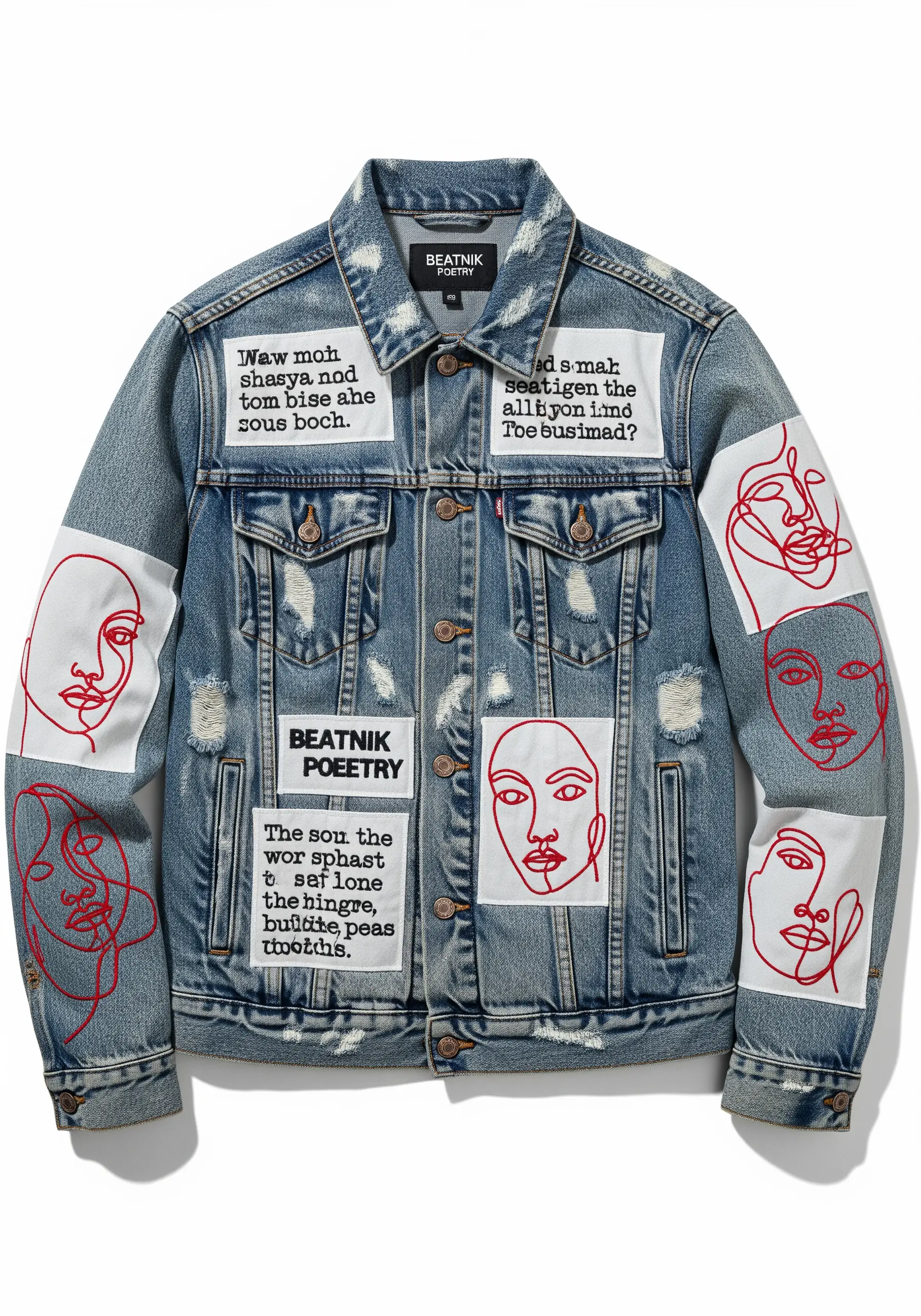
Embrace minimalism by stitching simple line art faces onto separate white fabric squares, then applying them to your jacket as patches.
Use a single, bold thread color, like this vibrant red, to create a striking contrast against the white fabric and blue denim.
A smooth, consistent backstitch or stem stitch is all you need to create clean, expressive lines. The key is consistency in your stitch length.
This collage-style approach allows you to play with composition, arranging the patches in a way that feels balanced and intentionally deconstructed.
15. Achieve Precision with Optical Illusions
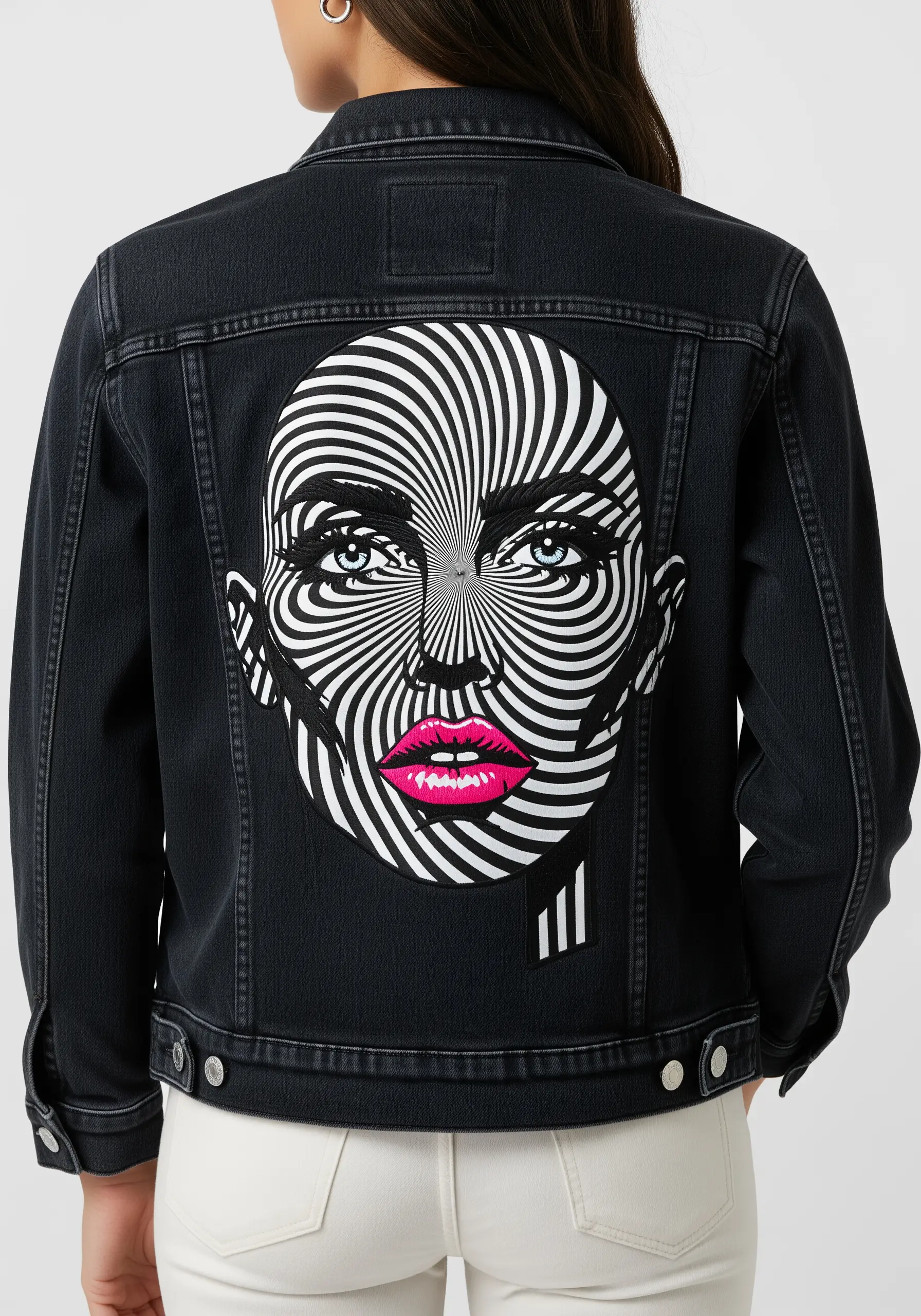
For a design with this level of graphic precision, success lies in preparation. Transfer your pattern perfectly and use a heavy-duty stabilizer to prevent any fabric puckering.
Use a single-strand satin stitch and work from the center outward, keeping your stitches extremely tight and uniform to create the hypnotic, swirling lines.
The illusion is created by the sharp contrast between the black and white threads and the perfect radial symmetry.
While challenging by hand, this effect teaches you ultimate control over stitch tension and placement, resulting in a truly stunning piece.
16. Build Luxe Texture with Sequins and Beads
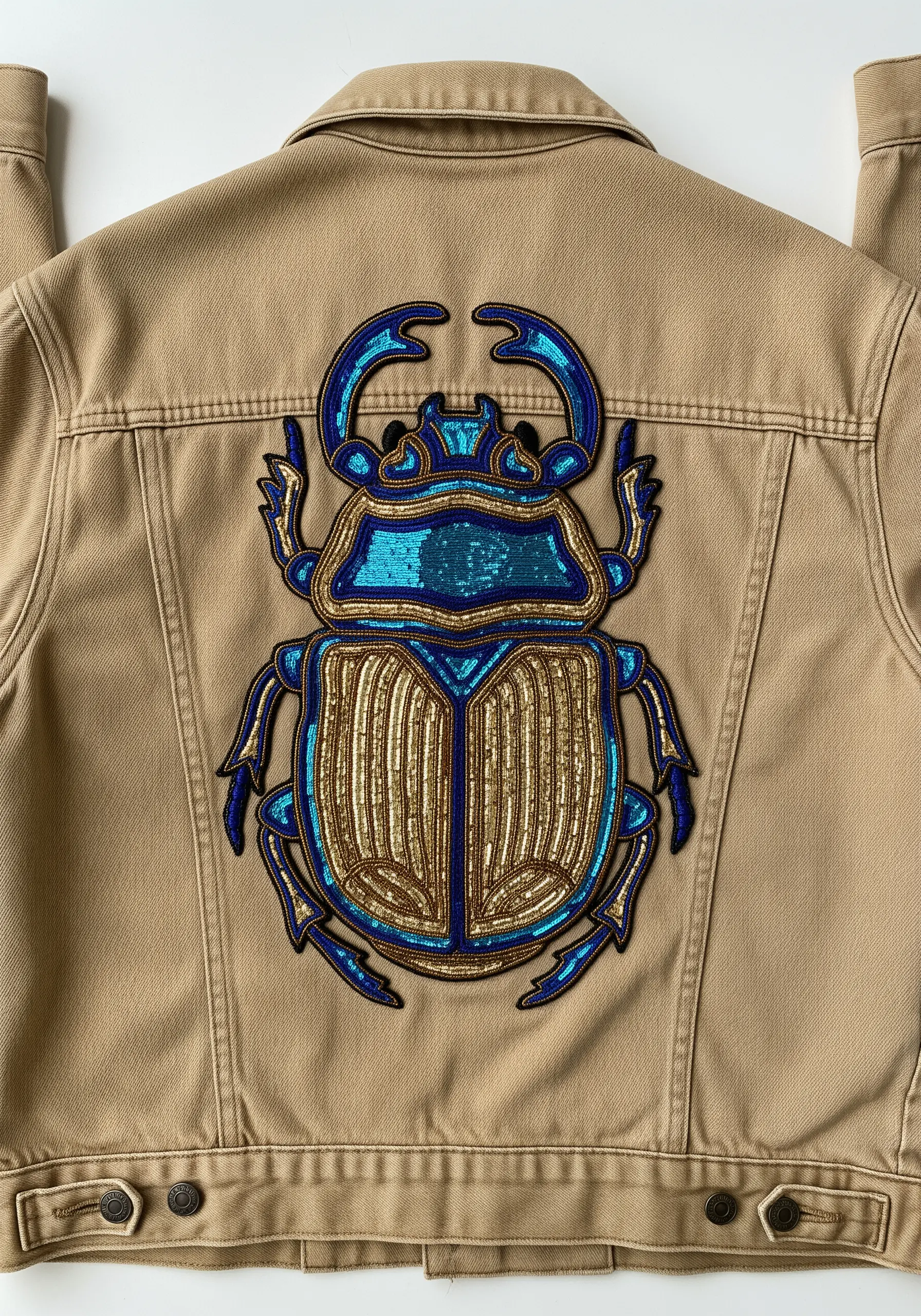
Elevate an embroidered motif by incorporating other materials. Here, sequins and bugle beads are used to create the scarab’s shimmering shell.
Secure rows of bugle beads using a couching stitch, laying down a long bead and tacking it in place with a separate thread for a clean, aligned finish.
For the sequins, stitch each one down individually with a tiny seed bead in the center—this locks it in place and adds another layer of detail.
This mixed-media approach adds a rich, tactile dimension that thread alone cannot achieve, making the design feel opulent and ancient.
17. Use Color Gradients for Vibrant Florals
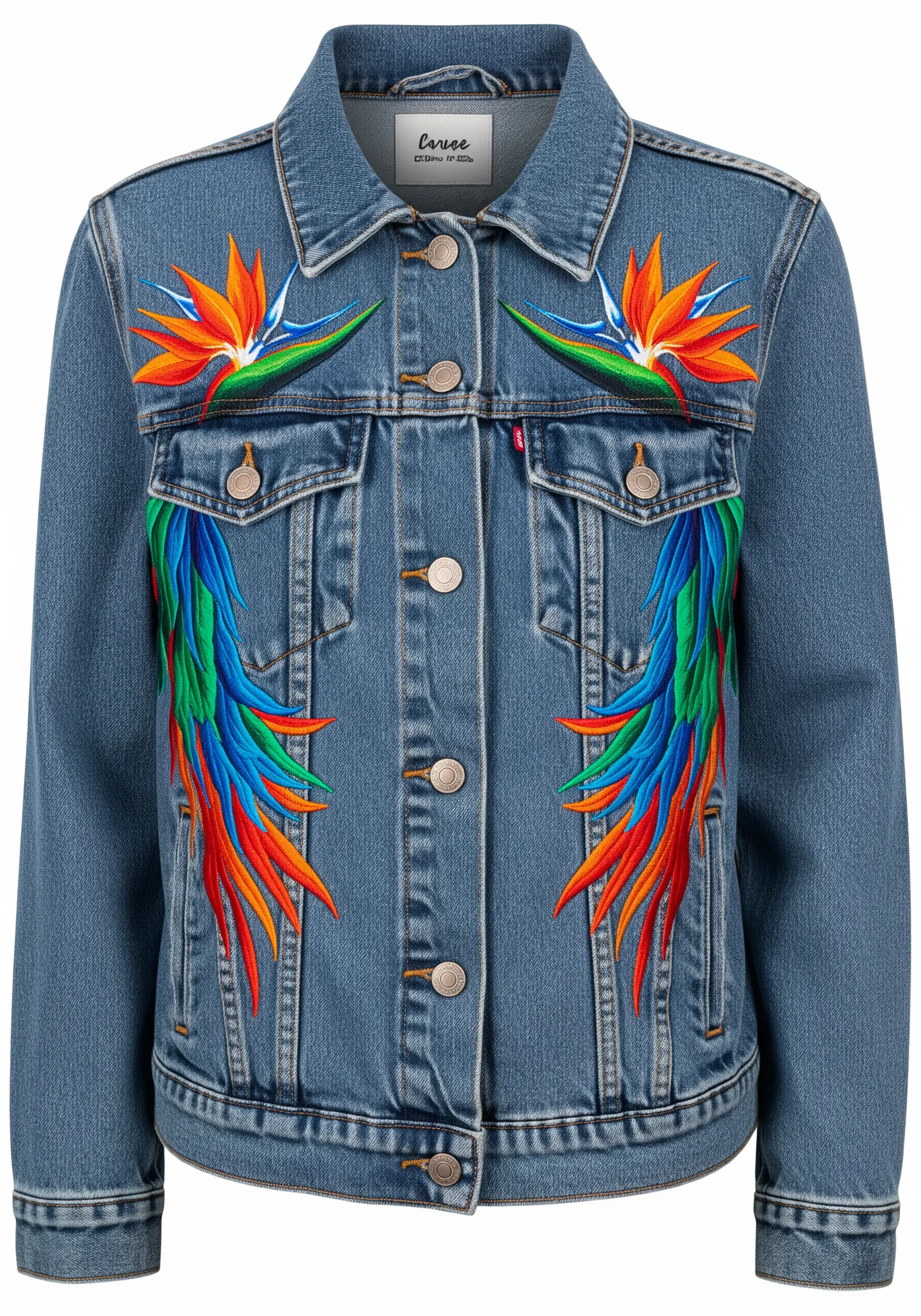
Create the look of tropical feathers and petals by mastering the long-and-short stitch to blend your colors seamlessly.
Work in sections, starting with the lightest color and gradually introducing darker shades, ensuring the stitches of each new row interlock with the previous one.
The success of this gradient color floral embroidery depends on a smooth transition, so avoid hard lines between colors by staggering your stitch lengths.
Symmetrical placement on the jacket front creates a bold, balanced design that frames your torso beautifully.
18. Create Pixel Art with a Grid Approach
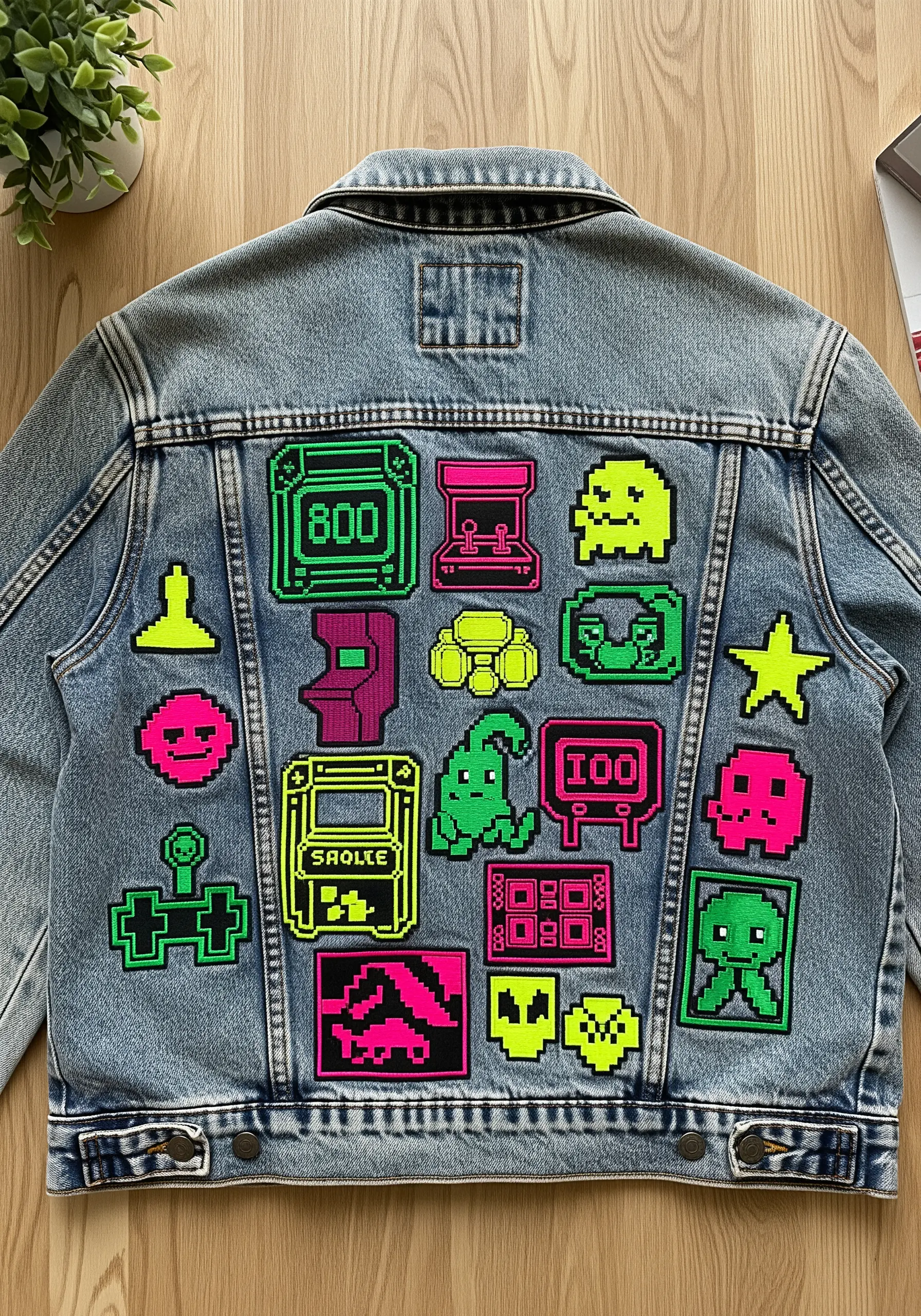
Recreate an 8-bit aesthetic by treating your design like a grid. You can achieve this look with tiny, precise satin stitches or by using the cross-stitch technique.
If using satin stitch, make sure each stitch representing a pixel is perfectly square and aligned with its neighbors for a clean, digital look.
Neon thread is the key to capturing that retro arcade feel. The bright colors pop dramatically against the denim, creating a playful and nostalgic vibe.
Scatter multiple small patches across the back panel for a fun, collected-over-time look that tells a story.
19. Capture Delicacy with Fine Linework
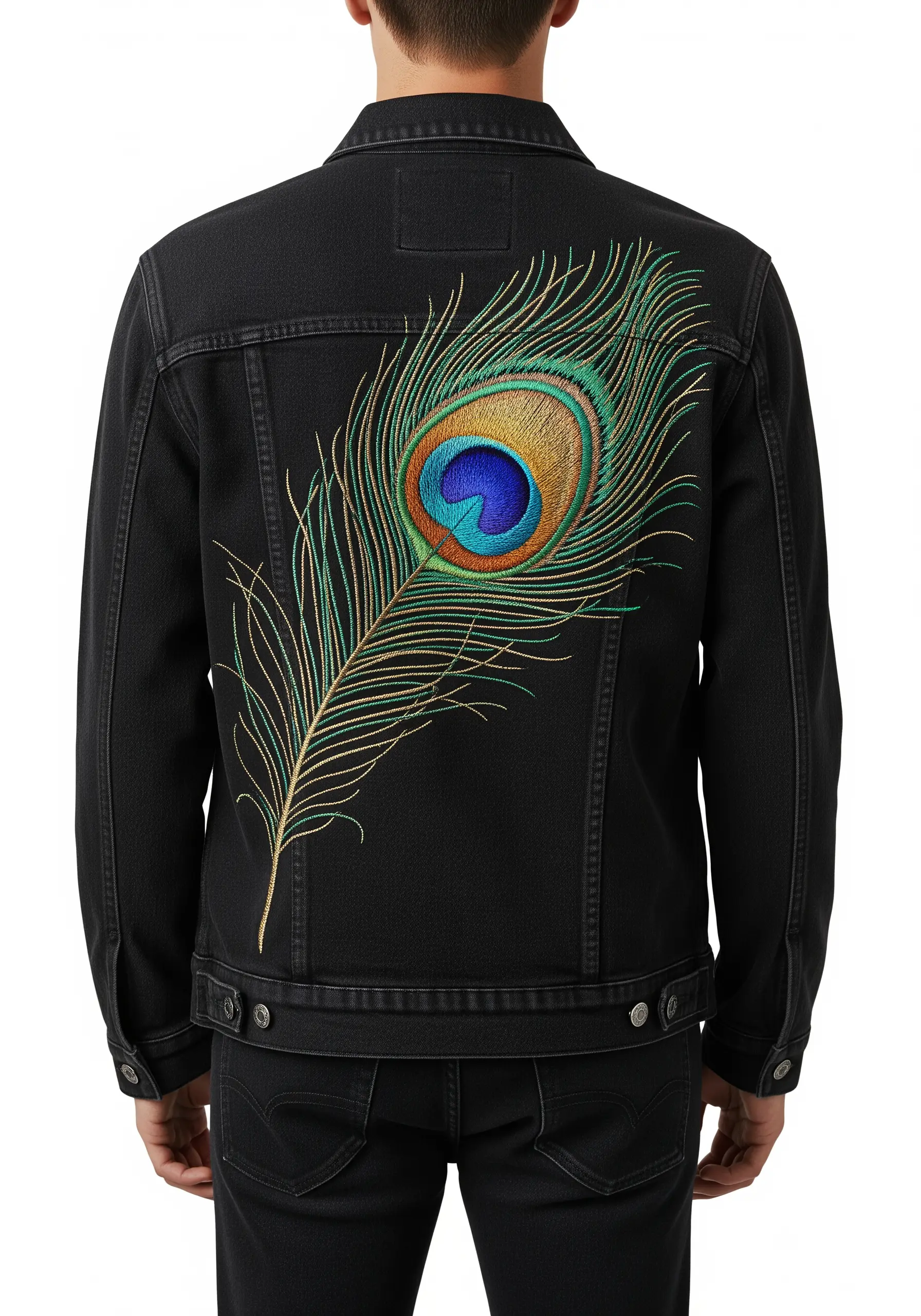
To embroider something as delicate as a peacock feather, use only one or two strands of floss. This allows for fine, precise lines that mimic the feather’s texture.
Use a combination of split stitch and satin stitch for the central ‘eye’ of the feather, blending the colors carefully to create a jewel-toned effect.
For the wispy barbs, use long, straight stitches that fan out from the central stem, varying their angle slightly to create a sense of softness and movement.
Placing this single, elegant motif against a dark denim background makes the iridescent colors appear even more vibrant.
20. Embrace Classic Sailor Tattoo Motifs
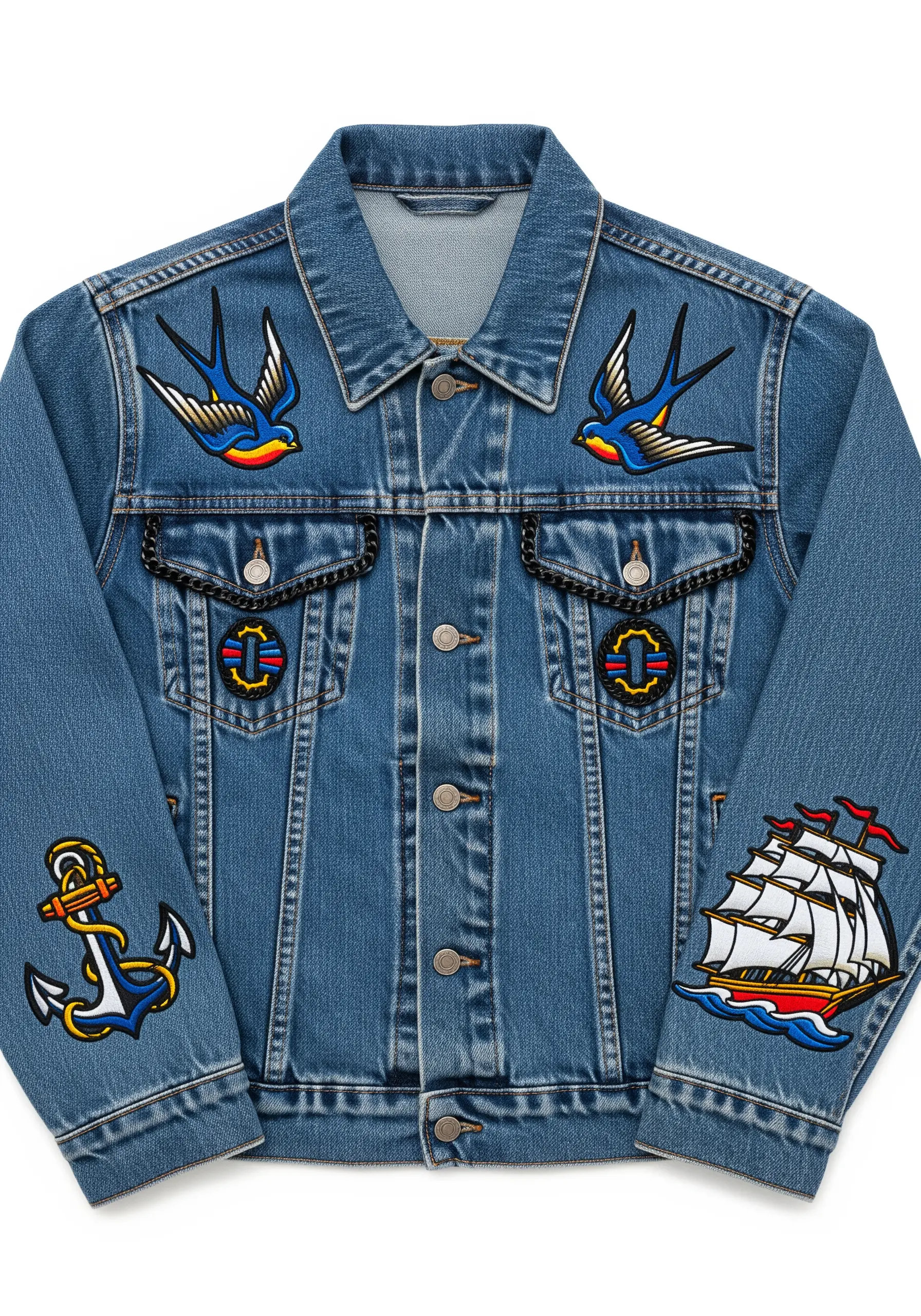
Channel a timeless, old-school aesthetic with classic nautical tattoo designs like swallows, anchors, and ships.
The key to this style is a bold black outline paired with a limited, primary color palette—typically red, yellow, and blue.
Use a dense satin stitch to fill in the colors, ensuring a solid, opaque finish that looks like a vintage patch.
Arranging multiple motifs on the sleeves and chest creates a curated, story-driven piece that feels personal and well-traveled.
21. Stitch a Minimalist Desert Landscape
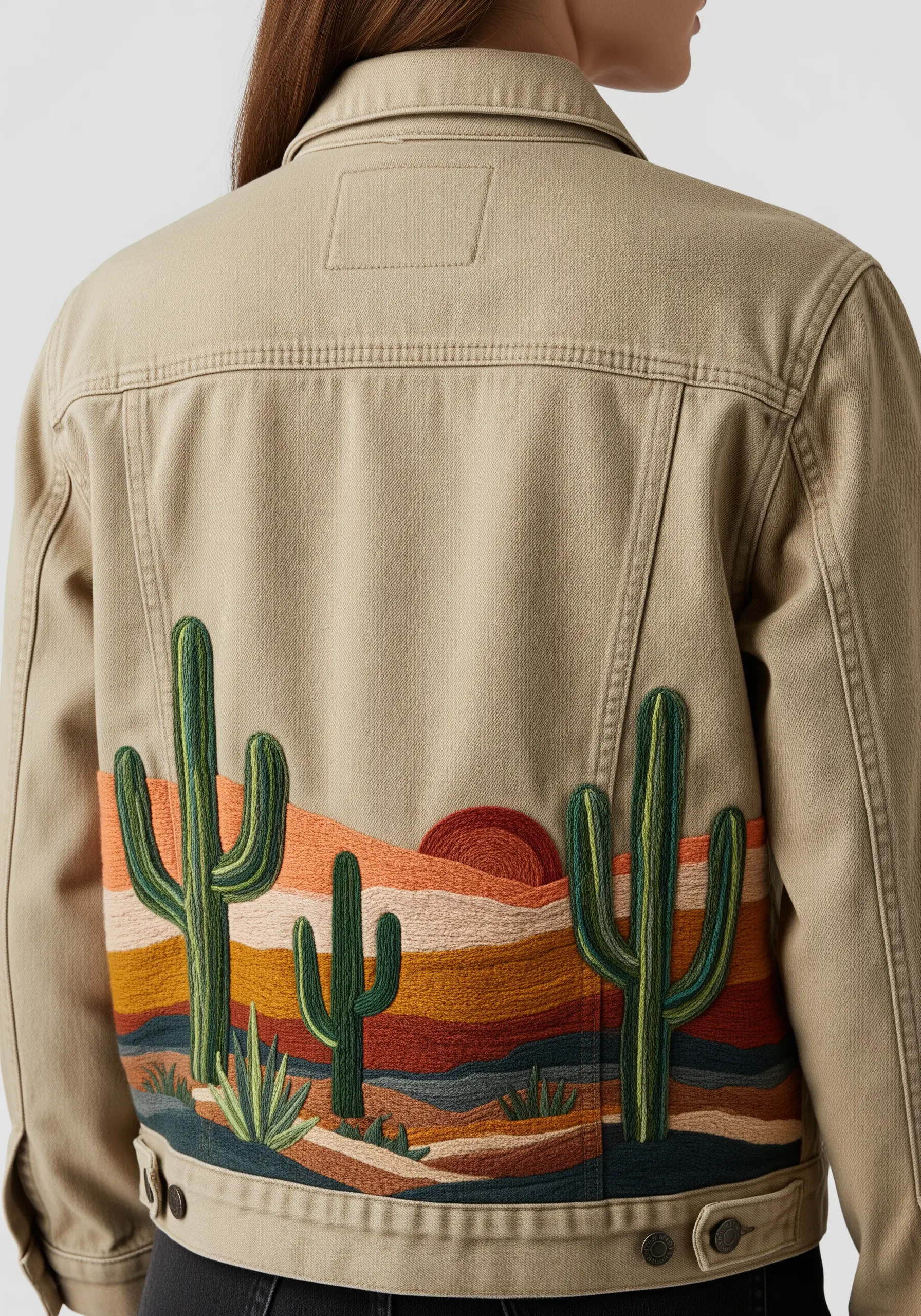
Create a stylized desert scene by layering bands of color with horizontal satin stitches. This creates a clean, graphic representation of hills and sky.
For the cacti, use a vertical satin stitch in two tones of green to create a simple highlight and shadow, giving them form and dimension.
The beauty of this design lies in its simplicity and use of negative space. The unstitched khaki denim becomes part of the landscape.
This is a perfect example of how earth-tone patterns and block stitching can create a serene, atmospheric piece.
22. Use Stitch Direction to Define Feathers
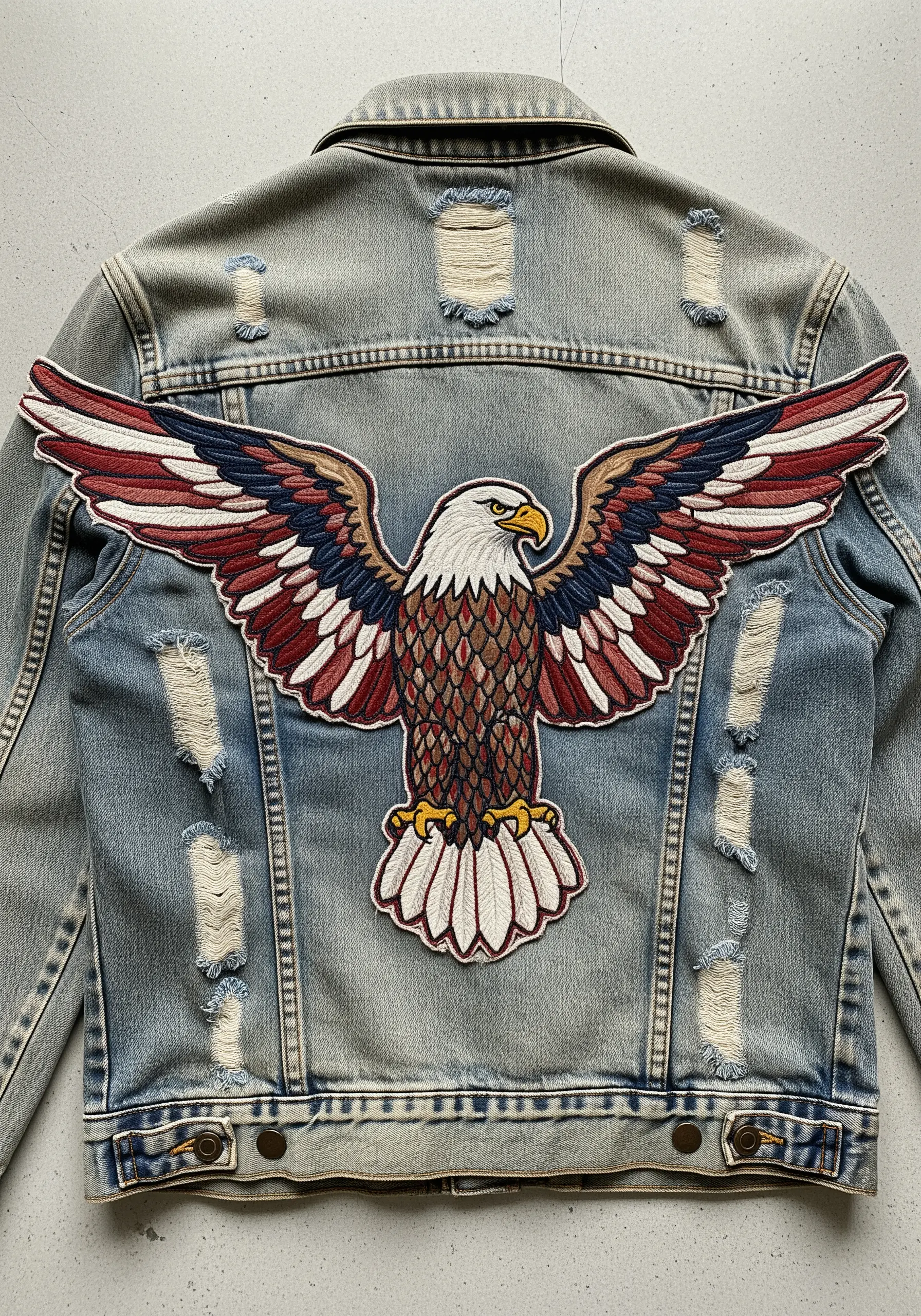
When embroidering birds, let the direction of your stitches define the form. Angle your long-and-short stitches to follow the natural sweep of the feathers on the wings and body.
This technique creates a sense of movement and realism, making the eagle feel powerful and dynamic rather than static.
Alternate between colors in short, layered stitches to build up texture and shading, especially on the chest and wing tips.
A strong white or cream outline around the entire motif helps it stand out against the distressed denim, giving it a clean, finished edge.
23. Transform a Placket with Folk Art Figures
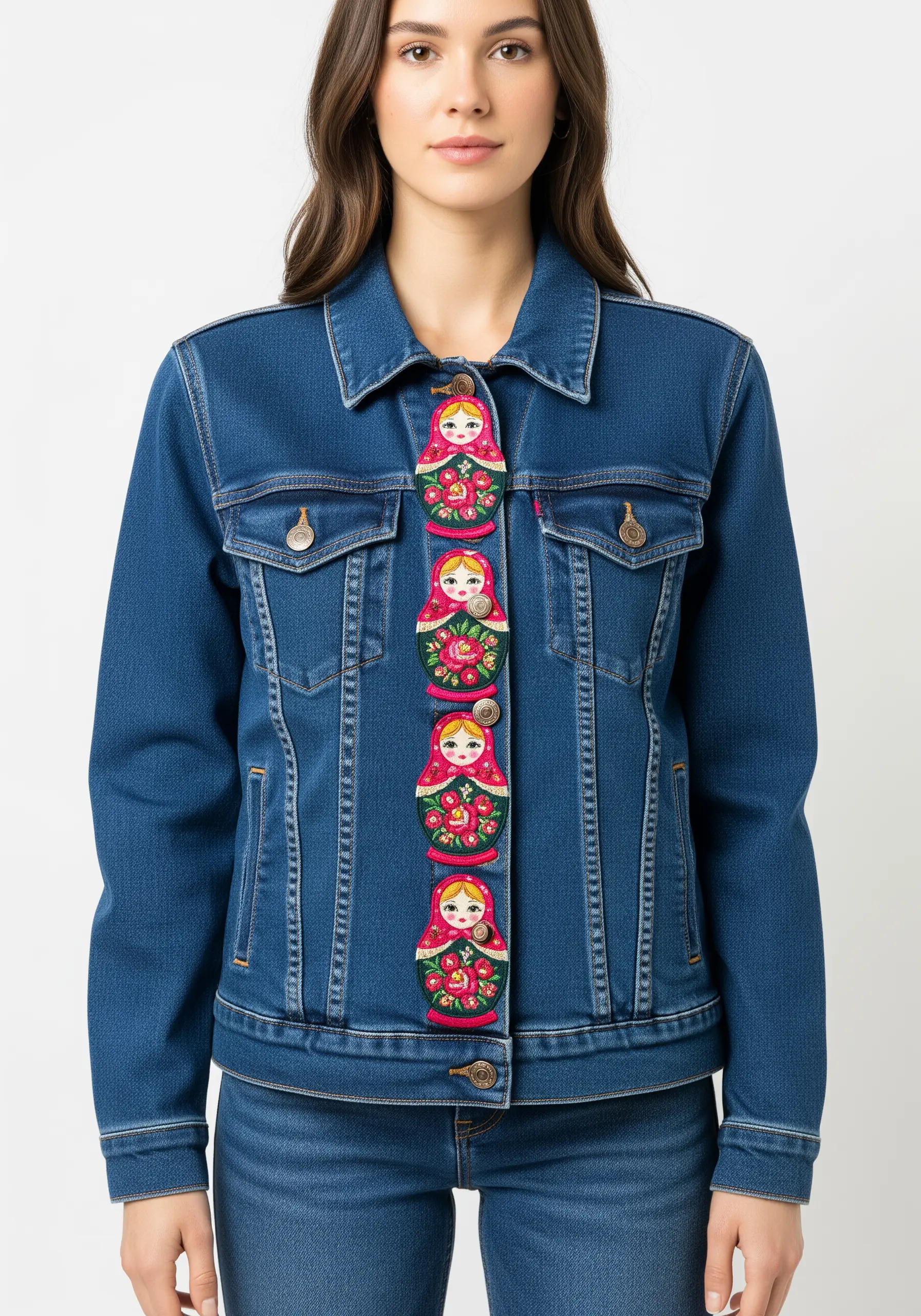
Think beyond the back panel and use embroidery to highlight unconventional parts of your jacket, like the button placket.
Create a series of small, detailed motifs like these Matryoshka dolls on a separate strip of fabric, which you can then appliqué over the placket.
Use fine, single-strand backstitch to add the delicate facial features and floral patterns over the satin-stitched bodies.
This unique placement is an unexpected detail that showcases your skill and transforms a functional part of the jacket into its main decorative feature.
24. Recreate Abstract Art with Appliqué
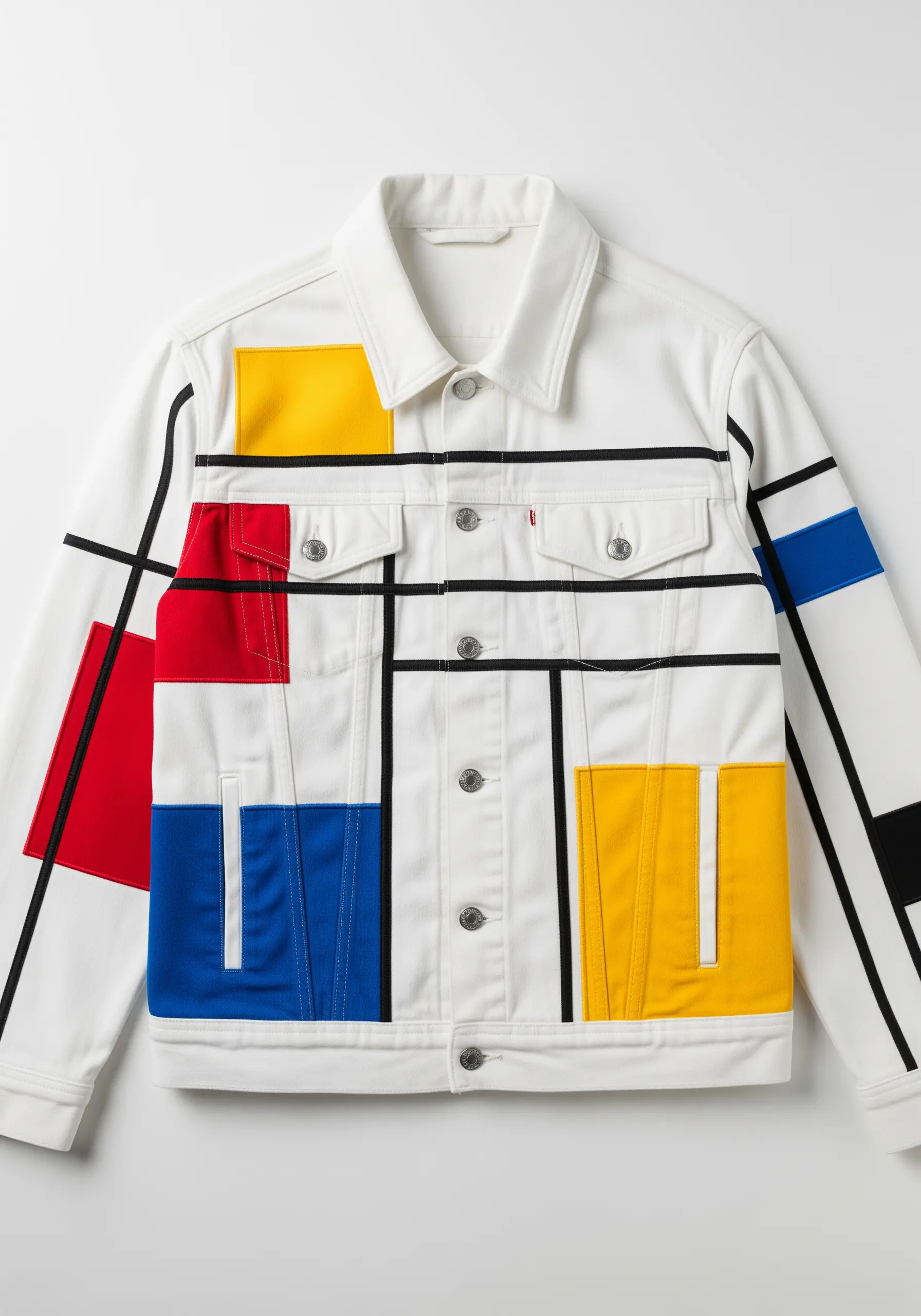
Channel Piet Mondrian by using fabric appliqué for the large blocks of primary color. This ensures perfectly flat, saturated color that would be difficult to achieve with thread alone.
Cut your fabric shapes precisely and secure them with an iron-on adhesive before stitching down the edges for a clean finish.
Then, lay down the iconic black lines using a wide, dense satin stitch. This creates a bold, graphic grid that defines the composition.
This method brilliantly combines sewing and embroidery to create a piece of modern thread art that is both striking and clean.
25. Add 3D Elements for Playful Dimension
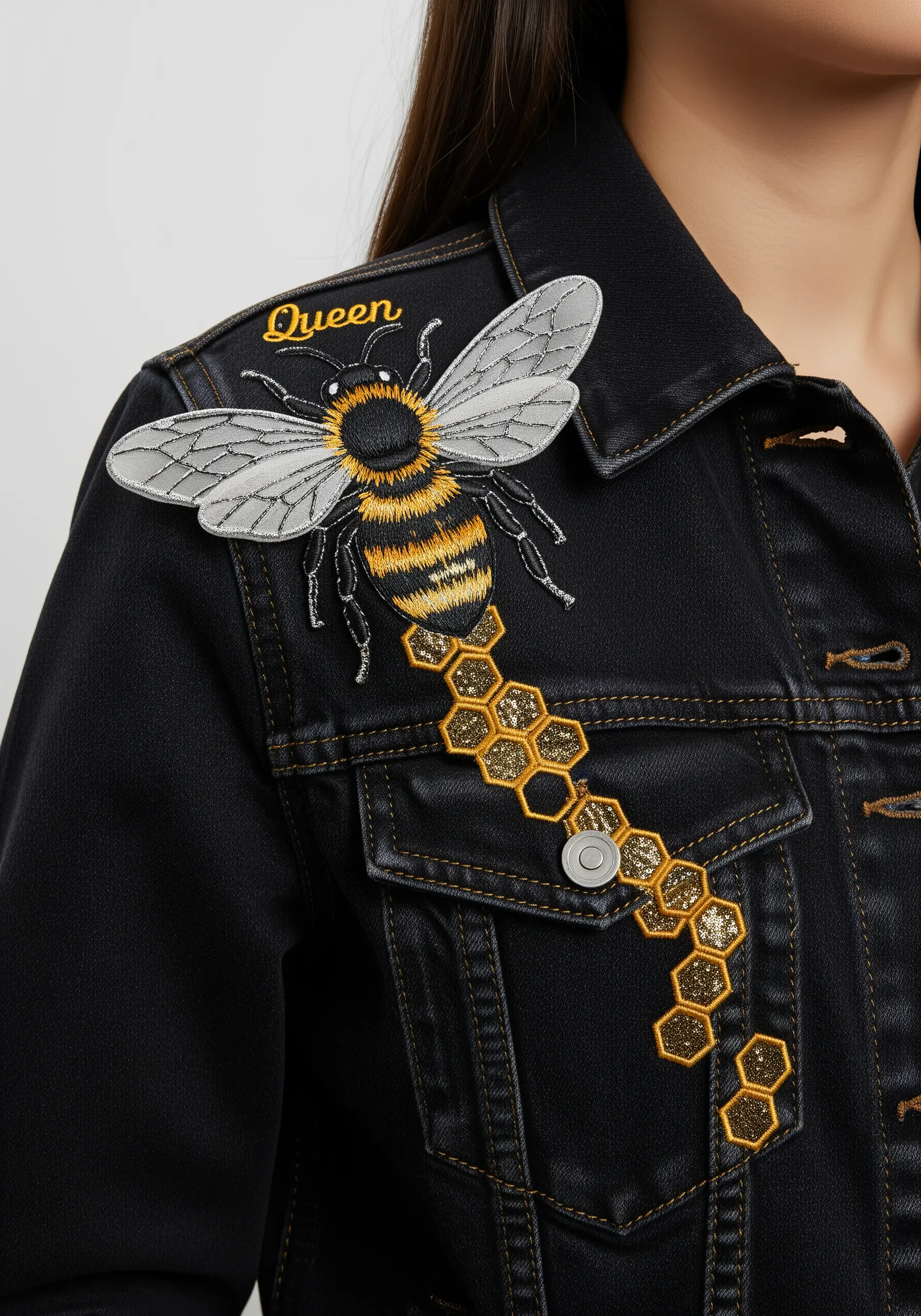
Bring your embroidery to life by adding three-dimensional elements. The bee’s wings here are stitched on a sheer fabric like organza, cut out, and then attached only along the body.
This allows the wings to lift off the jacket, creating realistic dimension and movement.
For extra sparkle, use a glittery fabric appliqué for the honeycombs, outlining each shape with a gold backstitch for definition.
This technique adds an interactive, sculptural quality to your work, making it truly stand out.
26. Capture Surrealism with Thread Painting
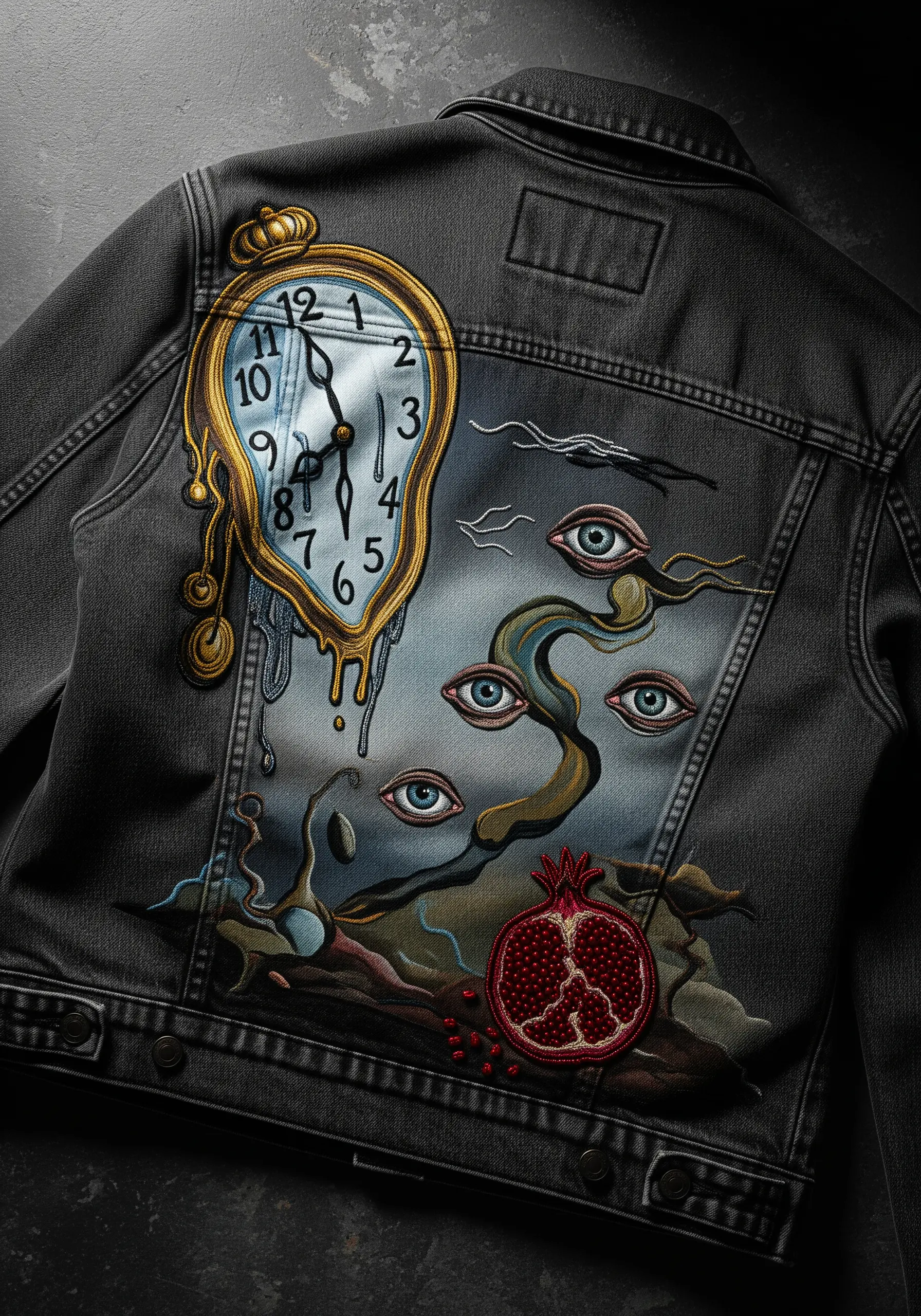
Tackle fine art replication with advanced thread painting, using the long-and-short stitch to create the smooth, painterly shading of Dalí’s work.
To create the metallic sheen on the clock, blend gray, white, and silver metallic threads, paying close attention to where the light would hit.
This is a masterclass in detail and patience. Work with a single strand of floss for maximum control over color blending and fine details like the eyelashes.
By treating your thread like paint, you can achieve a level of realism and artistry that transforms your jacket into a true masterpiece.
27. Create a Tapestry Effect with Dense Texture
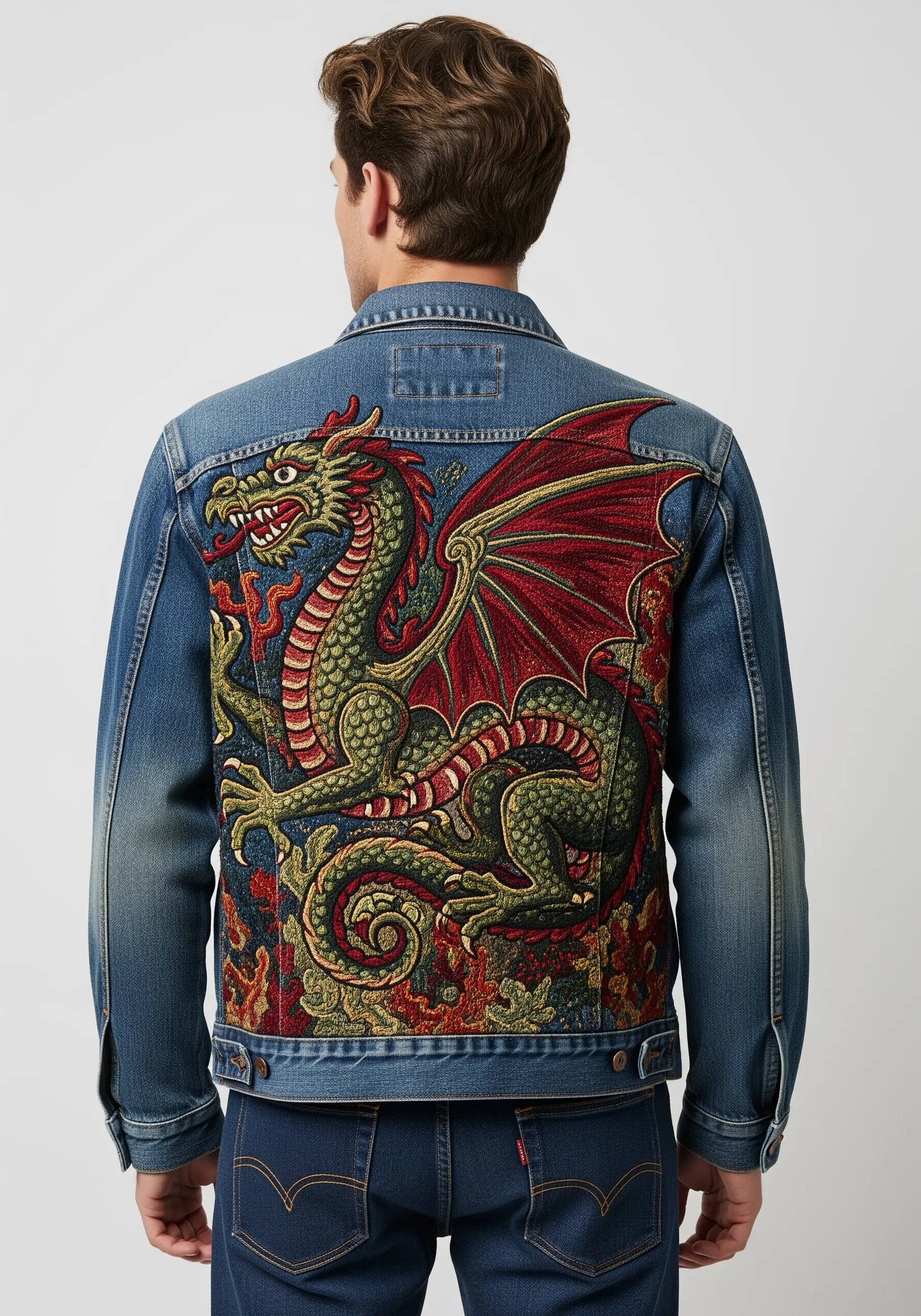
For a rich, tapestry-like feel, fill your design with a variety of stitches and colors packed closely together. This isn’t about smooth blending, but about creating texture.
Use a brick stitch or a slightly overlapping satin stitch for the dragon’s scales, alternating between greens and golds to create an iridescent effect.
Incorporate thick metallic threads for outlines and accents to give the piece a mythical, antique quality.
The dense, all-over stitching gives the design a substantial weight and presence, making it feel like a piece of woven history on your back.
28. Map the Stars with Beads and Stitches
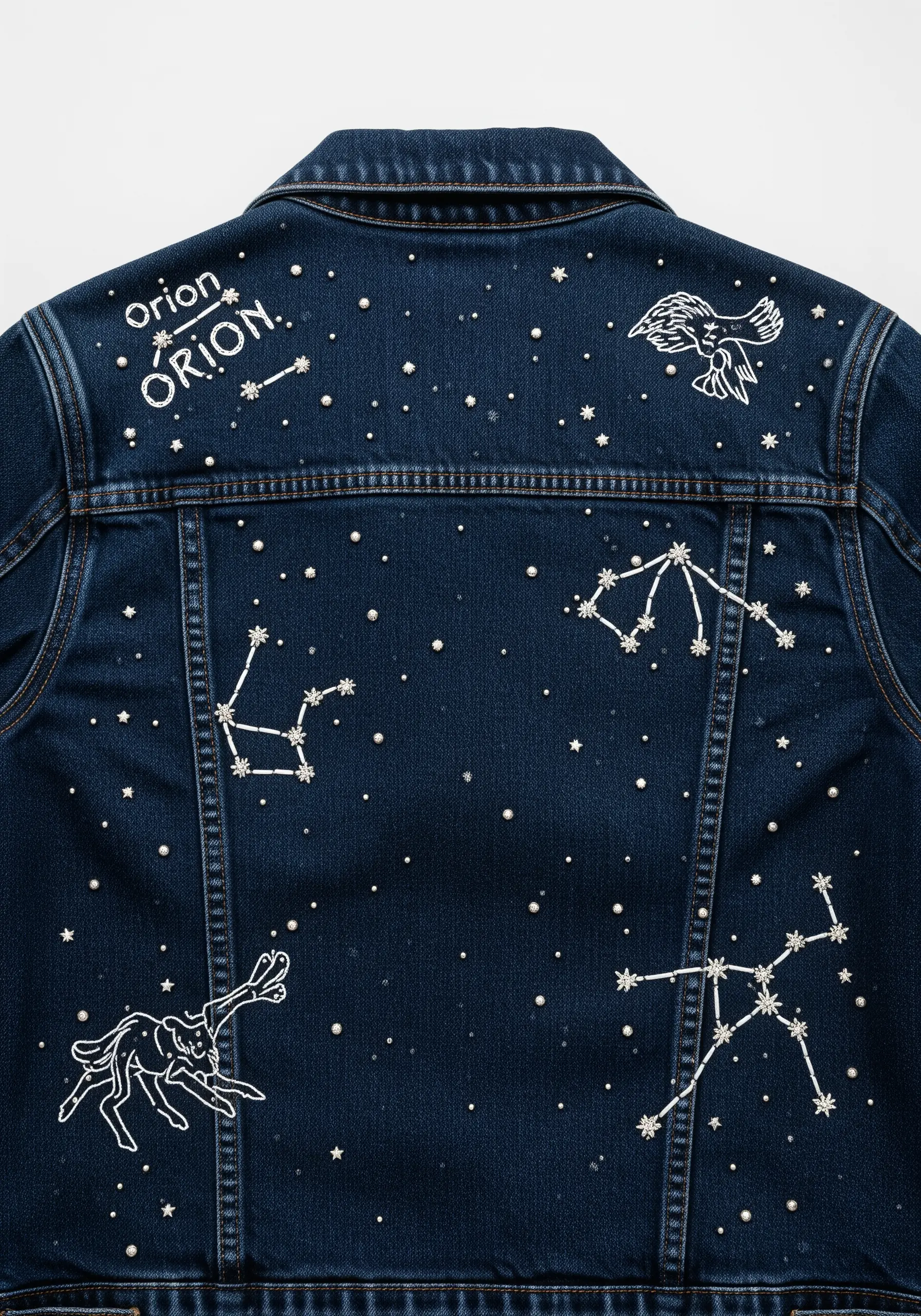
Create a celestial scene using a minimalist approach. Use a simple backstitch or stem stitch with a bright white or silver thread to draw your constellations.
For the stars, use a mix of small French knots and tiny seed beads or pearls. This variation in texture adds visual interest and a subtle shimmer.
The beauty of this design is its sparse, elegant composition. Let the dark denim act as the night sky, and don’t feel the need to fill every inch of space.
These minimal sky moon designs are proof that thoughtful placement and simple stitches can be incredibly powerful.


