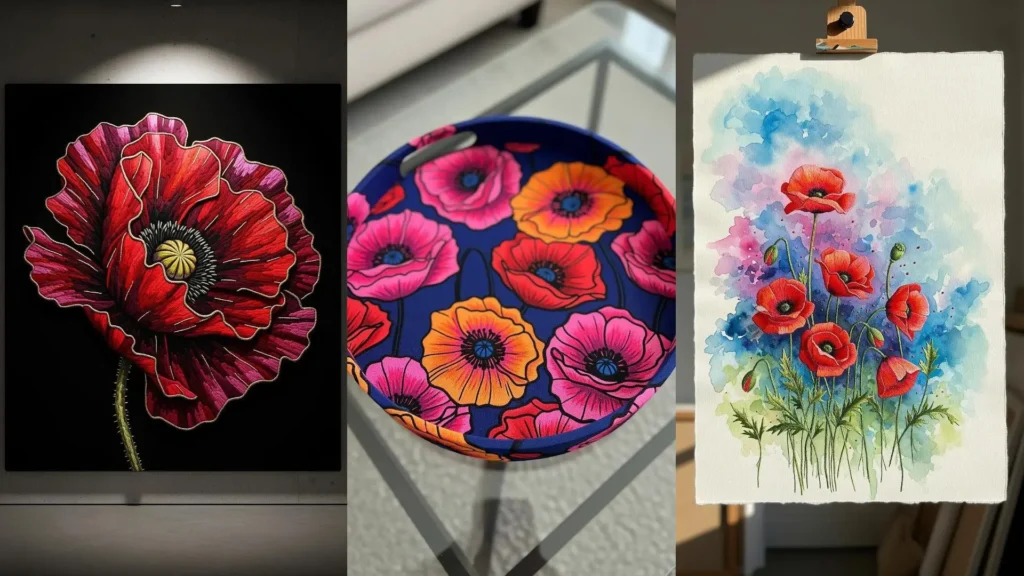
The pressed flowers you’ve saved are more than just dried petals—they are tangible pieces of a memory, a walk, a gift. Instead of simply securing them to fabric, you can use thread to give them a voice, creating a piece that tells a story and feels truly complete.
This is where you move from crafter to artist. By thoughtfully choosing a stitch, a color palette, or a composition, you can frame your botanical treasures with intention. The texture of embroidery floss against a fragile leaf, or the shimmer of a metallic thread beside a soft petal, creates a dialogue between materials that is deeply personal and visually stunning.
These ideas are not about overwhelming complexity, but about making deliberate, elegant choices. Here, you’ll find techniques to add movement, texture, and meaning, transforming your cherished flowers into expressive works of art that feel uniquely yours.
1. Frame a Flower with Celestial Light
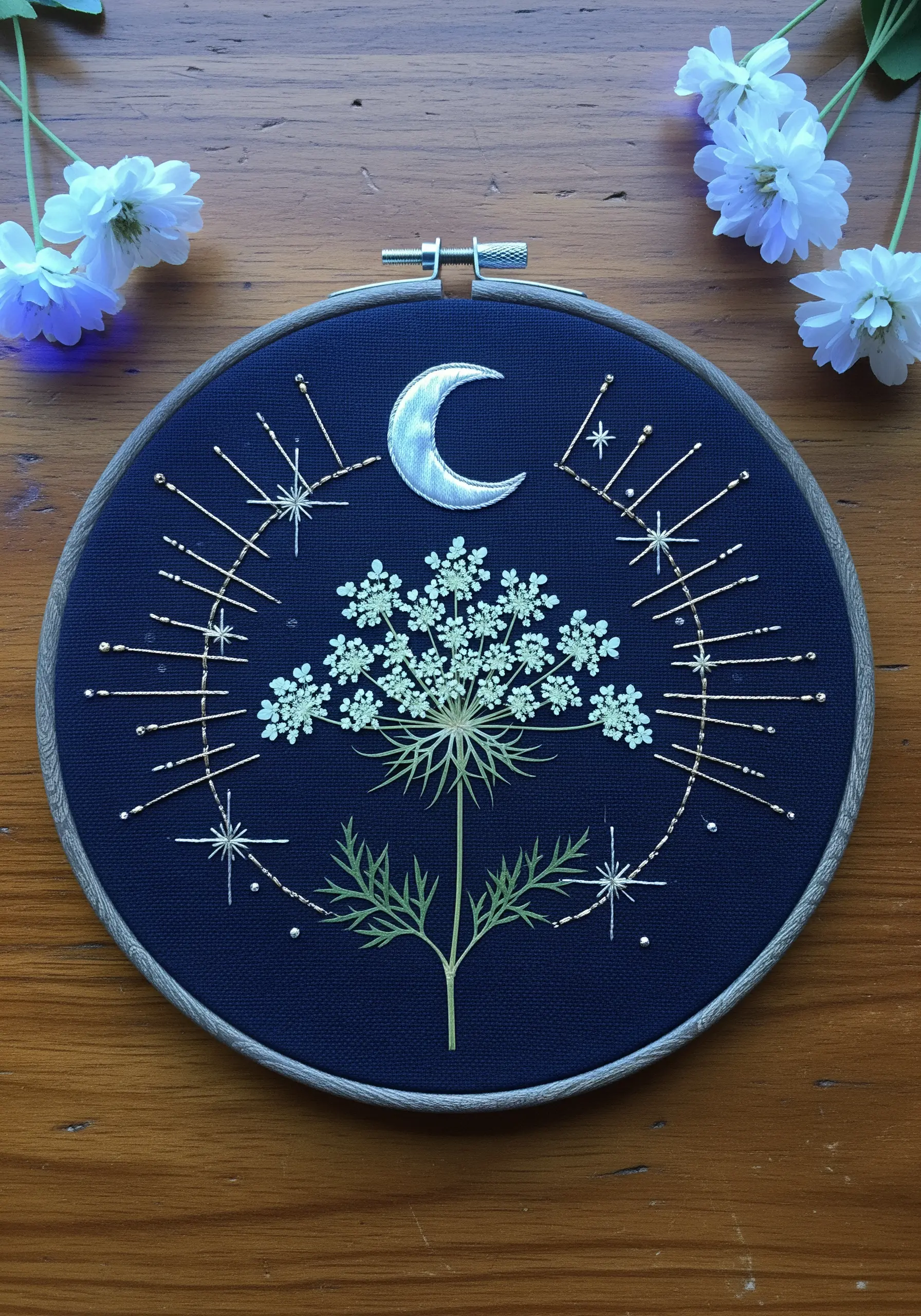
Create a stunning focal point by contrasting a delicate pressed flower against a dark, dramatic background like navy linen.
Use a single strand of a high-sheen metallic thread for the starbursts to ensure the lines are crisp and fine.
Instead of knots, use tiny silver or gold seed beads to anchor the ends of each ray, adding a subtle texture that catches the light.
For the crescent moon, build up a padded satin stitch to give it a raised, three-dimensional quality that stands out against the flat fabric.
2. Juxtapose Organic Petals with Graphic Color Blocks
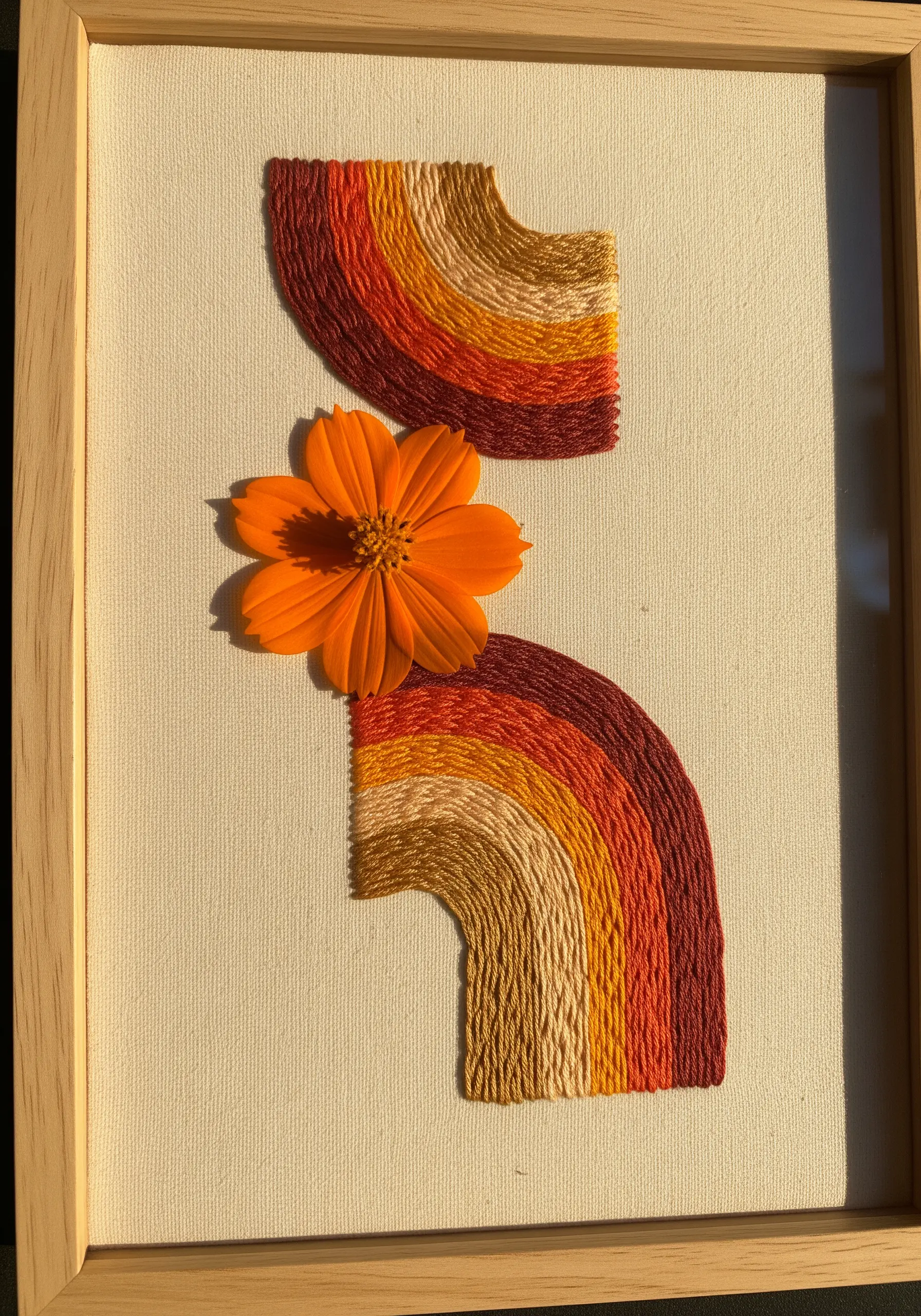
Create a modern, architectural backdrop for a soft flower by stitching bold, curved shapes.
To achieve a perfectly smooth satin stitch surface, first outline each color block with a split stitch.
This technique creates a slightly raised edge that guides your satin stitches, preventing gaps and ensuring a clean, sharp line.
Choose a warm, analog-inspired palette to contrast with the fresh flower, making the organic texture pop against the solid block of color.
3. Create a Floating Web on Sheer Fabric
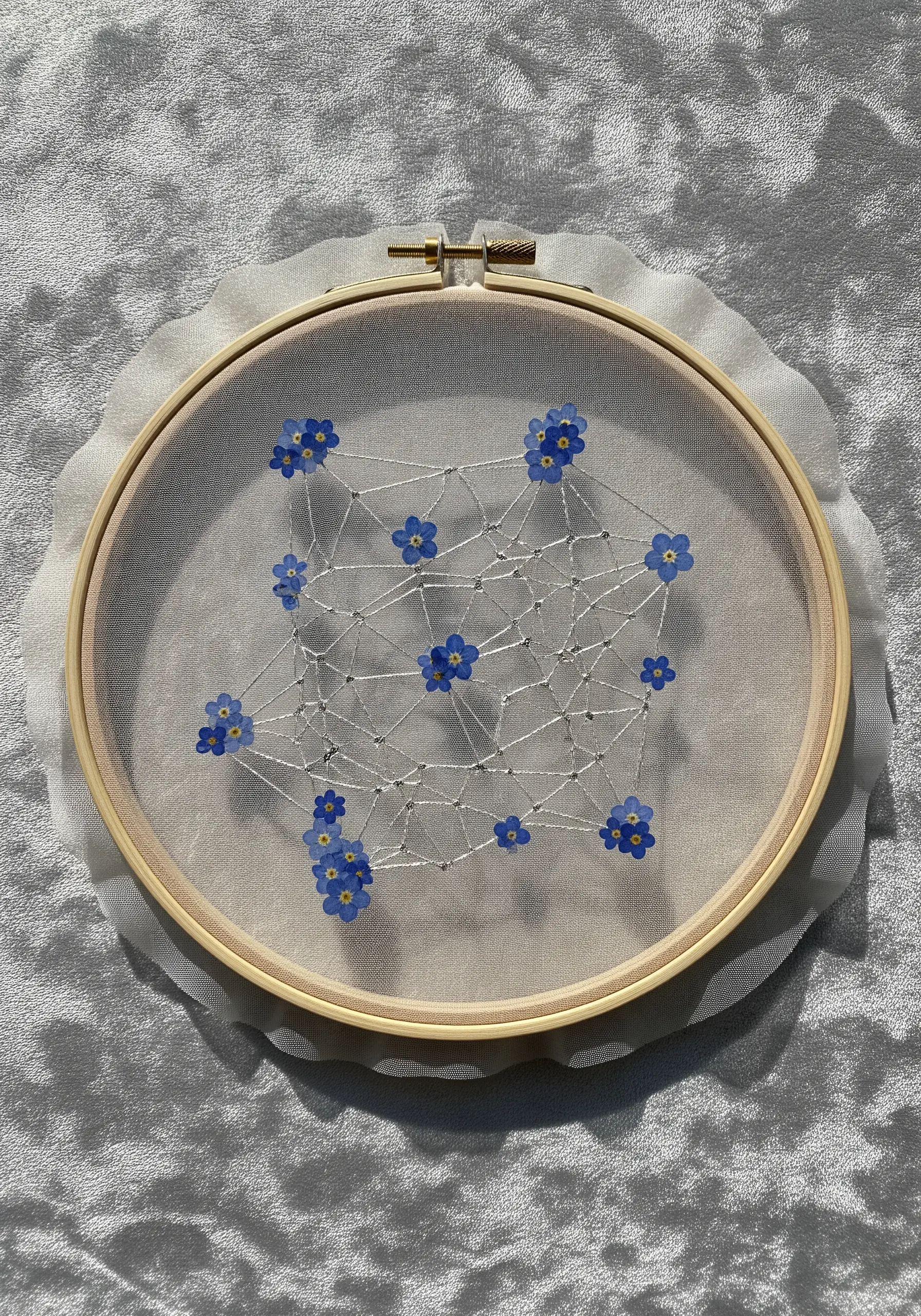
Embroidering on a sheer fabric like organza or tulle makes your pressed flowers appear suspended in air.
To secure the delicate blooms, stitch a random, web-like pattern using a single strand of fine white or silver thread.
At each intersection, use a tiny couching stitch or a single seed bead to tack the thread down, adding stability and a hint of sparkle.
This minimalist approach preserves the fabric’s transparency, resulting in an ethereal, gallery-worthy piece.
4. Stitch a River of Movement for Tall Botanicals
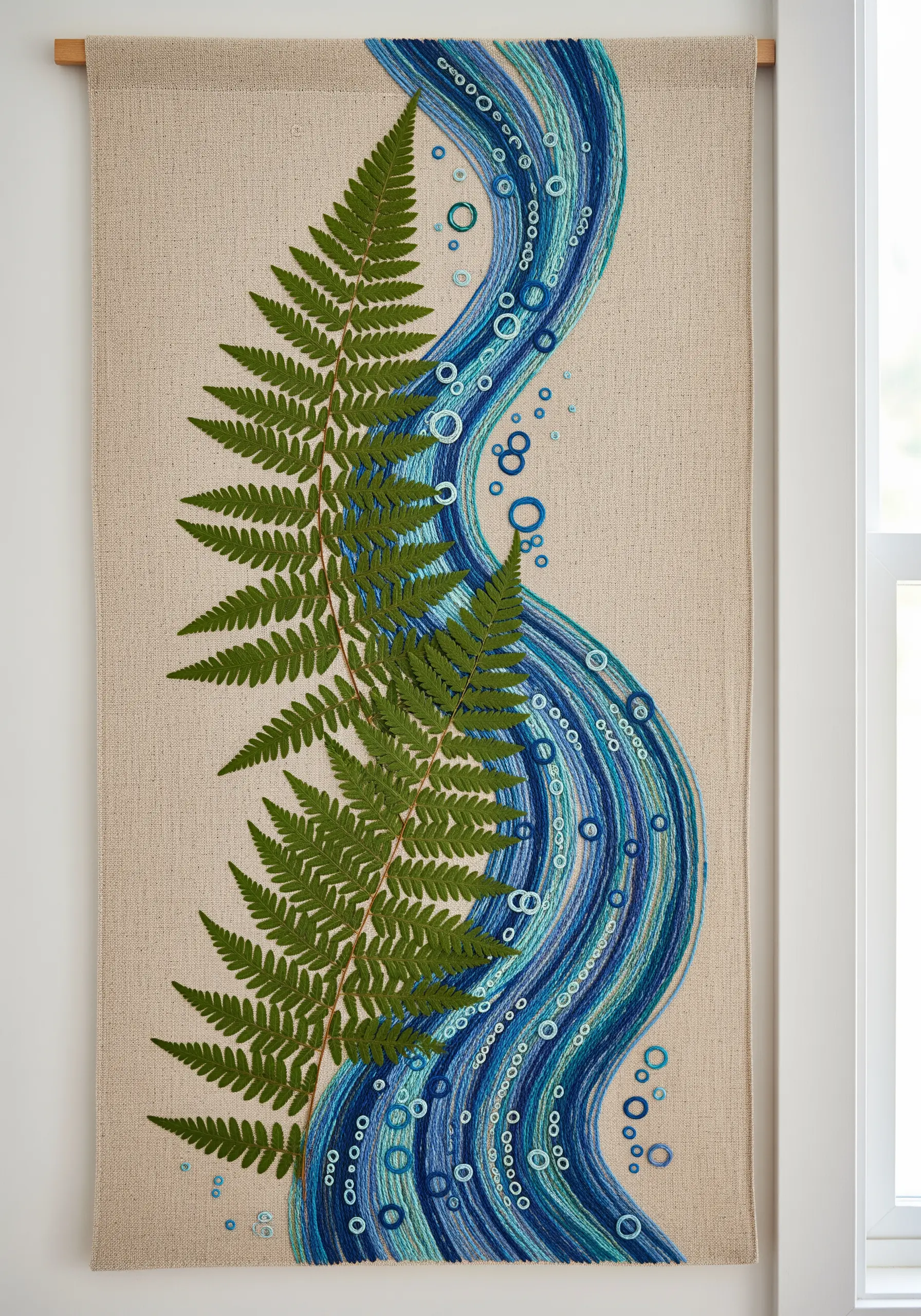
For large-scale pieces like wall hangings, you can create a sense of flowing movement to complement a linear botanical like a fern.
Use a mix of long-and-short stitch, seed stitches, and French knots to mimic the varied texture of moving water.
Blend several shades of blue floss within the same needle to create subtle, natural color variations without changing your thread constantly.
The strong vertical line of the fern acts as a beautiful anchor against the dynamic, curving stitches.
5. Give a Simple Pansy Delicate Butterfly Wings
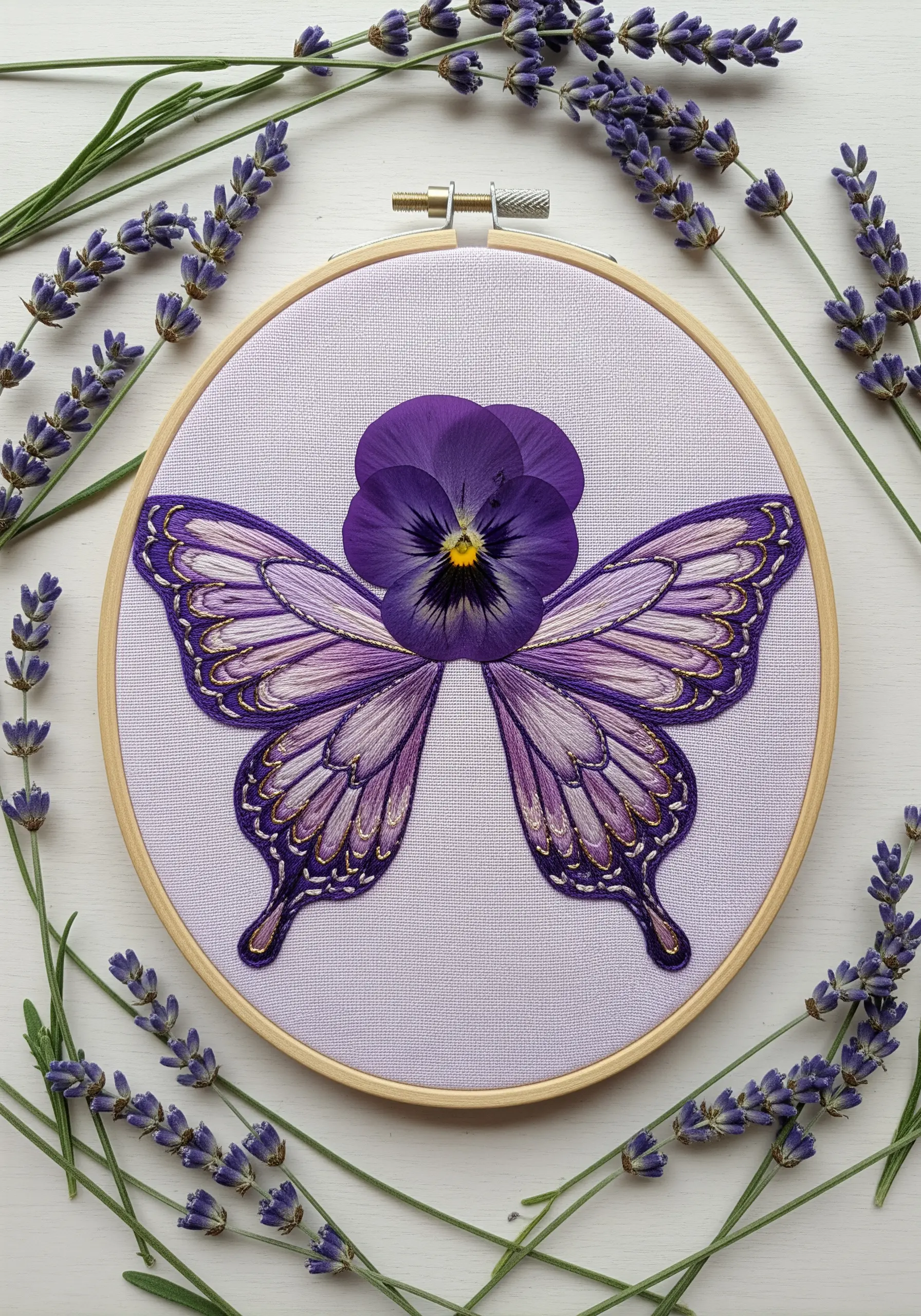
Merge botanical beauty with imaginative design by stitching a pair of intricate butterfly wings extending from a central flower.
Use the long-and-short stitch—often called thread painting—to create a soft, realistic gradient with shades of purple and white.
For a refined finish, outline the wing segments with a single strand of gold metallic thread using a whipped backstitch, which creates a smooth, solid line.
This technique transforms your pressed flower into a piece of narrative art.
6. Design an Earthy Wreath with Found Textures
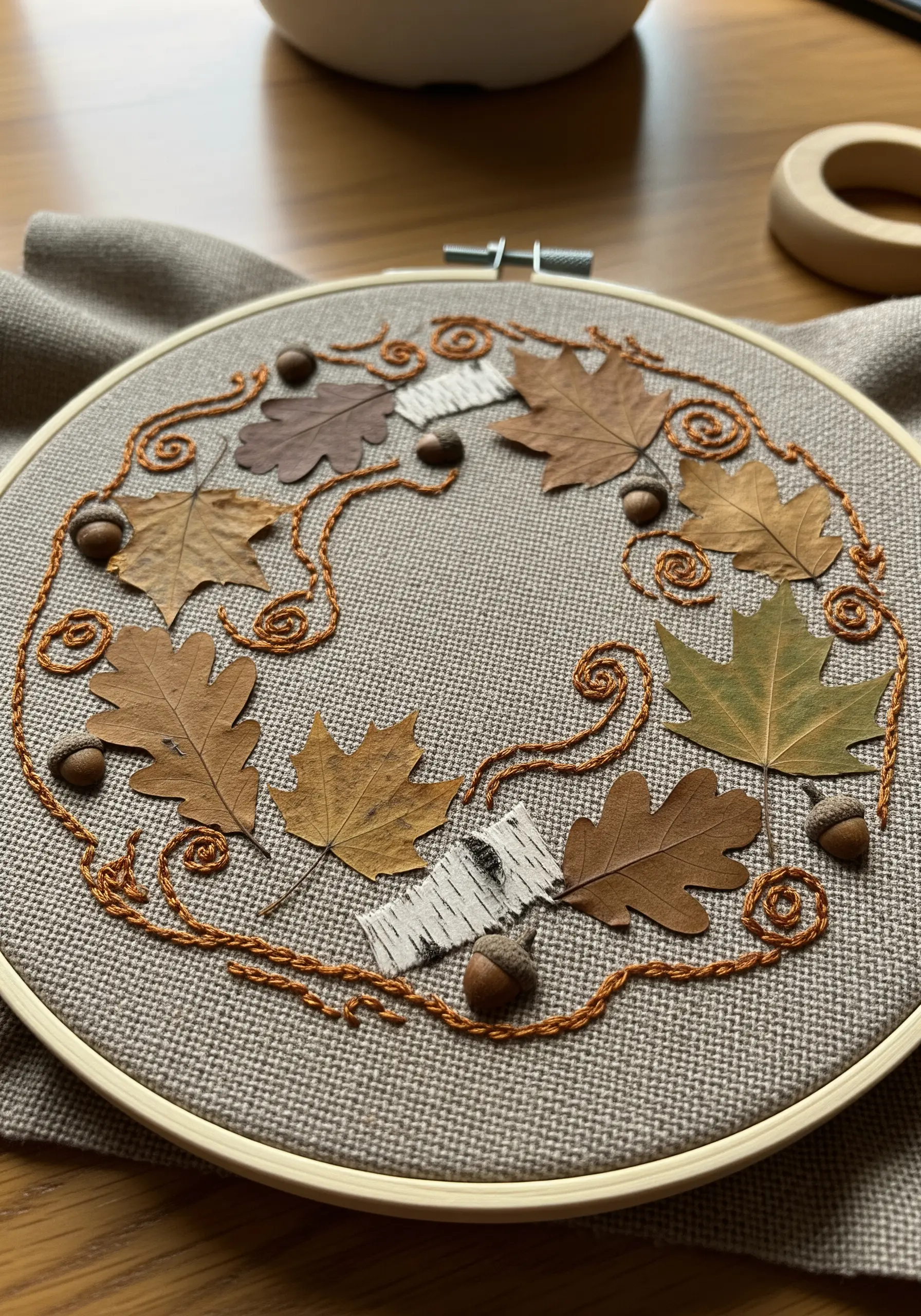
Incorporate more than just petals by adding dried autumn leaves, acorns, and even small pieces of birch bark to your design.
Use a textured, variegated thread in an earthy tone for the swirling vines, stitched with a chunky chain stitch for dimension.
Secure the leaves and bark with a few tiny, almost invisible couching stitches in a matching color, allowing the focus to remain on the natural elements.
The result is a rustic, multi-textured piece that celebrates nature’s variety.
7. Radiate Energy with a String Art Sunburst
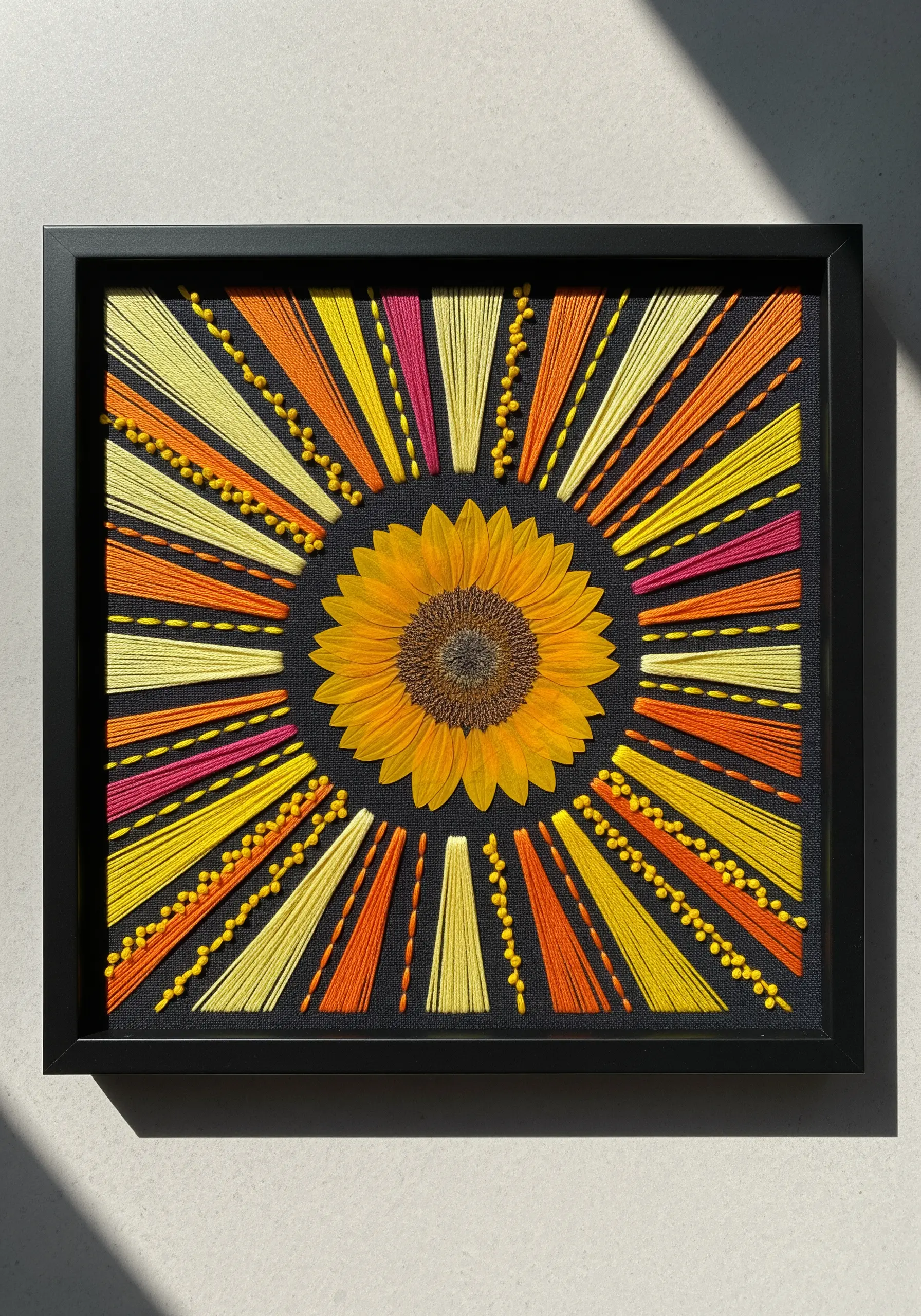
Amplify the impact of a single, bold flower like a sunflower with radiating lines inspired by string art.
Choose a high-contrast fabric, such as black canvas, to make bright yellow and orange threads appear intensely vibrant.
Alternate between simple straight stitches, satin stitch bars, and rows of French knots to add rhythm and texture to the rays.
This technique transforms simple stitches into a powerful, graphic statement.
8. Contrast Delicate Florals with Sharp Geometry
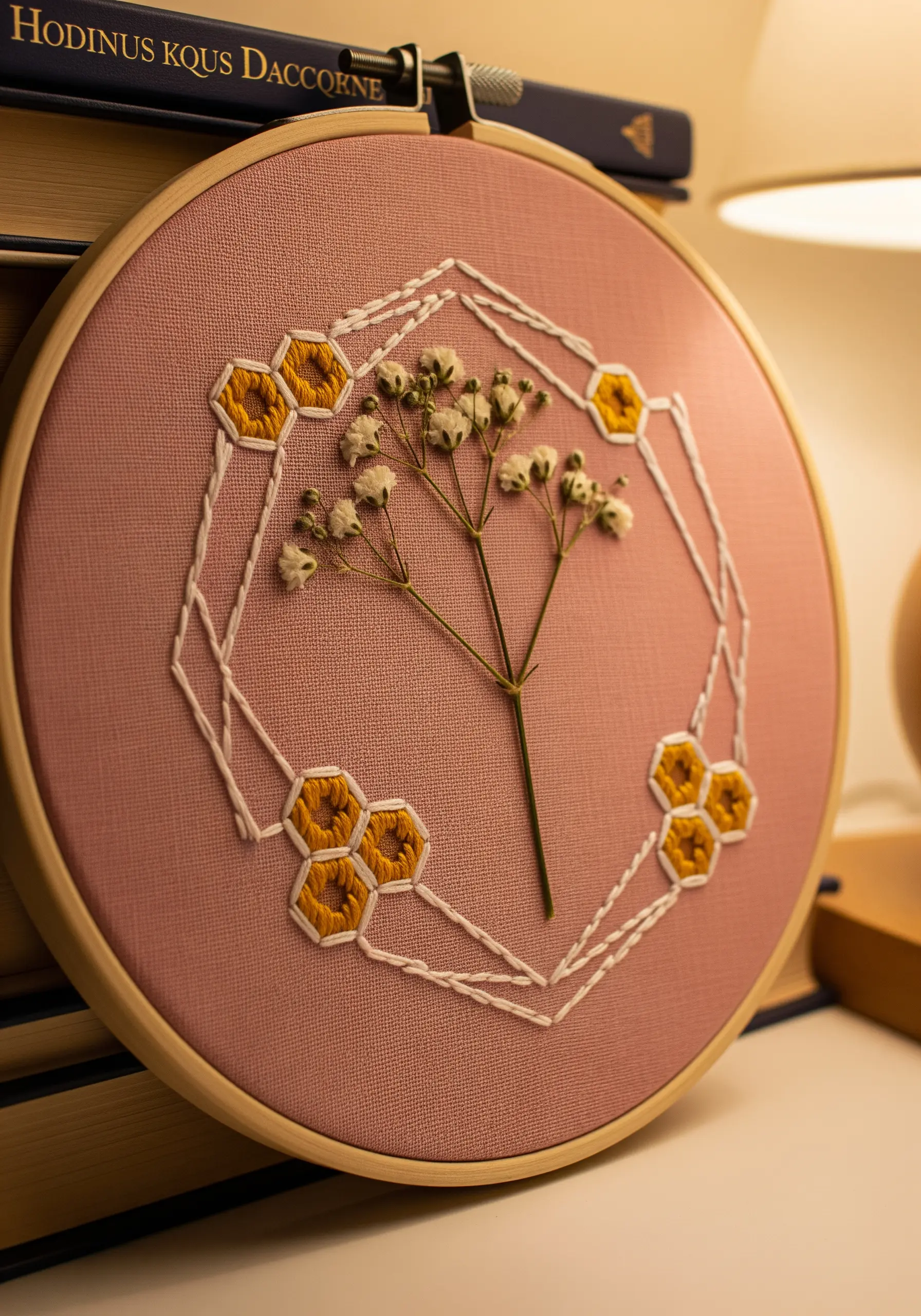
Create a striking visual balance by framing a soft botanical, like baby’s breath, with a crisp geometric pattern.
Use a simple backstitch for the hexagonal outlines to ensure the lines are clean and sharp.
Fill in select shapes with a neat satin stitch to add solid blocks of color, which draws the eye and adds weight to the design.
The contrast between the airy, organic flower and the structured lines results in a modern, balanced composition.
9. Add 3D Stumpwork Bees to a Lavender Scene
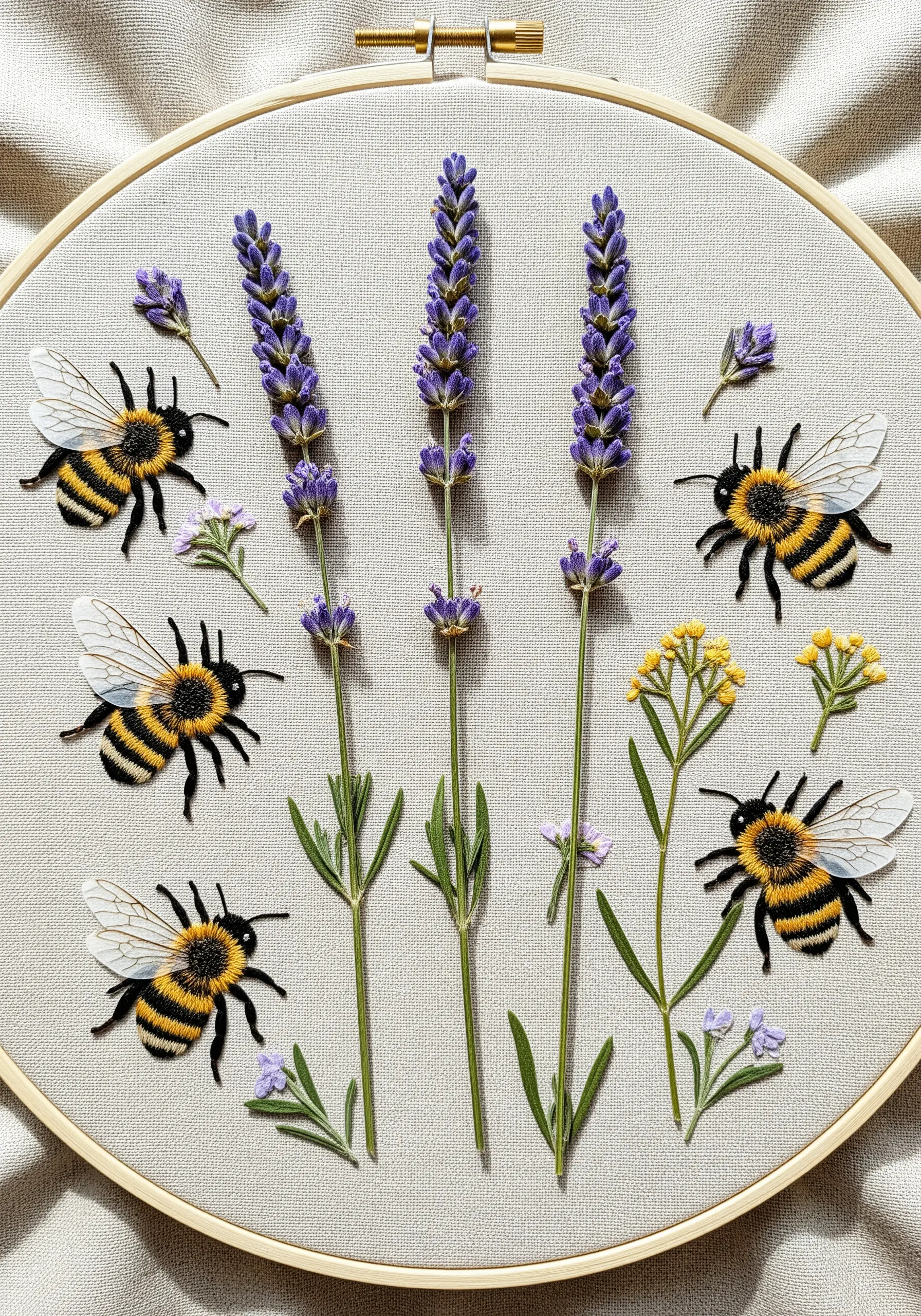
Bring your botanical scene to life by pairing pressed flowers with three-dimensional embroidered elements.
To create the stumpwork bees, stitch their bodies directly onto your fabric, then create the wings separately on a scrap of organza.
Outline the wings, fill them with a few spaced stitches, then carefully cut them out and tack them onto the body at the base.
This technique adds a surprising and delightful 3D element that makes your artwork interactive and dynamic.
10. Center a Preserved Rose in a Stitched Mandala
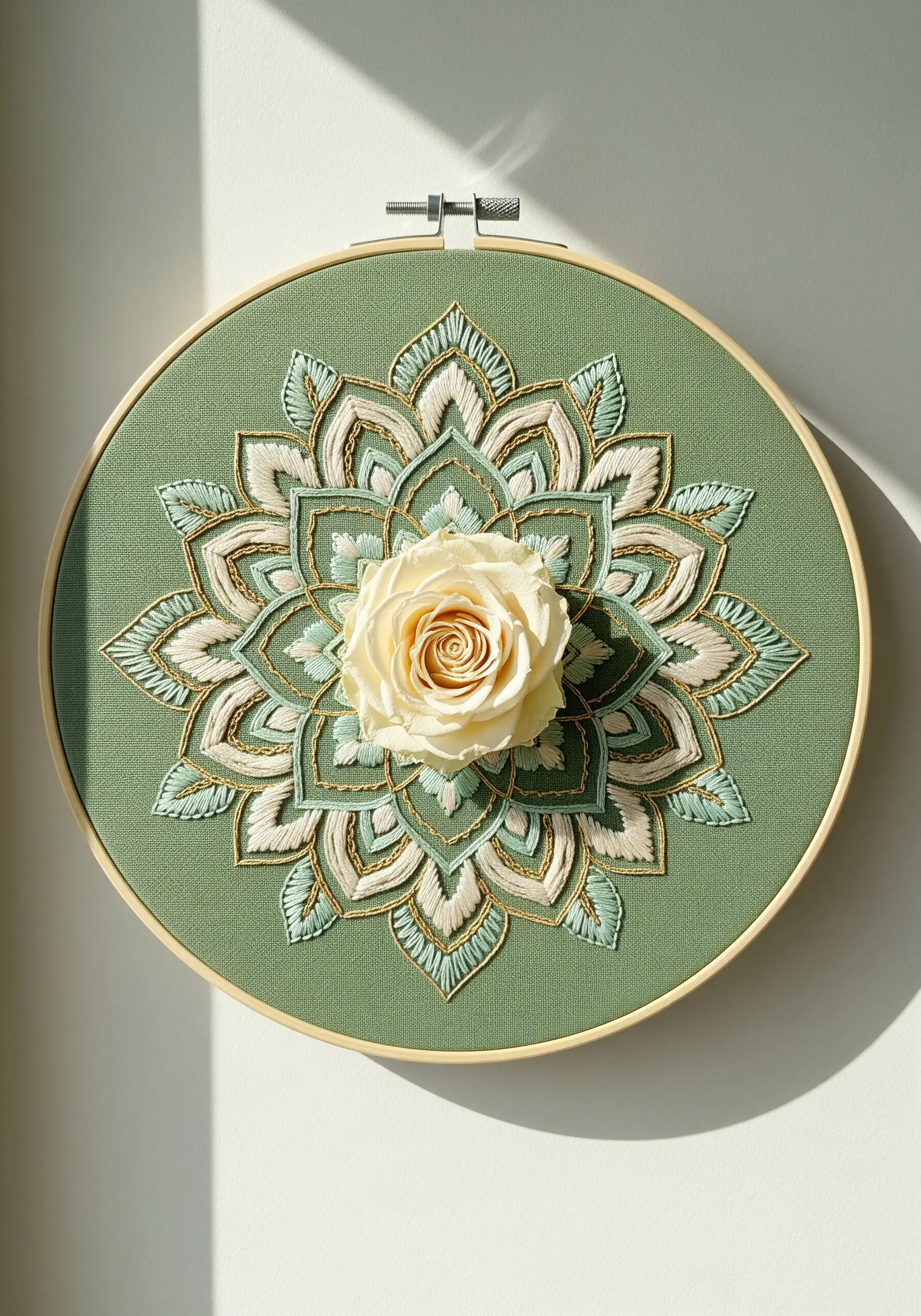
Use a preserved 3D flower as the centerpiece for an intricate, symmetrical embroidery design.
A mandala pattern allows you to explore different stitches, like satin stitch, French knots, and chain stitch, to build layers of texture.
For a clean, raised satin stitch, first create a foundation of split stitches or chain stitches and then work your satin stitch over the top.
A soft, tonal color palette ensures your intricate stitching complements the flower without overpowering it.
11. Use Minimalist Lines on Unconventional Fabric
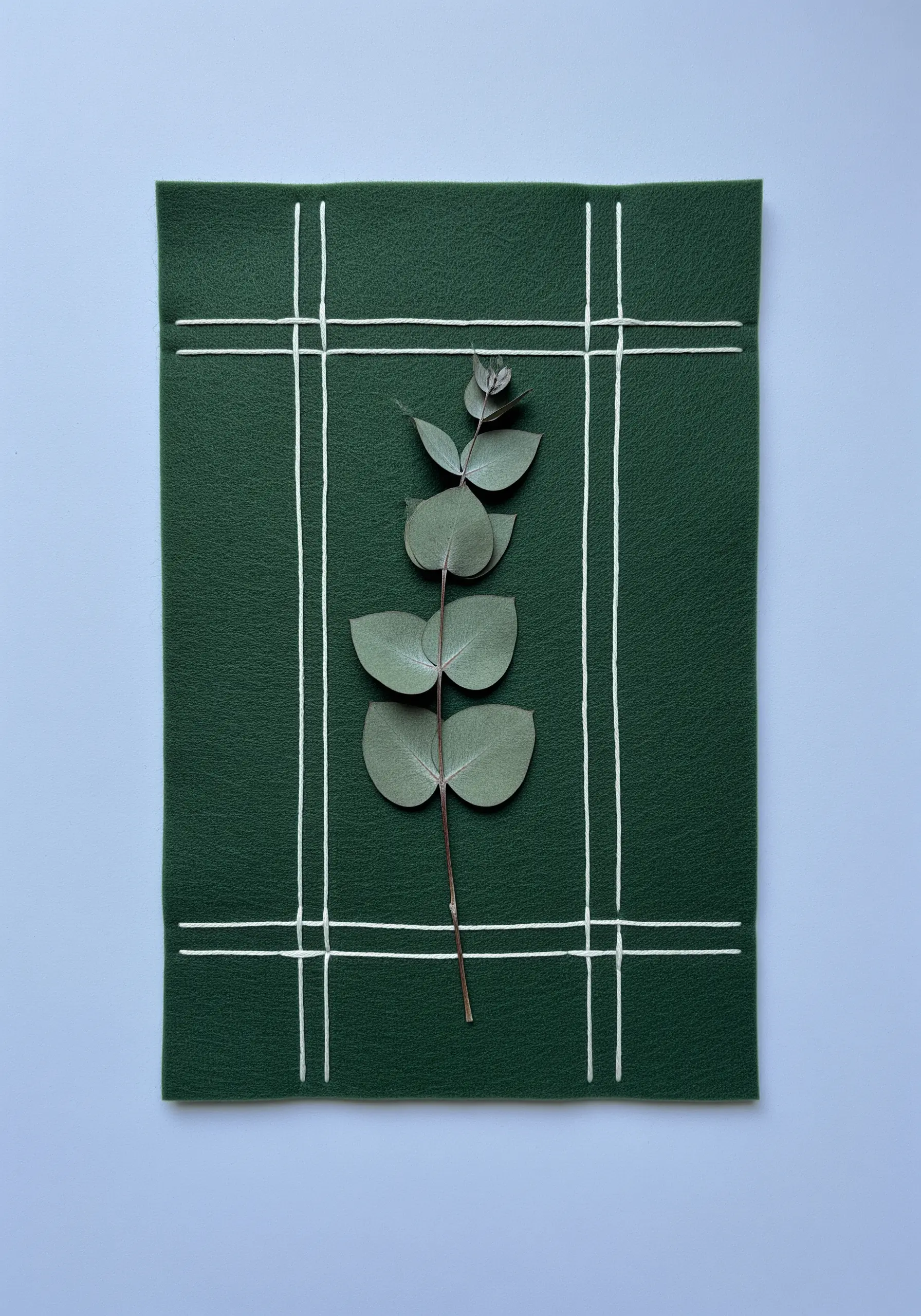
Explore stitching on unexpected surfaces like thick felt, which provides a modern, matte background and doesn’t require a hoop for stability.
A simple grid of running stitches, worked in a contrasting cotton perle thread, creates a clean, architectural frame.
This minimalist approach draws attention to the simple elegance and form of the botanical element, such as a eucalyptus sprig.
The texture of the felt grips the thread, making it perfect for clean, graphic line work.
12. Create an Abstract Cascade of Petals
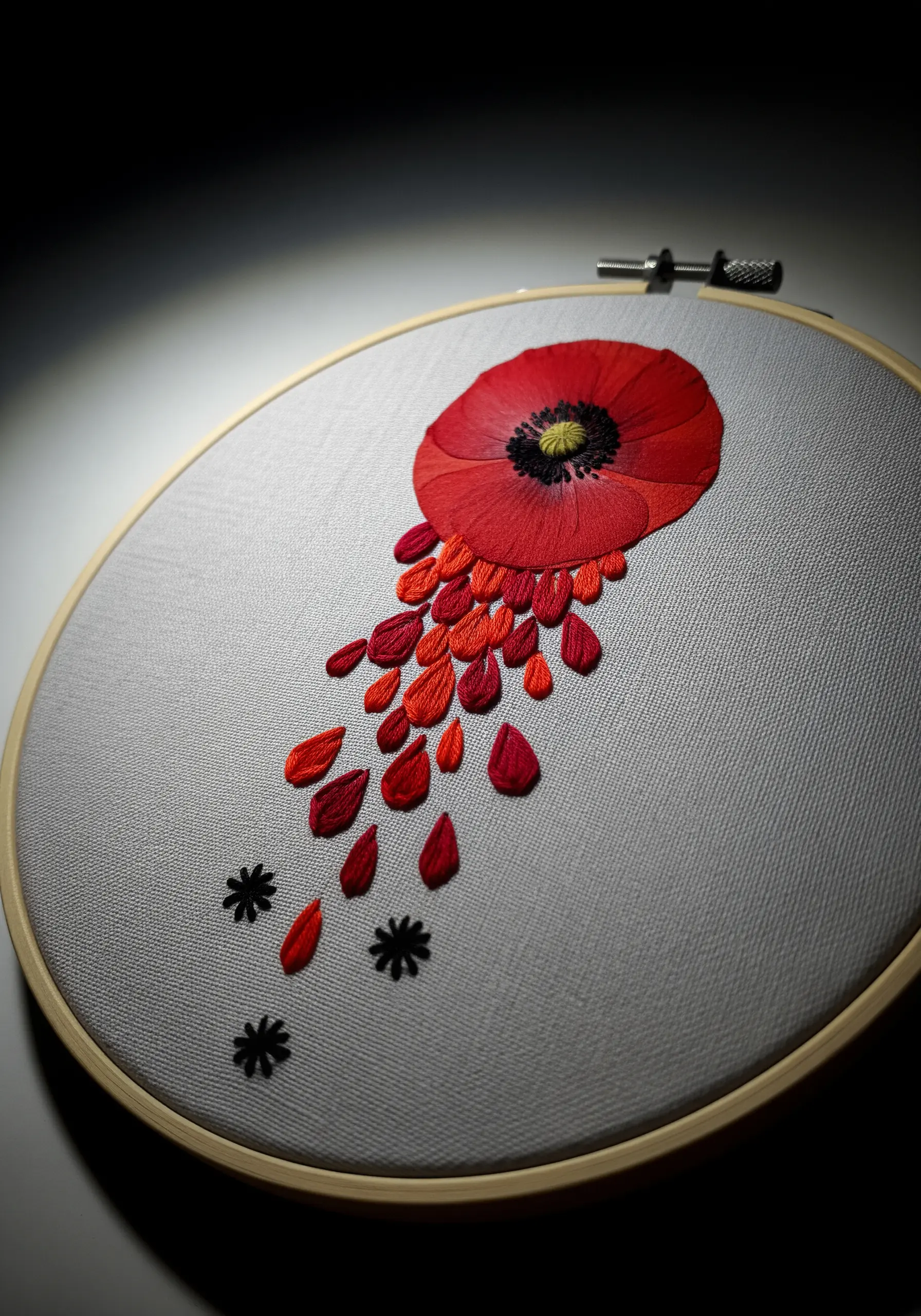
Suggest movement by stitching abstract petals that appear to be falling from your central pressed flower.
Use a satin stitch or fishbone stitch to create individual teardrop shapes, varying their size and orientation for an organic feel.
Incorporate several shades of the same color, blending them within each petal to give them depth and dimension.
This technique creates a beautiful illusion of movement and deconstruction, adding an artistic, narrative quality to your piece.
13. Pair a Ginkgo Leaf with Art Deco Geometry
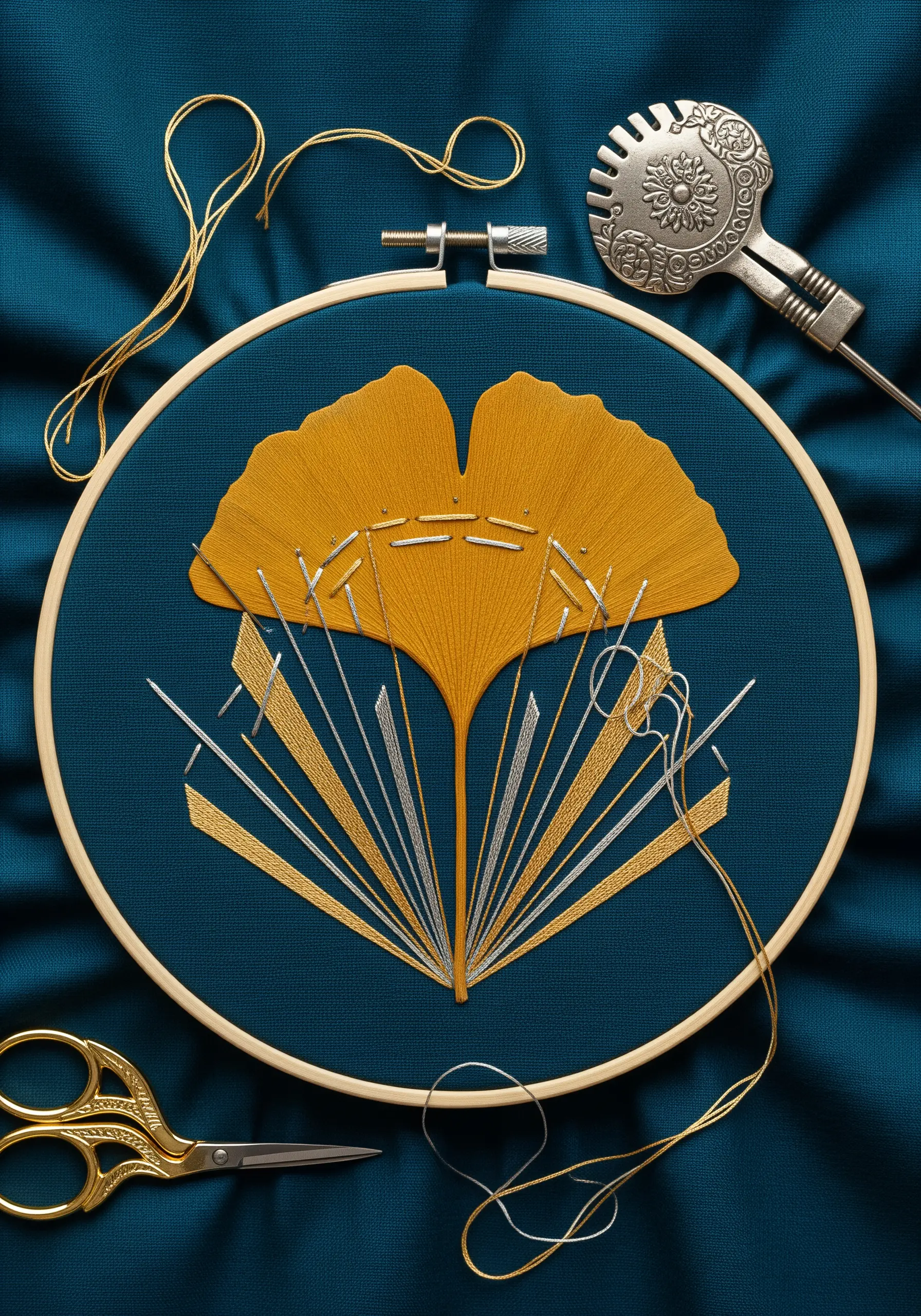
Complement the unique fan shape of a pressed ginkgo leaf with a design inspired by Art Deco’s clean, elegant lines.
Use radiating straight stitches and satin stitch bars in alternating silver and gold metallic threads to create a glamorous, geometric sunburst.
Secure the leaf itself with a few carefully placed straight stitches that integrate seamlessly into the overall pattern.
This thoughtful pairing of a natural shape with a distinct design style results in a sophisticated, cohesive piece.
14. Curate a Clean and Modern Herb Triptych
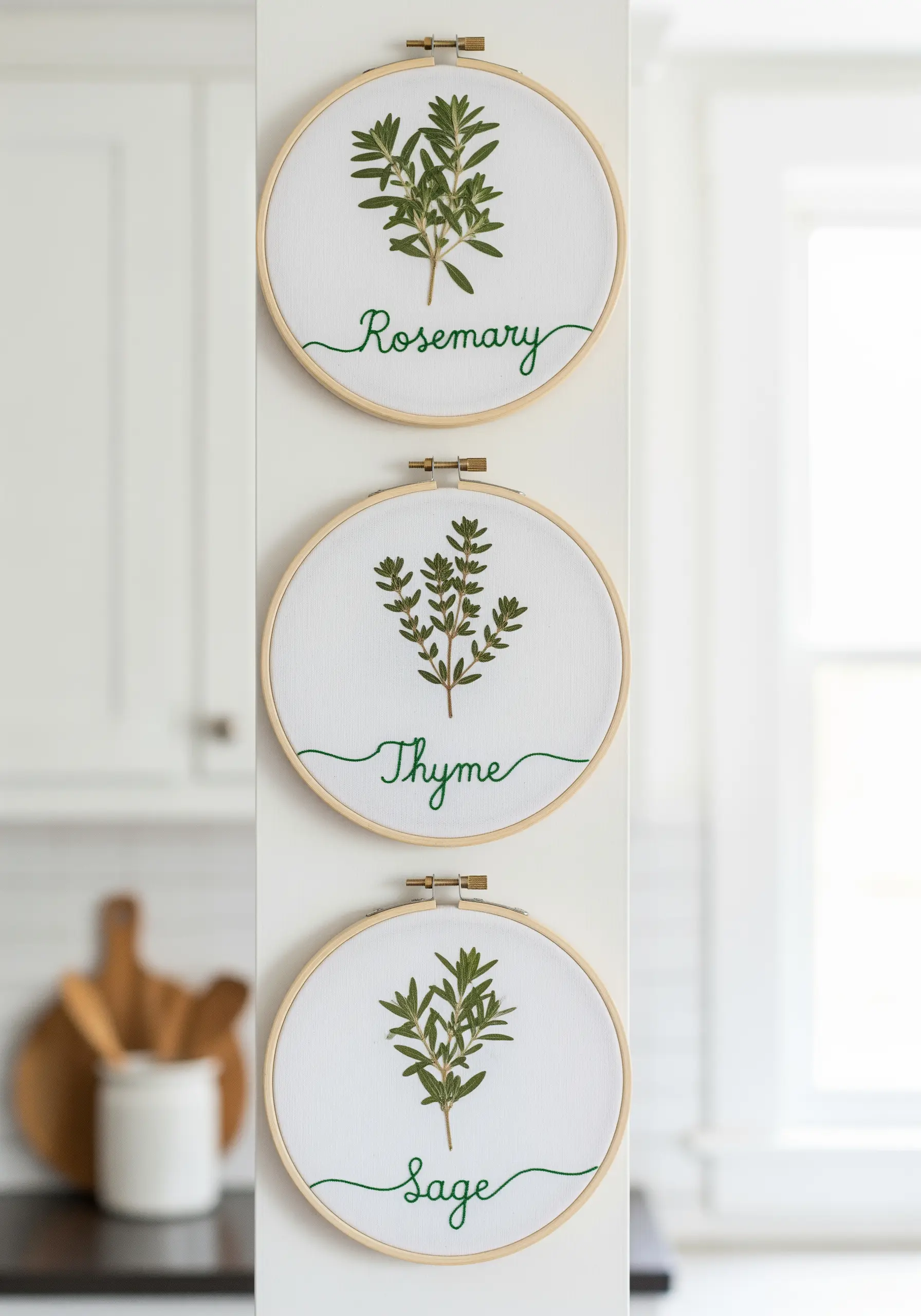
Create a cohesive wall display by grouping similar botanicals, like kitchen herbs, in a matching set of hoops.
For the lettering, use a whipped backstitch in a single, unifying color to create a smooth, raised script that is both elegant and easy to read.
By keeping the embroidery minimal against a clean white background, you ensure the natural beauty and texture of the pressed herbs remain the stars of the show.
15. Capture a Spring Breeze with Swirling Stitches
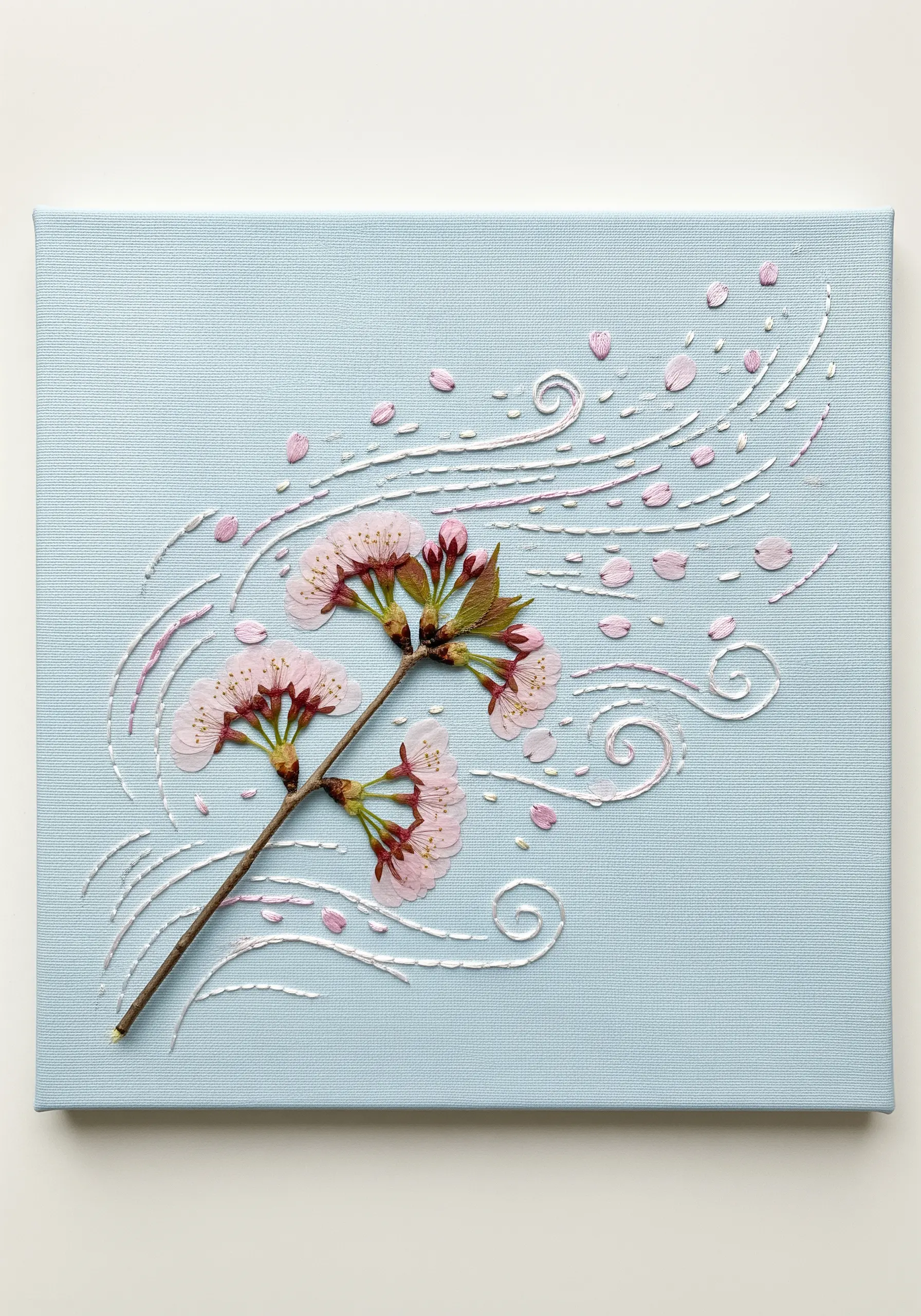
Evoke the feeling of a spring breeze by surrounding a delicate branch with flowing, atmospheric stitches.
Use a stem stitch or whipped running stitch in a soft white thread to create elegant, swirling lines that represent wind.
Scatter tiny satin-stitched petals or detached chain stitches along the stitched currents to create the illusion of blossoms being carried on the air.
This method adds a beautiful sense of narrative and movement to your composition.
16. Encircle a Flower with a Classic Daisy Chain
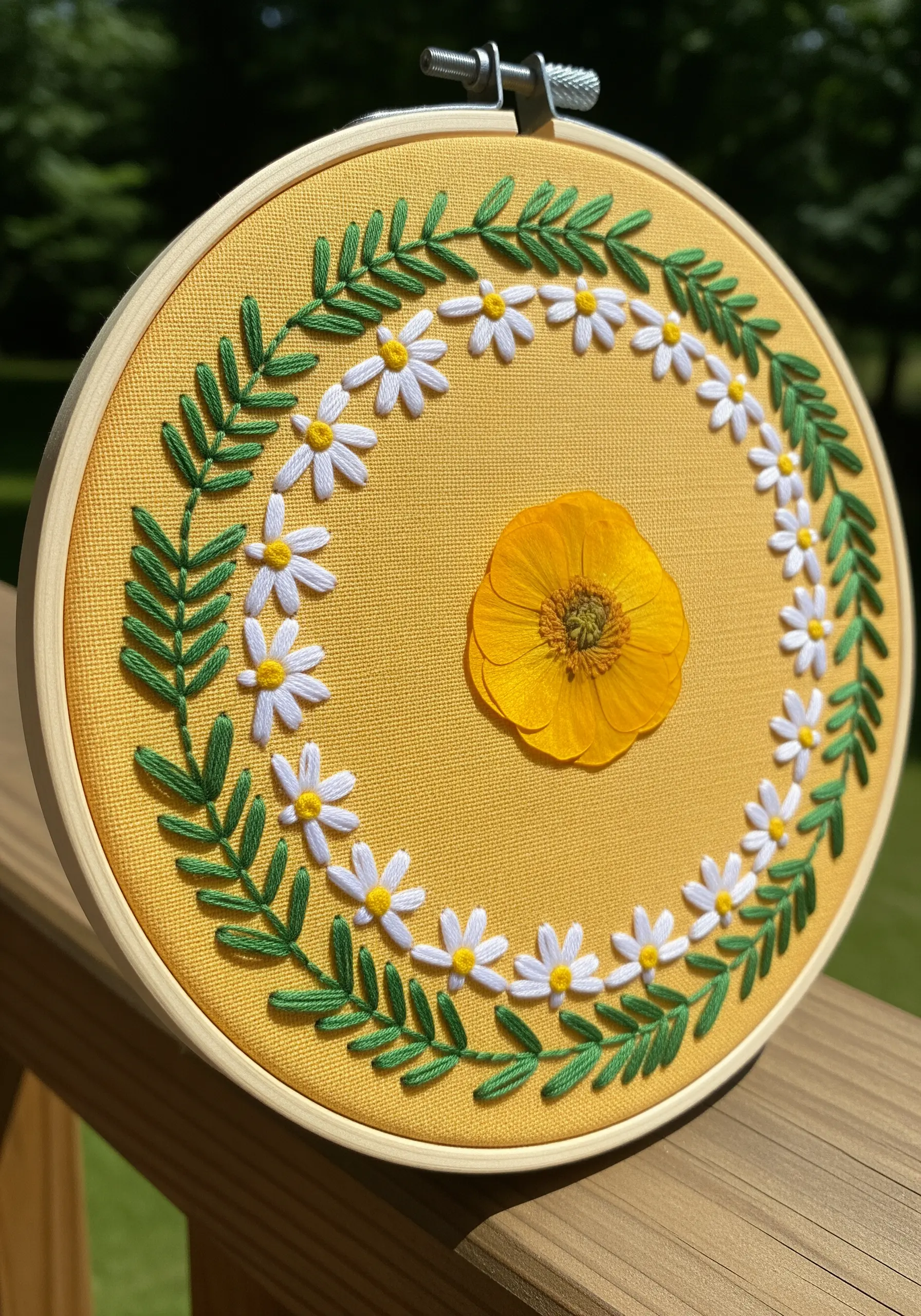
Frame a single pressed flower with a timeless and cheerful embroidered wreath.
Use the detached chain stitch, also known as the lazy daisy stitch, to form the petals—it’s quick, simple, and creates a perfect teardrop shape every time.
Connect the daisies with leafy vines stitched in the fern stitch, which creates symmetrical, feathery foliage with minimal effort.
This design is a perfect way to add a touch of handmade cottage charm to your work.
17. Build a Dense Wreath of Layered Leaves
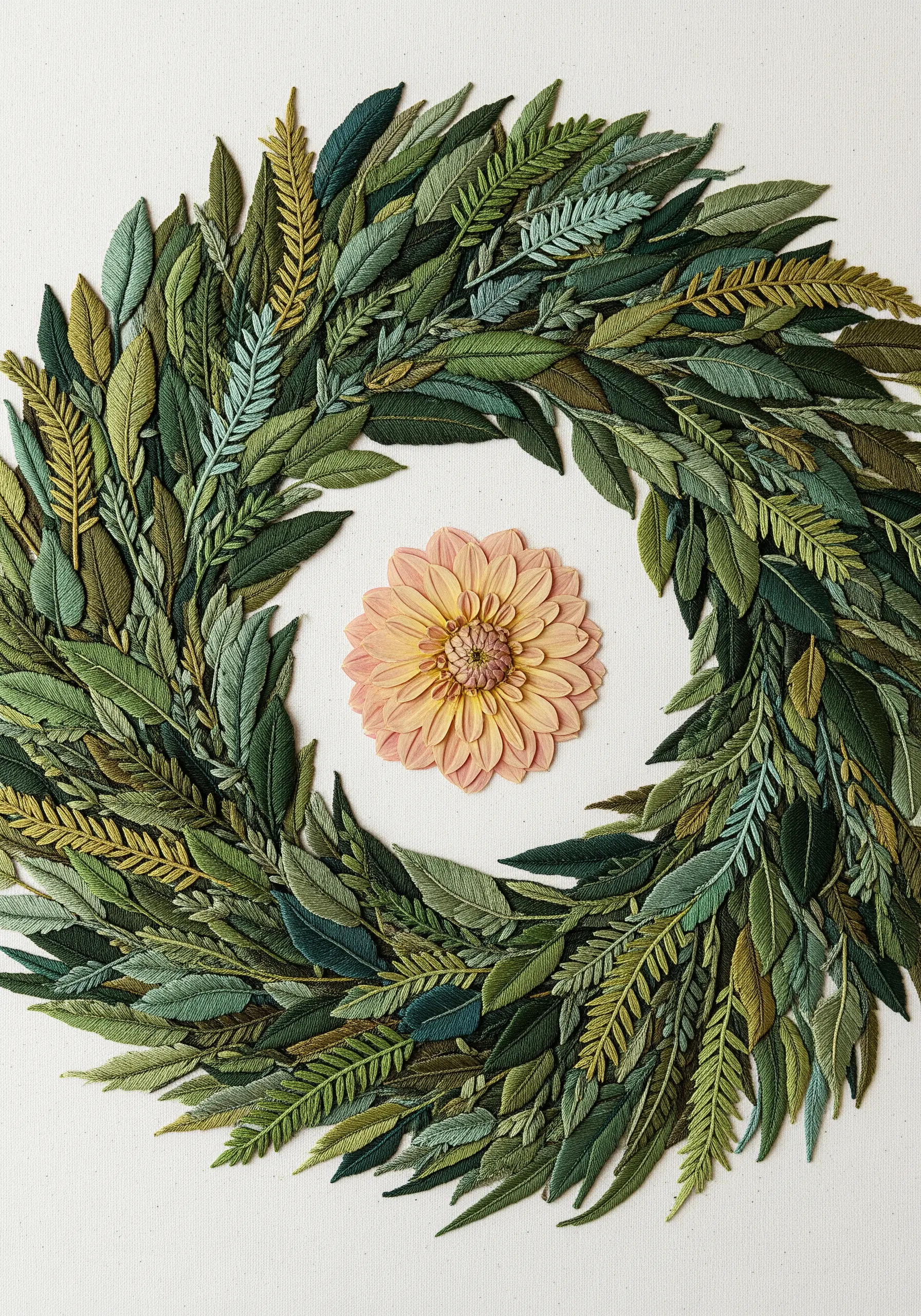
Create a lush, textural frame for your central flower by building a dense wreath of embroidered leaves.
Use a combination of fishbone stitch and satin stitch, varying the direction of your stitches for each leaf to reflect light differently.
Layering is key: don’t hesitate to stitch new leaves directly over the edges of others to achieve a natural, overlapping effect.
Working with a wide palette of greens, from olive to teal, will give the wreath incredible depth and realism.
18. Frame a Thistle with an Abstract Color Explosion
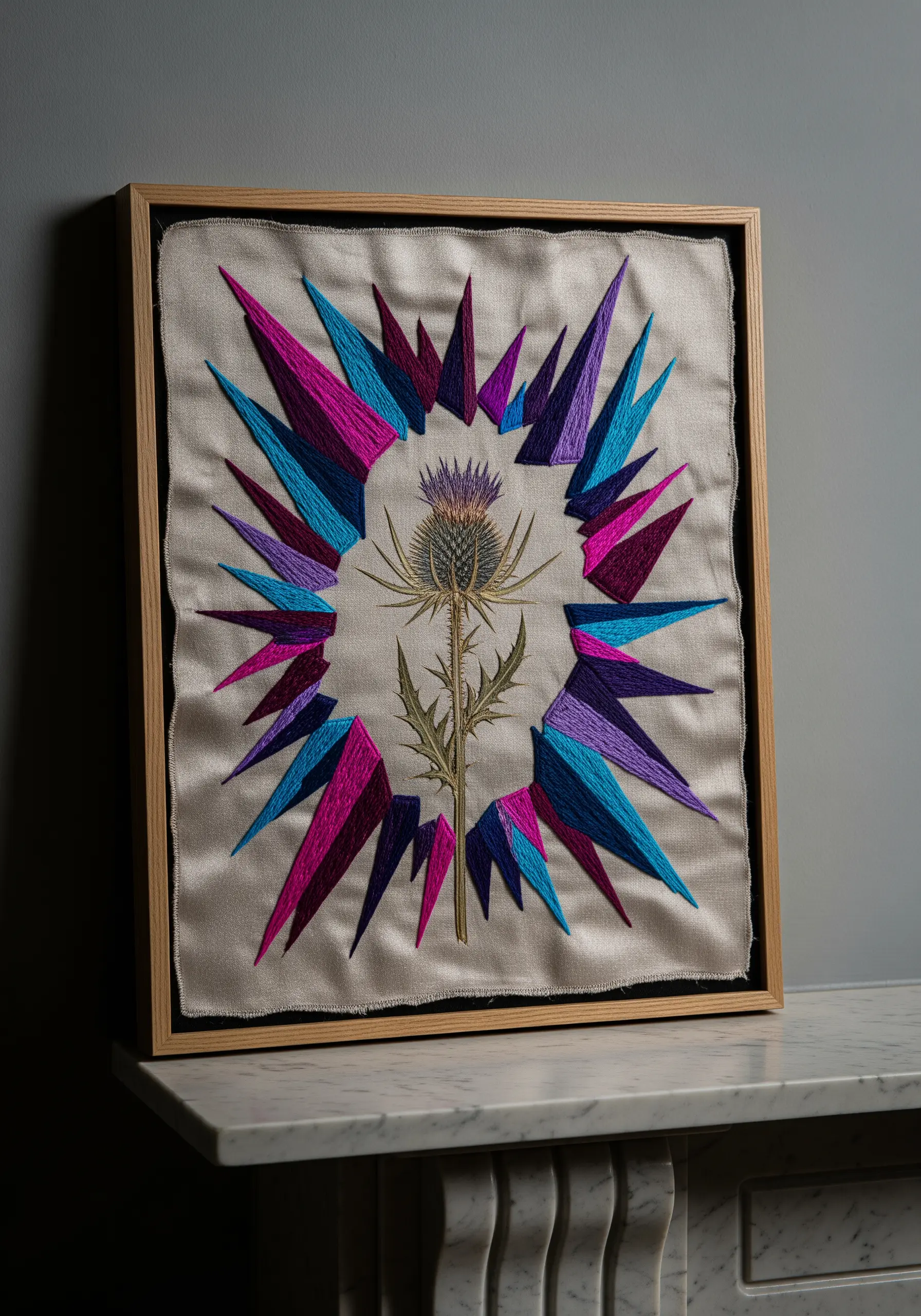
Contrast the sharp, architectural form of a plant like a thistle with a dynamic burst of abstract color.
Use satin stitch to create jagged, crystal-like shards that radiate from the center, leaving negative space around the botanical to let it breathe.
A bold, high-contrast palette of magenta, cyan, and deep purples creates a vibrant energy that transforms the piece into a contemporary work of art.
This technique makes a powerful statement piece where nature meets graphic design.