Have you ever watched the wind move through long grass, or the way water eddies around a stone, and wished you could capture that feeling in your embroidery? It’s a common desire—to move beyond filling in shapes and start stitching with emotion and life.
The secret isn’t in learning hundreds of complex stitches. It’s in learning to see. By observing the simple, powerful forces of nature—wind, water, and gravity—you can translate their motion into thread.
This collection is designed to help you do just that. You’ll discover how to use stitch direction, thread texture, and composition to create abstract art that feels dynamic and intentional. It’s time to let your needle follow the current, and stitch the invisible forces that shape our world.
1. Sculpted Currents with Directional Stitches
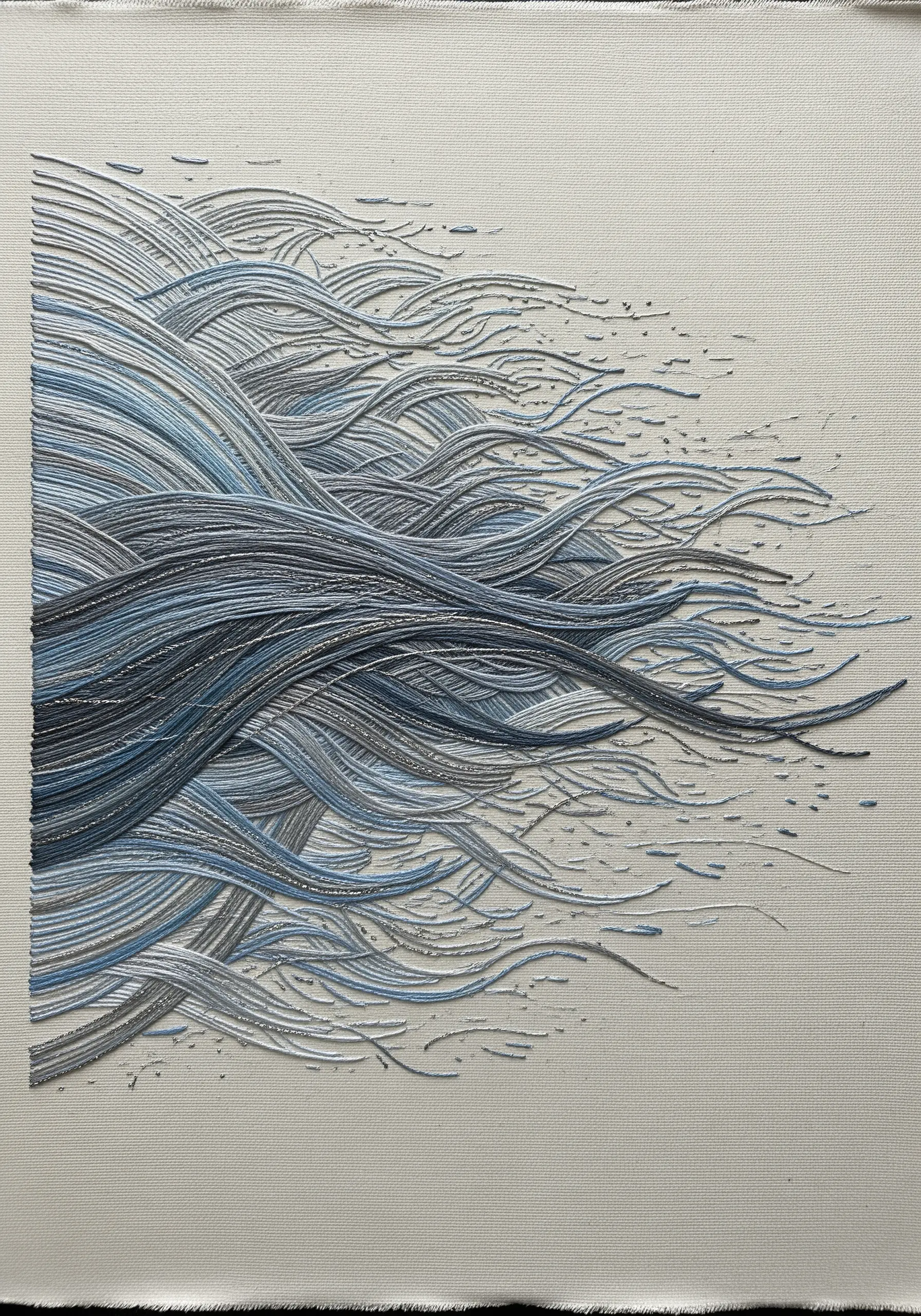
Create the illusion of flowing water by using dense, directional straight stitches that follow a wave-like path.
Instead of uniform satin stitches, vary the length and angle of each stitch slightly to mimic the chaotic yet cohesive movement of a current.
Use a palette of analogous blues, grays, and silvers, occasionally blending two different colored threads in the same needle to create subtle shifts in tone.
Allow some threads at the edge of the design to fray or end abruptly to represent the water dissipating into spray.
2. Rhythmic Ripples with Couching and Knots
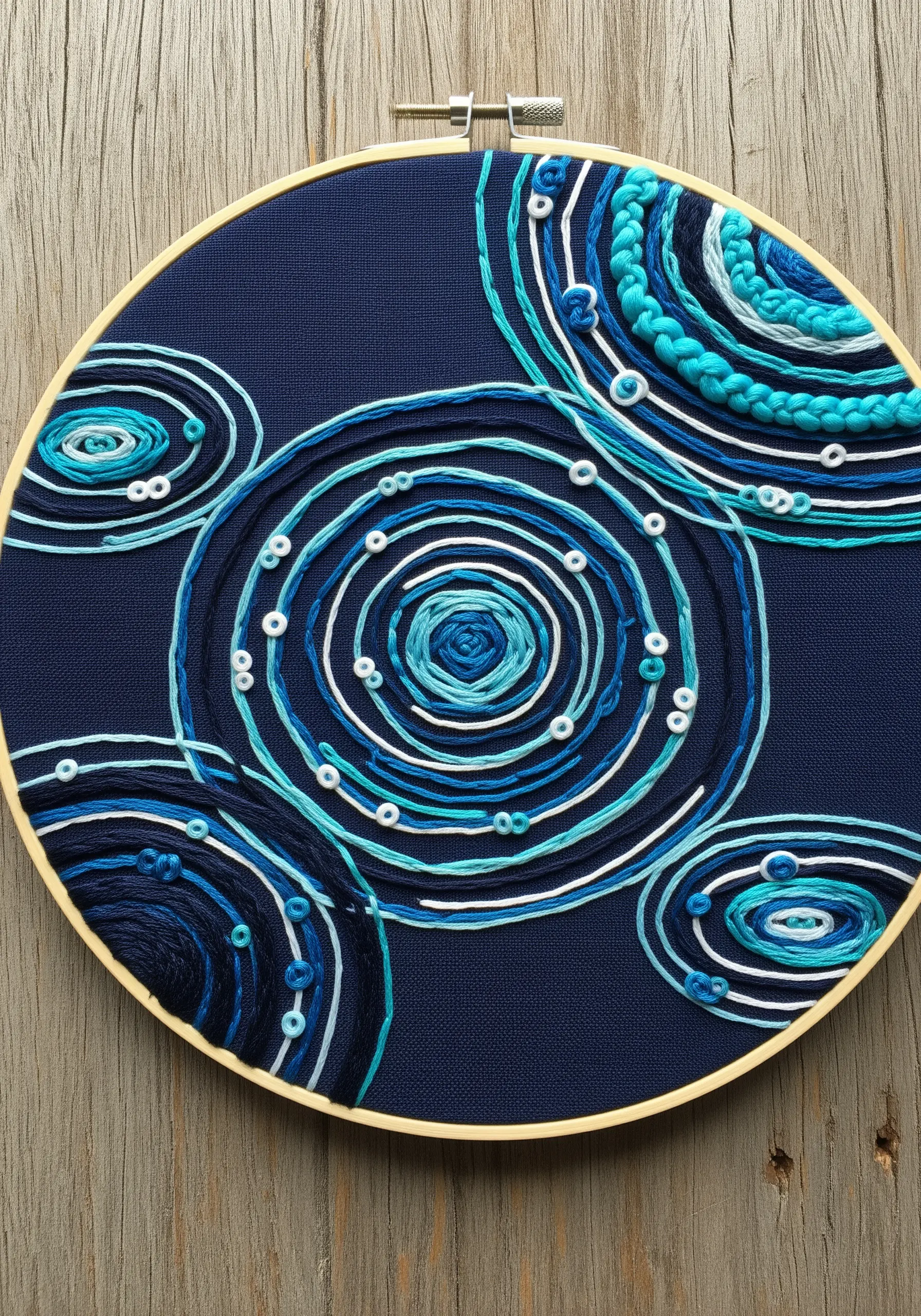
To represent ripples spreading on water, couch down thicker yarns or multiple strands of floss in concentric circles.
This technique gives you perfectly smooth, raised lines that contrast beautifully with the flat fabric base.
Introduce texture by alternating couched lines with rows of French knots or wrapping some circles with a second, contrasting thread (whipped stitch).
The small white knots scattered throughout act as focal points, like pebbles dropped into a still pond, creating visual rhythm and breaking the uniformity of the circles.
3. Gravitational Drape with Heavy Cording
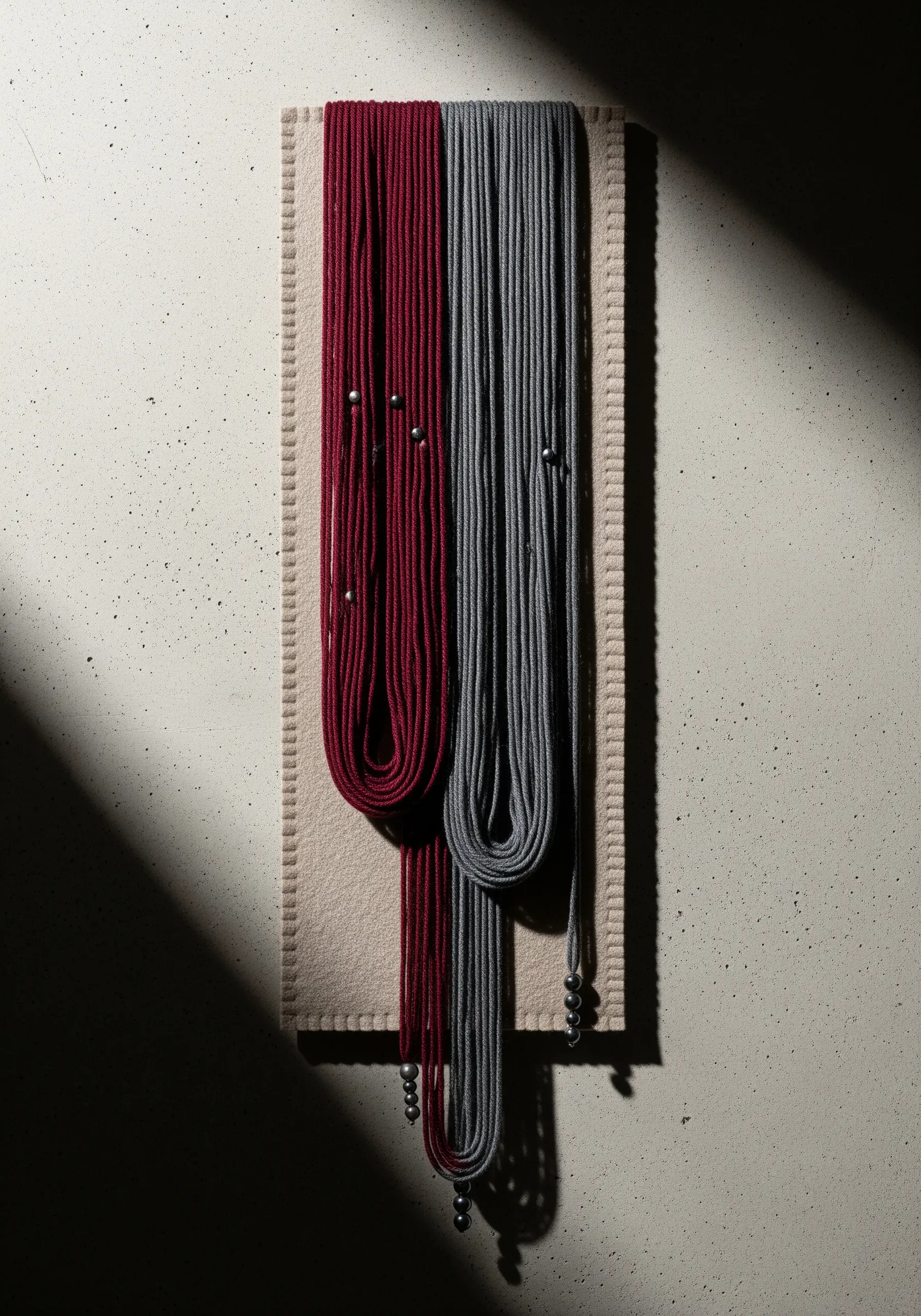
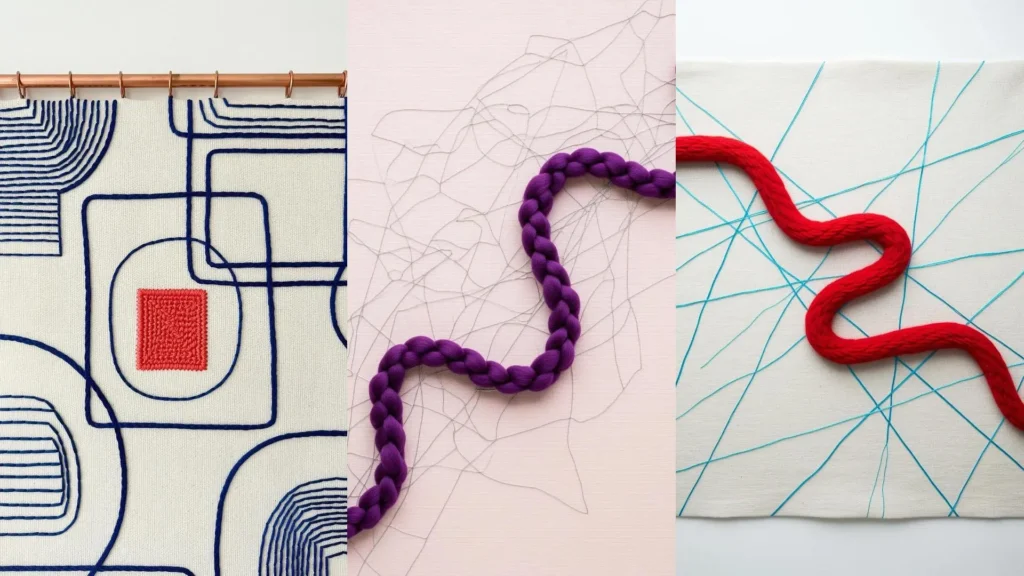
Explore the direct effect of gravity by allowing heavy, smooth cords to hang naturally against a textured back panel.
Instead of stitching a shape, you are guiding the material. Anchor the cords securely at the top with strong, invisible couching stitches worked from the back.
The minimalist composition highlights the weight and texture of the cords themselves. Adding a few metallic beads provides a subtle counterpoint to the soft textile, catching the light and adding a point of interest.
This technique works best when you use negative space to emphasize the form.
4. Scattered Motion with Appliqué and Wind Lines
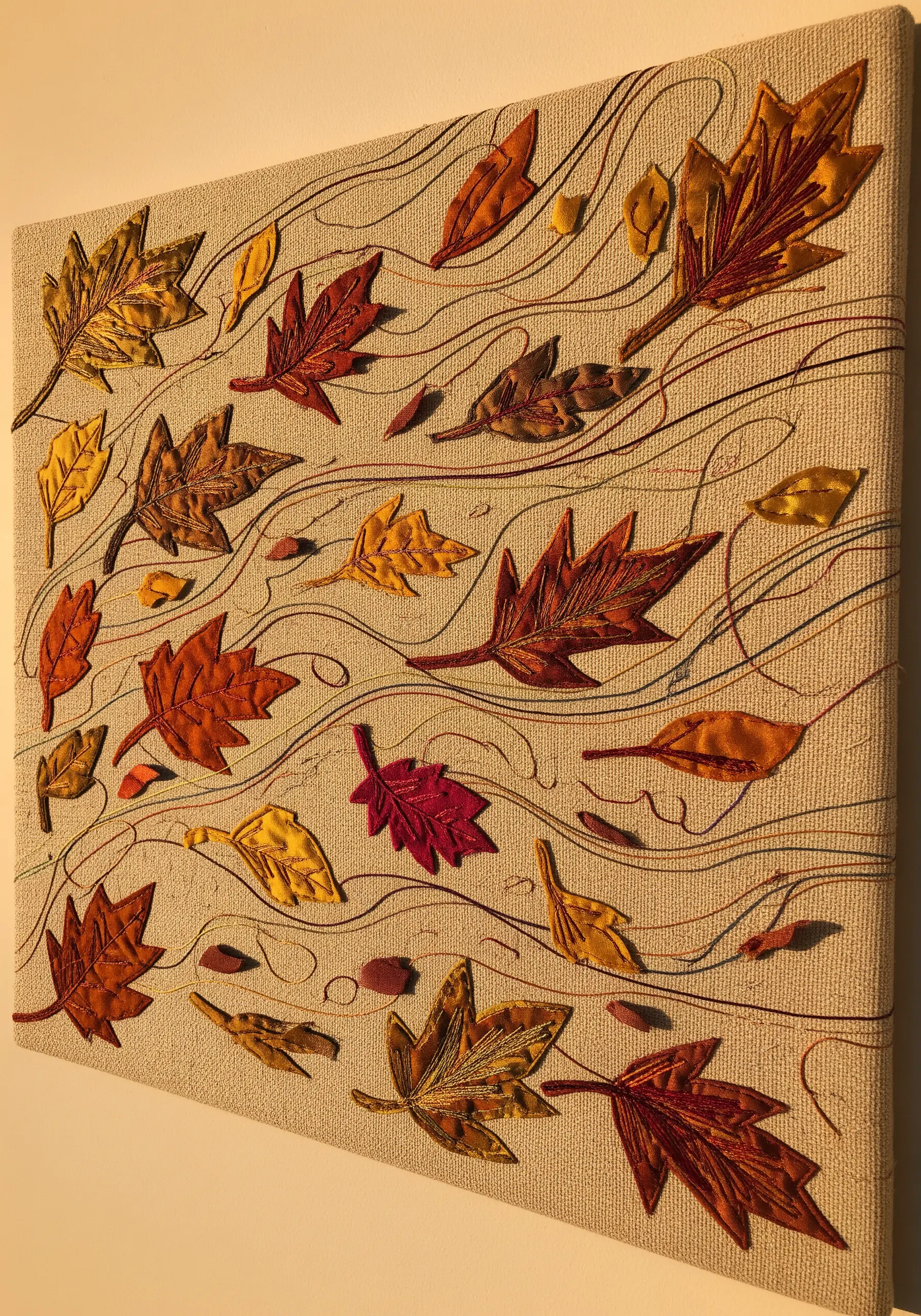
Capture the feeling of a blustery autumn day by combining appliqué with delicate, gestural stitches.
First, create small leaves from scraps of silk or satin and attach them to the base fabric. This adds dimension and a subtle sheen.
Then, connect the leaves with long, sweeping stitches using a single strand of dark thread to represent the invisible currents of wind tossing them about.
Arrange the leaves in a deliberately random pattern, avoiding uniform rows, to create a convincing sense of natural, chaotic movement.
5. High-Profile Waves with Braided Yarn
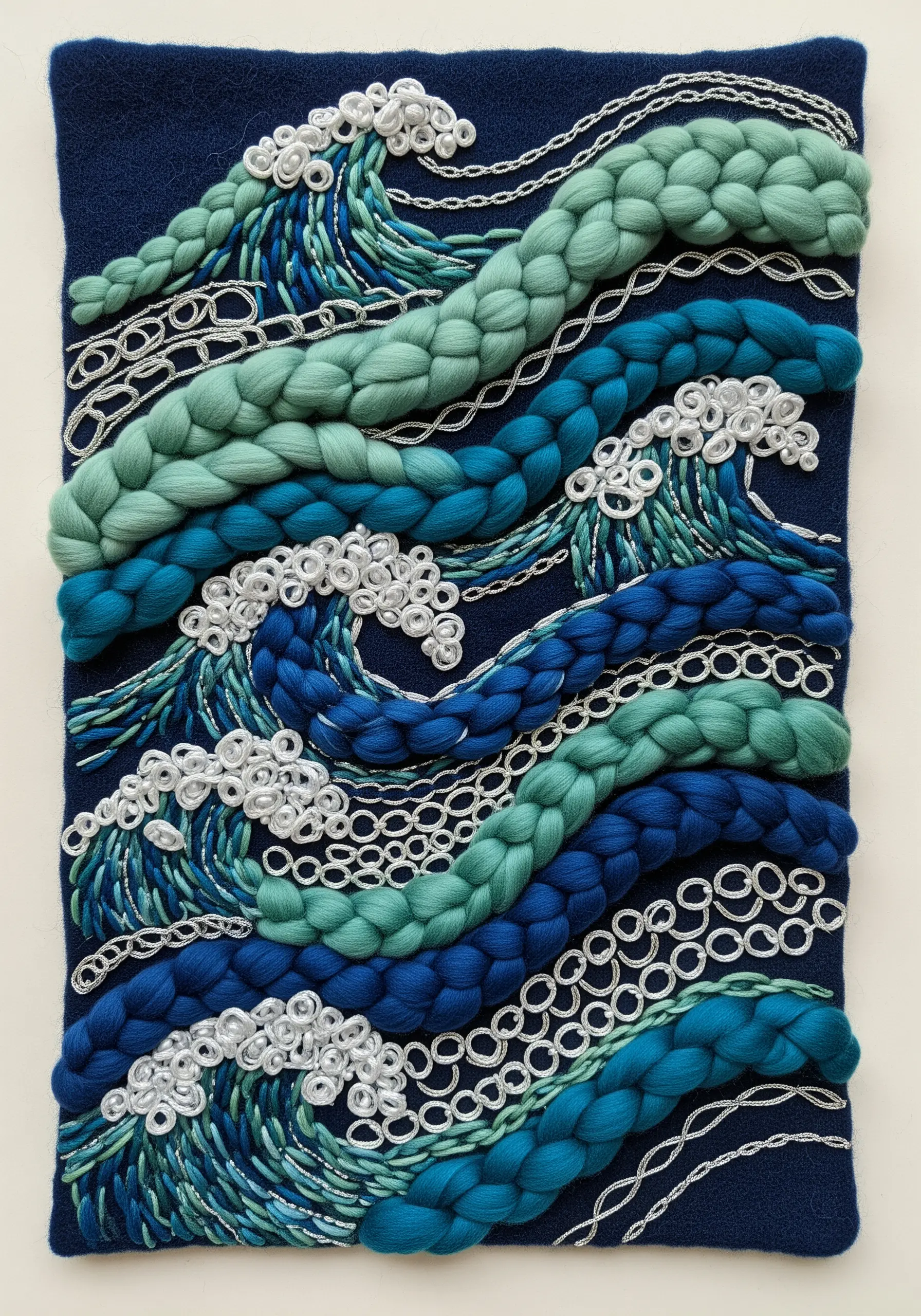
To build dramatic, three-dimensional waves, braid bulky yarn before couching it onto your fabric.
This method creates a much higher relief than stitching alone, instantly adding sculptural quality to your work.
Contrast the soft, matte texture of the wool with fine, shimmering metallic thread for the sea spray. The juxtaposition of thick and thin, matte and shiny, elevates the design from simple craft to compelling statement textured embroidery.
Use a color gradient in your yarn choices to give the waves depth and form.
6. A Vortex of Beads and Thread
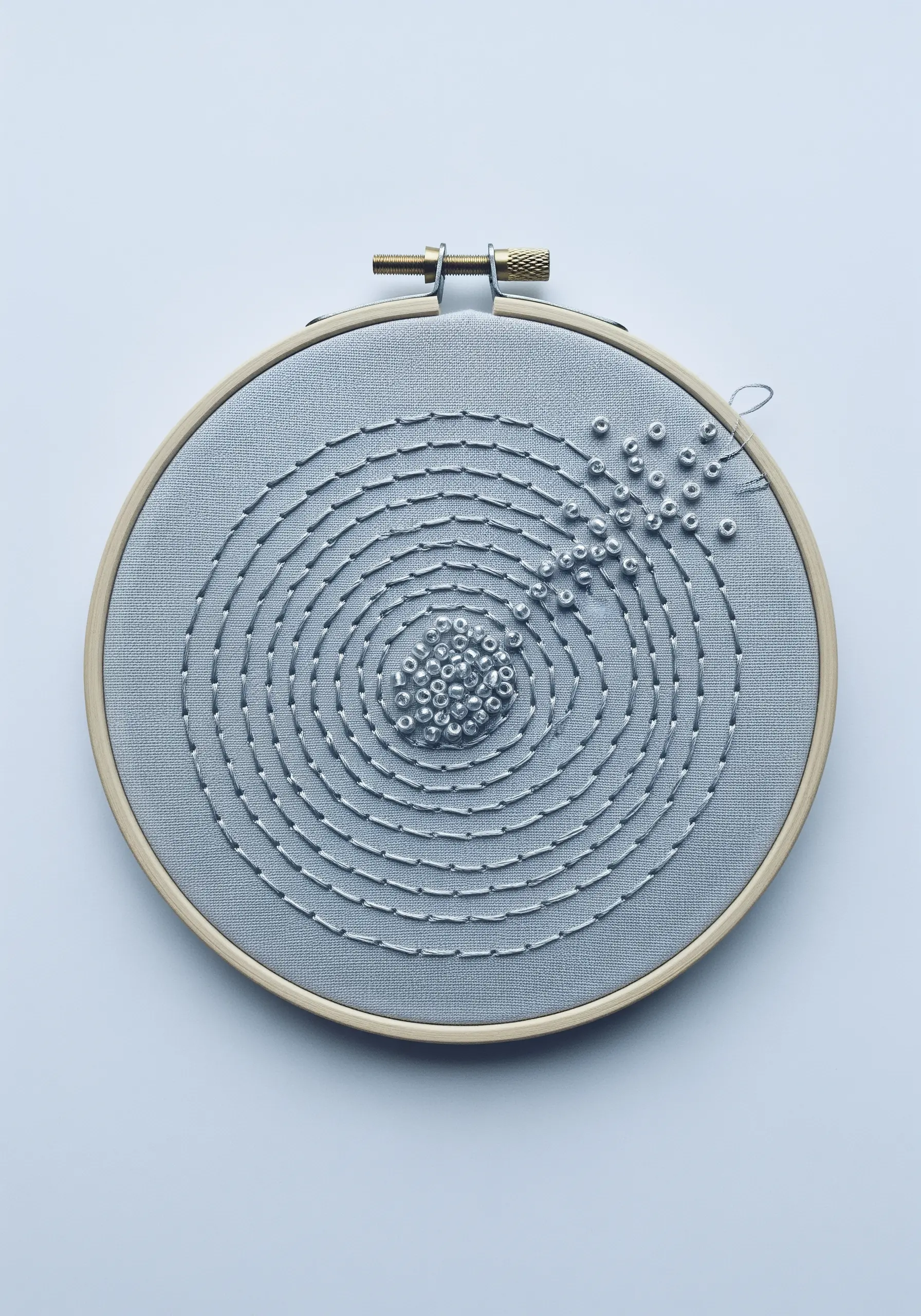
Illustrate a spiraling gravitational pull by combining simple stitches with beadwork.
Begin by stitching a spiral with a basic running stitch or backstitch, which will act as your guide.
Create the sense of acceleration by placing beads sparsely along the outer rings and packing them densely toward the center.
Let a few beads “escape” the lines to suggest chaotic energy, making the vortex feel active and unstable rather than static.
7. Gravitational Pull with Stitch Density
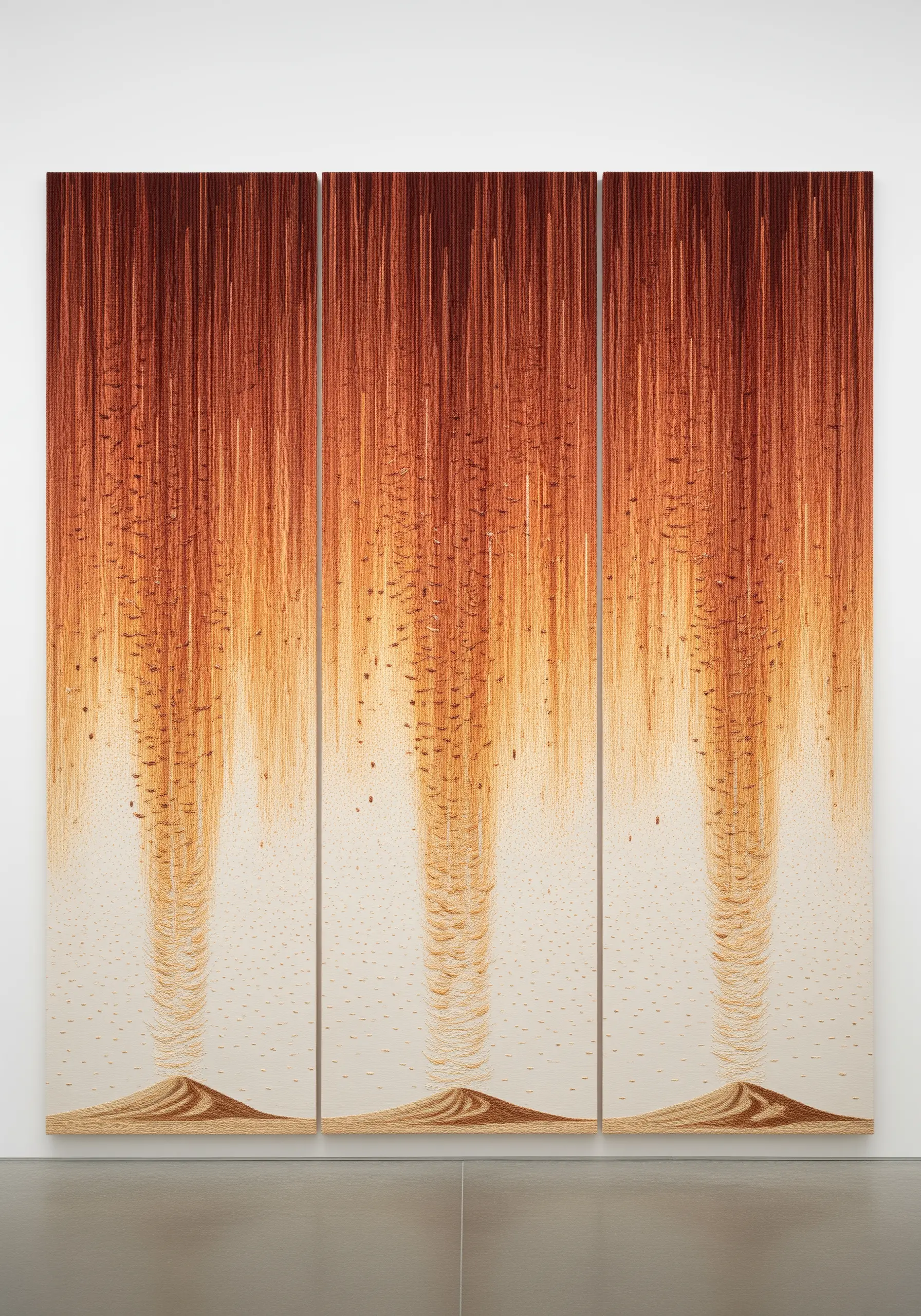
Create the effect of particles falling and settling by graduating the density of your stitches.
Use thousands of tiny seed stitches or French knots, packed tightly at the top of your composition and becoming progressively more scattered toward the bottom.
This technique, known as ‘stippling’ in drawing, translates beautifully to thread and creates a powerful sense of atmospheric weight and gravity.
Working on a large scale, like a triptych, amplifies the effect and turns a simple stitch into a monumental statement.
8. Galactic Swirl with Blended Threads
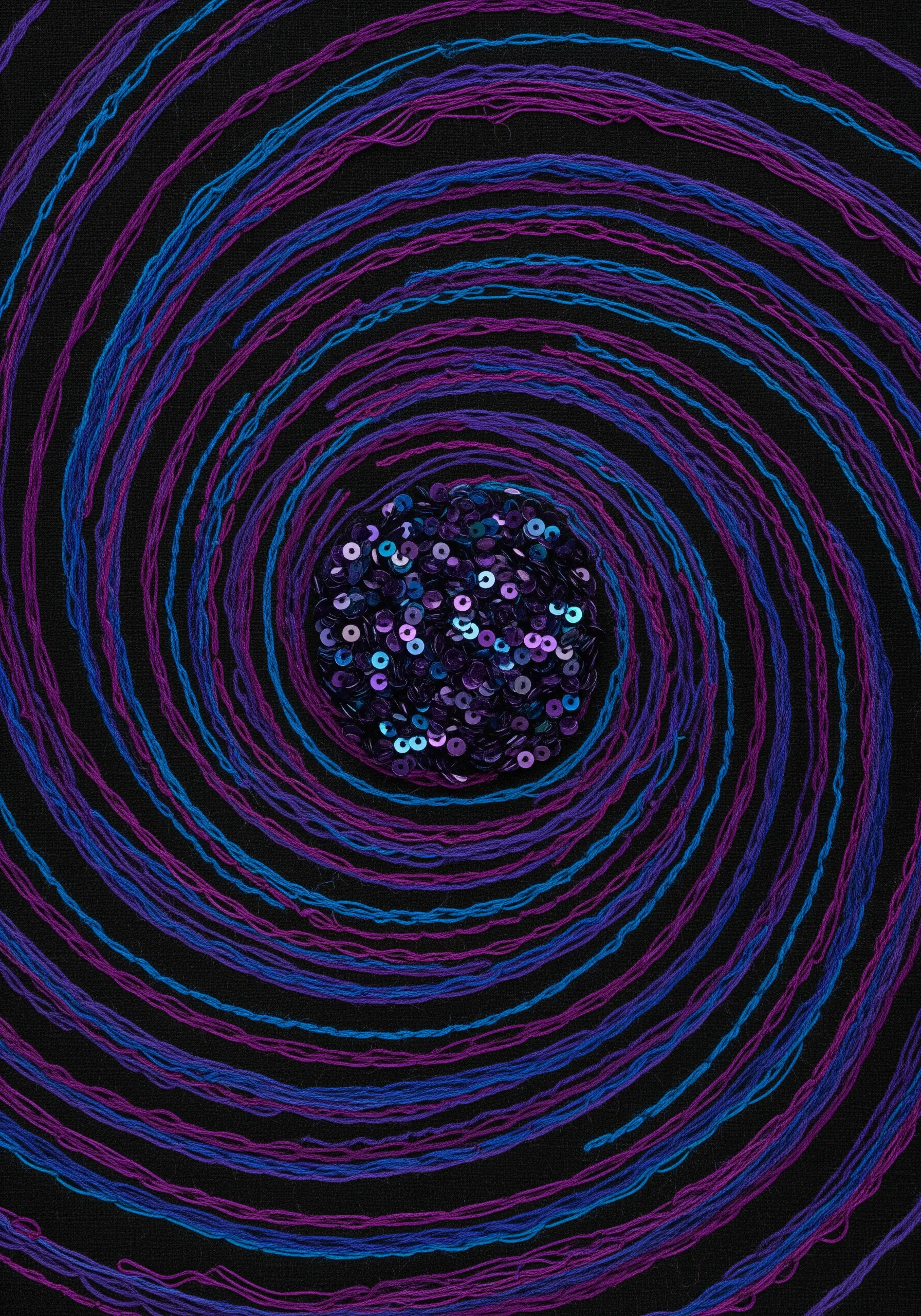
To create a swirling vortex effect with subtle color shifts, thread your needle with two or three different colors of floss at once.
As you couch these threads down in a spiral, the colors will twist and blend randomly, producing a variegated effect that feels more organic than solid color blocks.
Fill the center with a dense cluster of iridescent sequins or dark beads to create a focal point—a ‘singularity’ that anchors the entire composition.
The dark background fabric is essential for making the vibrant thread colors pop, enhancing the cosmic feel.
9. Dandelion Seeds on an Air Current
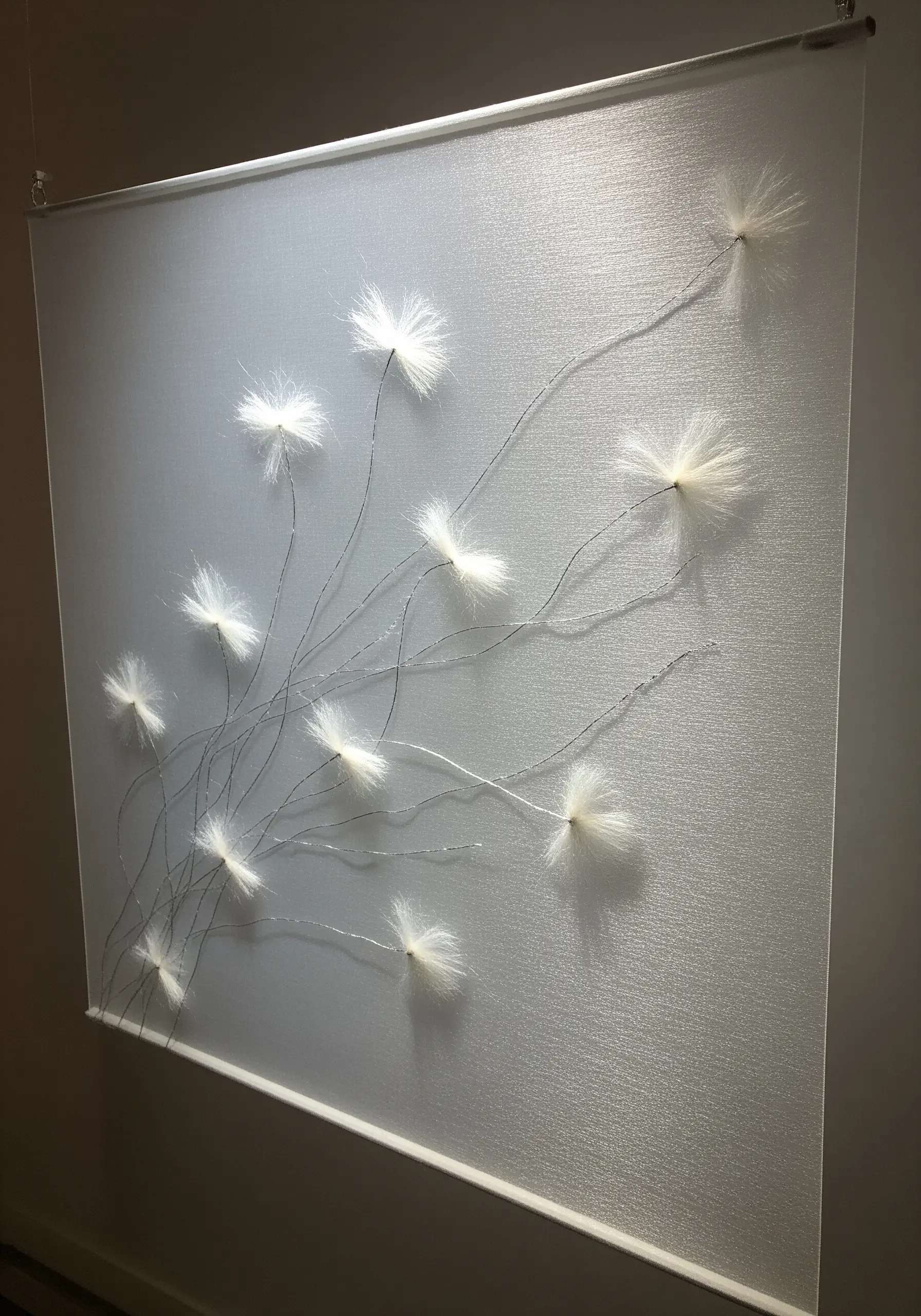
Evoke the lightness of wind by stitching delicate forms on a transparent or semi-transparent fabric like organza.
Create the fluffy seed heads using turkey work, leaving the loops uncut for a soft, tufted texture. Alternatively, use small, loose detached chain stitches.
For the stems, use a fine, slightly stiff metallic thread and allow it to curve and bend gracefully, suggesting it’s being carried on a breeze.
The transparency of the fabric makes the stitches appear to float, enhancing the ethereal, weightless quality of the piece.
10. Cascading Waterfall with Loose Threads
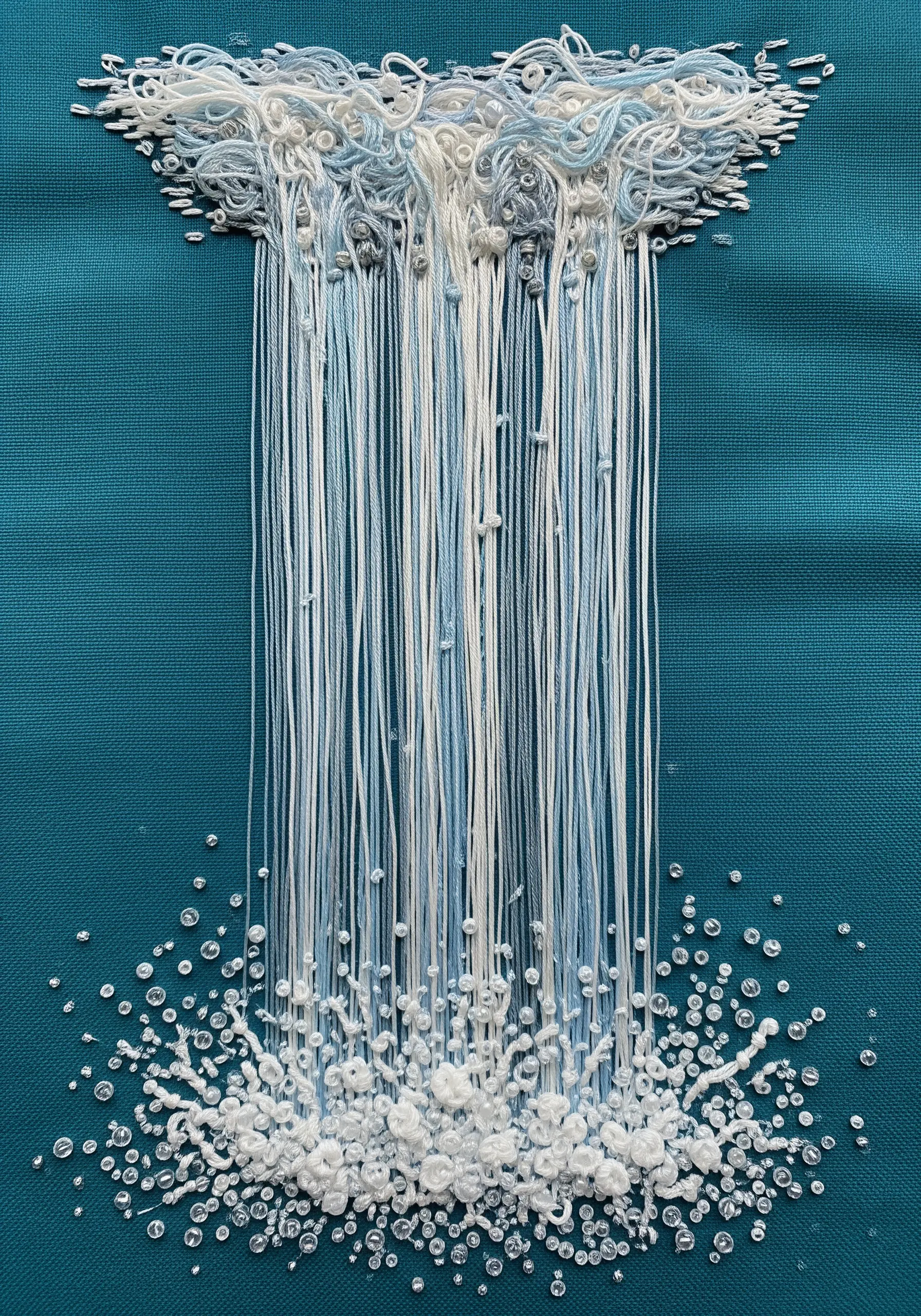
To mimic the sheer drop of a waterfall, use long, straight stitches that are only anchored at the top and bottom.
Incorporate un-plied strands of embroidery floss or fine silk threads, allowing them to hang slightly loose and creating a realistic, gravity-led cascade.
Create the churning foam at the base with a dense collage of French knots, bullion knots, and seed beads in whites and clears.
The contrast between the smooth, vertical threads and the chaotic, textured base is what gives this design its dynamic energy.
11. The Weight of Velvet Folds
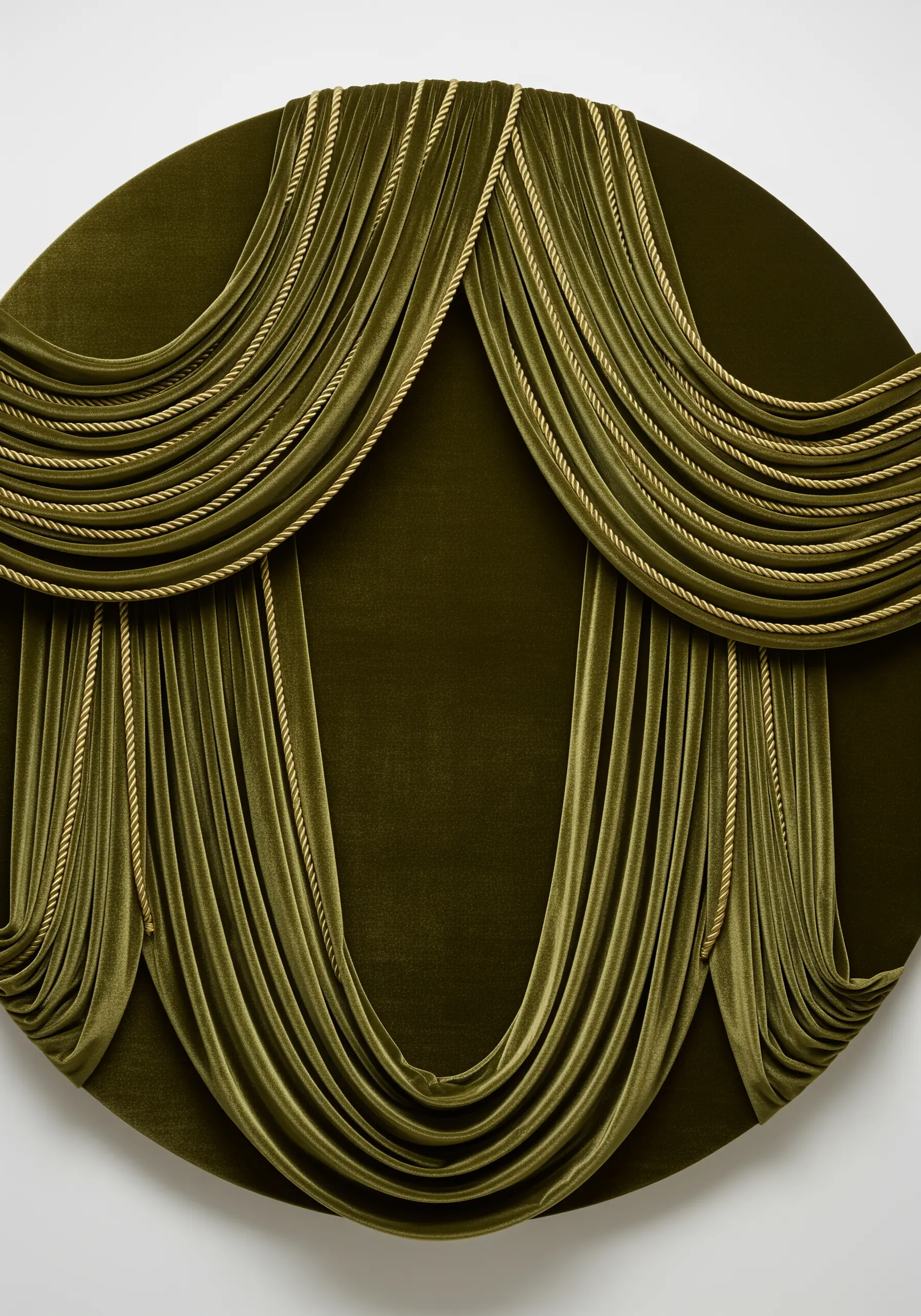
While technically a sculpture, you can translate the heavy, luxurious drape of velvet into your embroidery using stumpwork and appliqué.
Cut shapes from soft velvet, strategically pleating and folding the fabric before carefully stitching it down onto your base.
Enhance the illusion of depth by using a darker thread to add shadow stitches deep within the folds. A fine gold cord couched along the edges will define the form and add a touch of classical elegance.
This is a masterclass in how fabric choice influences the perception of weight and gravity.
12. Contrasting Textures for Wind and Water
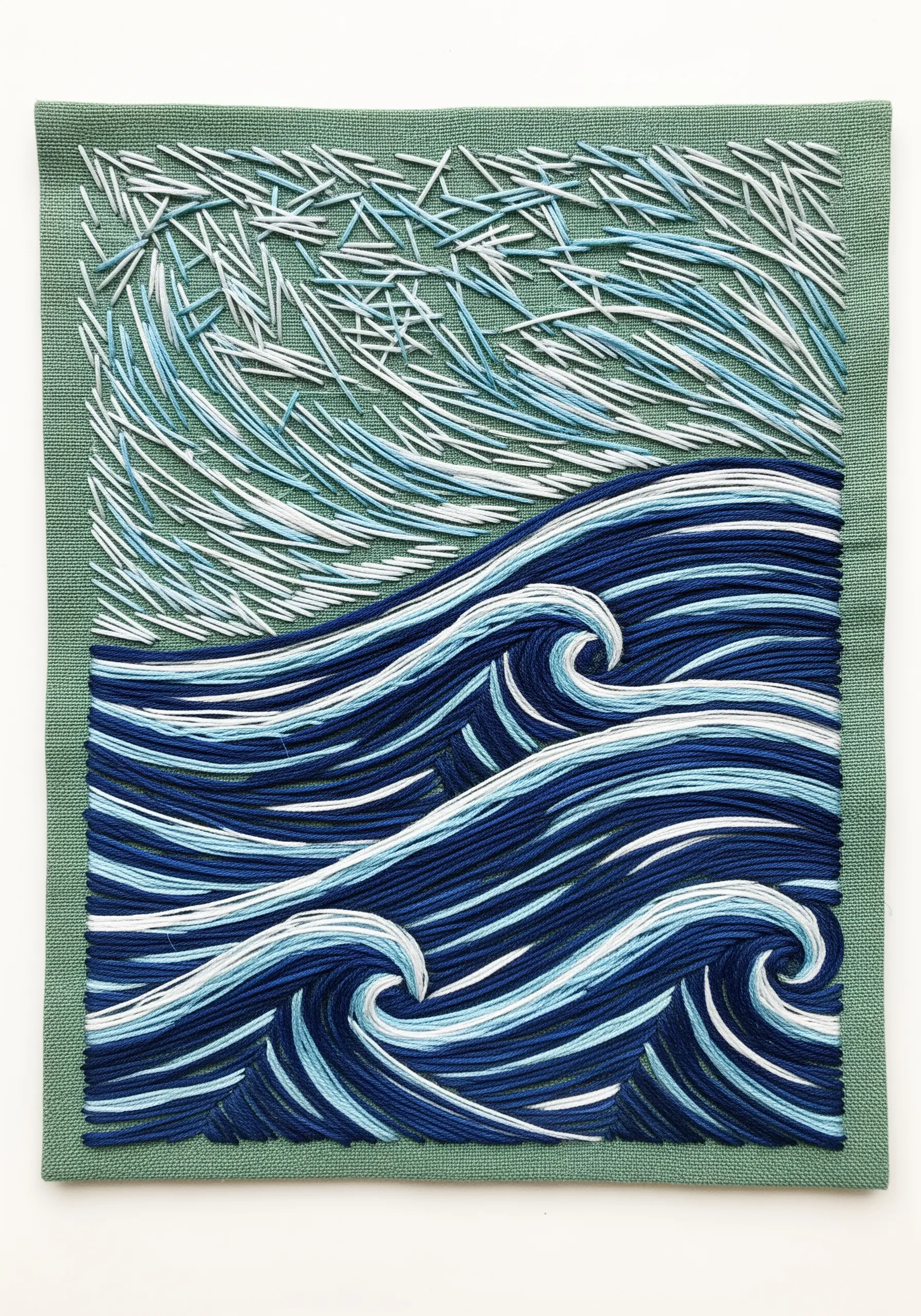
Create a dynamic seascape by assigning distinct stitch textures to different natural elements.
Use smooth, directional satin stitches or laid work to represent the powerful, uniform motion of ocean waves. Follow the contour of the wave to enhance the sense of movement.
For the wind or sea spray above, switch to chaotic, multi-directional straight stitches. Let them overlap and vary in length to create a feeling of turbulent energy.
This clear distinction in texture is what separates the elements and brings the entire scene to life.
13. Minimalist Flow with Parallel Lines
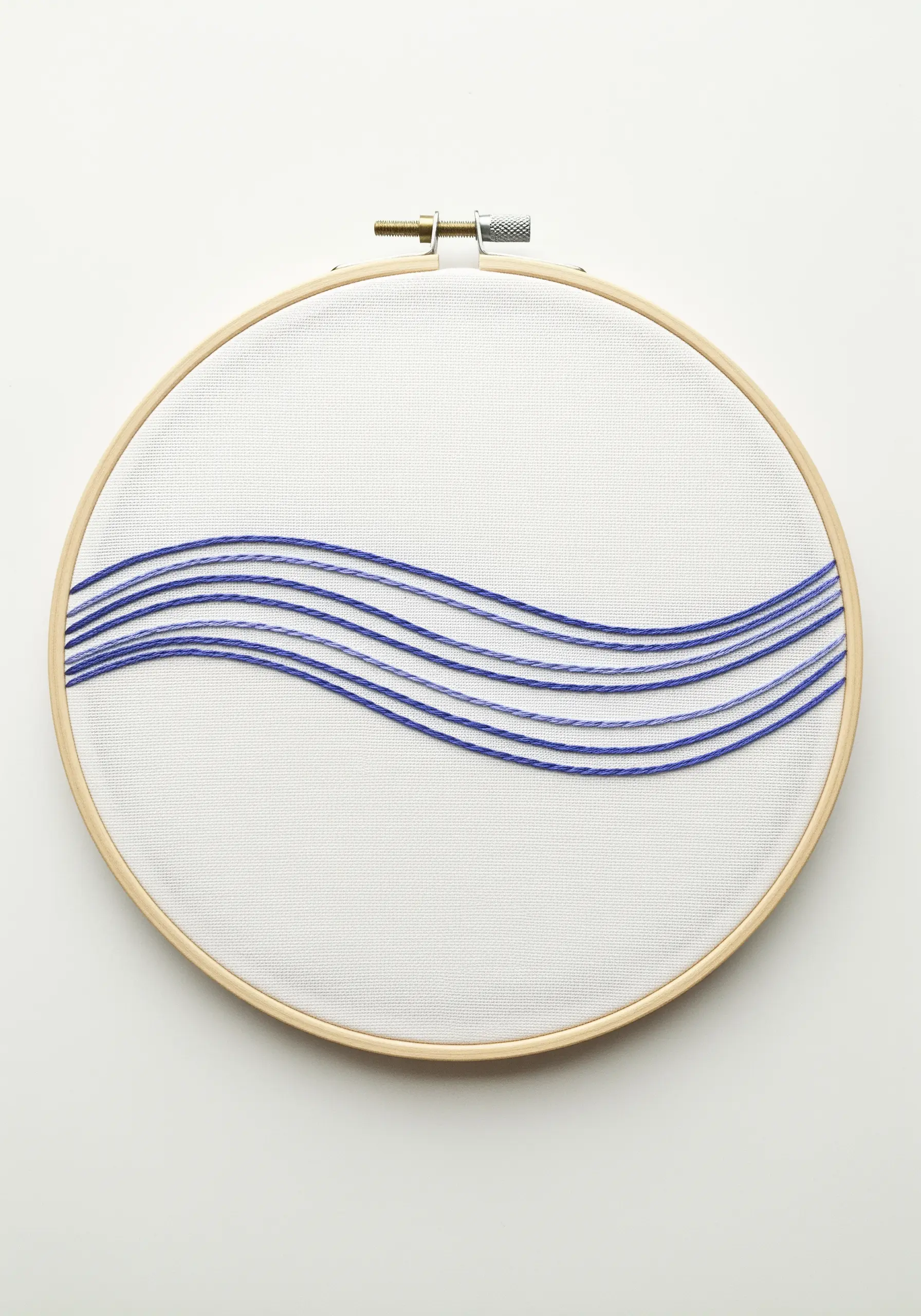
You don’t need complex stitches to evoke motion. Create a serene sense of flow using a series of clean, parallel lines.
Use a stem stitch or a split stitch to ensure each line is smooth, solid, and consistent in thickness. The elegance of this design lies in its precision.
Map out your curves carefully before you begin stitching. The space between the lines is as important as the lines themselves—consistent spacing is key to the calming, rhythmic effect.
This is a perfect exercise in stitch control and a great example of minimal embroidery.
14. Viscous Drips with Sculptural Yarn
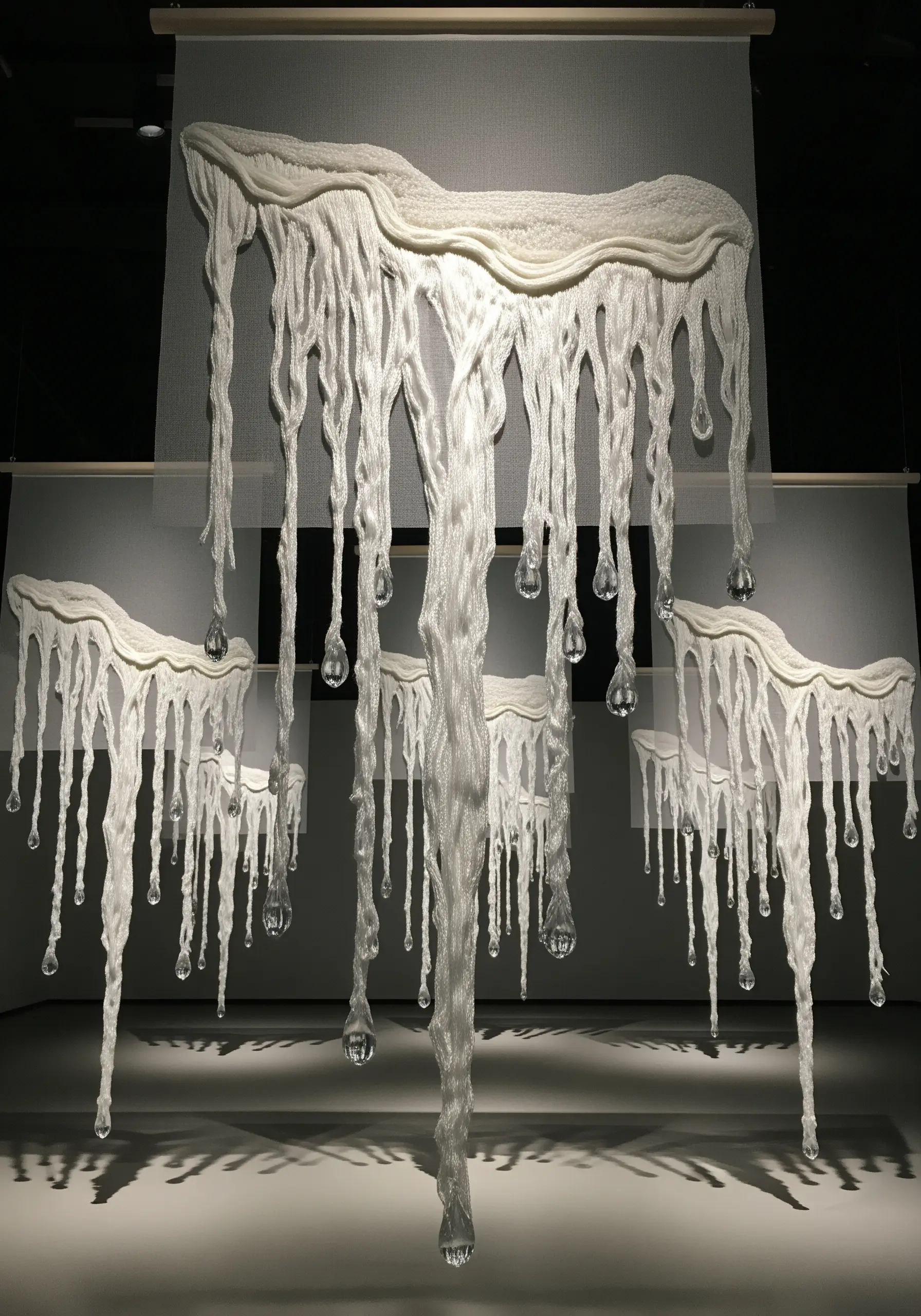
Capture the slow, heavy pull of gravity on a thick substance by using highly textural, sculptural techniques.
This effect can be achieved by couching down very thick, soft-spun yarn or by using needle felting to apply wool roving directly to the fabric surface.
Build up the material so it has a high profile and a rounded, soft edge, which enhances the ‘melting’ appearance.
Adding glass teardrop beads at the end of each drip gives a sense of weight and captures the light, completing the illusion of a liquid in motion.
15. An Energetic Burst of Water
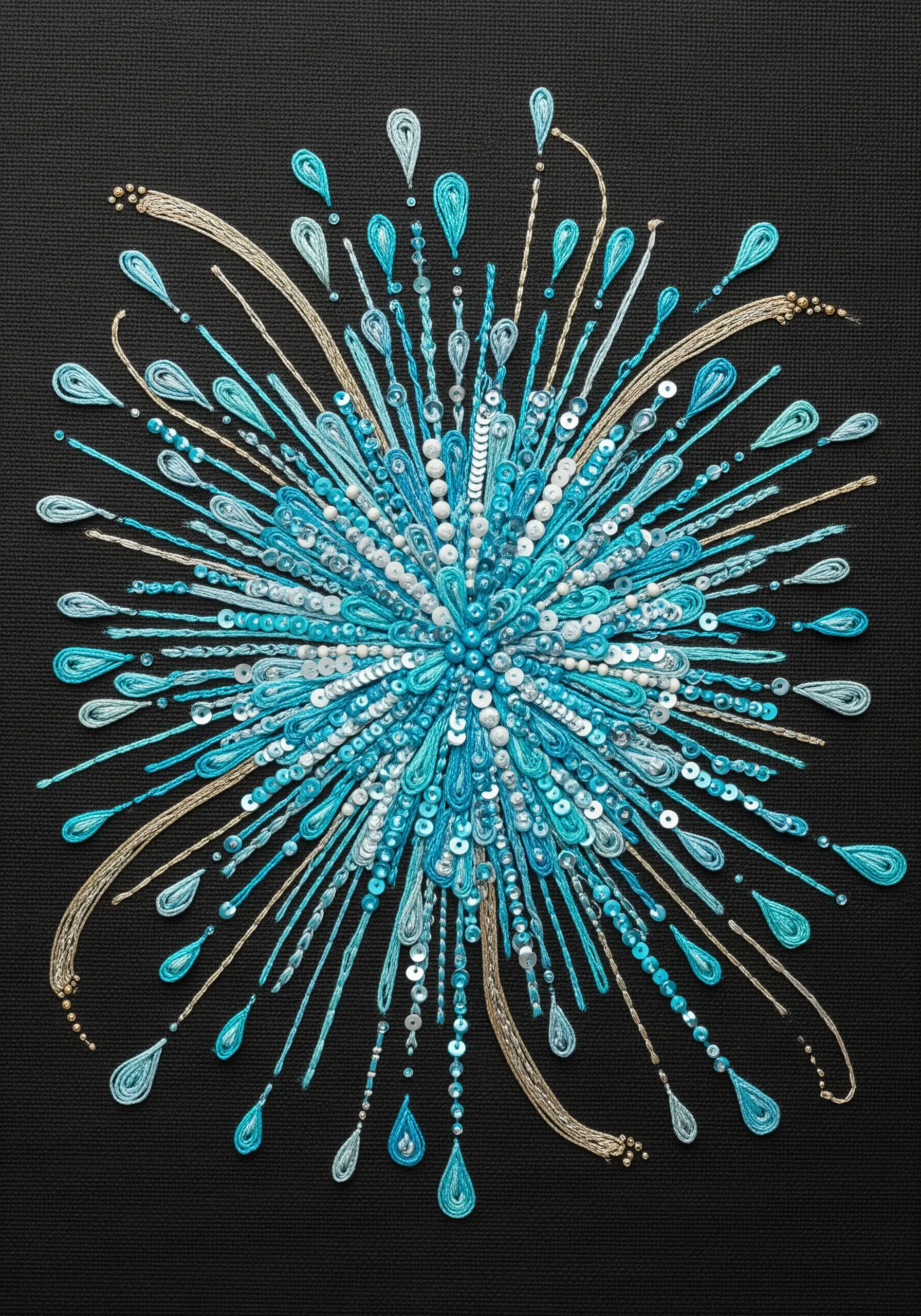
Recreate the explosive energy of a splash by radiating stitches and beads from a central point.
Start with a dense core of seed beads and French knots in your main color palette. This grounds the design.
From this center, work outward with a variety of stitches: straight stitches for sharp jets, detached chain stitches for droplets, and couched metallic threads for glistening arcs.
Varying the length, type, and direction of your radiating lines is crucial for creating a dynamic and believable explosion of energy.
16. Sedimentary Layers with Channel Stitching
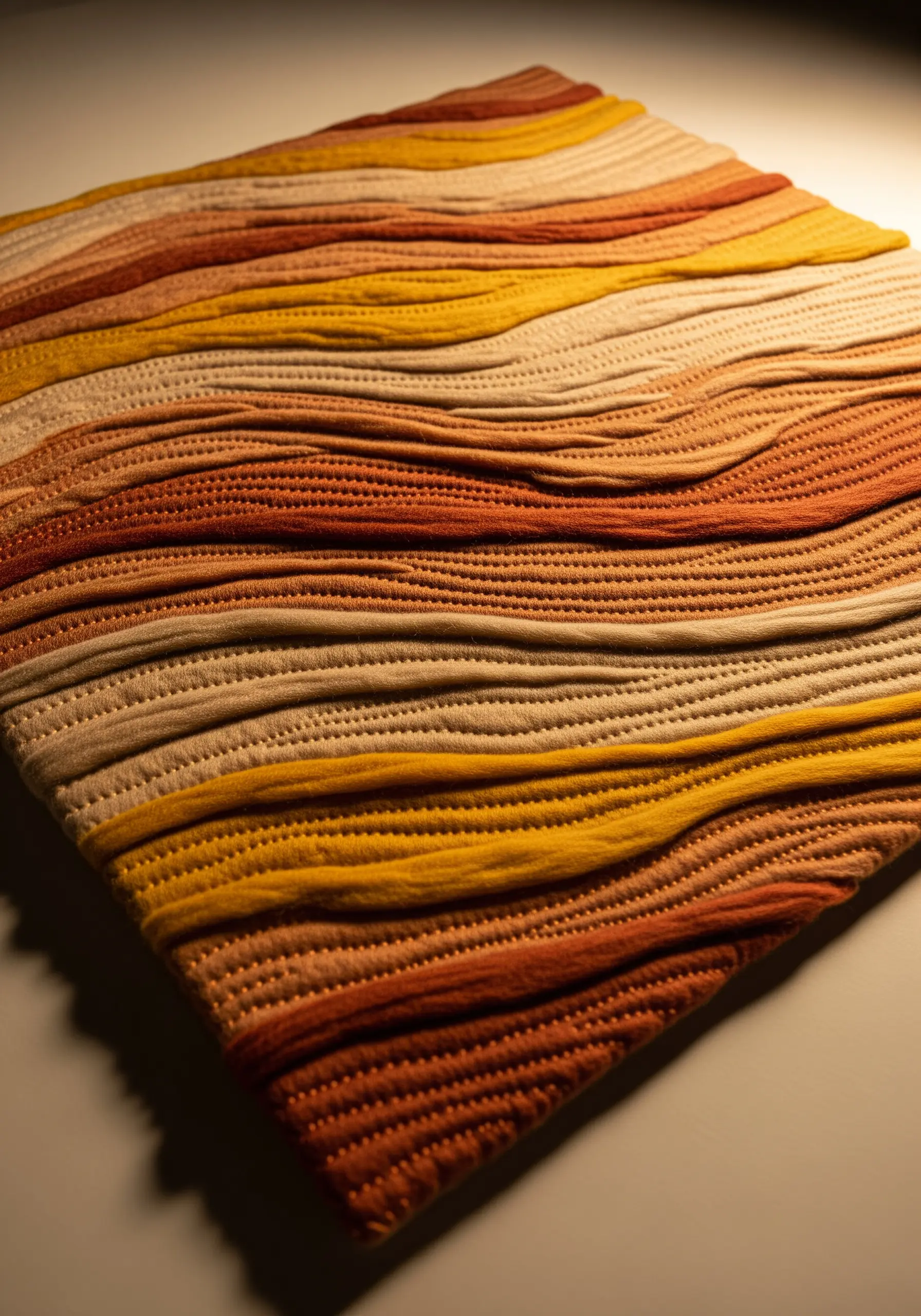
Evoke the slow, gravitational layering of earth and rock with padded channel stitching, a technique borrowed from quilting.
Place thin strips of batting or felt onto your base fabric and cover them with a top layer of cloth. Then, stitch parallel lines across the fabric to create raised, undulating channels.
A gradient of earth-tone fabrics enhances the geological feel, making the piece look like a cross-section of land.
The soft, sculptural ridges invite touch and give the abstract design a strong physical presence.
17. A Petal’s Gentle Descent
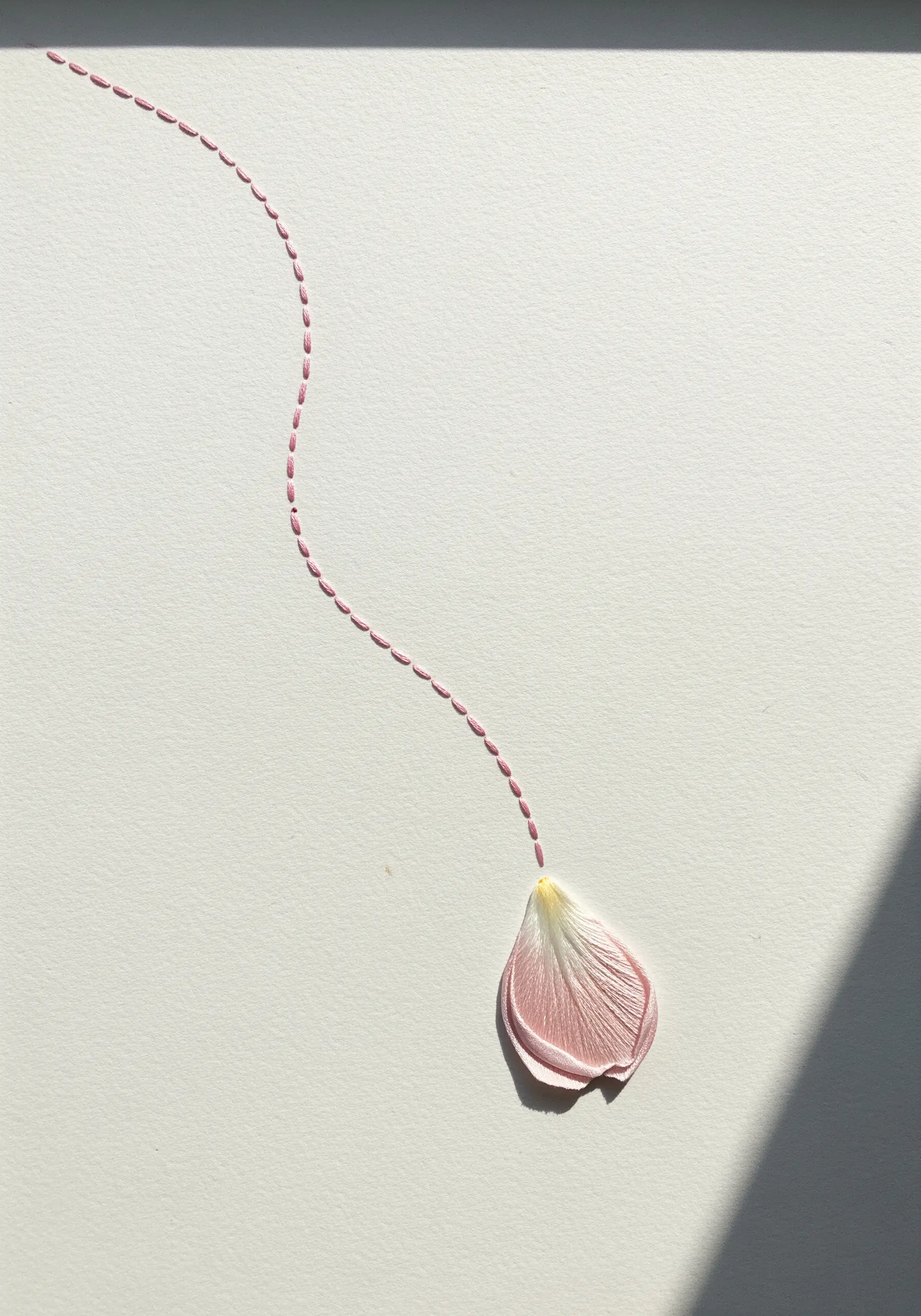
Tell a story of gravity with the utmost simplicity by stitching the path of a single falling petal.
Create the petal itself using a detached chain stitch and fill it with delicate satin stitches. The key is to make it feel light and fragile.
Then, mark its descent with a curved line of tiny, spaced-out seed stitches. This dotted line is a wonderfully graphic way to represent a movement that has already happened.
The vast expanse of negative space is essential, as it emphasizes the solitude and silence of the petal’s fall.
18. Turbulent Foam with Layered Knots
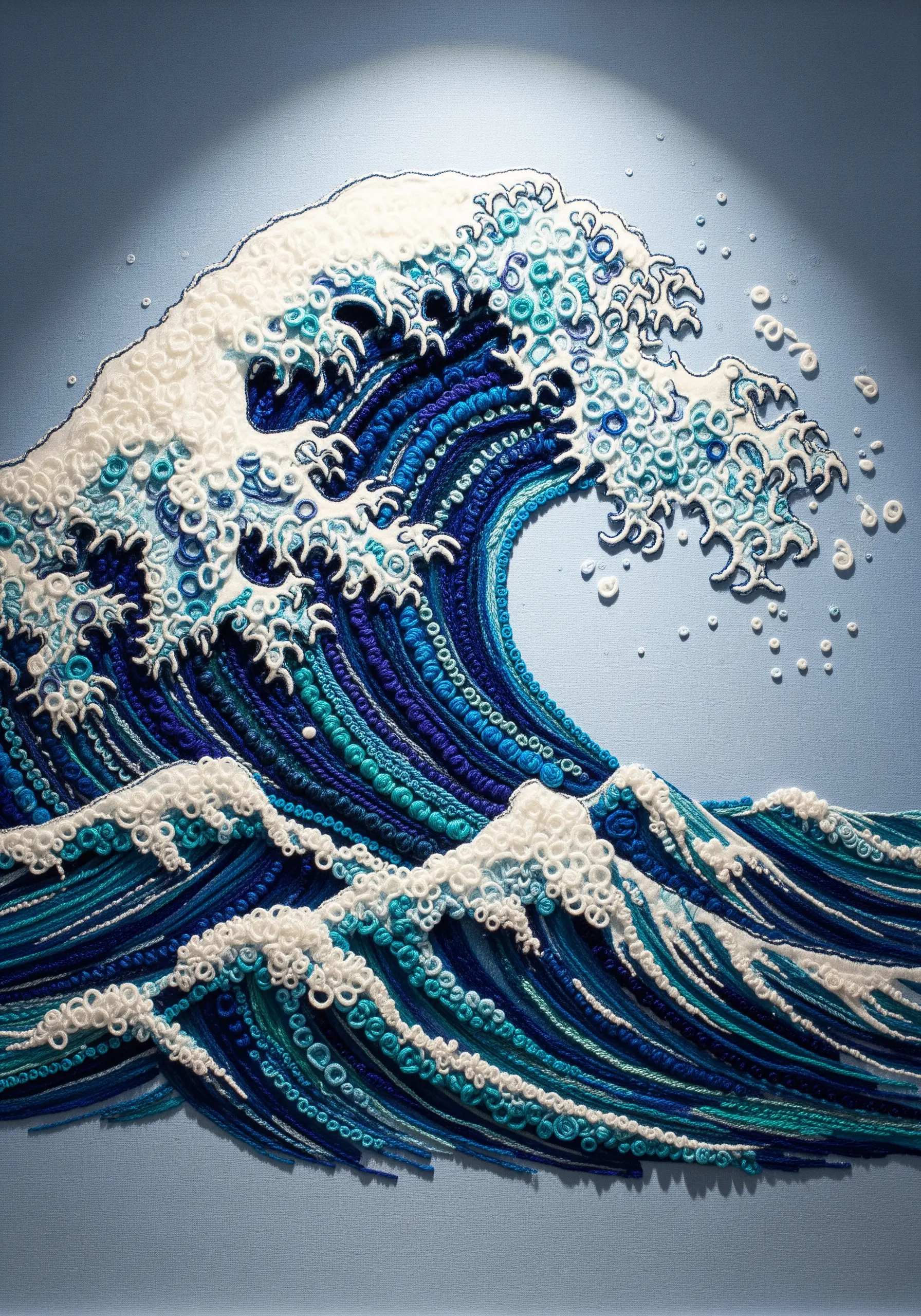
To capture the chaotic, churning texture of sea foam, build up layers of knotted stitches.
Use French knots, colonial knots, and bullion knots in a dense cluster. Vary the size of your knots by changing the number of thread strands and the number of times you wrap the needle.
Don’t be afraid to stitch knots on top of other knots to create a highly dimensional, coral-like texture.
An ombré of blues for the wave and stark white for the foam creates a classic, powerful composition that celebrates organic texture.
19. Weightless Clouds with Wool Roving
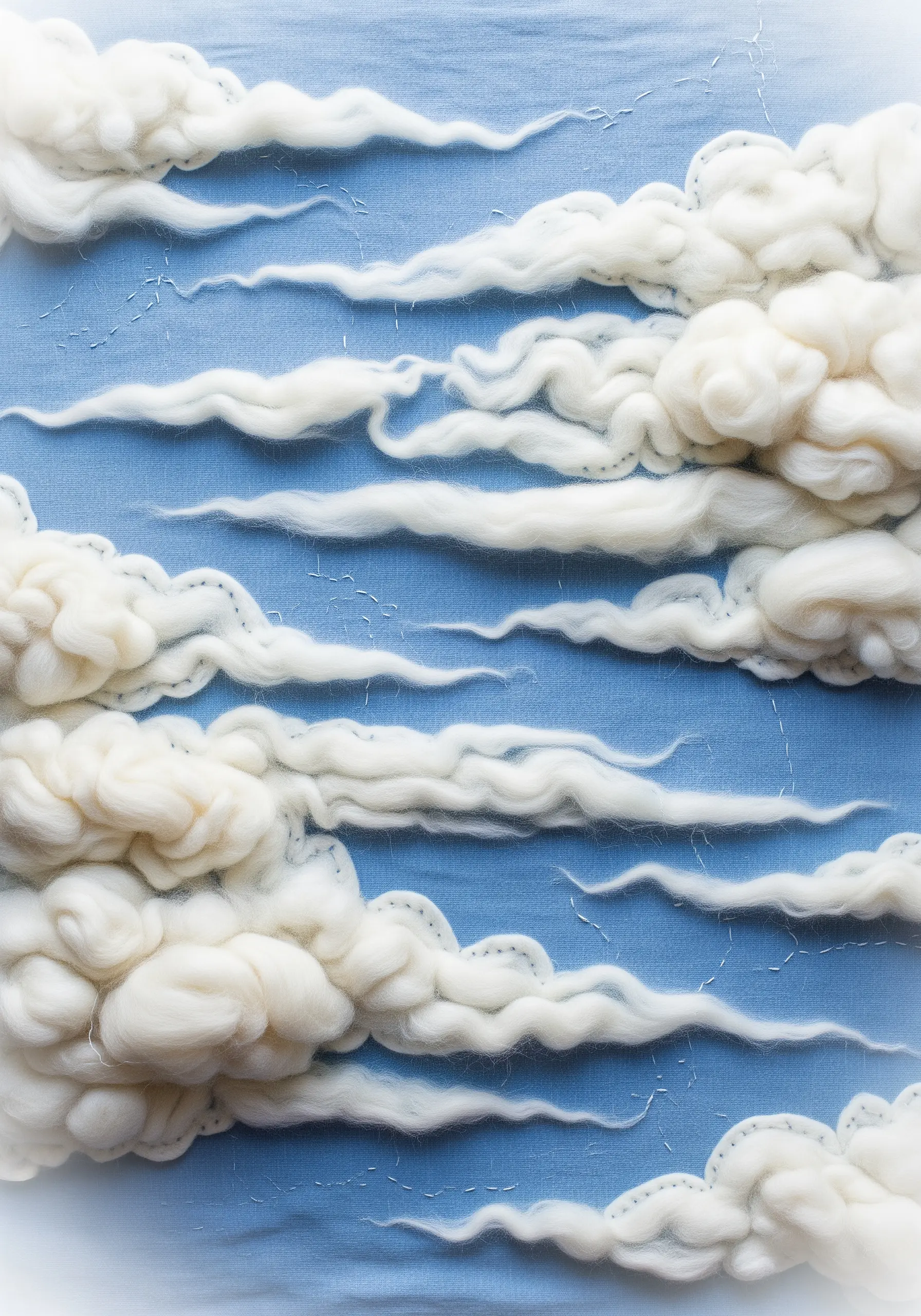
For the fluffiest, most ethereal clouds, step beyond thread and embrace wool roving.
Pull apart and shape wisps of wool roving into cloud-like forms directly on your fabric. Once you’re happy with the composition, use a felting needle to gently tack the fibers in place.
Secure the edges with a simple, visible running stitch. This not only anchors the wool but also adds a charming, handmade quality to the piece.
This mixed-media technique is incredibly fast and effective for creating soft, diffuse textures that thread alone cannot replicate.
20. Molten Flow with Yarn and Beads
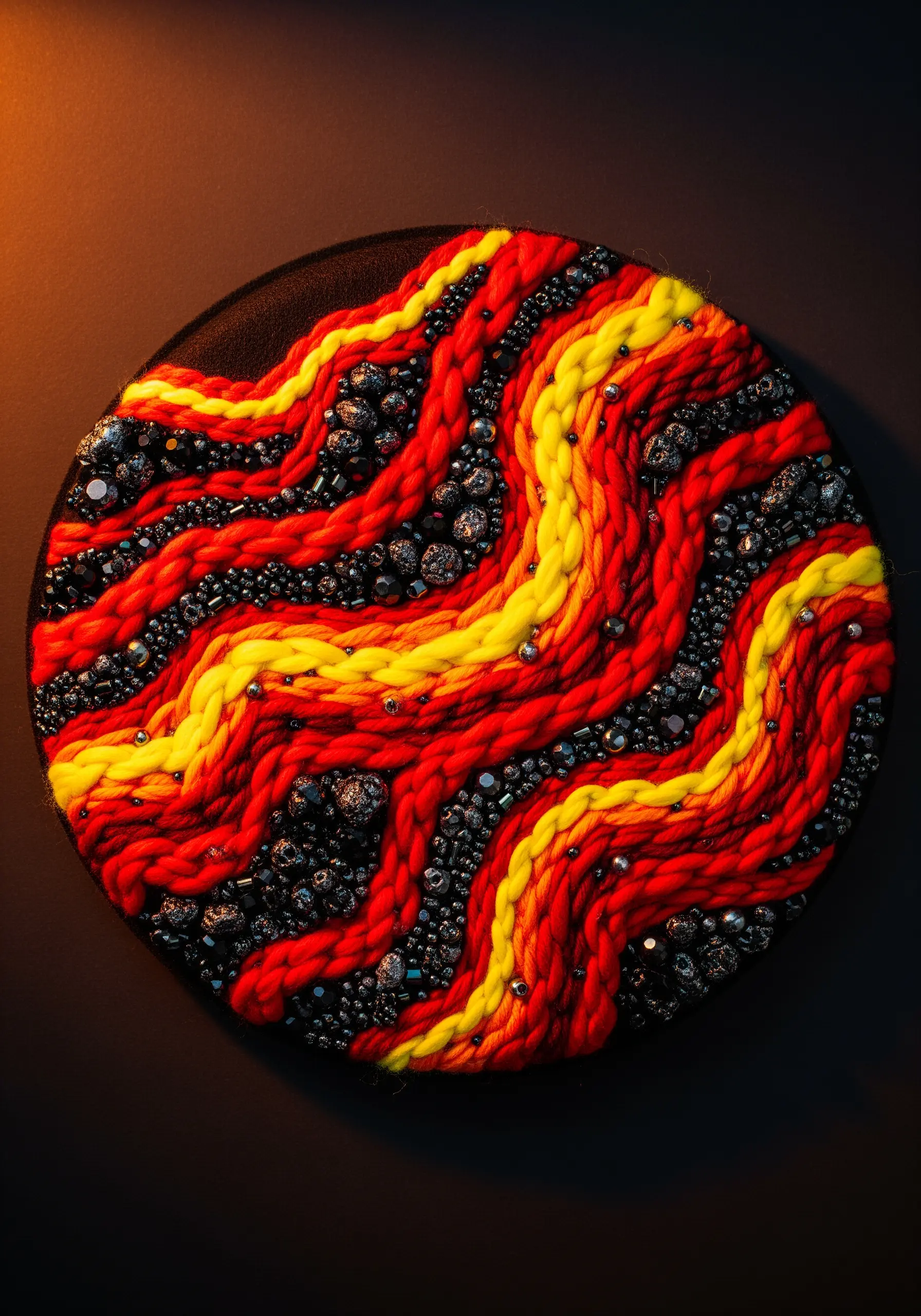
Suggest the slow, unstoppable movement of lava by combining the textures of thick yarn and granular beads.
Couch down thick, variegated red and yellow yarn in undulating S-curves to form the main lava flow. The thickness of the yarn gives it a sense of weight and heat.
Fill the negative space between the yarn rivers with dense, black, textured beads. This creates the impression of cooling, crystalline rock, providing a dramatic textural and color contrast.
The combination of soft and hard, bright and dark, makes the composition incredibly dynamic.
21. Fluid Dynamics Around a Solid Form
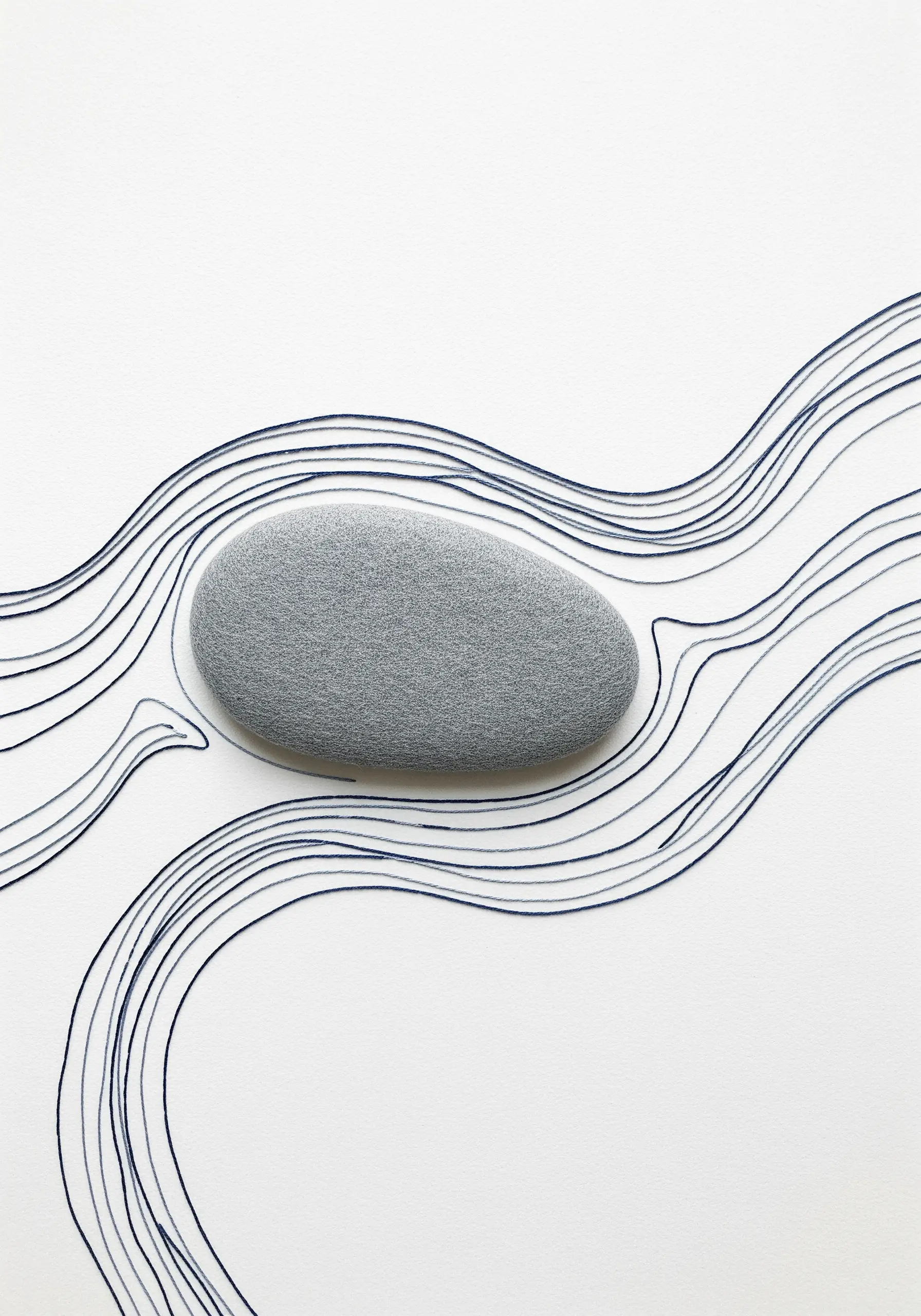
Illustrate how water flows around an obstacle by using contour lines in your stitching.
Place a central element on your fabric—this could be an appliquéd shape or even a smooth, flat stone.
Using a fine thread and a simple backstitch, stitch a series of parallel lines. As the lines approach your central object, curve them around it, narrowing the space between them as they pass.
This creates a perfect visual representation of fluid dynamics, showing how the current is warped and accelerated by the solid form.
22. Sculpted Wind with Ribbon and Wire
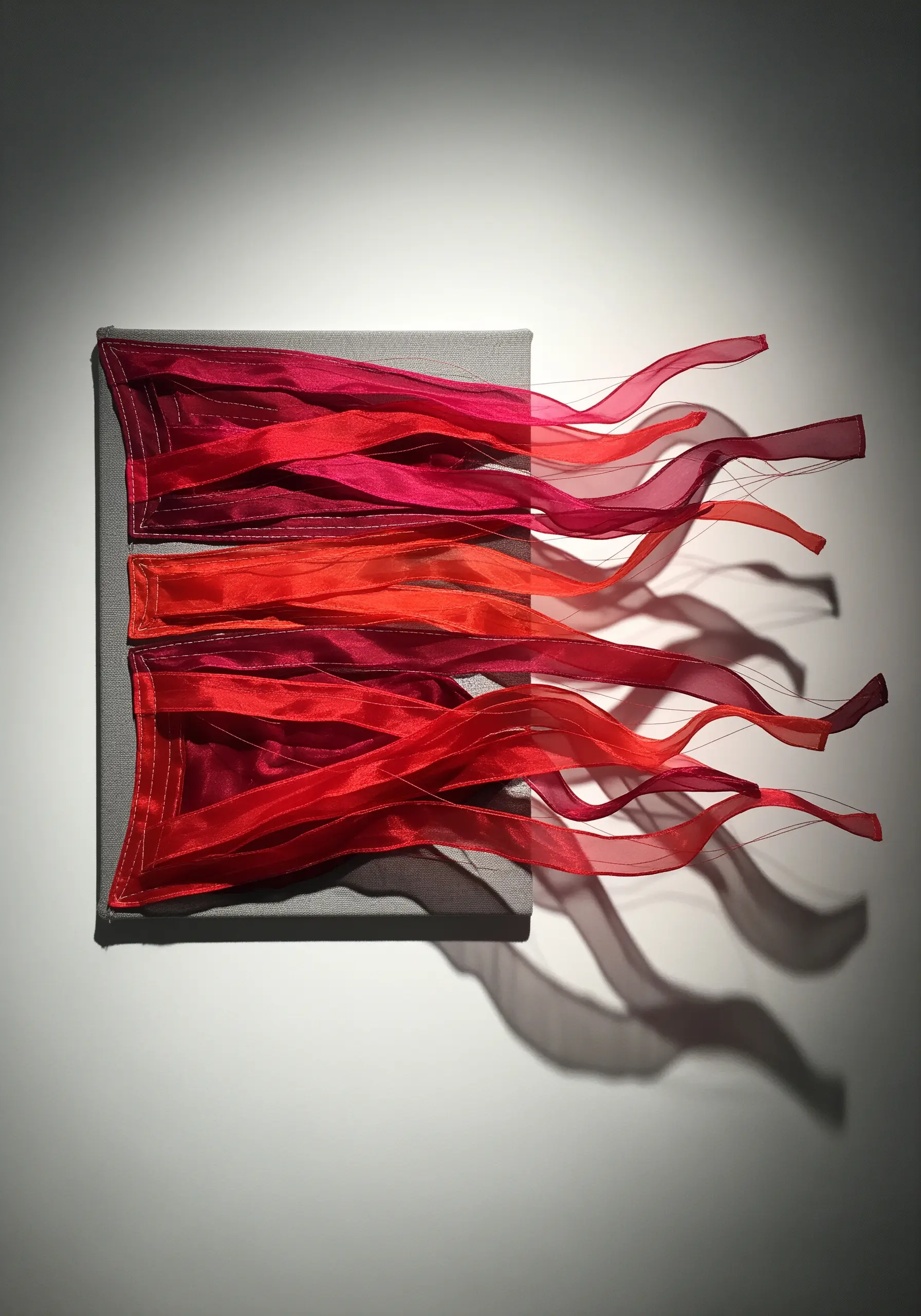
To make the wind visible, use lightweight materials that can be shaped to defy gravity.
Stitch down one end of several strips of sheer organza ribbon. This material is light enough to feel airy but has enough body to hold a shape.
To create the frozen-in-motion effect, discreetly stitch a very fine, malleable wire to the back of each ribbon. You can then bend and sculpt the ribbons into dynamic, windblown curves.
The shadows cast by this 3D piece become an integral part of the artwork.
23. Textural Gradient Weaving
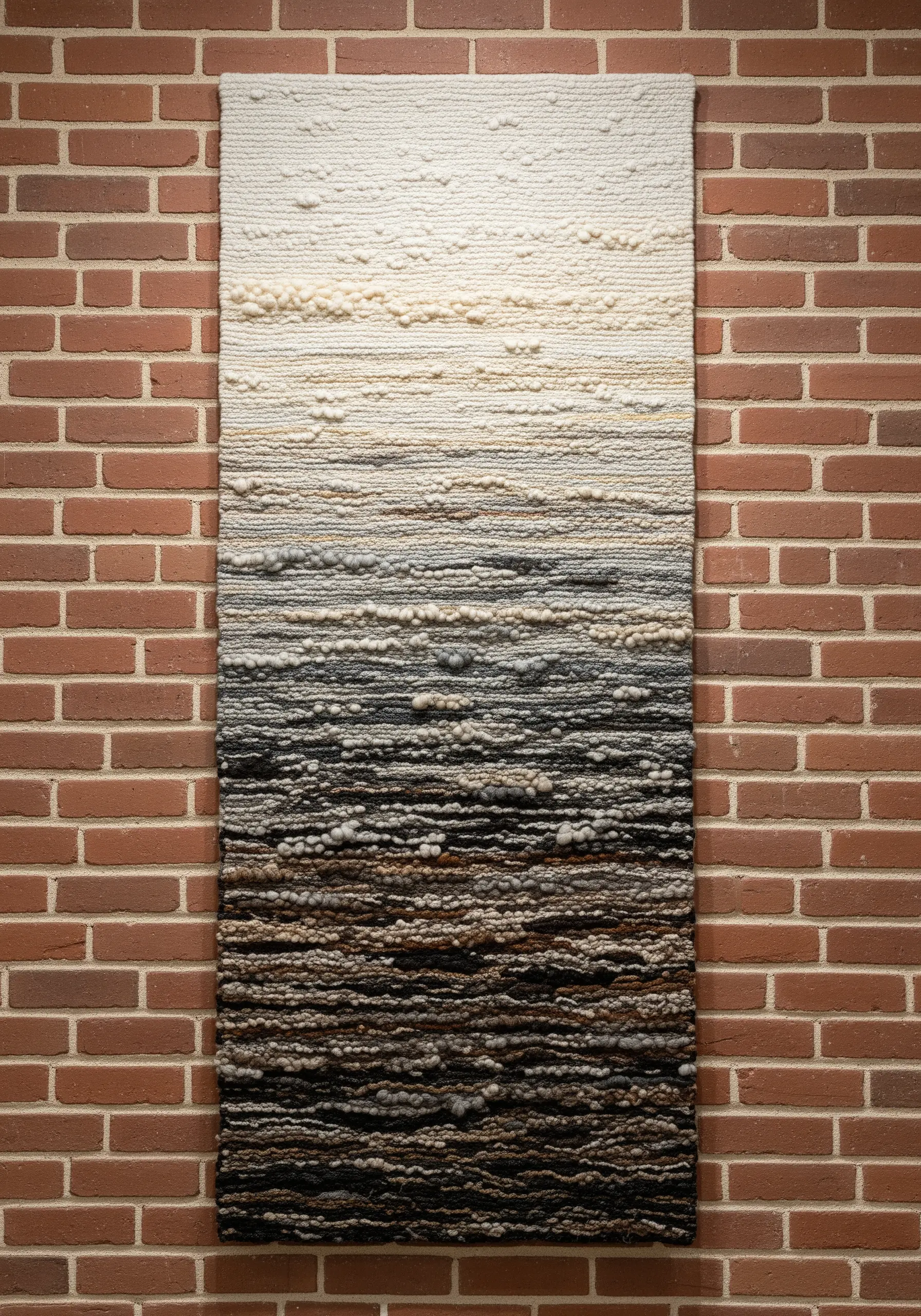
Create a sense of depth and atmospheric haze by creating a textural gradient with different weights of yarn and thread.
While this piece is woven, you can achieve a similar effect by filling your fabric with dense, horizontal straight stitches.
Start with thick, bumpy, and fuzzy yarns at the bottom in dark colors. As you move up the composition, gradually switch to thinner, smoother threads in lighter shades.
This shift in both texture and color creates a beautiful ombré effect that can represent a foggy landscape or a deep body of water.
24. Crystalline Frost with Fractal Stitching
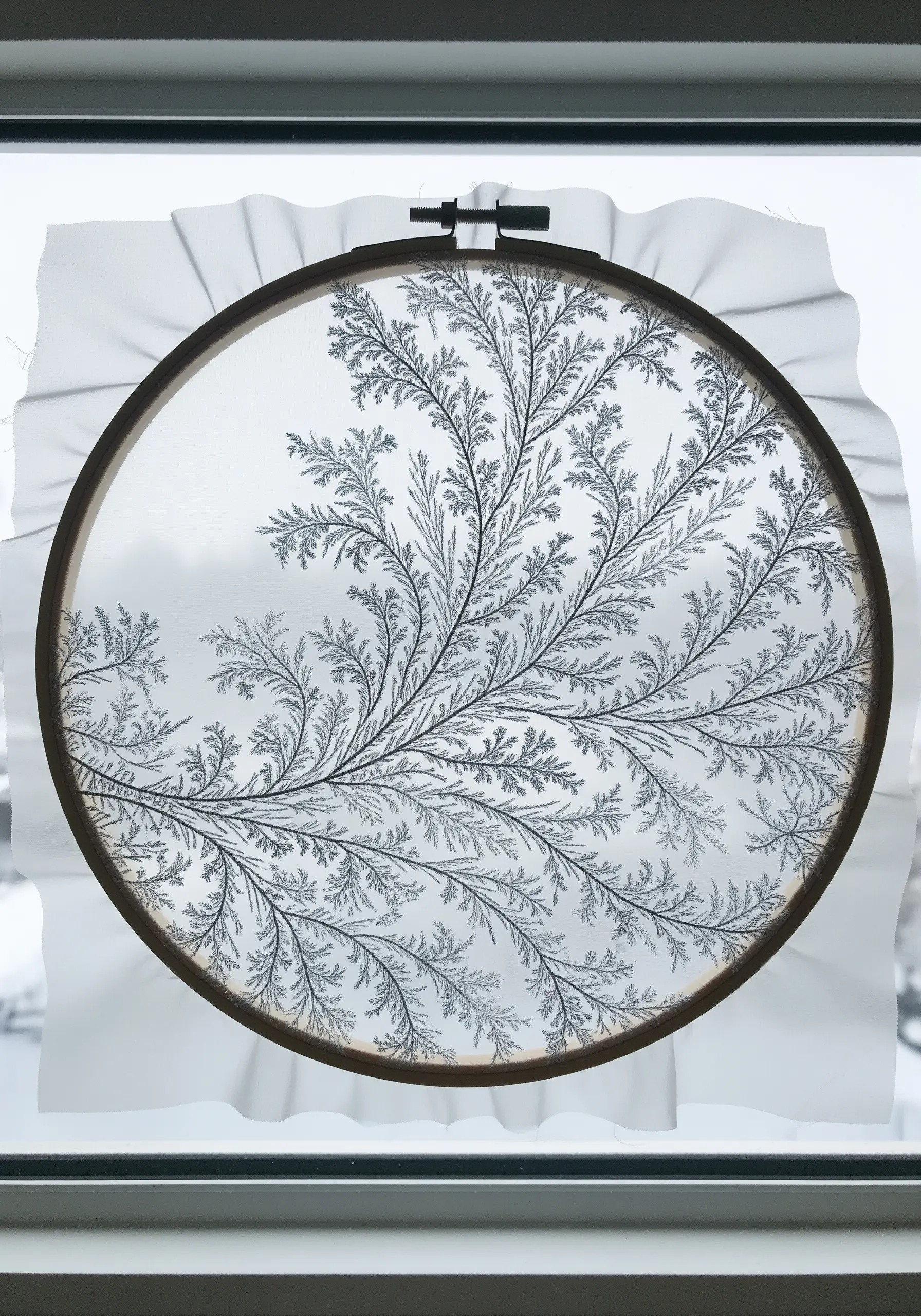
Mimic the delicate, branching patterns of frost by stitching with fine thread on sheer fabric.
Use a single strand of white or silver thread and a simple backstitch or split stitch. The key is to build the design using fractal geometry: start with a main branch, then add smaller branches off it, and even smaller ones off of those.
Let the pattern grow organically across the fabric. Stitching on organza and placing it against a window allows the light to pass through, enhancing the icy, translucent quality of the frost.
25. A Funnel of Controlled Chaos
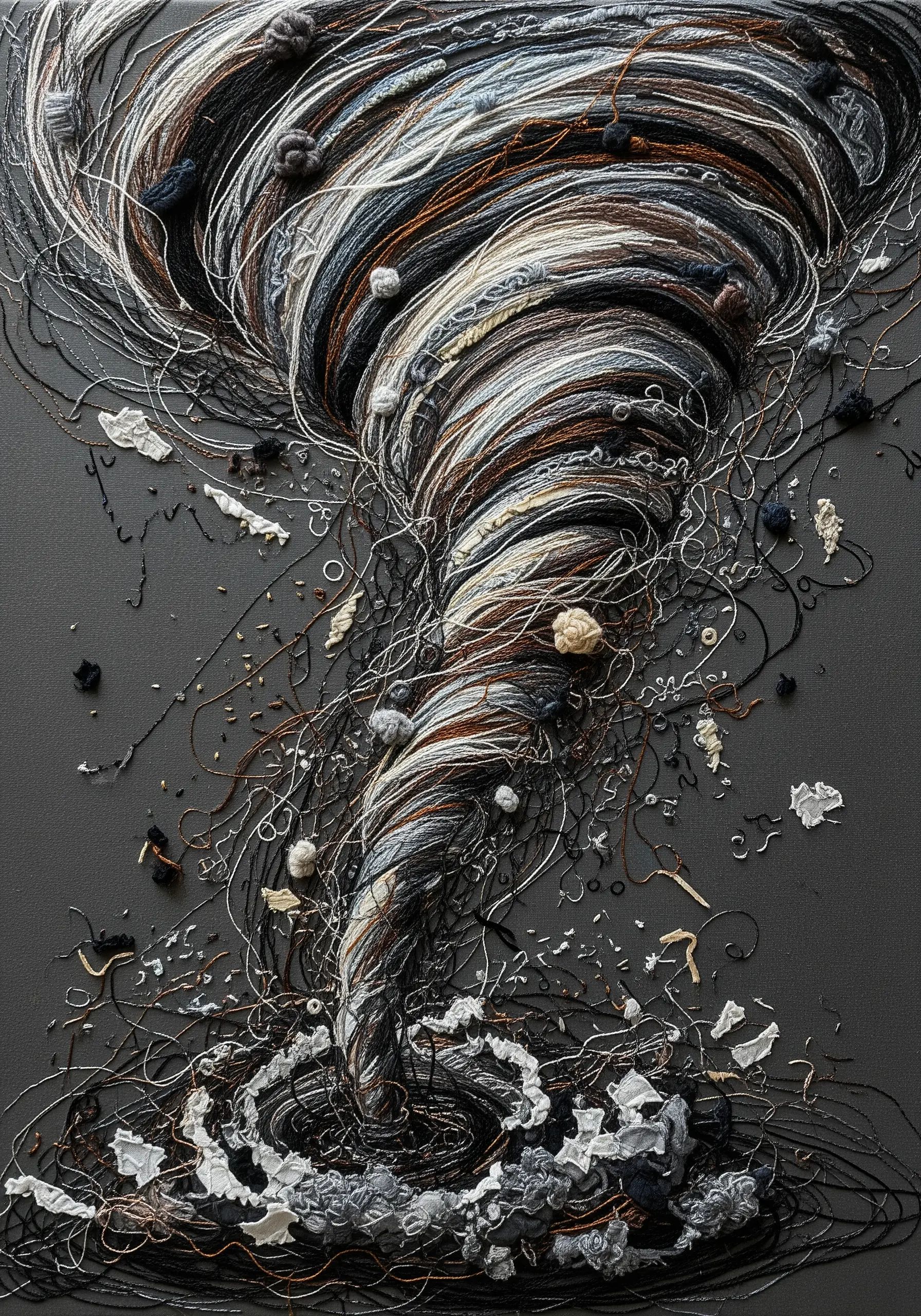
To capture the violent, rotating power of a tornado, combine tightly controlled stitches with chaotic, random elements.
Create the main funnel by wrapping and couching down bundles of thread in various neutral tones, twisting them tightly to suggest rotation.
For the debris field at the base, let loose. Use tangled threads, fabric scraps, French knots, and random, jagged stitches to represent the destructive energy.
The tension between the tightly wound core and the explosive base is what gives this piece its dramatic power.
26. Warped Spacetime with a Thread Matrix
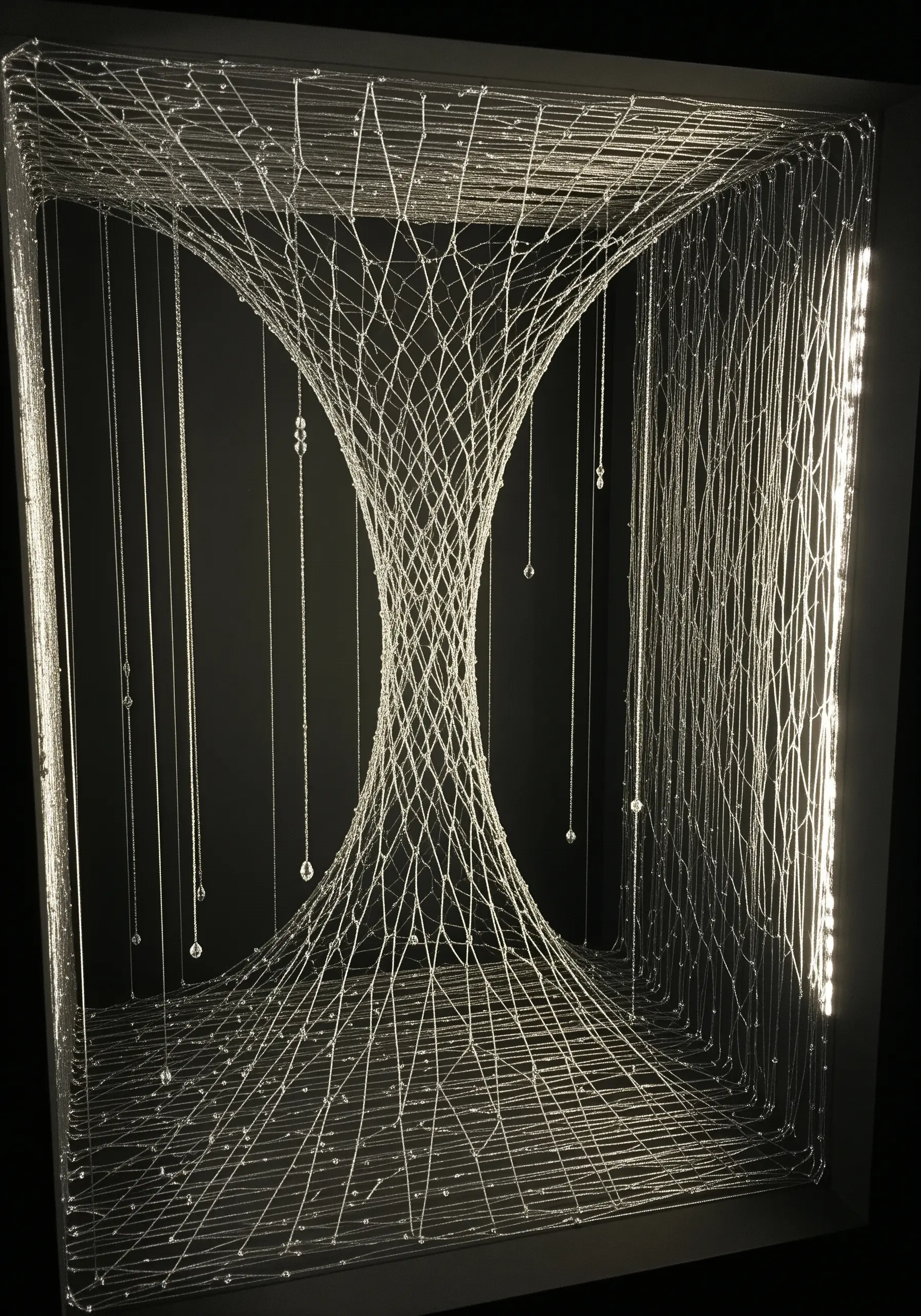
Visualize the concept of gravity warping spacetime with a three-dimensional string art installation.
Create a frame and stitch a grid of taut threads across the top and bottom. Then, use additional threads to pull the two grids toward each other at the center, creating a concave hourglass shape.
Use a metallic or iridescent thread that catches the light to emphasize the form. Adding a few suspended beads or crystals suggests planets or stars held within this gravitational well.
This is an advanced concept that beautifully merges physics with abstract thread sculpting.
27. River Delta with Braided Ribbon
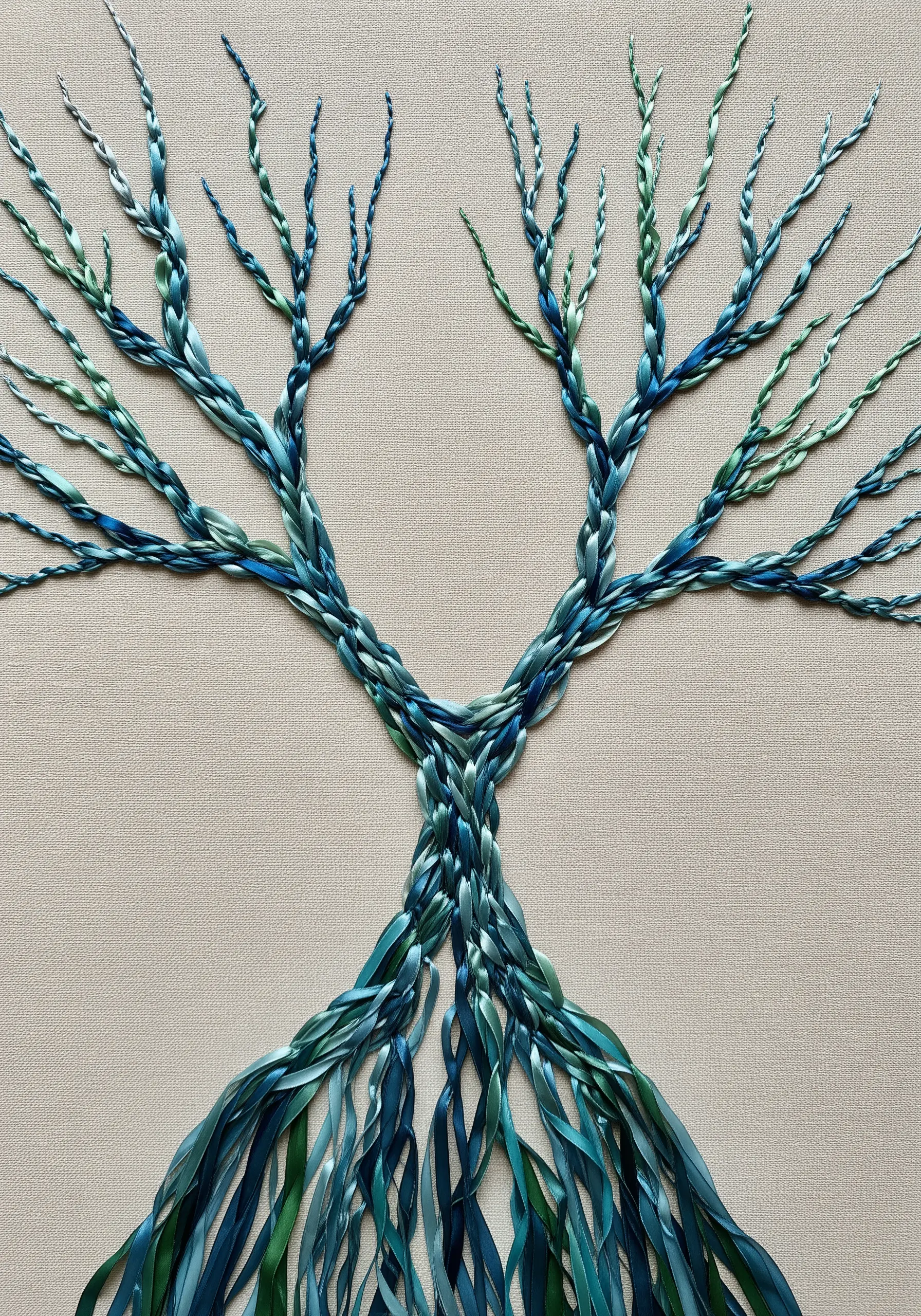
Use silk ribbon to represent the branching, meandering paths of a river delta.
Start with a thicker, braided section at the base to represent the main river. You can achieve this by plaiting several ribbons together before couching them down.
As you move up the fabric, allow the braids to split into smaller, individual ribbons. Use a simple ribbon stitch or twisted straight stitches to create texture and movement.
The mix of braided and single ribbons, combined with a variegated color palette, creates a rich and organic representation of water finding its path.
28. Sonic Waves in Minimalist Form
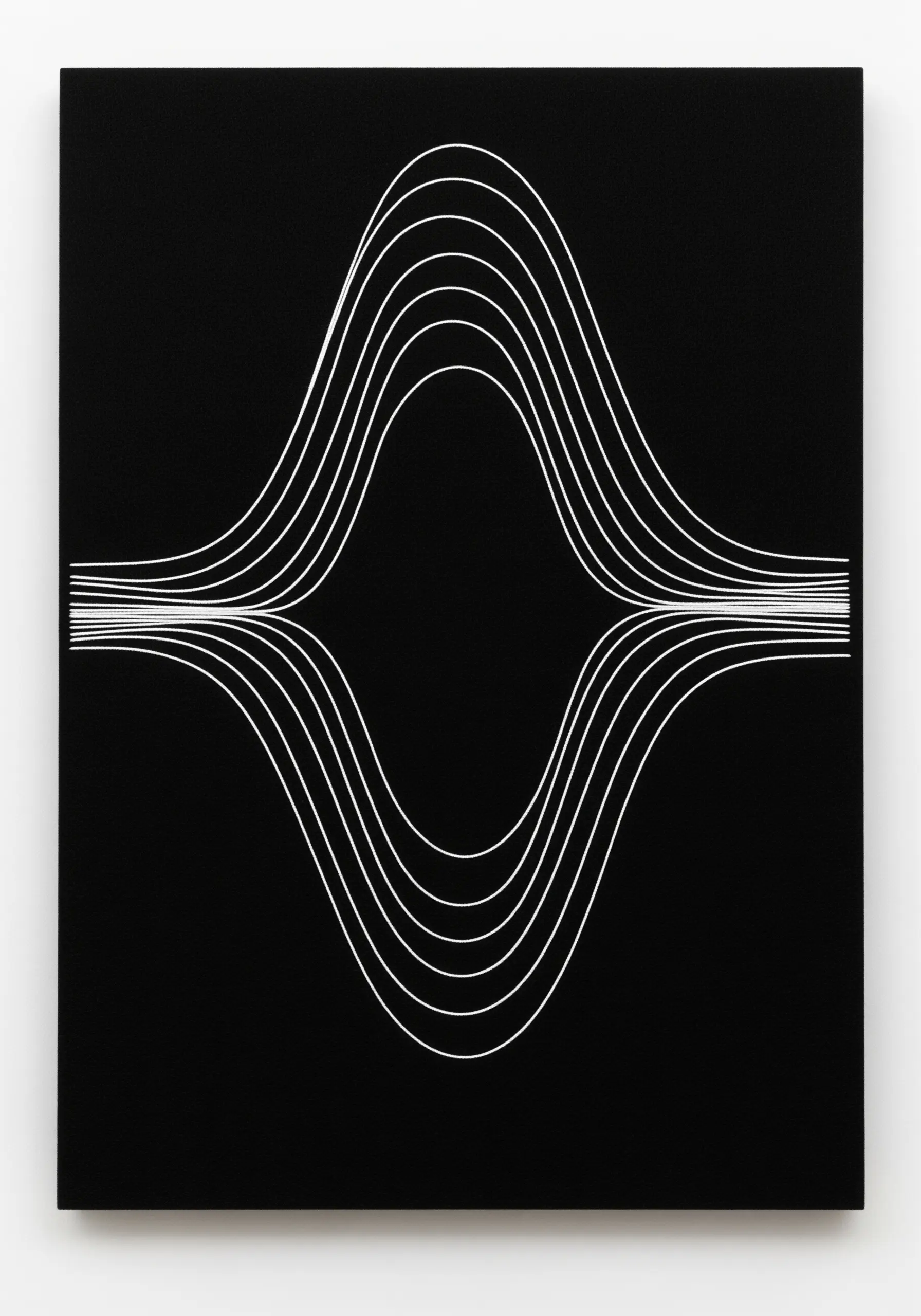
Represent the invisible motion of sound or energy waves with a clean, graphic, and precise design.
This technique relies on perfect symmetry and spacing. Carefully draw your waveform onto the fabric first.
Use a smooth, continuous line stitch like a whipped backstitch or couch down a single, heavy thread to get a flawless curve. High contrast is essential—white thread on a black background creates the most dramatic impact.
Here, the motion is implied by the shape itself, proving that powerful ideas can be executed with minimalist stitched ideas.
29. Watercolor Bleed with Contour Stitching
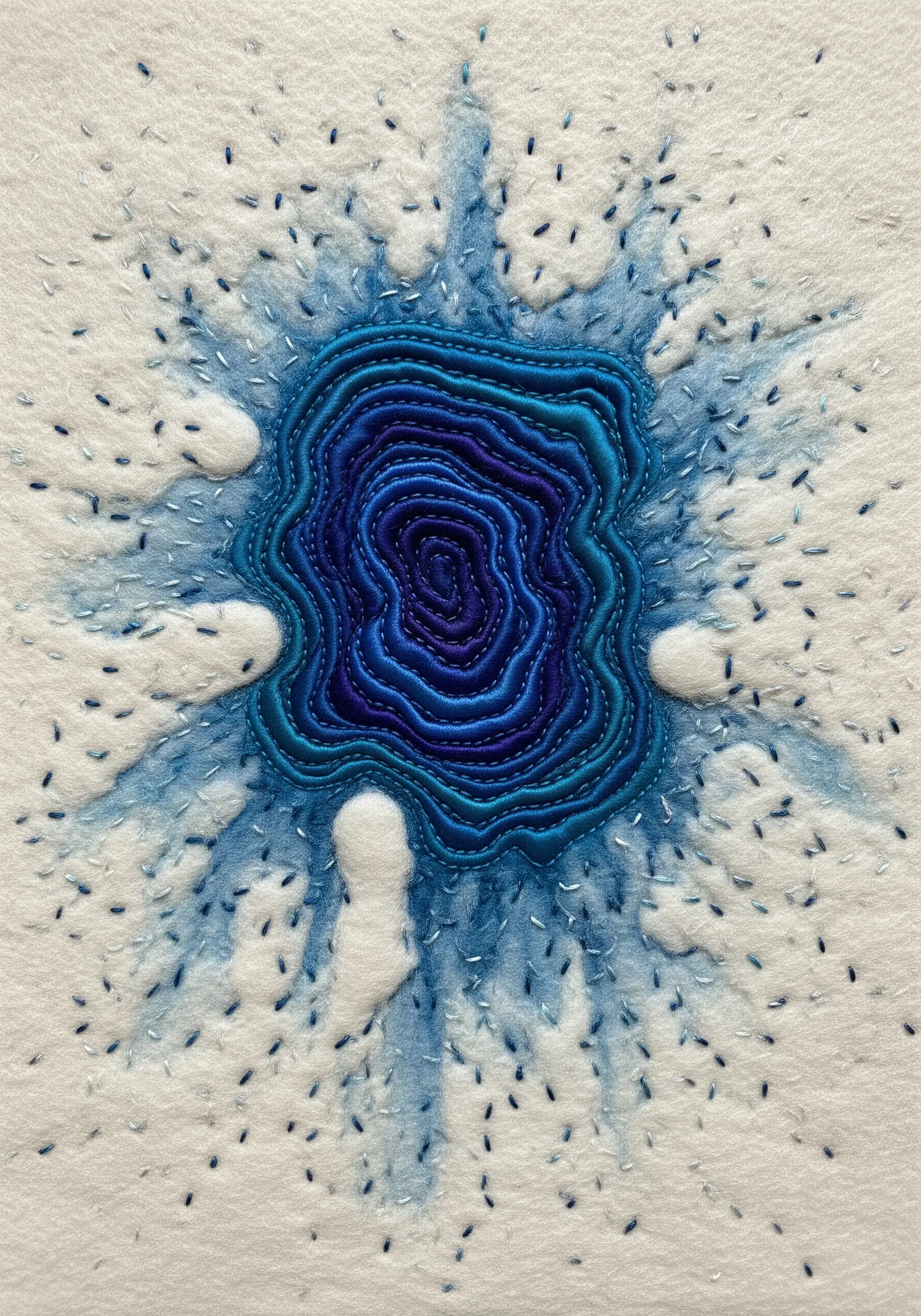
Capture the organic spread of liquid through paper by combining fabric dyeing with embroidery.
Begin by applying watercolor paint or fabric dye to a small area of damp fabric, allowing it to bleed outwards naturally. Let it dry completely.
Next, use concentric lines of split stitch or stem stitch to add definition and texture to the intensely colored center. As you move outward into the faded areas, switch to sparse seed stitches to mimic the dissipating pigment.
The embroidery enhances the watercolor effect, giving it depth and a tactile dimension.
30. Wind-Carried Pollen with French Knots
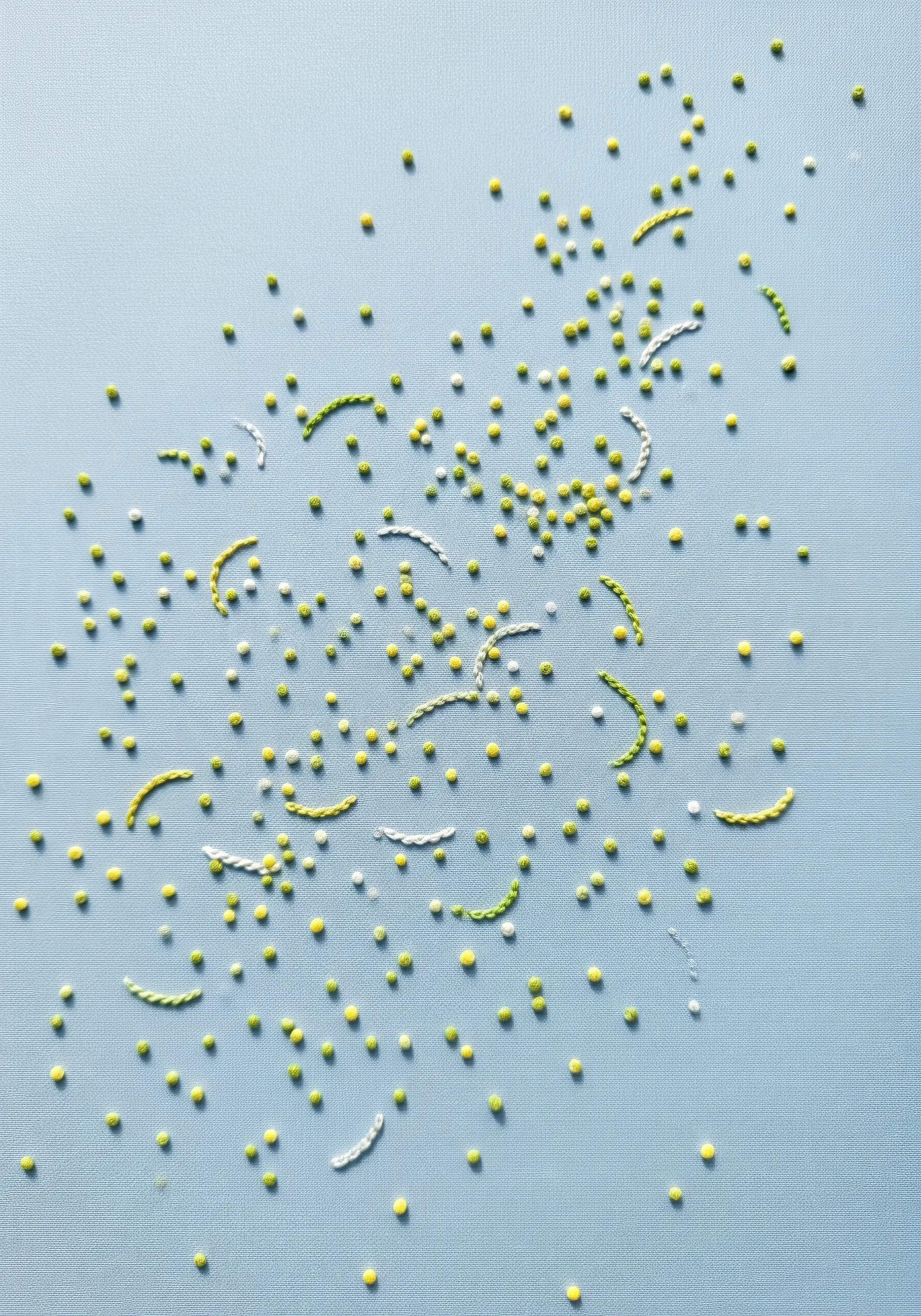
Create the sense of something light and microscopic carried on the wind with a sparse, random composition.
Use tiny French knots made with a single strand of floss to represent pollen grains. A few small, curved running stitches can suggest the swirling air currents.
The key to this design is restraint and the confident use of negative space. Scatter the stitches across the fabric as if they were thrown there by a breeze.
This minimalist approach is perfect for creating a feeling of quiet, gentle movement.
31. The Catenary Curve of Gravity
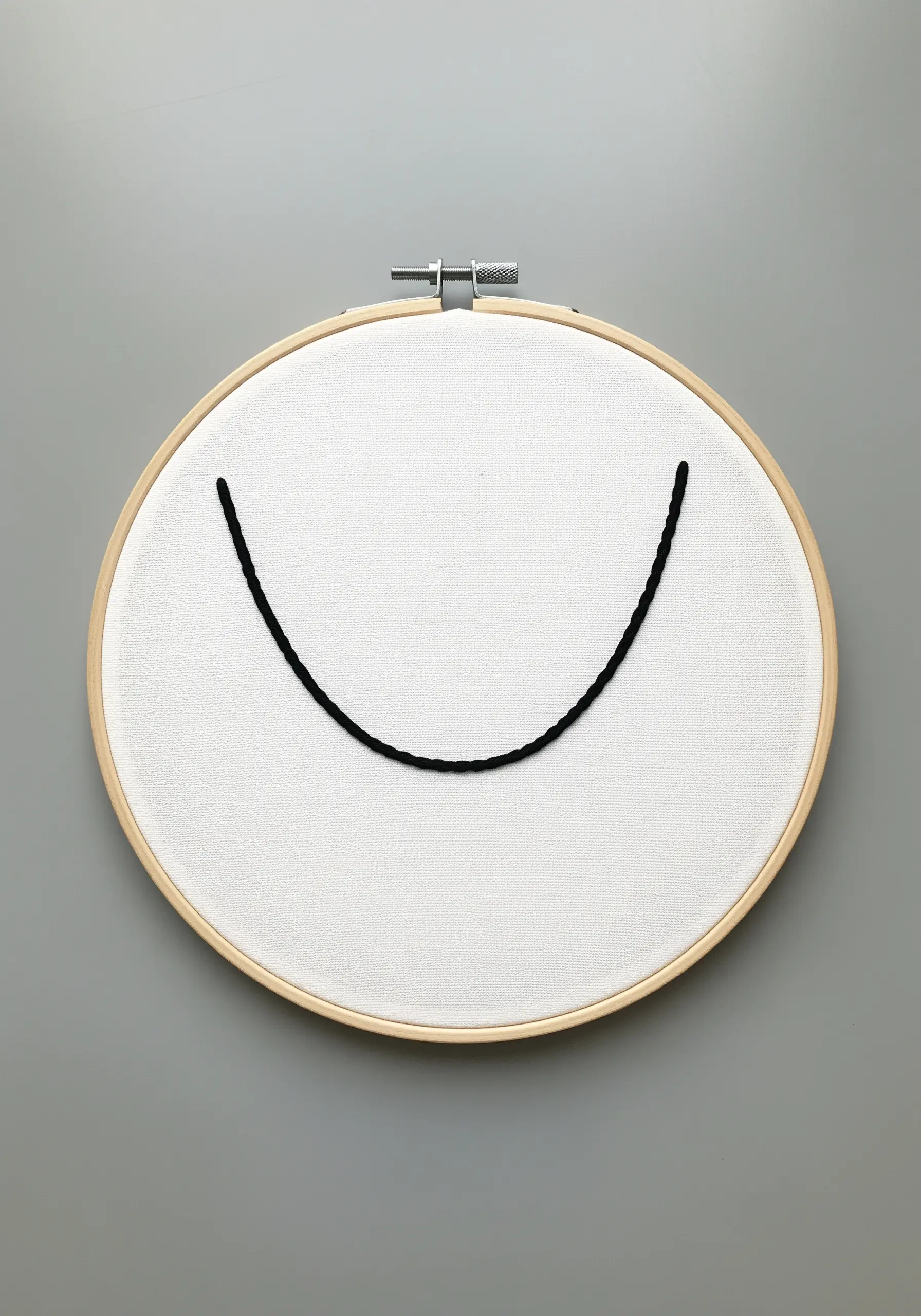
A catenary is the curve a hanging chain or cord forms under its own weight. You can capture this pure expression of gravity with a single, elegant stitch.
Choose a thick, soft yarn that has some weight and drape, like a cotton chenille or a heavy wool.
Anchor the yarn at two points on your hoop and let it hang naturally to find its perfect curve before securing it with a few discreet couching stitches.
This minimalist design is a powerful study in form and physics, celebrating the beauty of a line shaped by nothing but gravity.
32. Erupting Geyser with Radiating Stitches
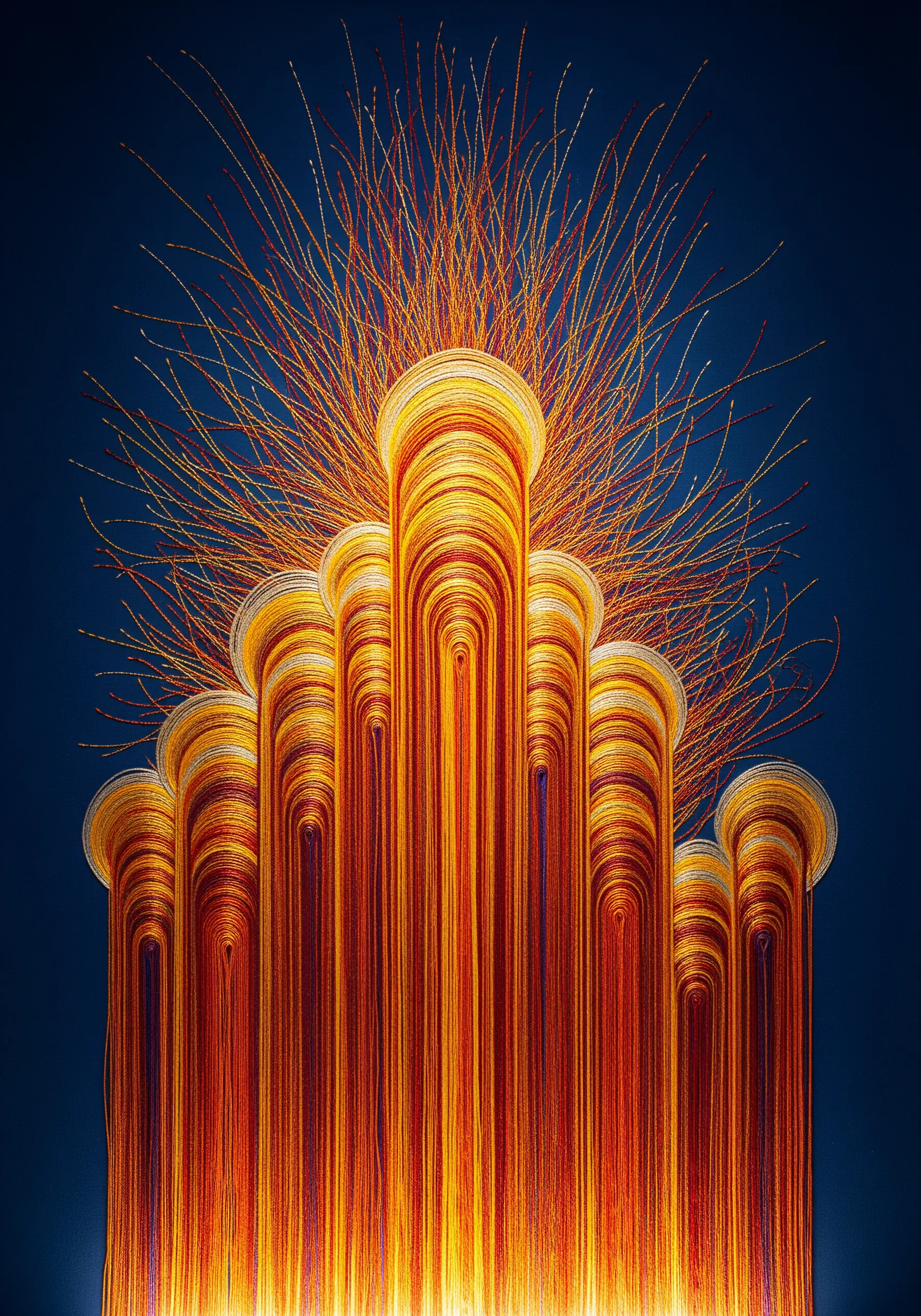
To capture the upward, explosive force of a geyser or fountain, focus on strong vertical and radiating lines.
Build the core columns with dense, vertical satin stitches, using lighter thread colors at the center to create a highlight.
For the spray, use long straight stitches radiating out from the top. Create an even more dynamic effect by intentionally leaving some of these stitches loose, allowing them to arc and fall back down, mimicking the path of water droplets defying and then succumbing to gravity.
33. Delicate Sea Foam with Tatting Stitches
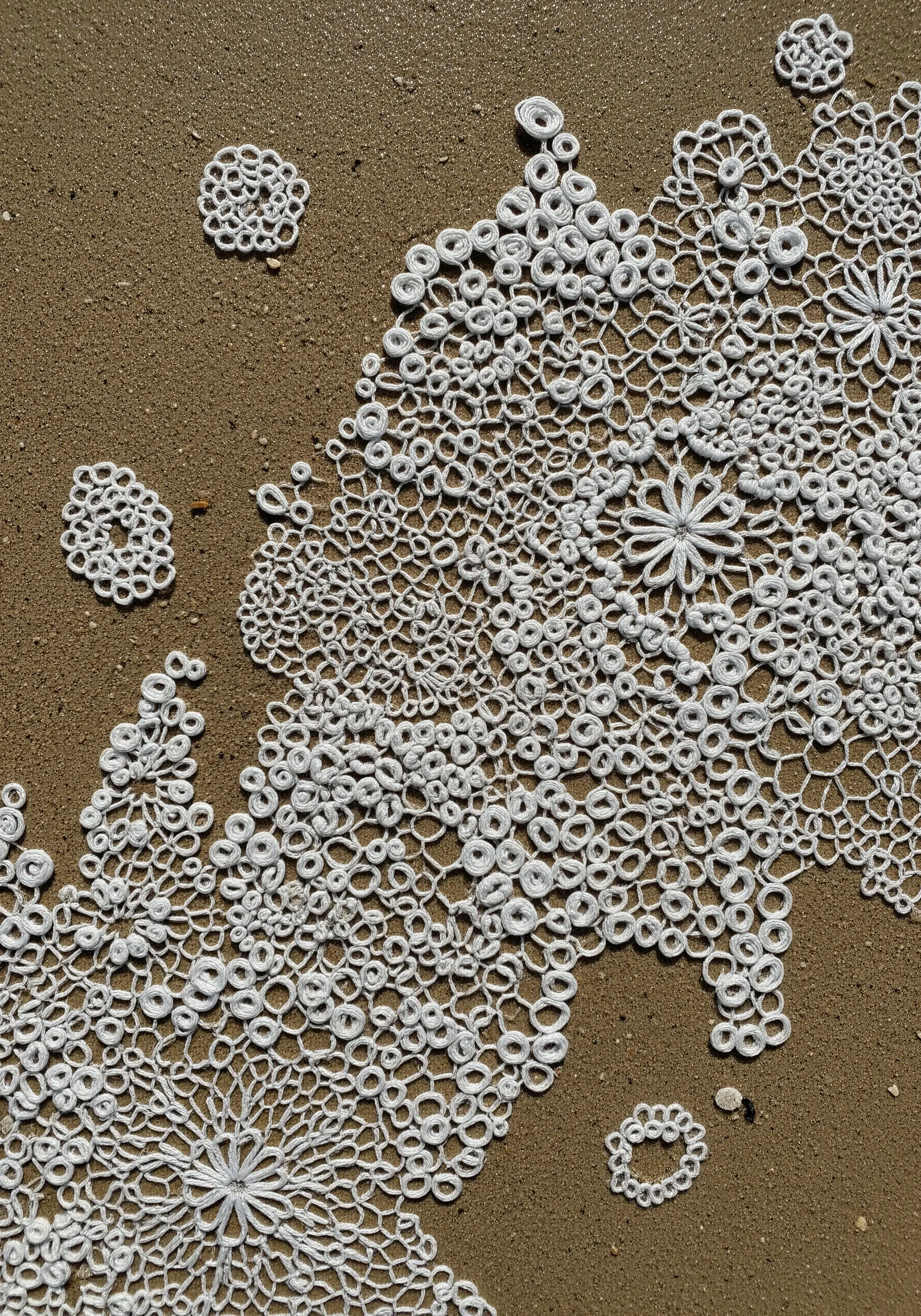
The lacy, cellular structure of sea foam can be beautifully replicated using techniques from lace-making.
While this appears to be tatted lace, you can create a similar effect in embroidery by linking hundreds of tiny detached chain stitches (lazy daisies) together.
Work in clusters, building up organic, web-like patterns. Incorporate picot stitches—small loops of thread—along the edges to mimic the bubbly texture.
This is a painstaking but meditative technique that results in an incredibly delicate and realistic texture.
34. A Shoreline of Textured Pebbles
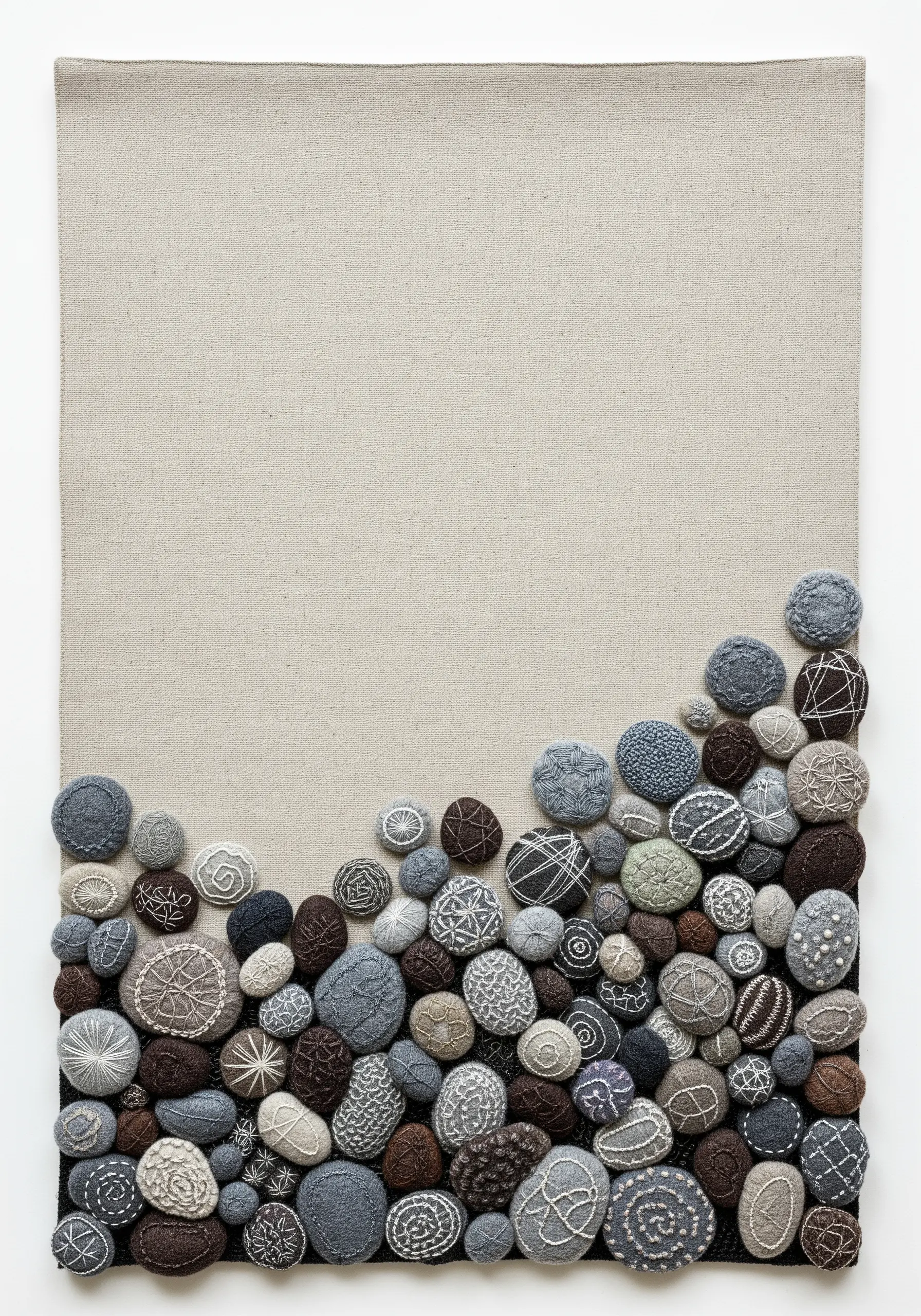
Represent the result of water and time—smooth stones on a beach—using padded stumpwork techniques.
Create individual pebble shapes by covering small pieces of felt or batting with neutral-colored fabric. Before attaching them to your main canvas, embellish each one with a unique stitch pattern: spirals, straight lines, seed stitches, or cross-hatching.
Arrange the finished pebbles in a dense, overlapping pile at the bottom of your piece, as if deposited there by the tide.
This method turns a simple subject into a rich sampler of natural textures.
35. Radiating Light with Neon Thread
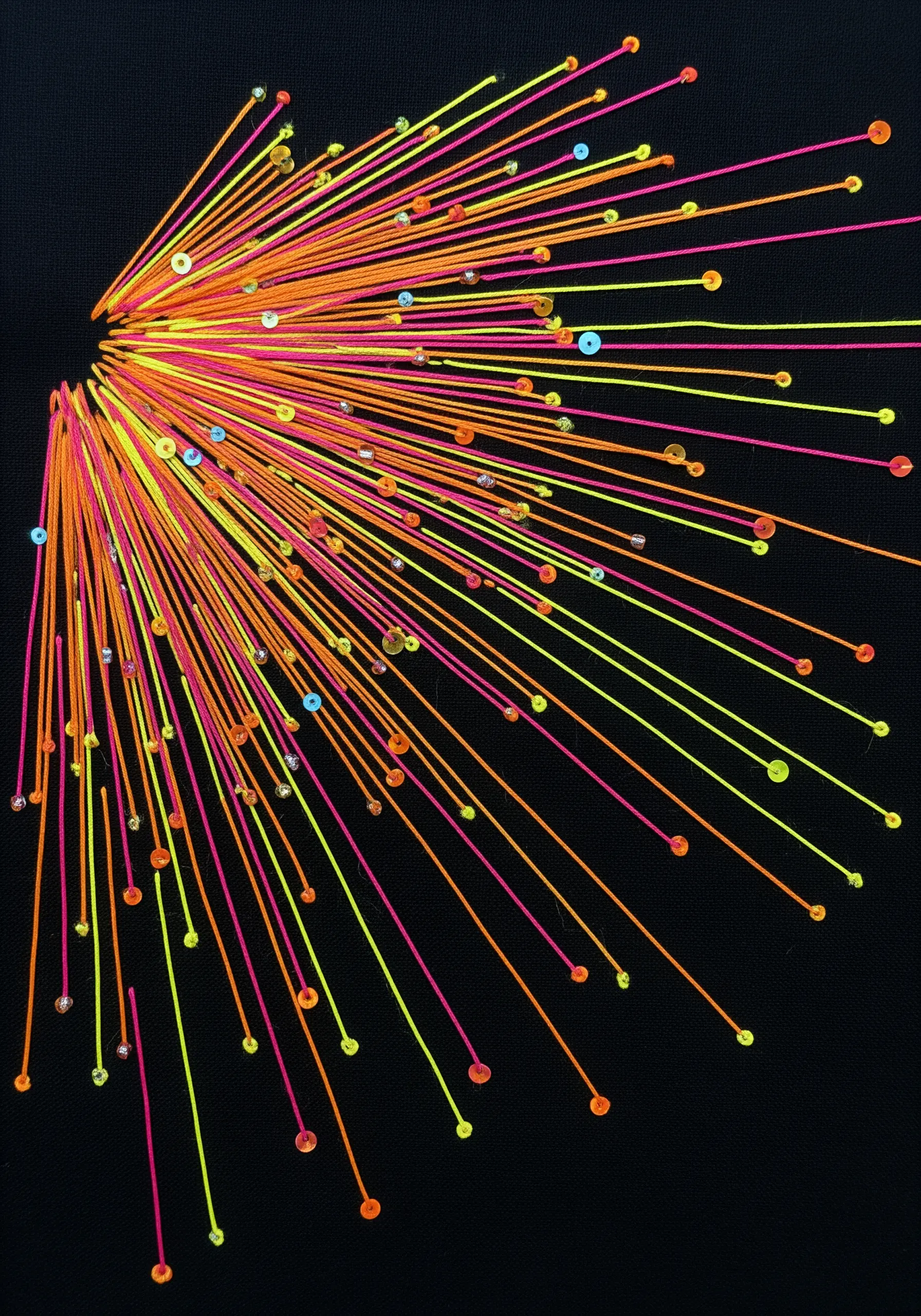
Capture the explosive, instantaneous movement of light with long, taut straight stitches.
Choose a dark, non-reflective background like black cotton to make the colors appear as vibrant as possible.
Use neon or brightly colored threads, stitching them so they radiate from a single point. Keep the tension high so the lines are perfectly straight and sharp.
Add tiny beads or sequins at the end of some stitches to represent sparks or particles of light, adding a final touch of glimmer to the composition.
36. Serene Waves with Varied Line Stitches
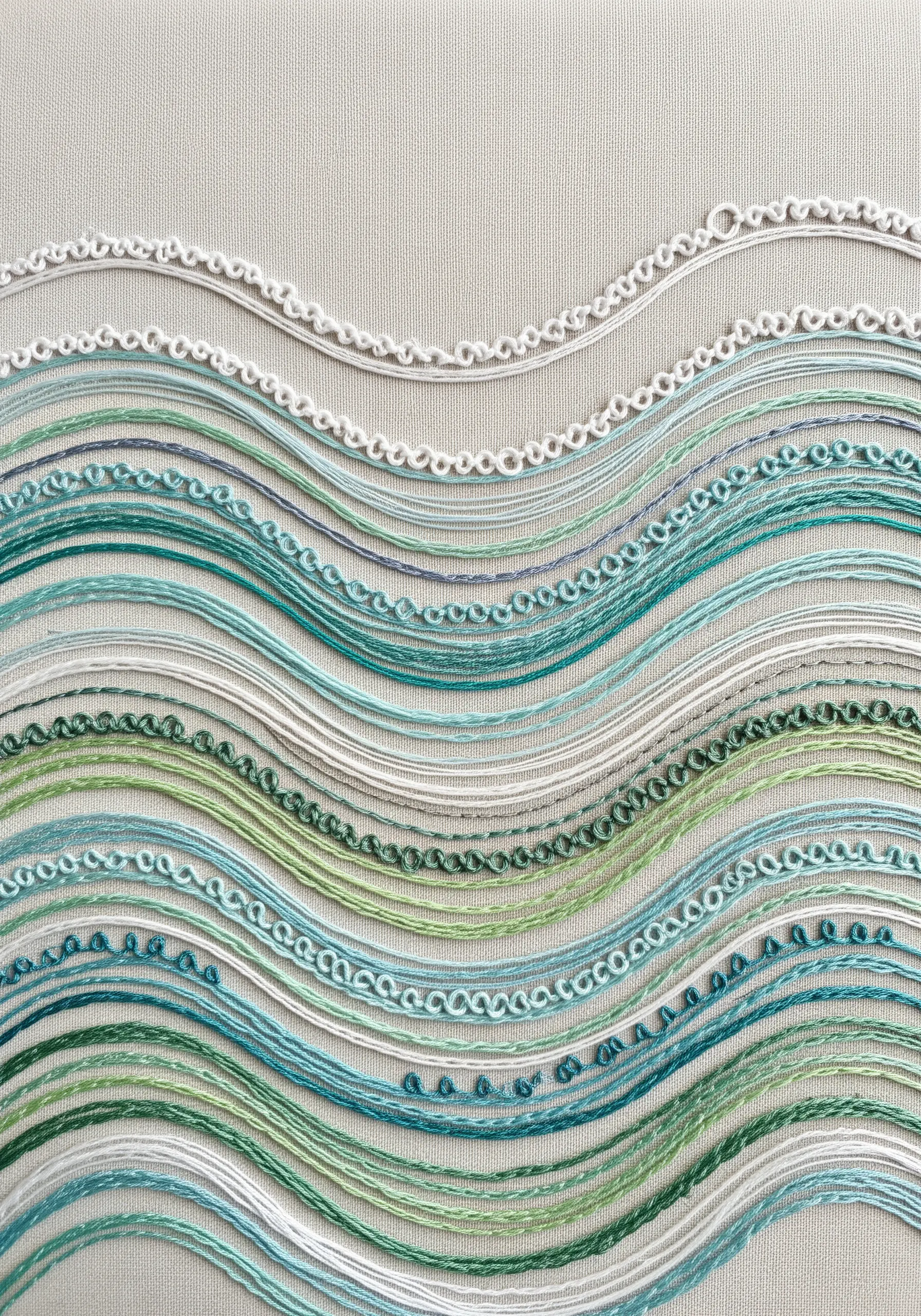
You can create a complex, rhythmic pattern by combining several simple line stitches.
Design a composition of parallel, undulating waves. Then, assign a different stitch to each line to give it a unique personality.
Try a smooth whipped backstitch for one wave, a bumpy line of Pekinese stitch for another, a delicate row of open chain stitch for a third, and a simple running stitch for the next.
This approach builds a rich textural landscape that is calming yet visually engaging, perfect for depicting gentle water motion.